endocrine system U.4 L.9
hormones are chemical regulators produced by cells that affect cells in another part of the body
produced in glands/ secreted into the blood
classified by their activation site : non-target : growth hormone, insulin, epinephrine/ target : parathyroid, gastrin
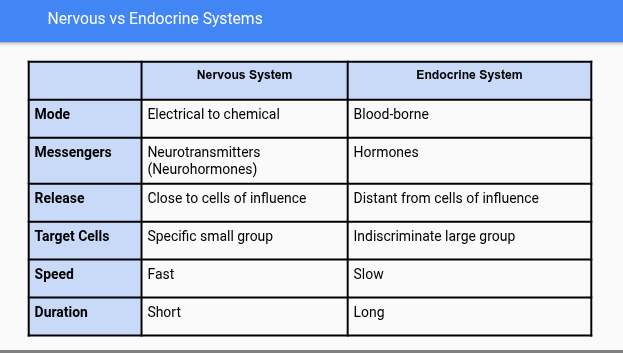
nervous system (rapid short-term adjustments) and the endocrine system (slower, long-term adjustments) work together to control organs and tissues
the hypothalamus regulates the pituitary gland through nerve signal
the pituitary gland stimulates the endocrine glands which secrete hormones that affect the hypothalamus
the pituitary gland is the master gland and controls other glands :
posterior lobe stores and relseases hormones produced by the hypothalamus
anterior lobe produces its own hormones by the release is regulated by the hypothalamus
types of hormones :
steroid hormones : made from cholesterol, fat soluble, ex. sex hromones/cortisol
protein hormones : made from amino acids, water soluable, ex. insulin, growth hormones
steroid hormones :
diffuse out of capillaries into target cell
combine w receptors in cytoplasm or nucleus
receptor-hormone complex binds to specific genes (hormone response elements)
transcription occurs
mRNA exits nucleus
translation occurs and proteins are synthesized
protein hormones (second messenger system) :
diffuse out of capillaries
combine w receptors in cell membrane
activated G protein
stimulated adenylyl cyclase to produce cyclic AMP adenosine monophosphate from ATP
cAMP activates target protein to phosphorylate specific proteins