AP Spanish Lit Unit 5: Crisis, Identity, and New Aesthetics
Historical Context: 1898 and the Literary Shifts
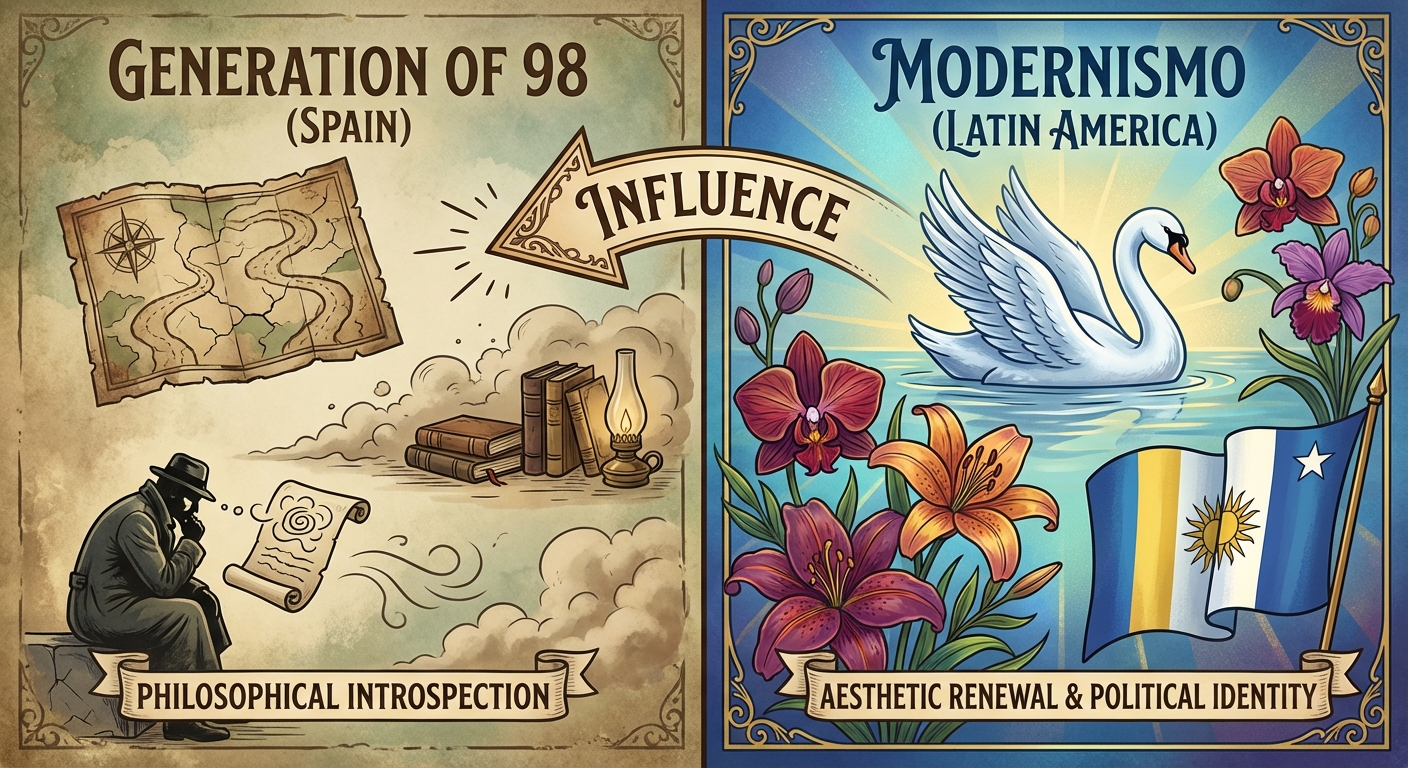
Unit 5 is pivotal because it represents a divergence in the Spanish-speaking world triggered by the Disaster of 1898 (La Guerra Hispanoamericana). This event caused Spain to lose its last major colonies (Cuba, Puerto Rico, and the Philippines), leading to an identity crisis in Spain while Latin America explored its own voice.
The Two Movements
La Generación del 98 (Spain): Defined by introspection, existentialism, and a critique of Spain's social and political decay. They looked inward at the Spanish soul ("el alma de España").
- Key Tone: Melancholic, critical, philosophical.
- Key Figure covered here: Antonio Machado.
El Modernismo (Latin America): The first literary movement born in Latin America that influenced Spain. It focuses on aesthetics, beauty, musicality of language, and later, political resistance.
- Key Tone: Elegant, sensory, exotic, and later anti-imperialist.
- Key Figure covered here: Rubén Darío.
Antonio Machado — He andado muchos caminos
Machado is a quintessential voice of the Generation of '98. In this poem, he explores the theme of El tiempo y el espacio and the duality of the Spanish people.
Key Concepts & Structure
- Romance: The poem follows the structure of a romance (ballad): octosyllabic lines (8 syllables) with rima asonante (assonant rhyme) in even verses ($O-A$ sound: veredas, riberas, negra, etc.).
- The Speaker: A weary traveler who has seen the world. This validates his observations.
Analysis of the "Two Spains"
Machado contrasts two types of people:
The Elites/Intellectuals ("Mala gente"):
- Described as pedantones paños (arrogant people).
- They look at people with their heads down, are sad (tristes), and melancholic.
- Result: They stink the earth (apestan la tierra).
The Common Workers ("Buenas gentes"):
- They work the land (laboran), dance, and enjoy simple pleasures (vino).
- They do not complain about luck (mula vieja).
- Result: They live in harmony with nature and eventually rest beneath it (descansan bajo la tierra).
Common Mistake: Students often think the speaker prefers the educated class. False. Machado glorifies the simple working class for their authenticity and criticizes the pretentious intellectuals.
Rubén Darío — A Roosevelt
Rubén Darío is the father of Modernismo. However, A Roosevelt represents a shift from his early "Art for Art's sake" phase (swans, blue colors, versaille) to Mundonovismo—a phase focused on socio-political commentary regarding the Americas.
Historical Context: The Big Stick
The poem is an open letter to Theodore Roosevelt, representing the United States' imperialist expansion (The "Big Stick" policy) and intervention in Panama and the Caribbean.
Literary Devices & Analysis
- Apóstrofe: The entire poem is a direct address to Roosevelt (The Hunter).
- Metaphor:
- USA: Future invader, Alexander-Nebuchadnezzar (conquerors), The North.
- Latin America: Indigenous blood, Spanish heritage, spirituality, The South.
- Biblical & Mythological Allusions:
- Darío uses references like Mammon (greed/wealth) and Hercules (strength) to characterize the US as strong but godless.
- He references Netzahualcóyotl and Moctezuma to validate the deep, ancient roots of Latin America.
The Thesis
The poem argues that while the US has immense industrial and military strength (Sajona), it lacks God and Soul (Y pues contáis con todo, falta una cosa: ¡Dios!).
Horacio Quiroga — El hijo
Quiroga is known as the "Edgar Allan Poe of Latin America." This short story is a masterpiece of Realismo/Naturalismo combined with psychological tension.
Theme: Man vs. Nature
In Naturalism, nature is not a peaceful backdrop; it is an indifferent, hostile force that ultimately defeats humanity.
Plot & Time Markers
The story takes place in Misiones (jungle region). Time is a crucial character:
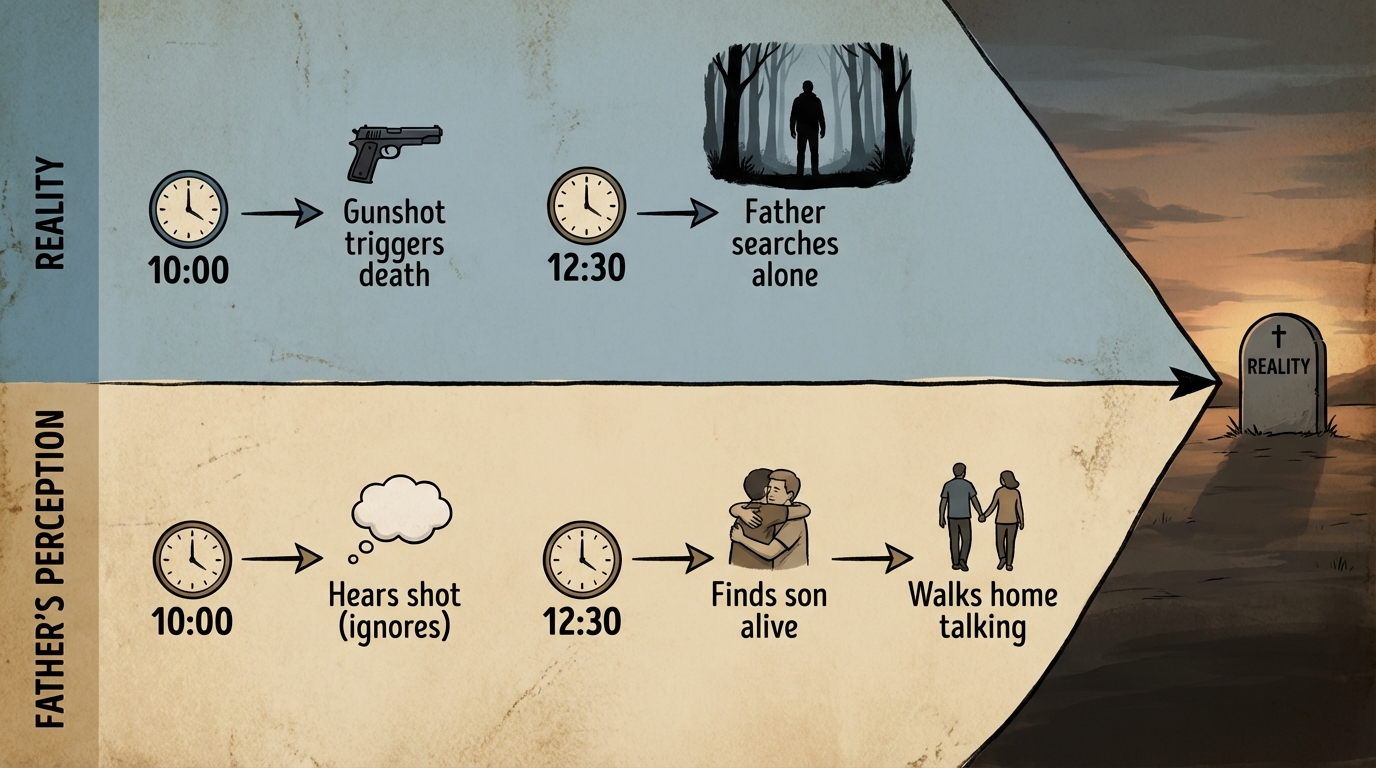
- 10:00 AM: The son (13 years old) leaves to hunt. The father warns him to return by lunch.
- The Shot: The father hears a shot. He assumes the son has killed a bird San Yacahí.
- 12:00 PM: The son has not returned. The father's anxiety begins.
- 12:30 PM: The father goes into the jungle. He begins to suffer hallucinations.
The Hallucination vs. Reality
The father has a history of hallucinations. At the climax, he finds his son, interacts with him, and walks home with him talking.
The Twist: The final paragraph reveals the father is walking alone. The son actually died at 10:00 AM, tangled in wire fencing, leading to an accidental discharge of the gun.
Interpretations
- Paternal Love: The hallucinations are a defense mechanism to protect the father's sanity.
- Fatalism: The tragedy was inevitable from the moment the boy entered the dangerous jungle.
Julia de Burgos — A Julia de Burgos
While chronologically later (post-modernism/avant-garde), Burgos fits the Unit 5 theme of La Dualidad del Ser perfectly. This is a work of Metapoesía (poetry about poetry/the self).
The Dual Identity
The poem is a battle between two selves:
| "Tú" (The Social Construct) | "Yo" (The Poetic/Inner Self) |
|---|---|
| Ropaje (Clothing/Mask) | La esencia (The essence) |
| Owned by others (husband, society) | Owned by nobody (free) |
| Fría muñeca de mentira social (Cold doll) | Viril destello de la humana verdad (Human flash) |
| Aristocratic, cares about appearance | Representative of the people (el pueblo) |
The Feminist Critique
Burgos criticizes the societal expectations placed on women (submissiveness, makeup, looking effectively "decorative") versus the intellectual and emotional capacity of the woman underneath.
Key Literary Device: Anaphora
The repetition of "Tú eres…" vs "Yo no…" creates a rhythmic, confrontational tone throughout the poem.
Summary Comparisons Table
| Work | Author | Movement | Key Theme | Major Device |
|---|---|---|---|---|
| He andado muchos caminos | Machado | Gen '98 | Social Division / Life as a Journey | Assonant Rhyme / Symbolism |
| A Roosevelt | Darío | Modernismo | Imperialism vs. Cultural Heritage | Apostrophe / Allusion |
| El hijo | Quiroga | Realism / Naturalism | Reality vs. Delusion / Nature's Cruelty | Ambiguity / Foreshadowing |
| A Julia de Burgos | Burgos | Post-Modern / Feminism | Duality of Being / Social Pressure | Anaphora / Metaphor |
Common Mistakes & Pitfalls
- Confusing the "Two Julias": Students often mix up who the speaker is. Remember: The "Yo" (the poet/speaker) is attacking the "Tú" (the social mask).
- Misinterpreting Darío's tone: A Roosevelt is not hating the US; it is warning the US and asserting Latin American dignity. He acknowledges US strength (eres el futuro invasor).
- The Ending of El hijo: Many students miss the specific time mentioned in the last line. The boy didn't die at the end; he had been dead since the first shot at 10:00 AM. The interaction in the jungle was entirely in the father's mind.
- Machado's "Mala Gente": Do not assume the "bad people" are criminals. In the poem, the "bad people" are the sad, arrogant intellectuals who think they are superior to the working class.