Natural Selection and Species
Natural Selection is the process in which certain inherited traits make it easier for some humans and animals to thrive and multiply. (A change in the genetic makeup that occurs over time).
- Charles Darwin first identified this process.
- Natural Selection is one of the most relevant processes in Evolution and evolutionary change. However, not all traits provide a survival advantage for organisms. Those with advantageous characteristics survive to old age and reproduce so these traits are passed onto offspring.
- Natural selection occurs in response to environmental pressures, results in adaptation, and only works on heritable (genetic traits).
Selective pressures are any factors that could lead to reduced resources for organisms, making it harder for organisms to survive and reproduce. e.g. food, water, shelter, nesting sites etc.
Four Principles of Natural Selection - orchestrated by Darwin
- Different members of a population have all kinds of individual variations e.g. body size, blood type, metabolism etc. (variations of phenotypes).
- Many of these variations are heritable and can be passed on to offsprings.
- There is often more offspring than resources e.g. food, water. This is what Darwin called The struggle for existence.
- Survival and Reproduction rates increase
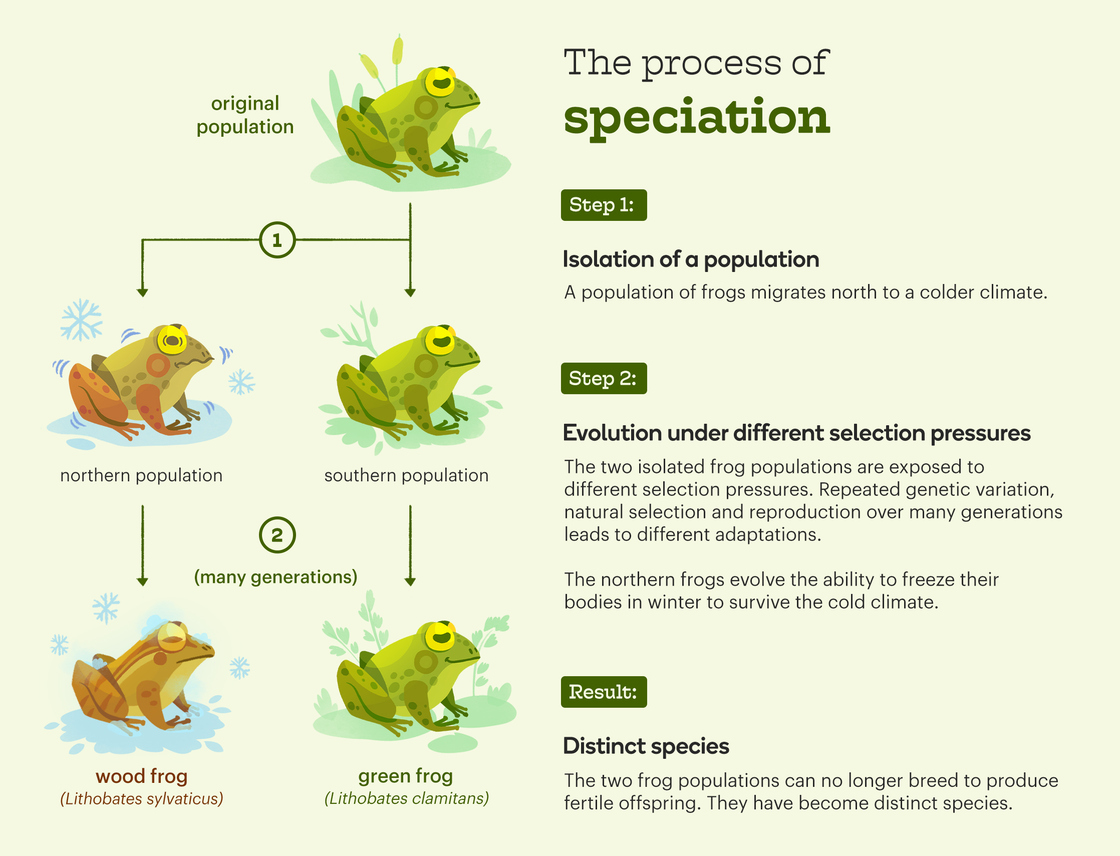
Any group of organisms that can breed to produce fertile offspring is called a species. For species to evolve they need to continue to reproduce.
- The formation of a new species is called speciation.