Chapter 2B
National Income Accounting for an Open Economy
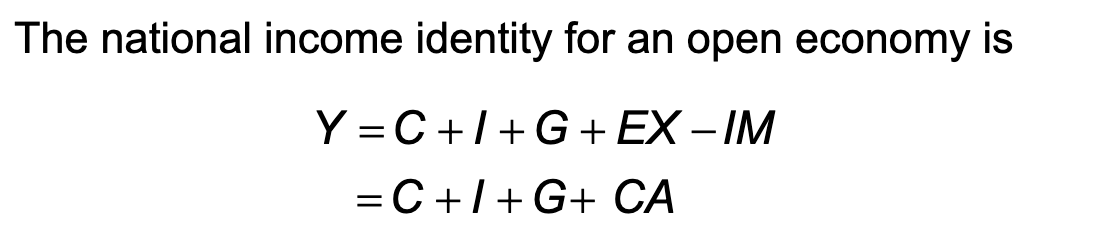
where C + I + G is expenditure by domestic individuals and institutions
and CA is net expenditure by foreign individuals and institutions

when production > domestic expenditure, exports > imports:
current account > 0 and trade balance > 0
when a country exports > imports, it earns more income from exports than it spends on imports
thus, net foreign wealth is increasing
when production < domestic expenditure, exports < imports:
current account < 0 and trade balance < 0
when a country exports < imports, it earns less income from exports than it spends on imports
thus, net foreign wealth is decreasing
Saving and the Current Account
National saving (S) = national income (Y) not spent on consumption (C) or govt spending (G)
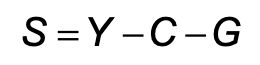
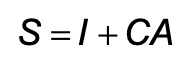
An open economy can save by building up capital stock (more investment) or by acquiring foreign wealth.
National saving (S) — domestic investment (I) = the current account (CA)(≈ exports minus imports).
the current account = net foreign investment (net outflows of financial assets).
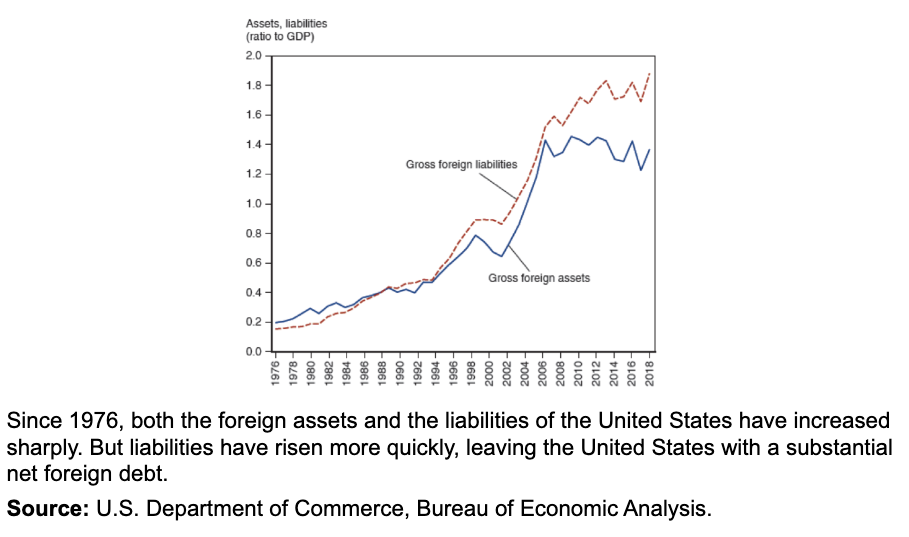
The US has the most negative net foreign wealth in the world, and is therefore the world’s largest debtor nation.
net foreign wealth = gross foreign assets — gross foreign liabilities.
its current account deficit in 2012 was $440 billion;
its net foreign wealth has continued to decrease.
the value of foreign assets held by the US has grown since 1980;
but liabilities of the US (debt held by foreigners) have grown faster.
U.S. Gross Foreign Assets and Liabilities, 1976–2019
About 70% of foreign assets held by the US are denominated in foreign currencies and almost all of US liabilities (debt) are denominated in dollars.
changes in the ex rate influence the value of net foreign wealth.
e.g. appreciation of the value of foreign currencies makes foreign assets held by the US more valuable;
but, it doesn’t change the dollar value of dollar-denominated debt for the US
National Income Accounting and
the Balance of Payments