Reproduction
reproduction - production of offspring
sexual
merging of haploid gametes from 2 distinct individuals
produces new allele combos
diversity + adaptation
driven by environmental change
asexual
produces genetically identical offspring
involves only 1 parent
optimized for stable, existing conditions
meiosis - produces haploid eggs + sperm
sexual reproduction
maintains diploid number of chromosomes
fusion of egg + sperm → diploid zygote
creates genetic diversity
crossing over
independent assortment
fertilization of gametes = random
Sperm and Egg
both are gametes
fuse to form zygotes
egg size > sperm size
sperm
0.005 mmm
produced in testes
millions released per ejaculation
motile - swim to egg
continuous production
billions in lifetime
X or Y chromosome
egg
0.1 mm
produced in ovaries
1 egg released per month
contains cytoplasm + nutrients
limited supply
400-500 per lifetime
X chromosome only
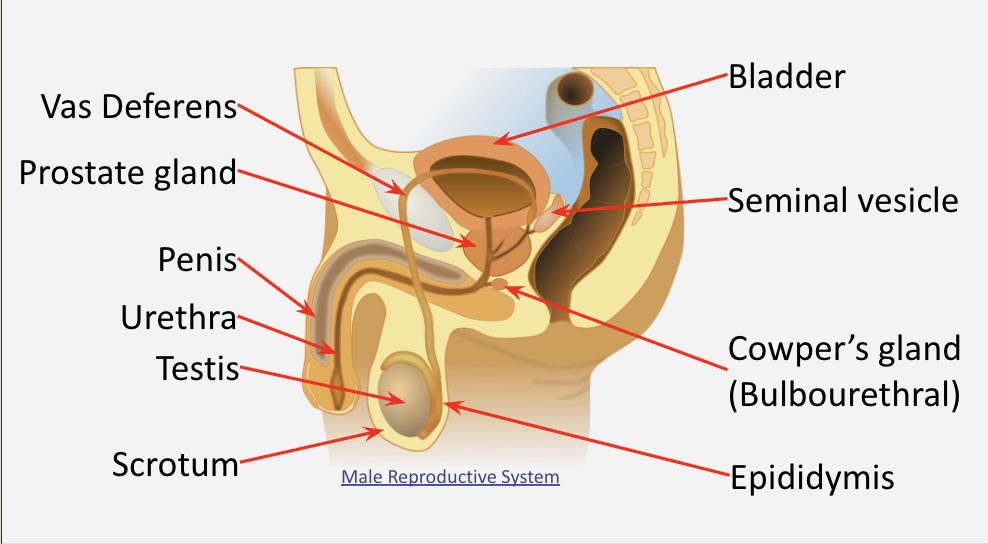
Male reproductive system
Scrotum
sack enclosing balls/testis
keeps at correct temperature
Testis
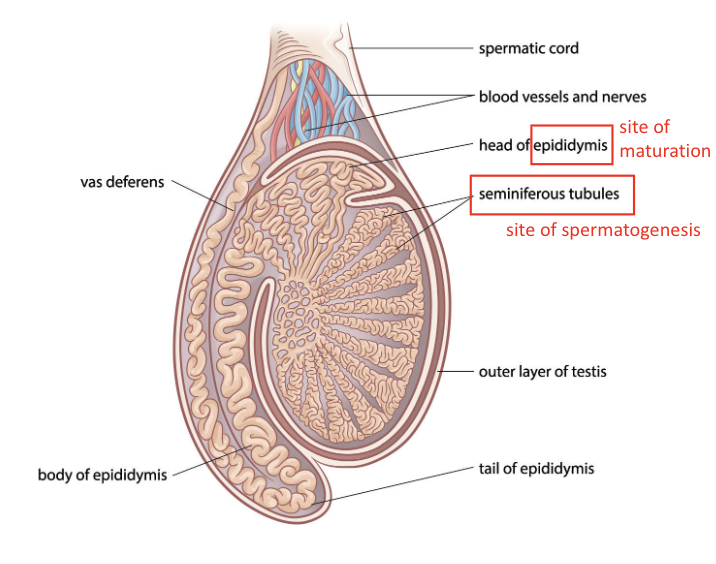
makes sperm/spermatogonia + testosterone
Epididymis
stores sperm
vas deferens
moves sperm from epididymis → urethra
cowper’s gland
makes lubrication for urethra before ejaculation
seminal vesicle
makes fluid for semen (70%)
nurtures sperm
fructose
prostate gland
30% of semen
alkaline
urethra
carries sperm + urine
penis
male organ inserted into vagina
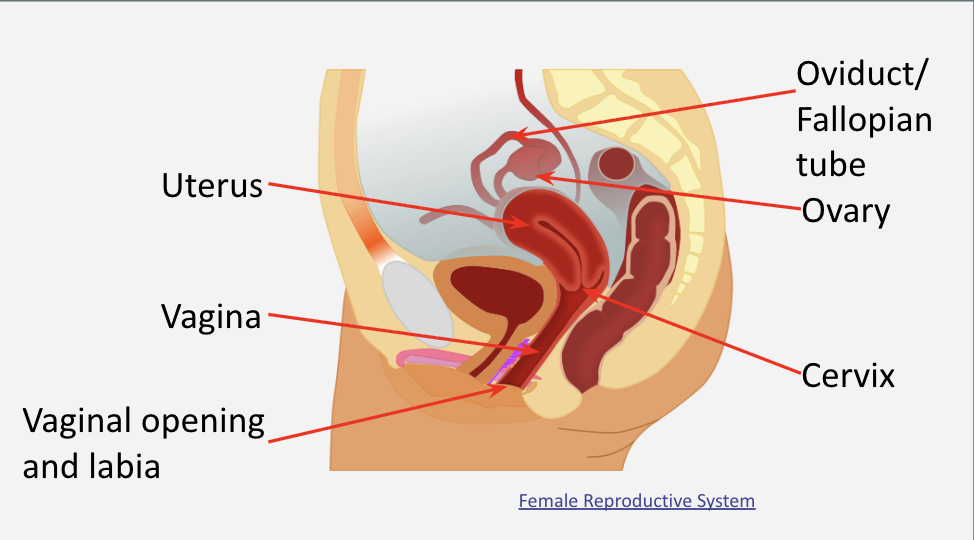
Female reproductive system
ovary
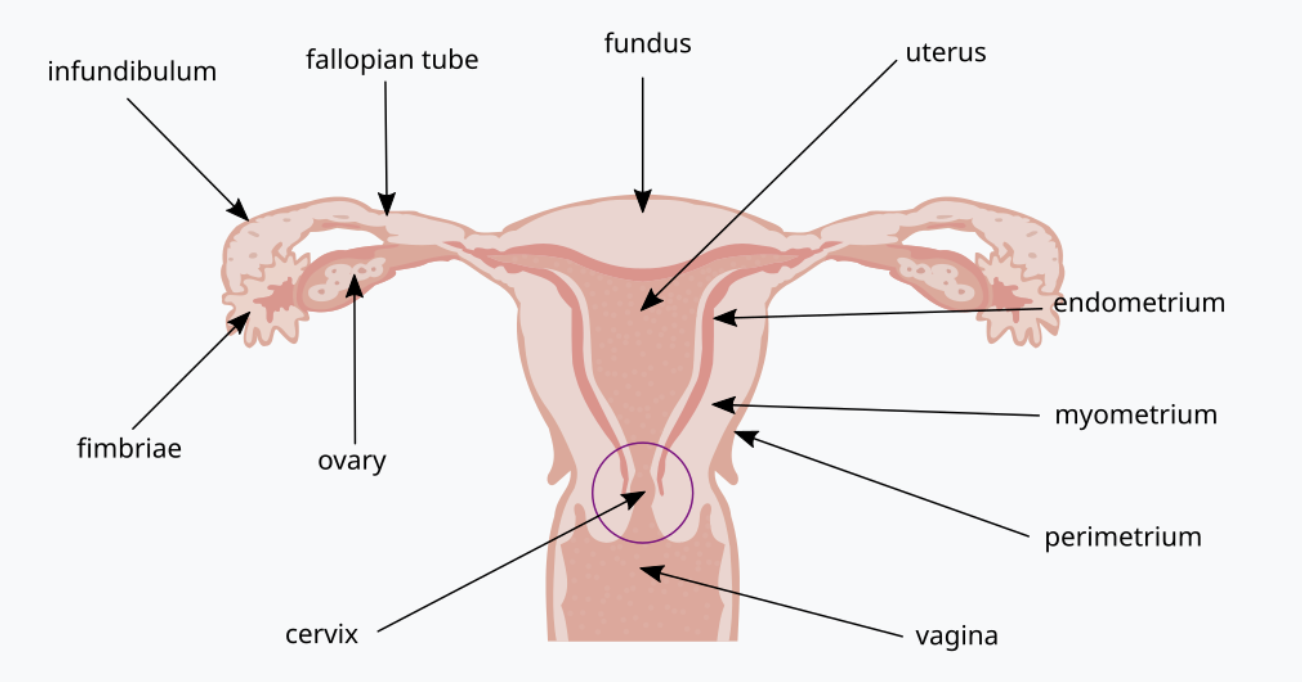
make + store + release eggs into fallopian tubes
during ovulation
oviduct/fallopian tube
2 tubes linking uterus to ovaries
where fertilization occurs
fimbrae - projections at the ends of fallopian tubes closest to ovaries
catch egg that ovaries release → sweep into fallopian tube
uterus
organ where baby grows during pregnancy
made of muscles
cervix
where vagina + uterus join
widens during birth to let baby pass
vagina
hollow tube linking uterus to outside body
menstrual blood + baby exits
penis inserted during sex
labia
inner + outer
outer covered in pubic hair
skin flaps that surround vagina + urethra
clitoris
small sensory organ w nerve endings
causes pleasure during sex
endometrium
inner lining of uterus
sheds during period
where embryo implants
myometrium
muscular layer
contracts during period + birth + orgasm
perimetrium
protective tissue layer
keeps uterus intact
spermatogenesis - production of spermatozoa (sperm)
epididymis - site of maturation
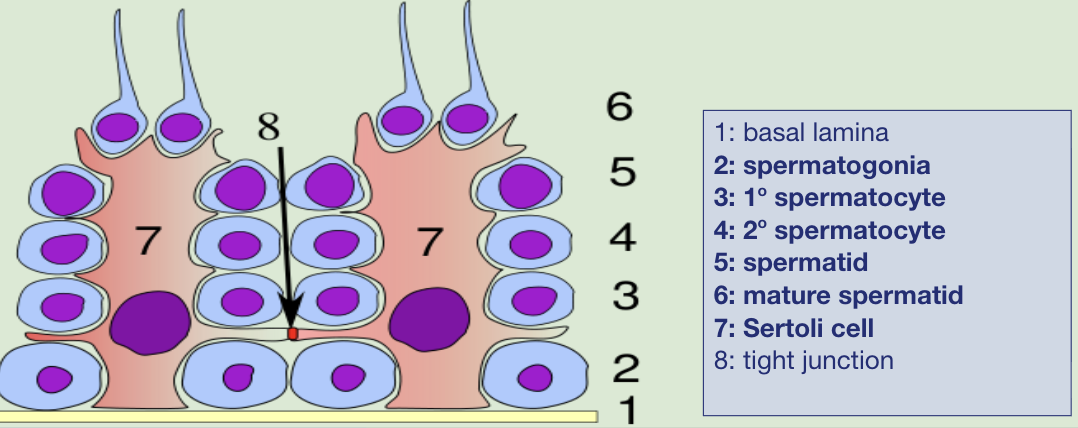
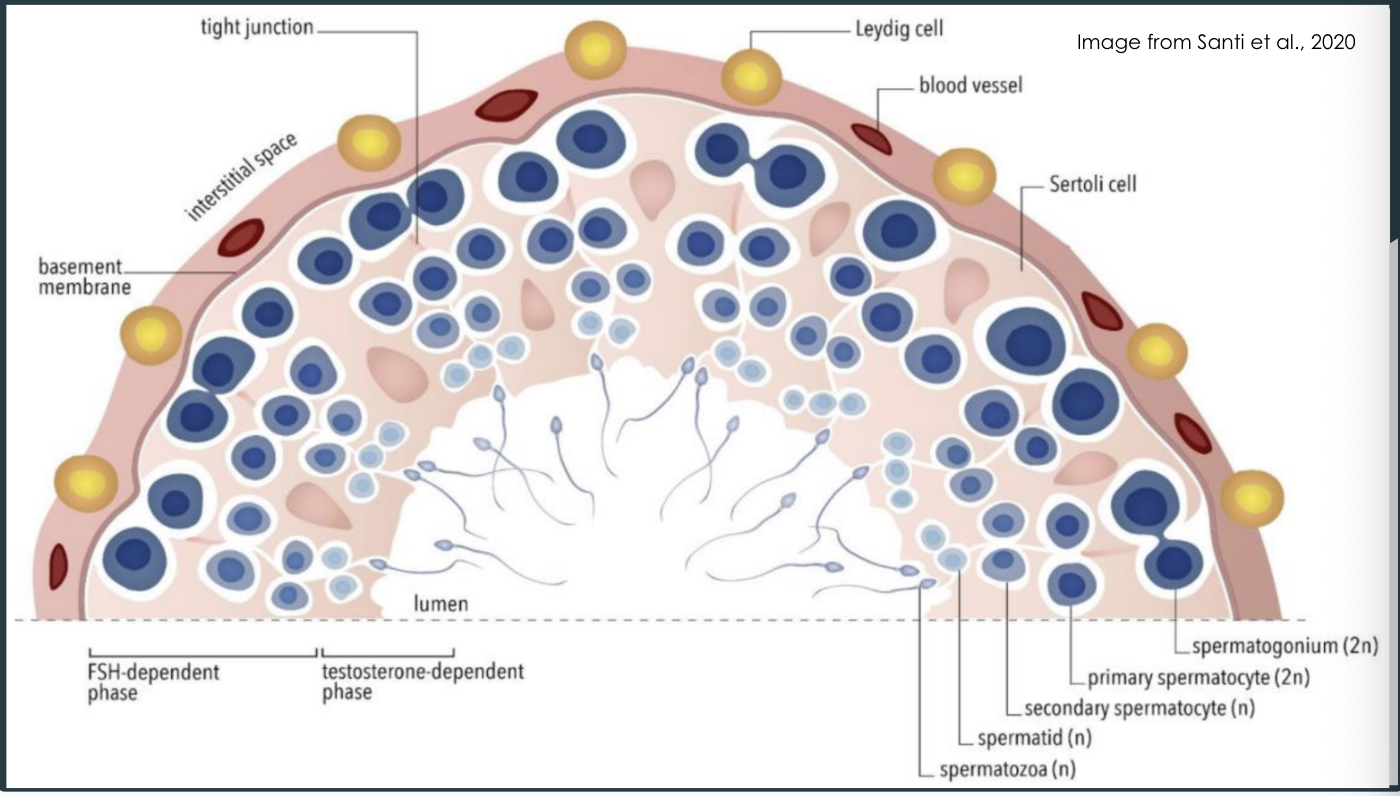
seminiferous tubules - site of spermatogenesis
epithelial (germ) cells give rise to spermatogonia
near outer wall of tubules
cells undergo mitosis/meiosis → cells migrate to Lumen
cells nourished by sertoli cells (supporting cells)
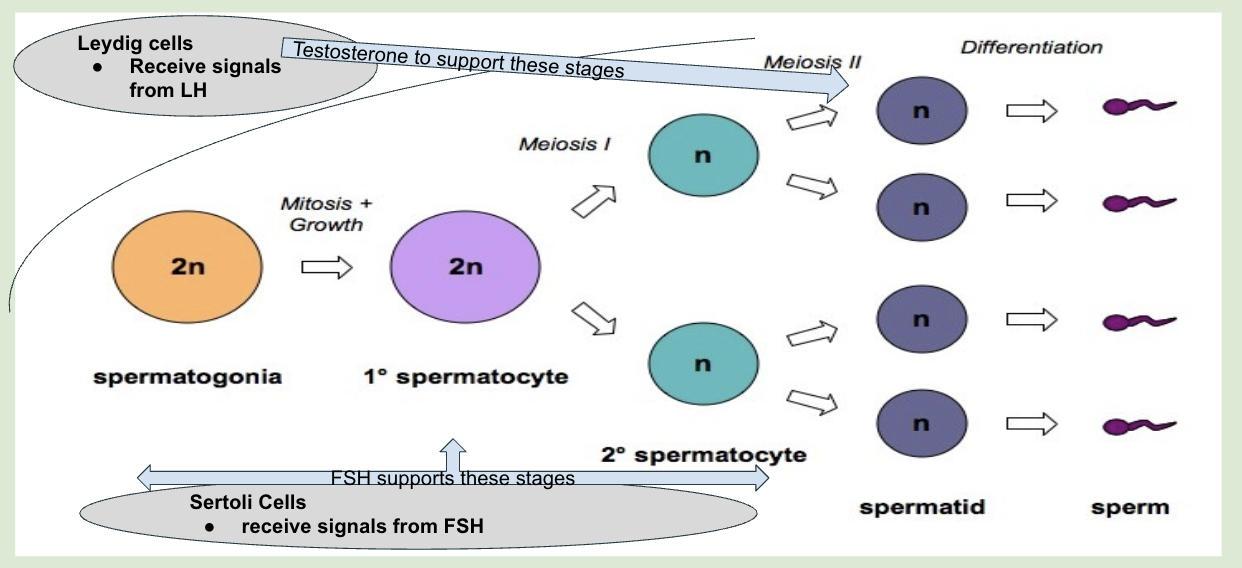
sertoli cells get signals from pituitary gland via FSH
triggers meiosis I + supports spermatogenesis
Leydig cells - produce testosterone
clustered outside tubules
have receptors for pituitary hormone LH
drive meiosis II + differentiation into mature sperm
Sperm production
Step 1
(diploid) spermatogonia undergo mitosis + growth → primary spermatocyte
Step 2
(diploid) primary spermatocyte undergoes meiosis I → 2 secondary spermatocyte
Step 3
(haploid) secondary spermatocyte undergo meiosis II → each produces 2 spermatids
Step 4
(haploid) spermatids undergo differentiation → sperm
After spermatogenesis → sperm go to epidiymis
gain motility + storage
oogenesis - production of ova (eggs)
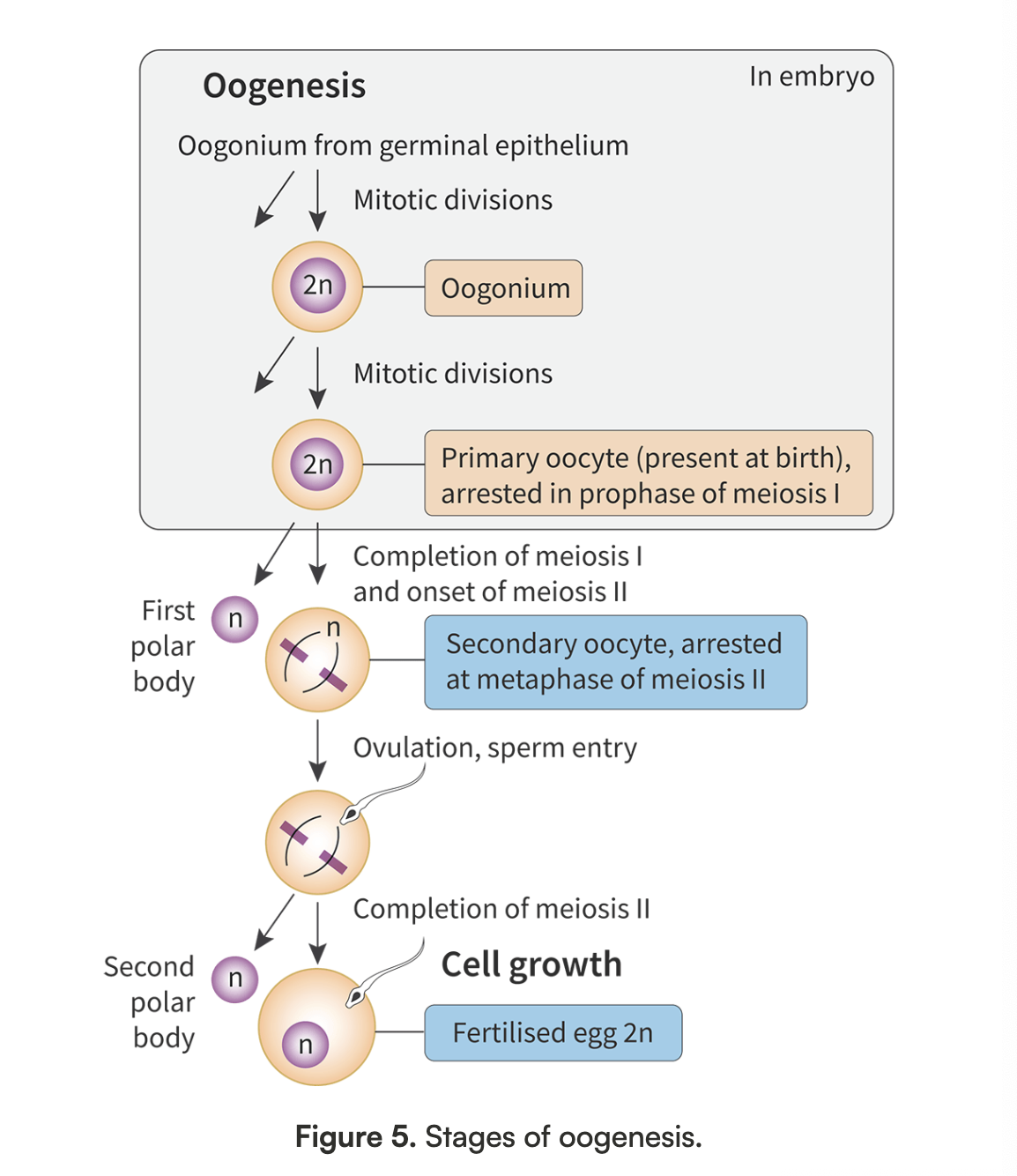
initial steps begin when female is a fetus
oogonia - stem cells for egg formation
no longer exists at birth
puberty - FSH promotes growth of follicle cells + drives primary oocyte to continue process of meiosis
Ova production
step 1
fetal development
(diploid) oogonia formed
step 2
(diploid) oogonia undergoes mitosis + growth → primary oocyte
mitotic arrest at P1 (pause)
Step 3
FSH → puberty
(diploid) primary oocyte undergoes meiosis I → 1 polar body + 1 (haploid) secondary oocyte
corona radiata - follicle cell that stays with secondary oocyte
Step 4
LH → ovulation - process where secondary oocytes erupt from the ovary
corpus luteum formed from remaining follicle cells
(haploid) secondary oocyte undergoes meiosis II → 1 polar body + (haploid) ovum
final products (per primary oocyte): ovum + 3 polar bodies
Oogenesis and spermatogenesis
BOTH
growth + mitosis
2 series of meiosis
reduction in chromosome number to haploid
differentiation
regulation via hormones
OOGENESIS
unequal division of cytoplasm
1 ovum + polar bodies
pauses
Prophase 1 + metaphase II
polar bodies exist
release 1 secondary oocyte a month
location in ovary
begins during embryonic development
stops during menopause
Spermatogenesis
equal division of cytoplasm
4 sperm
no pauses
no polar bodies
many/frequent releasees
location in testes
begins during puberty
stops at death
Sperm
small + streamlined shape
adapted to swimming
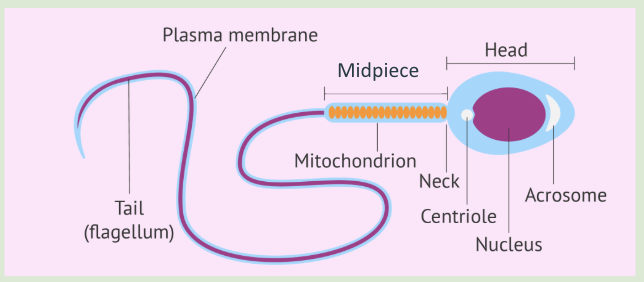
Haploid nucleus
in head of sperm
contains paternal genetic info
acrosome
in head of sperm
hydrolytic enzymes
aid in fertilization
midpiece
contains mitochondria → ATP to swim
flagellum
sperm can swim + reach egg
Ova
large cells
contain haploid nucleus
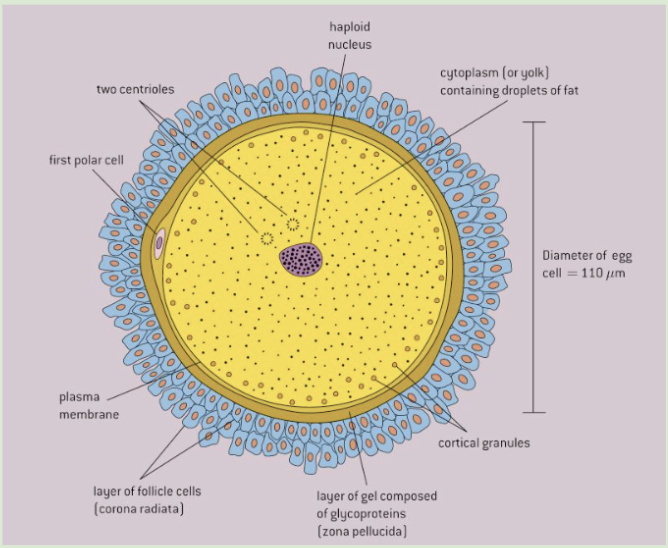
zona pellucida
prevents polyspermy
cortical granules
vesicles
make zona pellucida impenetrable to sperm after fertilization
lipid droplets
in cytoplasm
provide developing embryo w energy
corona radiata
layer of follicle cells on very outside
gives vital proteins to the cell + shields egg from environmental damage
hormones + puberty
childhood - secretion of FSH + LH inihibted by low levels of gonadotropin releasing hormone
FSH - follicle stimulating hormone
LH - luteinizing hormone
certain stage of development during childhood
hypothalamus increases secretion of GnRH → increase in FSH and LH
males
LH → testosterone
FSH → sperm
females
FSH + LSH FSH + LH regulate menstrual cycle + production of oestradiol/progesterone
sex hormones → secondary sex characeristics
girls
breasts
bigger hips
pubic/armpit hair
boys
deeper voice
facial hair
more muscle
menstrual cycle
menstruation (0-5)
all hormones low
low P + oestradiol at very beginning → endometrium shed
FSH increases
some ovarian follicles start growing
near end → oestradiol (oestrogen) starts to increase
days 5-14
dominant follicle emerges → oestradiol produced
oestradiol → thickens uterine lining
oestradiol negative feedback FSH
aka decrease in FSH
ovulation (day 14)
oestradiol peak → slight positive feedback to release LH (pituitary)
LH peak
follicle ruptures → mature egg released
matures secondary oocyte + triggers ovulation/formation of corpus luteum
FSH short peak
Days 14-28
ruptured follicle → turned into corpus luteum
filled with cells
corpus luteum (ovary) secretes Progesterone + some oestradiol
Progesterone thickens + vascularizes + matures endometrium
low LH + FSH
progesterone peak
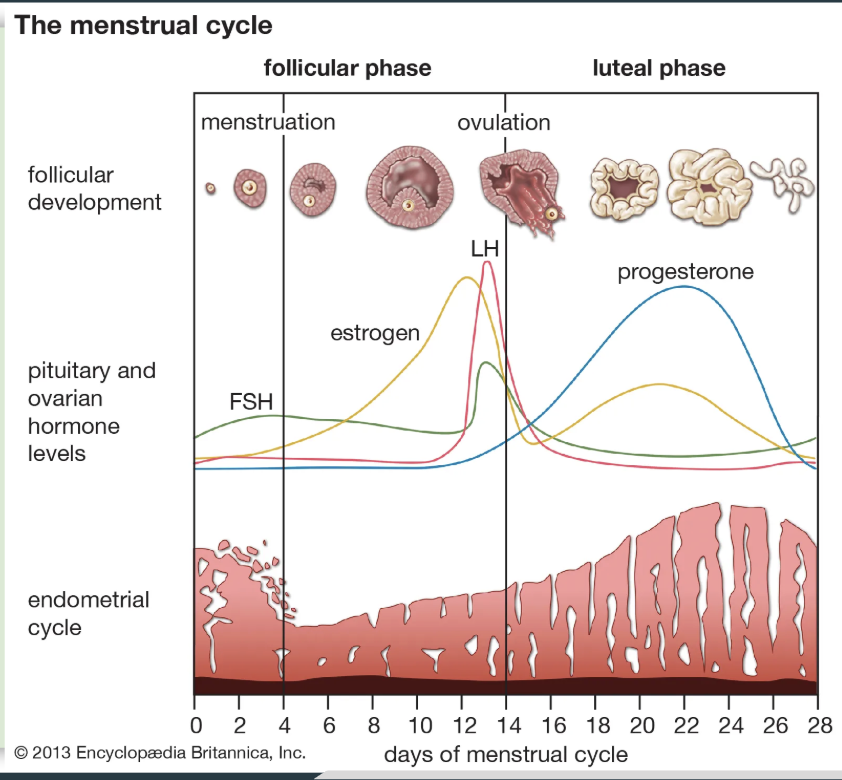
feedback loops
Days 12-14
more oestradiol → more LH/FSH from pituitary → more GnRH from hypothalamus
positive
Over most of cycle
more orestradial → less LH/FSH from pituitary → less GnRH from hypothalamus
Fertilization - fusion of egg + sperm
occurs in oviduct/fallopian tubes
sperm tail detaches + mitochondria destroyed
enters egg
nuclear membrane of sperm + egg break down → chromosomes from both condense → meiosis
Steps
sperm attracted by chemicals released in oocyte → swim toward it
first sperm breaks through corona radiata → binds to proteins in zona pellucida
binding → acrosome reaction → acrosome enzymes released
enzymes digest route to plasma membrane of oocyte
plasma membrane of oocyte + sperm fuse → nucleus of sperm enters oocyte → tail/mitochondria of sperm break
meiosis II completed in ovum
cortical reaction → cortical granules move toward the plasma membrane of ovum → release enzymes into zona pellucida
enzymes from cortical granules → cross linking of glycoproteins in zona pellucida
prevents polyspermy
IVF (in vitro fertilization) - fertilization occurs outside female body (in vitro = in glass)
first IVF baby = Louise Brown
Steps
normal menstrual cycle halted via oestriadol
high doses FSH injected to stimulate follicle development
superovulation - up to 20 oocytes can develop
human chorionic gonadotropin (hCG) injected into woman → stimulates oocytes to mature
mimics LH role
secondary oocytes harvested + sperm collected from male (sperm screened for health)
2 ways for fertilization
oocytes mixed w up to 100k sperm at 37C
single sperm is injected directly into egg
fertilized egg → zygote → divides via mitosis → up to blastocyst
1+ embryos placed into uterus after 2-5 days
screening maybe
extra progesterone inserted into vagina → maintains endometrium
pregnancy continues as normal
the zygote
product of fertilization
carries out mitosis + cytokininesis → 2 cell embryo
continues to divide → morula
morula - hollow ball of identical cells
morula begins to differentiate → blastocyst
blastocyst - hollow ball of cells w inner cell mass (embryo)
outer cells = placenta
formed around day 5
around 125 cells
embryonic layer = inner
trophoblast = pre-placental layers
Day 7-8 → blastocyst implants into endometrium
Blastocyst
outer layer develops finger-like projections → penetrate uterine lining
implantation
allows exchange of materials btwn parent and embryo
human chorionic gonadotropin (hCG) - released by embryo + developing placenta
maintains corpus luteum
ensures uterine lining does not break down
stimulates ovary to secrete progesterone in early pregnancy
embryo secrets hCG → replaces role of LH in maintianing corpus luteum → allows progesterone to be secreted to maintain endometrium
pregnancy tests
use monoclonal antibodies → bind to human chorionic gonadotropin
monoclonal antibodies - antibodies produced by a single cell line
all identical
hCG = antigen for monoclonal antibodies
8 weeks of development → embryo gets bone tissue → foetus
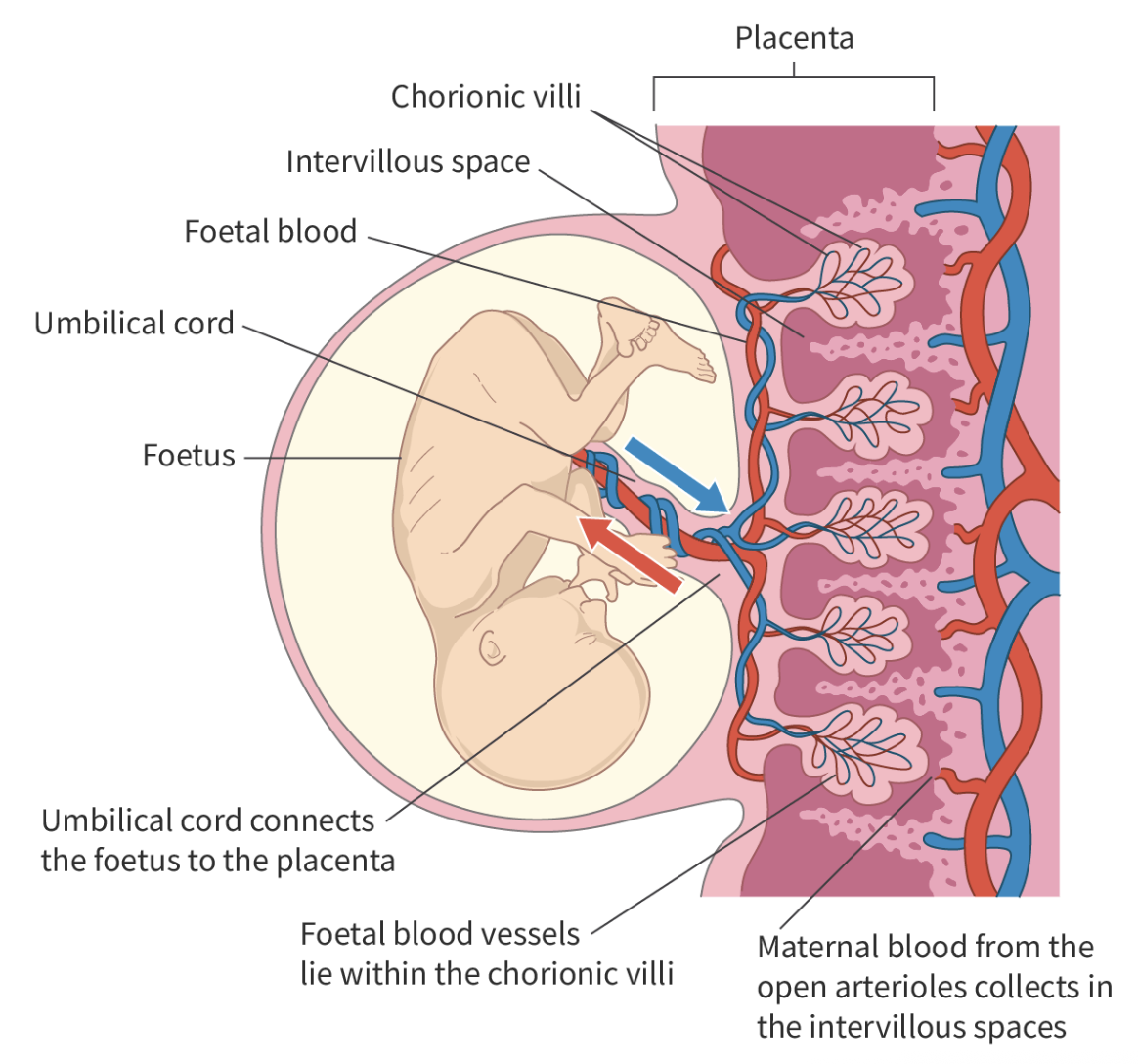
foetus connects to placenta via umbilical cord
placenta - disc shaped structure with many projections (villi)
embedded in endometrium
maternal blood pools via open ended arterioles into intervillous spaces
placental (chorionic) villi extends to these spaces → large surface area for exchange of materials
Materials exchanged
foetus → adult (umbilical artery)
CO2 + Urea
diffusion
CO2 along conc gradients
water
hormones
ex. hCG
adult → foetus (umbilical vein)
O2
diffusion along conc. gradients
nutrients, vitamins, minerls
facilitated diffusion + active transport
water
hormones
antibodies
endocytosis
alcohol, drugs, nicotine
viruses
placenta secretes hormones → maintain pregnancy
oestradiol + progesterone + hCG
allows human foetus to be retained in uterus until later stage of development than mammals that dont get placentas
hormones maintaining pregnancy
progesterone + oestradiol
secreted by corpus luteum early in pregnancy
maintain uterine lining
later secreted by placenta to maintain pregnancy
hCG
maintains corpus luteum
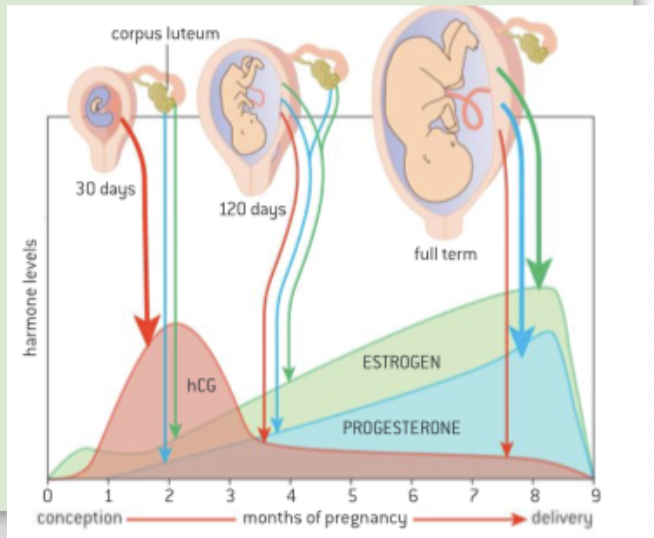
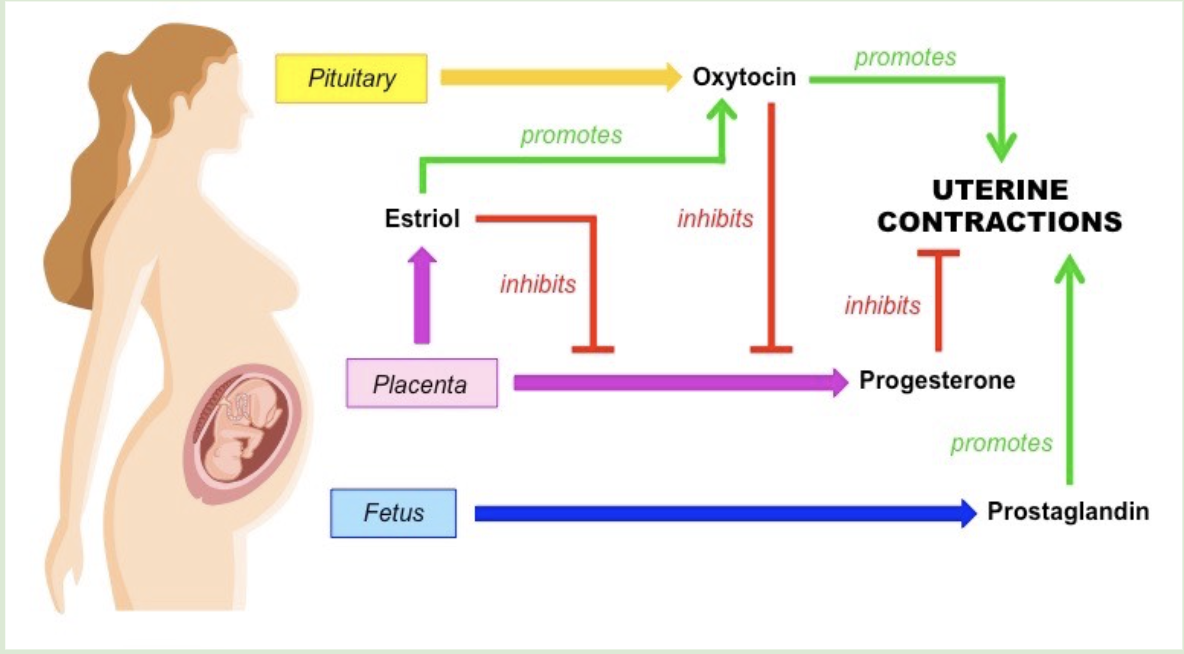
childbirth regulated by interactions btwn hormones
high levels progesterone during pregnancy → prevent contractions
inhibit oxytocin while fetus develops
foetus grows larger + pushes against uterine wall → stress hormones released by baby + parent during last few weeks of gestation → oestradiol increase → inhibit progesterone release + increase density of oxytocin receptors in uterine wall (positive feedback effect)
uterine contractions + servical stretching stimulate posterior pituitary gland → oxytocin released → oxytocin binds to oxytocin receptors → stronger contractions → more contractions + cervix dilation
positive feedback loop
levels of oestradiol + progesteron decrease → menopause
reduction → increased risk of bone fractures + osteoporosis
Hormone replacement therapy (HRT) - treats w additional hormones to relieve symptoms of menopause
some ppl had reduced or increased incidence of coronary heart disease
flowers have both male (stamen) and female (carpels)
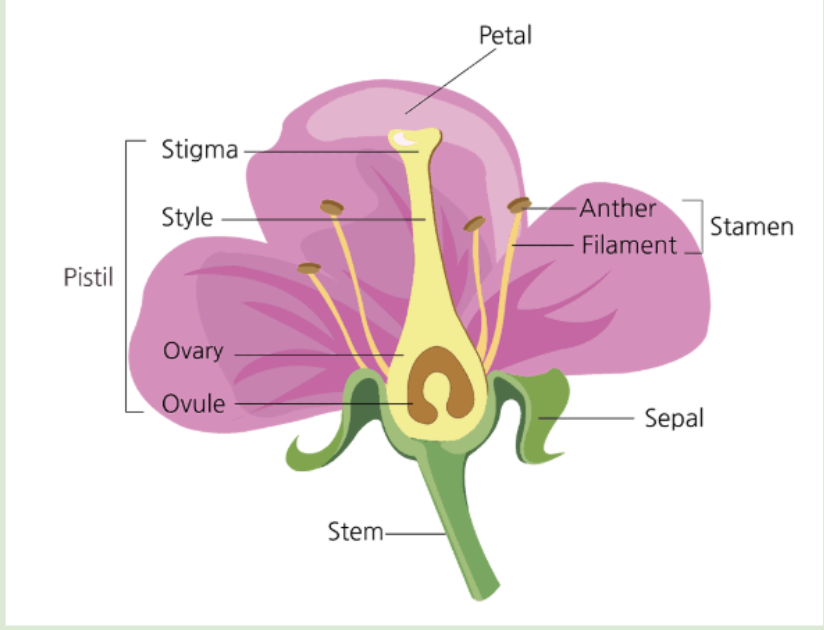
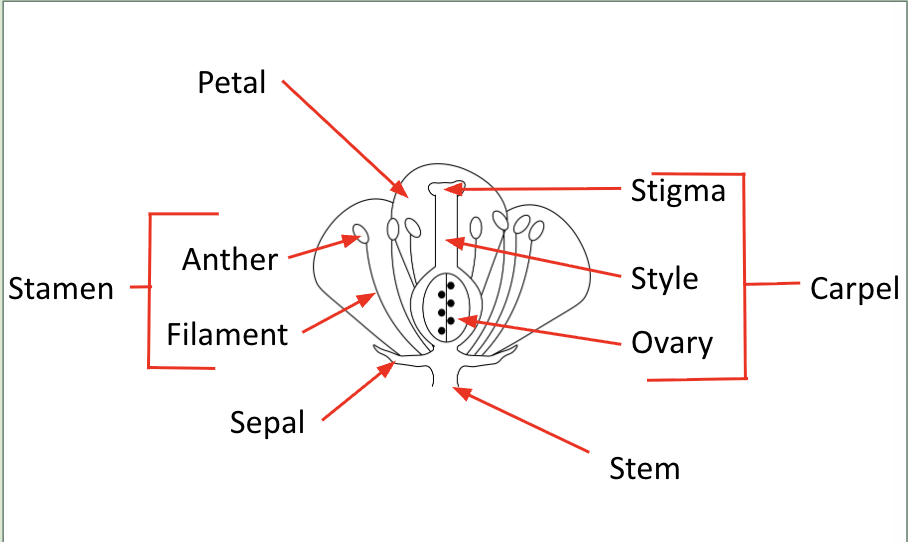
many plants produce sexually
sperm in pollen fertilizes egg in ovule
some hemaphrodites but still have sexual reproduction
pollination - transfer of pollen from male anther → female stigma
fertilization
occurs in ovary of the carpel (pistil)
seed dispersal - movement of seed away from parent plant
pollen lands on stigma of carpel → produces a pollen tube
tube grows down the style into the ovary → 2 sperm move down pollen tube → pollen tube enters ovule → fertilization
second sperm fuses w two polar nuclei → triploid endosperm
provides nutrients for actual embryo
Sepal
protects flower before blooming
petal
colorful/scented to attract insects
stamen
male part
filament + anther
filament
supports anther
anther
produces pollen w haploid sperm
carpel
female part
stigma, style, ovary
stigma
sticky tip
traps pollen
style
connects stigma + ovary
pollen tube grows down
ovary
contains ovules + haploid eggs
prevent self pollination
reduces genetic diversity → BAD
structural differences
different lengths of styles/stamen
temporal separation of male/female
develop at different times
genetic incompatability systems
rejection by stigma based on self recognition of pollen genotype
mechanisms to promote cross fertilization !!
different maturation time for pollen + style
some plants have separate male + female flowers on same plant
some species have separate male + female plants
plants evolved to be pollinated by animals or wind
animal-pollinated (ANIMALS INCLUDES BUGS)
large, bright, scented petals
short stamens
low quantities of sticky pollen
attaches to bodies of animal pollinators
stigma inside flower
brushes against animals entering
wind pollinated
small reduced petals
stamens outside flower w long filaments
produce large quantities of light, feathery pollen
easily carried by wind
stigma outside flower
traps pollen as it blows past
germination - development/growth of plant embryo → seedling
Steps
water absorbed
gibberellins synthesized by embryo
gibberellin stimulates aleurone layer cells → synthesize amylase
amylase hydrolyses starch → maltose
maltose → glucose
glucose transported to embryo → energy for growth
use oxygen + glucose for aerobic respiration
respiring embryo uses nutrients in seed