Biochemistry - Enzymes Study Guide
6.7 The Double Reciprocal or Lineweaver-Burk Plot
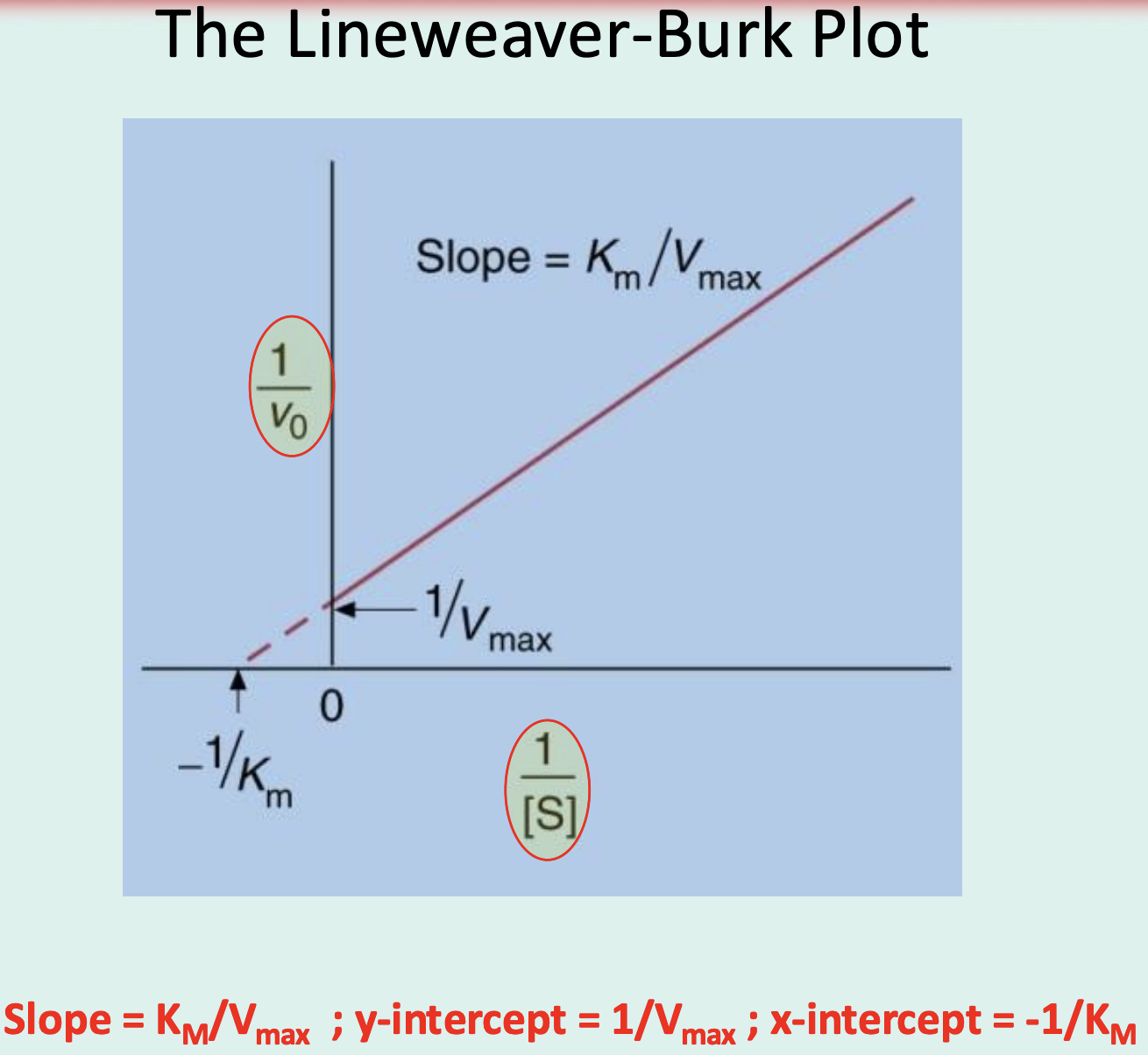
The Michaelis-Menten curve can be converted into a linear form by plotting versus , creating the Lineweaver-Burk Plot.
In this linear plot:
Values of Km and Vmax can be obtained from the intersections of its axes:
Slope =
y-intercept =
x-intercept =
The equation can be expressed as:

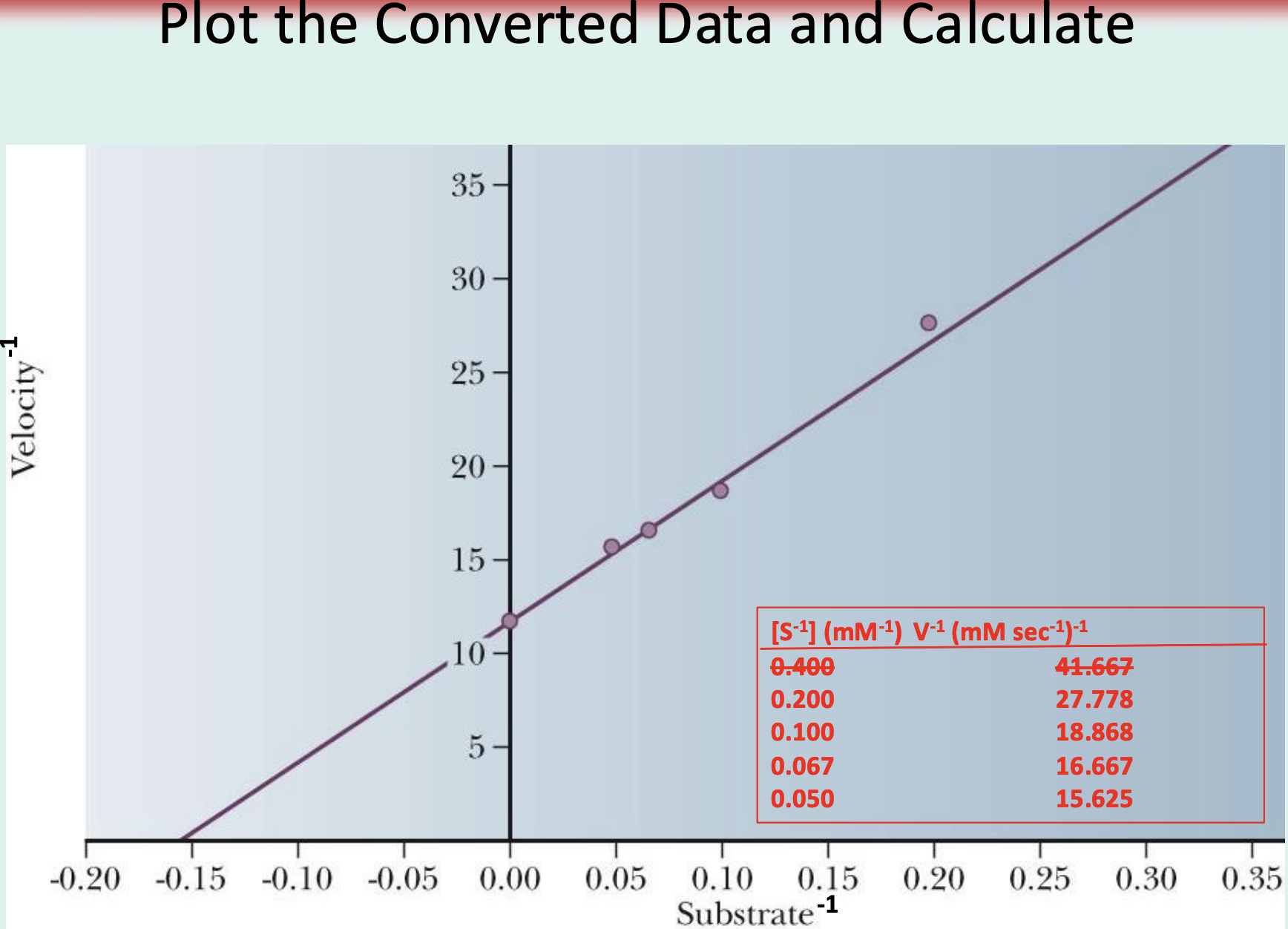
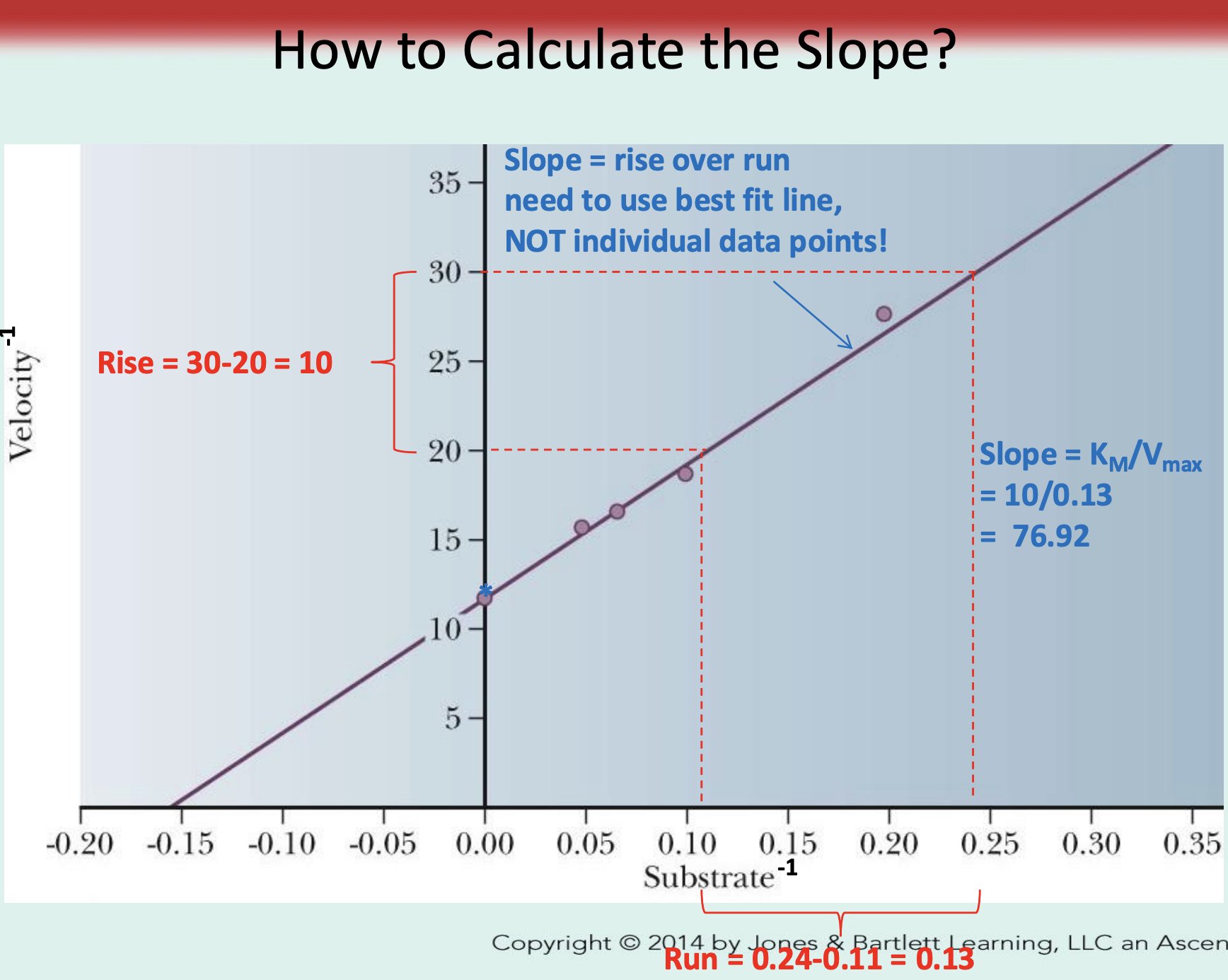
6.8 Method to Determine Km and Vmax Accurately
The Lineweaver-Burk Equation allows for more precise determination:




6.9 Reversible Inhibition
Reversible inhibition is characterized by an inhibitor that can bind to and dissociate from the enzyme:
This form of inhibition is the primary mechanism of enzyme regulation, employed by cellular regulators and pharmaceuticals.
Two main types of reversible inhibitors are:
Competitive Inhibition: The substrate (S) competes with an inhibitor (I) to bind to the enzyme (E). More substrate concentration is needed to achieve the same reaction velocity with a competitive inhibitor present.

Non-competitive Inhibition: does ot affect S binding, only blocks P formation

6.10 Competitive Inhibition Plots
Under competitive inhibition, the Lineweaver-Burk plot shows:
Inhibition leads to an increase in Km but Vmax remains unchanged. This is due to the need for a higher substrate concentration to achieve half-maximal velocity, demonstrating that the inhibitor competes with the substrate for the same active site.

6.11 Noncompetitive Inhibition Plots
In non-competitive inhibition, the maximum velocity (Vmax) of the system decreases as the presence of non-competitive inhibitors affects the flow of product formation. The Km value does not change because the substrate binding is not obstructed.


6.13 Irreversible Inhibition
Irreversible inhibitors: modifying agents are covalently attached, rendering them inactive:
Cannot be removed
Leaving enzyme with little to no activity