Chapter 8
There are at lest 7,102 living languages in the world.
2,301 are in Asia
2,138 in Africa
1,313 in the Pacific
1,064 in the Americas
Most spoken languages
English
Mandarin
Hindi
Spanish
French
Arabic
Bengali
Russian
Portuguese
Indonesian
Popular Languages:
English
Mandarin
Spanish
French
Arabic
Russian
The world’s lingua Franca: English
Historical Causes
English spreads via Imperialism/Colonialism
Language Family | Major Language | Location |
Indo-European | English | America, Europe, SW Asia, Australia, South Africa |
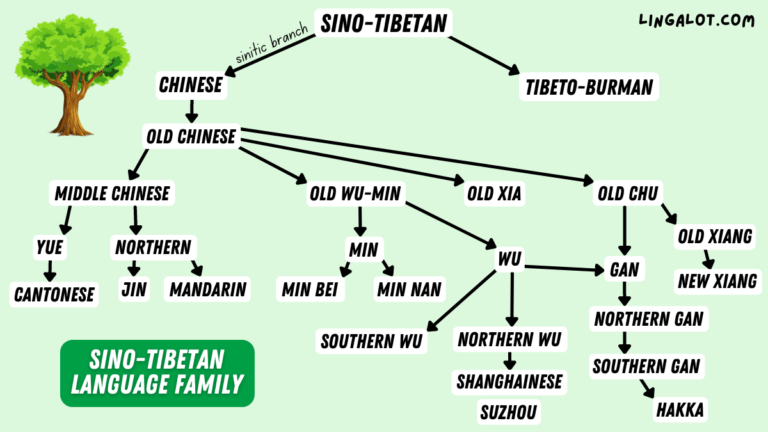
Sino-Tibetan | Chinese | China, SE Asia |
World’s Language organized into:
Language Families: collection of languages related through a common ancestral language
Language Branches: collection of languages within a family related through a common ancestral language. Difference are not as significant or as old as between families.
Language Groups: collection of languages within a branch that share a common origin in the relatively recent past and display similar grammar and vocabulary.
Acronym:
Fat Babies Get Lots of Doughnuts
F: Family
B: Branch
G: Group
L: Language
D: Dialect
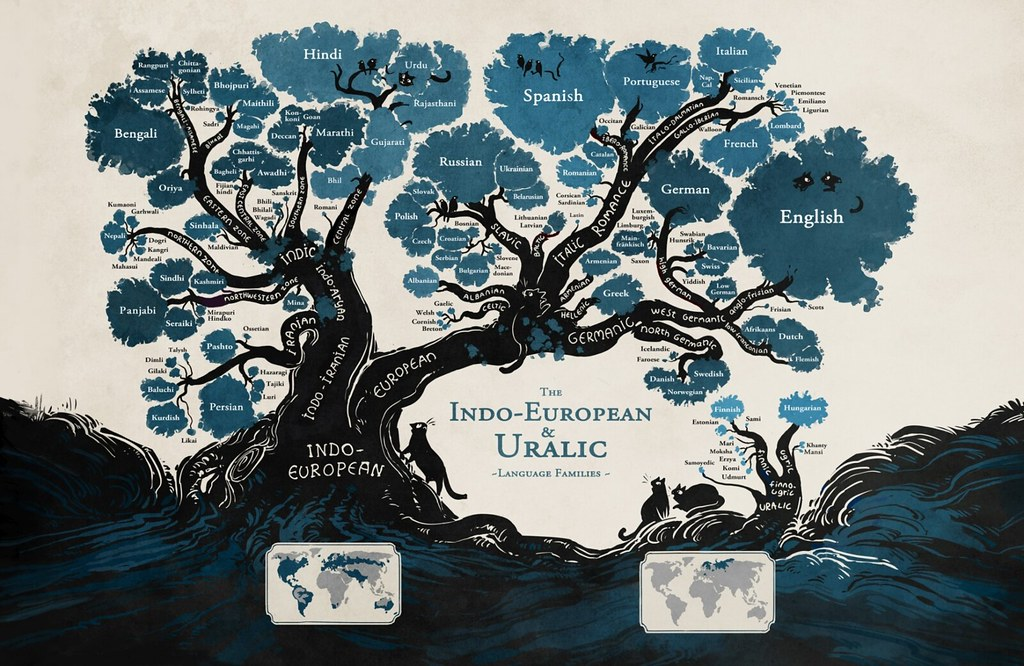
Language Tree:
Other Asian Language Families:
Several other language families spoken by large numbers of people in East and Southeast Asia.
Isolation on islands and peninsulas contributed to overall independent development
Languages of Southeast Asia and North Africa and Central Asia
Two largest language families are
Afro-Asiatic
Arabic is major language.
Official languages in 24 countries of S.W. Asia and North Africa
One of six official languages in UN
Altic
Altic language that is most spoken in Turkish
African Language Families
more than 1000 distinct languages have been documented
several thousands dialects recognized
most lack a written tradition
Niger - Congo
first language of 800,000 thousand people
official language of Tanzania
Lingua Franca of Africa, 30 million Africans speak it
Distribution of Indo-European Branches
Four most widely spoken branches
Germanic Branch
Spoken primarily in northwestern Europe and North America
English is classified in the Low Germanic group
Indo-Iranian
spoken mostly in South Asia
most speakers of language branch
438 languages in India, 29 with over a million speakers
Four most widely spoken branches
Balto-Slavic Branch
Spoken primarily is East Europe divided into:
Eastern Slavic and Baltic groups:
Russian Crania
Belarusian
West Slavic Group:
Polish Czech
Slovak
South Slavic Group:
Serbo-Croatian
Romance Branch
Spoken mostly in South West Europe and Latin America
Mostly used in Spanish, French, Portuguese, and Italian.
Origin and Diffusion of Language Families
Modern English has evolves primarily from the Language spoken by three Germanic tribes invading the British Isles.
Angles - South Denmark
Jutes - North Denmark
Saxons - North West Germany
Over time, others invaded England
Vikings from Norway
Normans from present-day Normandy in France spoken in French.
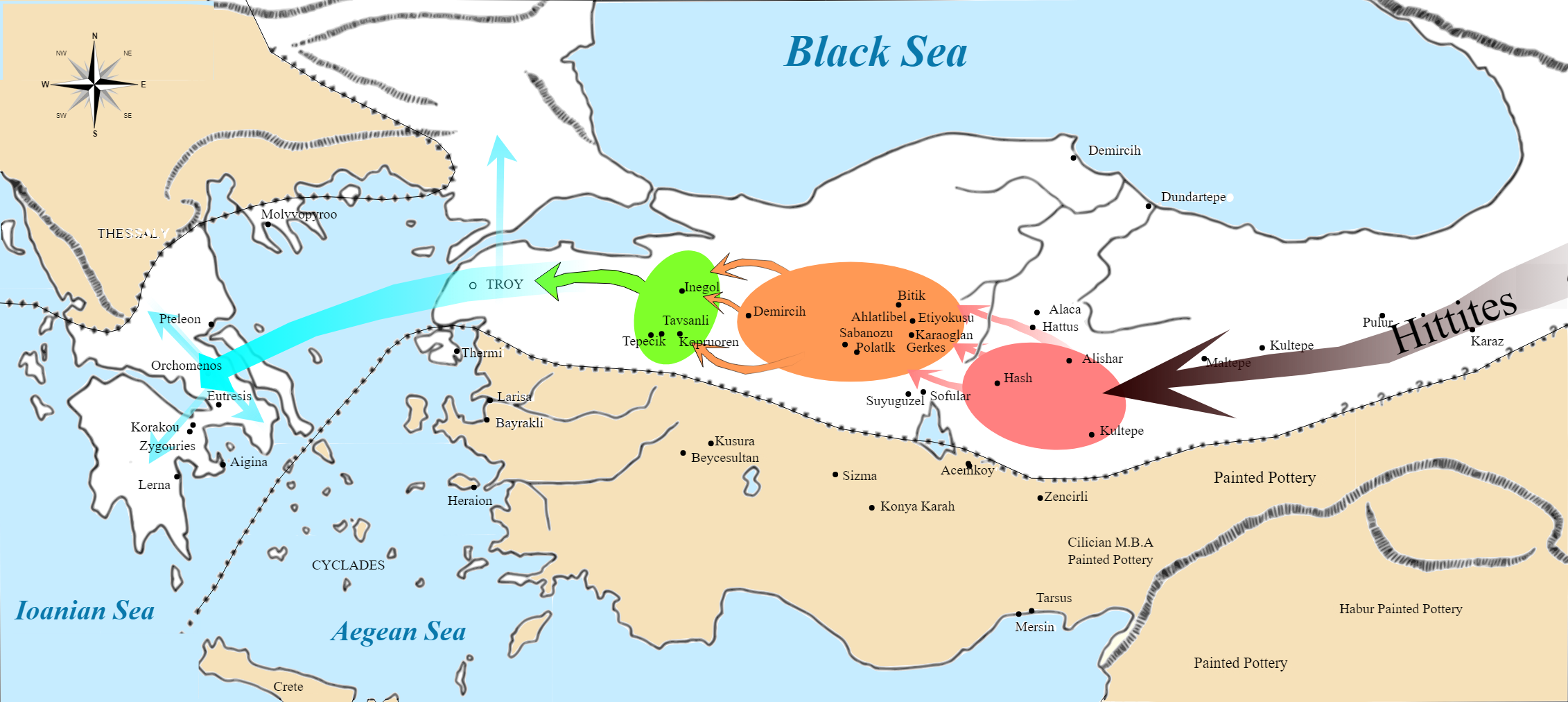
Two Theories:
Nomadic Warriors: Kurgan Hearth Hypothesis states that the first language in the boarders of
Sedentary Farmers: East Anatolia Hypothesis states that the first language was brought up in Turkey
Isogloss: boundaries of where regional words are used can be mapped; such as word usage boundary.
Dialects in the United States:
The 13 original colonies can be grouped into three dialects regions:
New England
Inhabited by settlers from England
Southeastern
Midlands
Most diverse group
Dialects in the United Kingdom:
Languages with multiple dialects my recognized one as the standard language that is widely recognized as the most acceptable for government, business, education, and mass communication.
Ex. England’s is known as British Received Pronunciation
British and American English Dialects
English language is noticeably different than English spoken spoken in England in three ways
Vocabulary
Spelling
Pronunciation
Language Diversity
Diversity can arise at the boundary between two languages.
Varying degrees of difficulties
Belgium
» Southern Belgians (Walloons) speak French
» Northern Belgians (Flemings) speak Flemish
Switzerland
» Peacefully exists with multiple languages
Switzerland attributes success to decentralized government
Four official languages —- German (65%), French (18%). Italian(10%), and Romansh(1%)
Isolated Languages: one unrelated to any other and therefore not attached to any language family.
Extinct Language: An extinct language is one that is no longer spoken or read in daily activities by anyone in the world.
Religion:
Christianity: Cross, Jesus sacrifice
Judaism: Star of David, Shields against evil
Islam: Crescent, Kingdom, Unity
Sikhism: Two swords
Buddhism: Wheel of Dharma, Wisdom, Knowledge, and Insight
Hinduism: Om, Essence of reality
Geographers are concerned with the distribution of the world’s religious because of the potential for religious conflict and the different ways that religious use space
Religion is another core value of culture but unlike other cultural values, few religions allow for people to join more than one religion.
There are 2 main types of religion that you need to know about:
Universalizing
Anyone can be a part of it as long as you follow the religion’s codes.
Beliefs attract universal population.
Often send missionaries to attract converts around the world.
Worshippers come from various ethnic backgrounds.
Major religions include Christianity, Islam, and Buddhism.
Ethnic
Part of a particular ethic or political group
Does not seek converts; most members are born into the religion
Ethnic religions tend to be most appealing to one particular group of people in one particular place.
Ethnic religions are found near the hearth (origin) but spread through relocation diffusion
E.g. Judaism diffused by the scattering of Jews around the world after the Roman destruction of Jerusalem in 70 AD.
Major ethnic religions include Judaism, Hinduism, and Sikhism.
Branches:
A large fundamental division within a religion (e.g. Sunni vs. Shia)
Denomination:
A division of a branch that unites a number of local congregations in a single legal and administrative body (e.g. Hanafi, Maliki, Shafi’i)
Sect:
A relatively small group that has broken away from an established denomination (e.g. Wahhabism)
Religions and Monotheistic when they believe in one supreme being or god (Islam, Judaism, Christianity, etc.)
Polytheistic religions believe in more than one supreme or deity. Polytheistic religion practiced today include Hinduism, Shintoism and Sikhism.
Secularism:
when religious beliefs and systems are rejected. It is rising in popularity in Europe.
Autonomous religious:
are self-sufficient religions with little organizations.
Ex. Islam prefers to unify by faith rather than specific boundaries.
Agnostic: Believe in god if it is proven to me.
Atheist: There is no god
Proselytic religion:
a universalizing religion that tries to convert other to practice.
Fundamentalism:
is the literal/strict interpretation of the fundamental (basics principals of a religion)