Climate Change on the Farm
Climate Change – Key Points
It is warming
It is us
We are sure
It is bad
We can fix it
Livestock and Climate Change
Article: Livestock and climate change: impact of livestock on climate and mitigation strategies
→ agriculture is a source of CO2 emissions, but is not the only source of
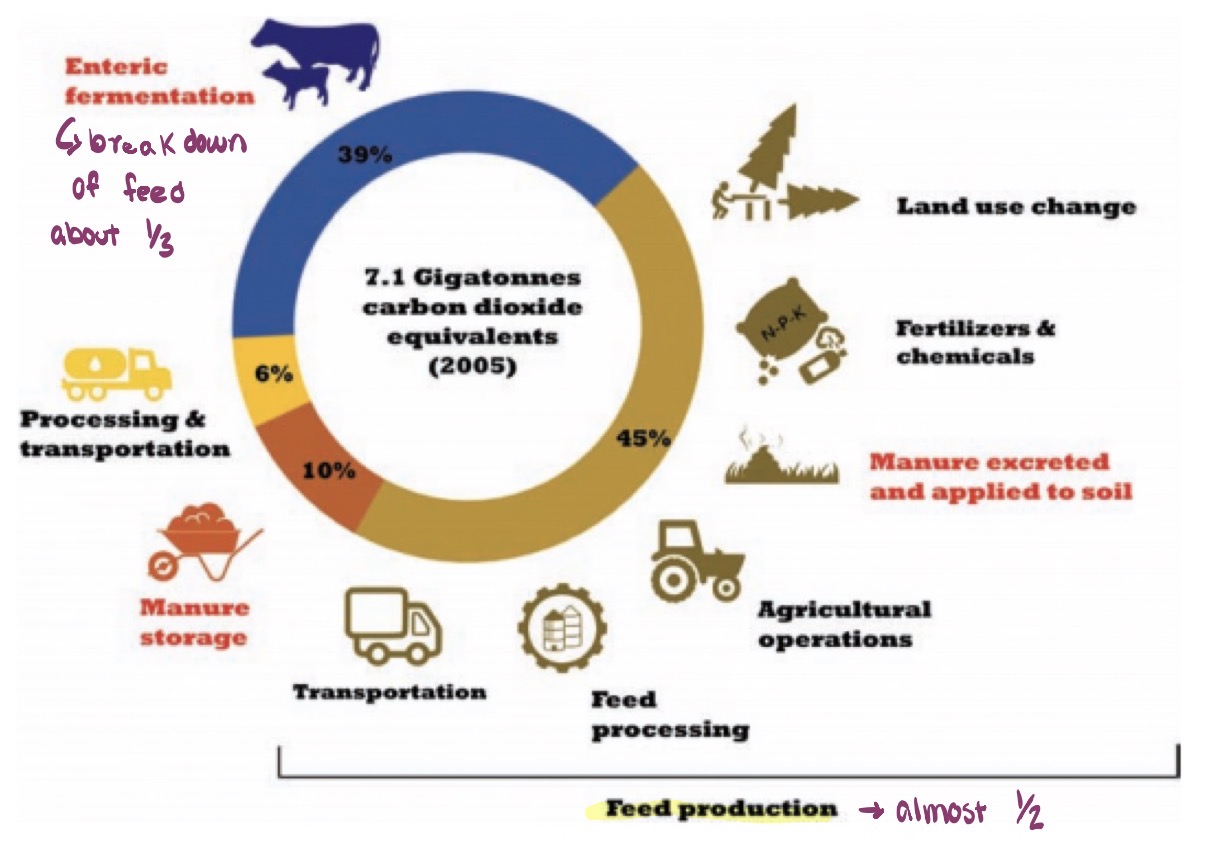
→ Feed production is worth almost ½ of CO2 emissions from agriculture
Trends in Livestock animals
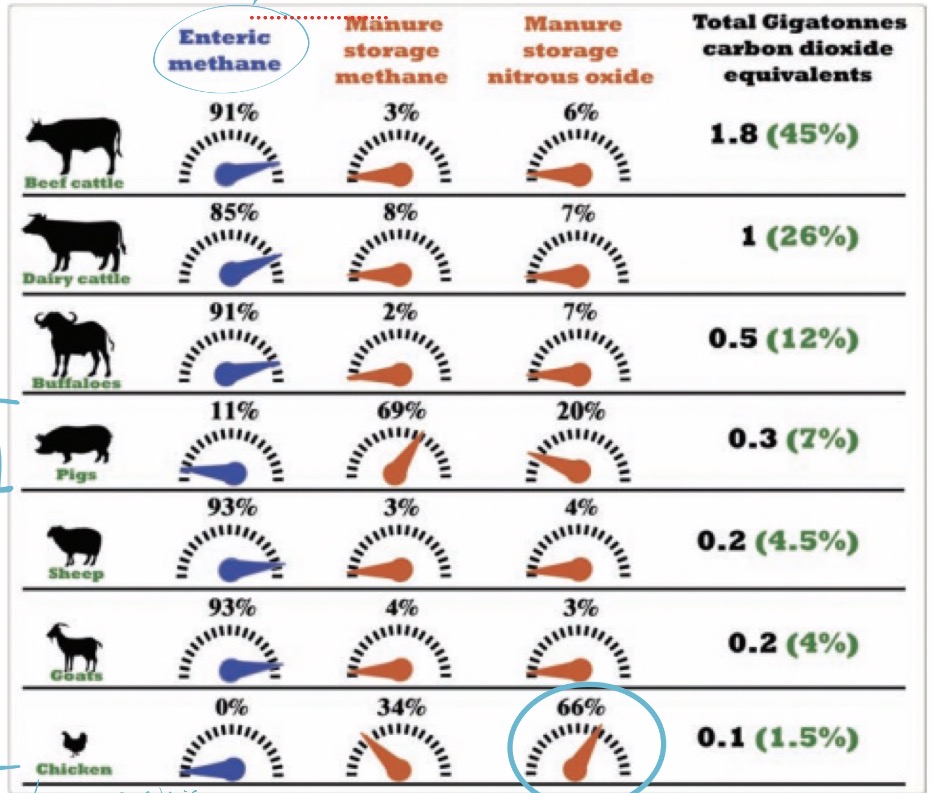
Things to take away from this chart:
Ruminents have the highest enteric methane production (from digestive through the stomach chambers)
Monogastrics (pigs and chickens) have low enteric methane production
Pigs have highest manure storage methane production
Chickens have the highest manure storage nitrous oxide production / emissions
Mitigation Strategies
Best Mitigation Strategies:
Manure Storage:
solid liquid separation , anaerobic digestion (remove O2 availability)
decrease manure storage time , frequently remove manure
increase productivity and farming techniques
Enteric Fermentation:
electron receptors
dietary lipids → add fat to the diet
Animal Management:
genetic selection → breed for less methane production
select better housing methods
Impacts of Climate Change on Livestock Production
Positive Impacts:
Extended growing seasons.
Increase in frost-free days, which can enhance animal health by reducing cold-induced injuries.
NOTE: these positives are all short term
Negative Impacts:
Increased exposure to more extreme temperature conditions: heat stress, droughts, and fires.
Reduced water and feed supply (shorter supply will cause increase in feed prices)
water quality decreases
increased risk of livestock diseases
lower productivity in animals and reduced reproduction
Environmental Contributions and Management
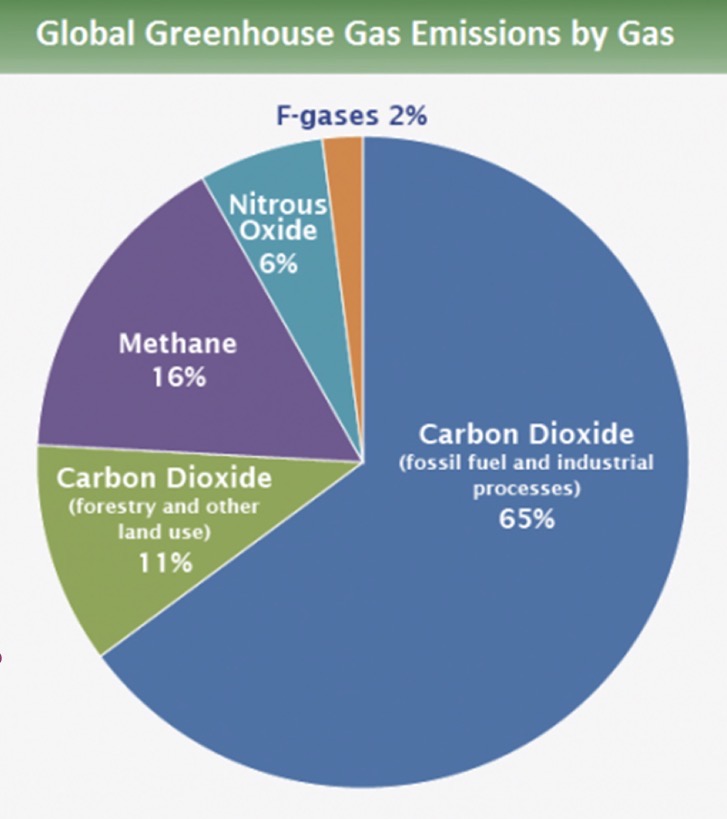
Causes of the Big 4 Greenhouse Gas Emissions
Carbon Dioxide (CO2):
fossil fuel combustion, land clearing for agriculture, and forest soil degradation.
Natural processes such as reforestation absorb CO2
oceans absorb CO2 but as a result are becoming more acidic and decreasing O2 concentration
Methane (CH4):
Major sources include agricultural activities, waste management, energy use, and biomass burning.
Nitrous Oxide (N2O):
Primarily from agricultural practices such as fertilizer use
livestock manure management
Also results from fossil fuel combustion.
Fluorinated Gases (F-gases):
Emissions from industrial processes and consumer products such as refrigeration.
Key Takeaways
Climate Change is already here and will become worse
Benefits and negative impacts are not fully understood → very complex
Many gaps in research related to water availability for livestock
identify breeds with inherent genetic adaptations to high climates
large uncertainties in energy costs of processing and transporting livestock
Adaptation Strategies:
Explore genetic capabilities of livestock to adapt to climate change.
Use water-saving technologies, such as rainwater collection, to mitigate impacts from reduced water supplies.
Implement strategic herd management to adapt to environmental changes.
Things to do in water crisis:
rain collection to obtain extra water → use plastic cover to trap precipitation
reduce herd size → if you can’t handle the amount, reduce
ration water → recycle milk where ever possible
force rain by flying plane through clouds
Mitigation Options
Water Management Strategies:
Use plastic covers for rainwater collection to enhance water resource availability.
Implement practices to minimize evaporation during water collection.
Herd Management:
Adjust herd sizes to ensure sustainability
provide mister to spray water mist onto animal for high heat days
Nutritional Adjustments:
Modify diets to include fats, lowering methane emissions.
Storage Management:
Decrease the storage time of manure to reduce greenhouse emissions.
Public Practices:
Promote public transport and alternative practices to reduce emissions related to livestock production.