The Nervous System and the Endocrine System
Nervous System: Consists of the central nervous system and the peripheral nervous system. Communicated using electrical signals.
Nervous System Functions: To collect, process and respond to information in the environment and to co-ordinate the working of different organs and cells in the body.
Central Nervous System (CNS): Consists of the brain and the spinal chord and is the origin of all complex commands and decisions.
Cerebral Cortex: The brain’s outer layer, 3mm thick and covers the brain like a peel, it is only found in mammals.
Peripheral Nervous System (PNS): Sends information to the CNS from the outside world, and transmits messages from the CNS to muscles and glands.
Somatic Nervous System (SNS): Transmits information from receptor cells in the sense organs to the CNS. It also receives information from the CNS that directs muscles to act.
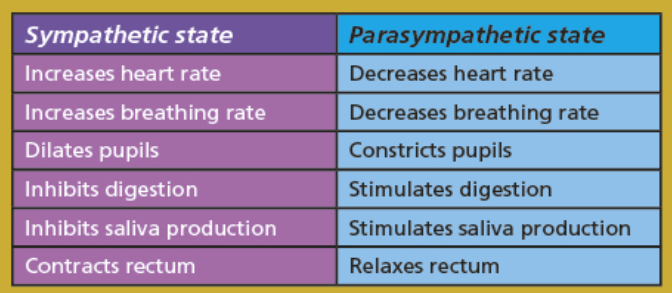
Autonomic Nervous System (ANS): Transmits information to and from internal bodily organs it governs functions such as breathing, heart rate and digestion. It is autonomic as the system operates involuntarily. It has two main divisions: the sympathetic and parasympathetic nervous system.
Endocrine System: One of the body’s major information systems that instruct glands to release hormones directly into the bloodstream. These hormones are carried towards target organs in the body. Communicates via chemicals but slower than the nervous system.
Thyroxine’s Purpose: The thyroid gland releases thyroxine to increase heart rate and increases metabolic rate in cells.
Pituitary Gland: The ‘master' gland’, located in the brain which controls the release of hormones from all other endocrine glands in the body.
Gland: An organ in the body that synthesised substances such as hormones.
Hormones: Chemical substances that circulate in the bloodstream and only target organs. They are produced in large quantities but disappear quickly. Their effects are very powerful.
Fight or Flight Response: The way an animal responds when stressed. The body becomes physiologically aroused in readiness to fight an aggressor or, in some cases, flee. First, the hypothalamus is alerted and activates the pituitary gland which triggers activity in the sympathetic part of the autonomic nervous system.
Adrenaline: A hormone produced by the adrenal glands which are part of the human body’s immediate stress response system. Adrenaline has a strong effect on the cells of the cardiovascular system - stimulating heart rate, contracting blood vessels and dilating air passages.
Parasympathetic Action: Once the threat has passed, the parasympathetic nervous system returns the body to its resting state. It works in opposition to the sympathetic nervous system and acts as a ‘brake’ and reduces the activities of the body that were increased by the actions of the sympathetic branch. This is referred to as rest and digest.