Biology Cell Cycle + DNA Review
Mitosis
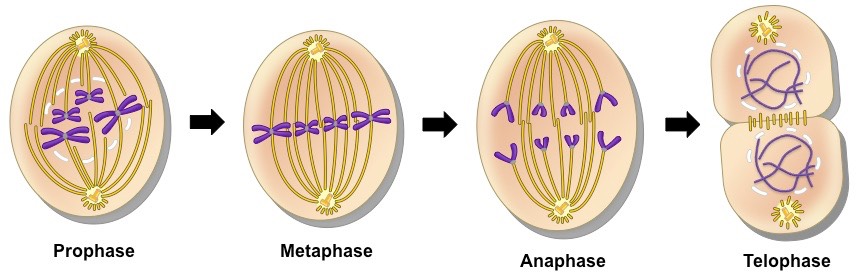
Prophase: DNA condenses into chromosomes
Metaphase: chromosomes line up in the middle of cell
Anaphase: sister chromatids split apart and go to opposite sides of cell
Telophase: 2 new nuclei are formed
+ Cytokinesis: cells split apart to make 2 new cells
Interphase
G1: cell grows
S: DNA replicates (synthesis)
G2: growth and preparation for mitosis
G0:
- a resting state, no division, is activated when resources are insufficient or when cell receives a signal
- some cells never exit G0 (ex. neurons)
Apoptosis - programmed cell death
Cancer cells:
- progress faster through cell cycle
- don’t function properly
- don’t go through apoptosis
- continuously divide
- stack on top of each other
Cells need to divide for:
- growth
- replacement
- repair
Daughter cells have same number of chromosomes as parent cell because DNA is replicated beforehand.
Chromosome = tightly wound DNA
Chromatin = genetic material (spaghetti ball)
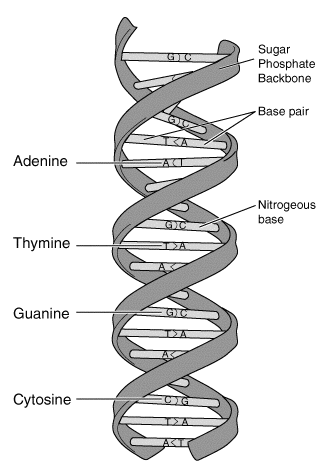
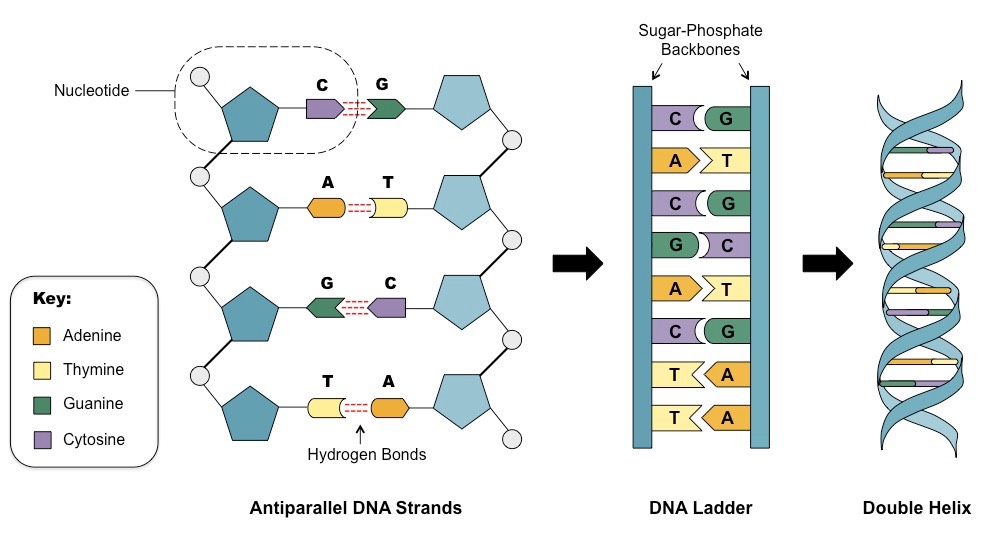
Nucleotides = connected by covalent bonds
Nitrogenous bases = connected by hydrogen bonds
Semi-conservative process:
- 1 strand is template (one strand from original full DNA strand)
- 1 strand is new, based off of template due to chargaff’s rule (made by DNA polymerase)
nucleic acid → made of nucleotides → made of nitrogenous base, sugar, + phosphate