The History of Art (Second Edition)
### Prehistoric Art (40,000 - 4,000 B.C.)
Characteristics:
Prehistoric art is marked by rock carvings, rough imagery, simple sculptures, and stone arrangements. These artworks served primarily as symbolic representations, often depicting animals, rituals, and important structures. The medium predominantly involved natural pigments derived from found materials, and stone etchings.
Leading Artists:
This period was defined by cultures that existed before written language, so the artists remain anonymous, representing entire prehistoric communities rather than individuals.
Prominent Works:
The most iconic works from this era are the Paleolithic cave paintings discovered in the caves of Lascaux, France, dated around 40,000 years old. These depict complex animal figures and symbolic scenes, providing insight into early human cognition and culture.
Summary:
Prehistoric art serves as the foundation of human artistic endeavor, illustrating early human interactions with their environment and spirituality. This era used rudimentary materials and techniques to create lasting symbols and imagery, reflecting communal values and survival narratives before written records were established.
---
### Ancient Art (4,000 B.C. - 400 A.D.)
Characteristics:
Ancient art focused largely on religious and symbolic imagery, often illustrating mythological stories. It was used to communicate social status, religious beliefs, and historical narratives.
Leading Artists:
Civilizations such as Mesopotamia, Egypt, Greece, and the Americas produced these artworks. Although specific artists are rarely named, the art reflects the sophisticated cultures and organized societies.
Influential Works:
A key piece from this period is the Code of Hammurabi (1792 B.C.) from Mesopotamia, a stone-carved set of laws symbolizing governance and social order. Artworks commonly feature gods, goddesses, and mythological figures within various media like sculpture, decorative reliefs, and murals.
Summary:
Ancient art transitions from symbolic prehistoric representations to highly sophisticated works intertwined with religion, politics, and mythology. These culturally varied creations served both decorative and functional roles, reinforcing the power structures and spiritual ideologies of early civilizations with durable mediums like stone, metal, and paint.
---
### Medieval Art (500 - 1400)
Characteristics:
Medieval art is deeply influenced by classical mythology and characterized by Gothic architecture and dark, often grotesque imagery reflecting the period’s struggles. The art is highly symbolic, with strong religious themes.
Leading Artists:
Abbot Suger, Cimabue, and Giotto are notable figures, with Giotto advancing towards naturalism within religious art.
Influential Works:
Key pieces include Cimabue’s Crucifix (1288) and various Gothic architectural masterpieces like Notre Dame cathedral, which features stained glass and intricate detailing intended to inspire awe.
Summary:
Medieval art embodies the medieval worldview defined by spirituality, the decline of classical culture, and the prominence of the church. The art is monumental and ornate, intricately linked with religious devotion and ecclesiastical power, marking a transitional period between ancient traditions and Renaissance innovations.
---
### Early Renaissance (14th Century)
Characteristics:
The Early Renaissance marks a cultural rebirth in Italy with a shift towards humanism and individualized art. It introduces knowledge from multiple disciplines—architecture, theology, math, science—which informed art creation.
Leading Artists:
Emerging artists from Italy began to focus on more realistic human forms and individualized portraits.
Summary:
This period sets the stage for the Renaissance by emphasizing human-centered subjects and scientific inquiry in art. It redefined artistic standards with a new focus on realism and proportion, departing from medieval styles and embracing classical antiquity’s heritage.
---
### Renaissance Art (1400-1600)
Characteristics:
Art from the Renaissance emphasized natural elements, realism, detailed anatomy, and perspective. Artists aimed for scientifically accurate human forms and sophisticated depth in compositions.
Leading Artists:
Leonardo da Vinci, Michelangelo, and Raphael dominated this era.
Influential Works:
Iconic pieces like da Vinci’s Mona Lisa and Michelangelo’s David exemplify mastery of form, anatomy, and emotional depth.
Summary:
Renaissance art revolutionized visual representation with the fusion of science and art. It highlighted human potential and beauty through precise anatomy, perspective, and innovative techniques that greatly influenced European art.
---
### Baroque (1600 - 1750)
Characteristics:
Baroque art is ornate, grand, and complex, heavily dramatized with high contrasts of light and shadow to evoke emotion and movement.
Leading Artists:
Caravaggio and Rembrandt are key figures known for their intense, dramatic paintings.
Influential Works:
Caravaggio’s The Calling of St Matthew and Rembrandt’s The Night Watch exhibit rich color palettes and masterful use of chiaroscuro to create intense emotional narratives.
Summary:
Baroque art intensified the expressive potential of painting with grandeur and complexity. Its drama and detailed realism aimed to engage viewers emotionally and spiritually, often serving religious or royal patronage.
---
### Realism (1848-1900)
Characteristics:
Realism focused on detailed, unembellished depictions of everyday life and ordinary people.
Leading Artists:
Gustave Courbet and Jean Francois Millet were notable proponents.
Influential Works:
Millet's The Gleaners captures rural laborers with dignity and accuracy.
Summary:
Emerging in response to Romanticism and social changes, Realism sought to portray life without idealization or romantic drama. It democratized subjects, focusing on the working class and ordinary experiences in a precise and empathetic manner.
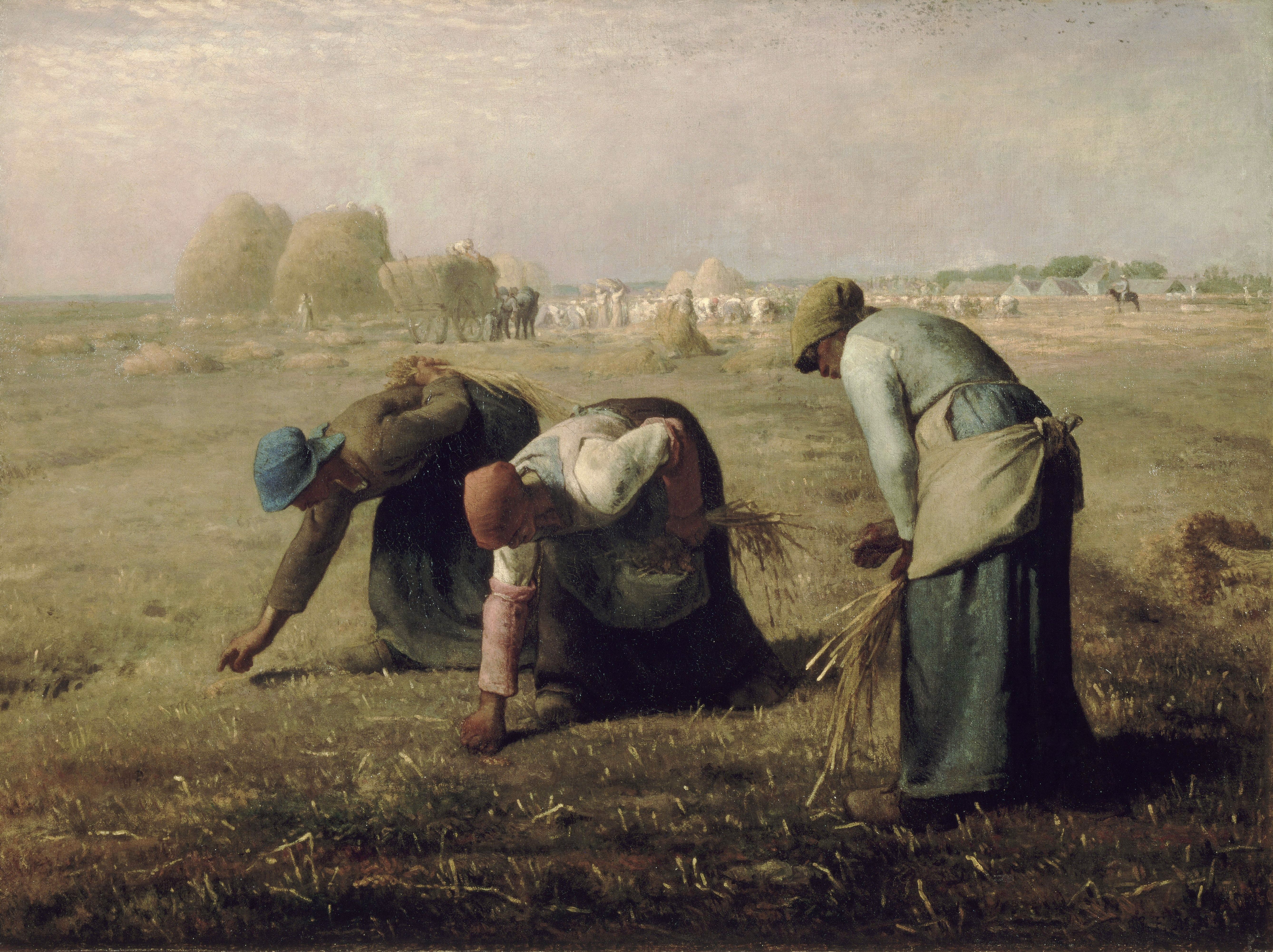
The Gleaners by Jean Francois Millet

Paris Street; Rainy Day by Gustave Caillebotte
### Art Nouveau (1890-1910)
Characteristics:
Art Nouveau features long, flowing lines and curves, integrating decorative arts with fine art, emphasizing organic, natural forms.
Leading Artists:
Gustav Klimt, with Antoni Gaudi as a prime architect.
Influential Works:
Gaudi's Church of Sagrada Familia is a landmark example of Art Nouveau architecture.
Summary:
Art Nouveau represented a modern break from historical styles, infusing art with stylized natural motifs and fluid lines across various media. It bridged fine art with everyday design, influencing graphic art and architecture.
---
### Impressionism (1865-1885)
Characteristics:
Impressionism is defined by quick, visible brushstrokes, light color separation, and an emphasis on capturing transient moments.
Leading Artists:
Claude Monet is pivotal in this movement.
Influential Works:
Monet’s Impression, Sunrise epitomizes the approach of capturing atmospheric effects and fleeting light.
Summary:
Impressionism revolutionized painting with a focus on spontaneity and perception rather than detailed finish. It depicted ordinary scenes and daily life, shifting away from academic historical and mythological subjects.
---
### Post-Impressionism (1885-1910)
Characteristics:
Post-Impressionism expanded on Impressionist techniques but emphasized symbolism, abstraction, and personal emotional expression.
Leading Artists:
Vincent van Gogh stands out with his expressive brushwork.
Influential Works:
Van Gogh’s The Starry Night showcases expressive color and emotional intensity beyond literal representation.
Summary:
This movement allowed artists to explore subjective vision and symbolic content, pioneering abstraction and deeper emotional resonance, foreshadowing modern art movements.

### Fauvism (1905-1908)
Characteristics:
Fauvism employed bold, pure, and often unmixed colors applied aggressively, prioritizing painterly qualities over realistic color.
Summary:
Though short-lived, Fauvism made a significant impact on modern art by demonstrating the emotional power of vivid color and painterly freedom, influencing subsequent expressionist work.
---
### Expressionism (1905-1920)
Characteristics:
Expressionism featured distorted forms and vibrant, intense colors to evoke emotional and psychological states.
Leading Artists:
Edvard Munch and Wassily Kandinsky.
Influential Works:
Munch’s The Dance of Life and Kandinsky’s The Blue Rider reflect deep anxiety and spiritual exploration.
Summary:
Born from societal anxieties and spiritual questioning, Expressionism prioritized emotion over realism, using distortion and color symbolism to convey inner turmoil and abstract ideas.
---
### Cubism (1907-1914)
Characteristics:
Cubism abandoned traditional perspective, presenting fragmented, geometric, and abstracted subjects in two-dimensional planes.
Leading Artists:
Pablo Picasso pioneered this breakthrough.
Influential Works:
Picasso’s Guernica dissects reality into geometric elements reflecting chaos and social commentary.
Summary:
Cubism challenged the conventions of visual representation, encouraging viewers to perceive multiple perspectives simultaneously, thus reshaping the language of art toward abstraction.
---
### Dadaism (1916–1925)
Characteristics:
Dadaism was an avant-garde, satirical art movement reacting to the horrors of World War I, embracing absurdity and anti-art sentiment.
Summary:
Through humor, mockery, and irony, Dada artists defied artistic norms and conventions, provoking confusion and anger to critique societal and artistic standards.
---
### Surrealism (1916-1950)
Characteristics:
Surrealism focused on dream imagery and the unconscious mind, blending bizarre with real elements.
Leading Artists:
Salvador Dali was a leading figure.
Influential Works:
Dali’s The Persistence of Memory merges precise draftsmanship with fantastic dreamscapes.
Summary:
Surrealism sought to unlock the unconscious through imaginative, dream-like portrayals, blending reality and fantasy to explore the depths of human psyche.
---
### Abstract Expressionism (1940s-1950s)
Characteristics:
Known for spontaneous, large-scale works employing diverse materials and movements, often emphasizing dynamic gesture.
Leading Artists:
Jackson Pollock and Mark Rothko.
Influential Works:
Rothko’s Orange and Yellow emphasizes color and mood; Pollock’s drip paintings highlight movement and chaos.
Summary:
Abstract Expressionism marked a shift to emotional rawness and improvisation in art, prioritizing the act of creation itself as a form of expression and experimenting beyond representational limits.
---
### Op Art (1950s-1960s)
Characteristics:
Op Art relies on repetitive colors, shapes, and patterns to create optical illusions of movement and depth.
Leading Artists:
Bridget Riley and Victor Vasarely.
Influential Works:
Riley’s Blaze exemplifies vivid optical effects.
Summary:
This movement combines art with perceptual science, creating visually dynamic works designed to challenge and engage viewers’ visual experiences through illusion.
---
### Pop Art (1950s-1960s)
Characteristics:
Pop Art features bold colors and imagery drawn from mass media and consumer culture.
Leading Artists:
Andy Warhol and Roy Lichtenstein.
Influential Works:
Warhol’s Campbell’s Soup Cans challenges traditional art by incorporating everyday objects.
Summary:
Pop Art critiques consumerism by elevating commercial imagery to fine art, blurring boundaries between “high” and “low” culture.
---
### Kinetic Art (1965)
Characteristics:
Kinetic art incorporates real or perceived movement, engaging viewers through dynamic interaction.
Leading Artists:
Ralfonso Gschwend is a prominent sculptor using natural forces like wind and water.
Summary:
By integrating motion, kinetic art transforms static viewing into an interactive experience, expanding the definition of sculpture and spatial art.
---
### Minimalism (1965)
Characteristics:
Minimalism focuses on simple geometric forms and stripping art down to essential elements.
Summary:
Reacting against earlier excesses, Minimalism emphasizes purity, simplicity, and objective materials, seeking to highlight the identity of the work without extraneous meanings.
---
### Earth Art (1975)
Characteristics:
Also called Land Art, it uses natural landscapes and materials to create site-specific artworks.
Summary:
Earth Art connects art with environment directly, sculpting nature itself. Originating prominently in 1960s-70s America, it rejects traditional gallery spaces to create monumental outdoor installations.
---
### Contemporary Art (1970-Present)
Characteristics:
Contemporary art is diverse, including street art, appropriation, digital art, and many smaller movements.
Leading Artists:
Jeff Koons, Banksy, Shepard Fairey.
Influential Works:
Shepard Fairey’s Change symbolizes political and social activism through graphic design and street art.
Summary:
Contemporary art reflects globalized, multicultural, and technologically driven societies. It questions art history and media through irony, skepticism, and innovative uses of modern technology, blending high art with popular culture in unprecedented ways.
---
This comprehensive overview details the evolution of Western and global art movements from the origins of human creativity in prehistoric times to the dynamic and pluralistic art scene of today. Each period reflects the cultural, social, and technological contexts that shaped artistic production and highlights how art functions as a mirror of human experience and societal change.