Data collection and sampling techniques
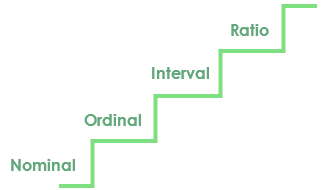
Measuring scales
 Data collection
One of the most common methods for collecting data is surveys. The three more common surveying methods are:
- Telephone survey:
- It is used when the population or rample is too big or spread apart
- Mailed questionnaire:
- It doesn’t mean literally mailed questionnaires: it can also refer to online surveys (such as ones found in apps)
- Personal interview:
- It can be used to collect very trustworthy information; while it is not usually used for large populations, it may be used in samples.
Data can also be collected in other ways:
- Surveying records (usually official institutions)
- Direct observation (fieldwork; statisticians are not allowed to intervene to avoid tainting the data)
Samples
Using samples saves time and money; in some cases, it also enables the researcher to get more detailed information about a particular subject. These cannot be obtained in haphazard ways because the information obtained might be tainted.
Random sampling
Samples are selected by using chance, methods, or random numbers.
- Number each subject in a population
- Place numbered cards in a bowl
- Mix them thoroughly and select as many cards as needed
- The subjects whose numbers are selected constitute the sample.
Systematic sampling
Samples are selected by numbering each subject of the population and then selecting every kth number. Systematic sampling (and systems) can be used to crack codes.