The Nervous System Biology Notes
<<Functions of the System<<
Responsible for the control of the body and communication among its parts
<<System Organs (and key parts)<<
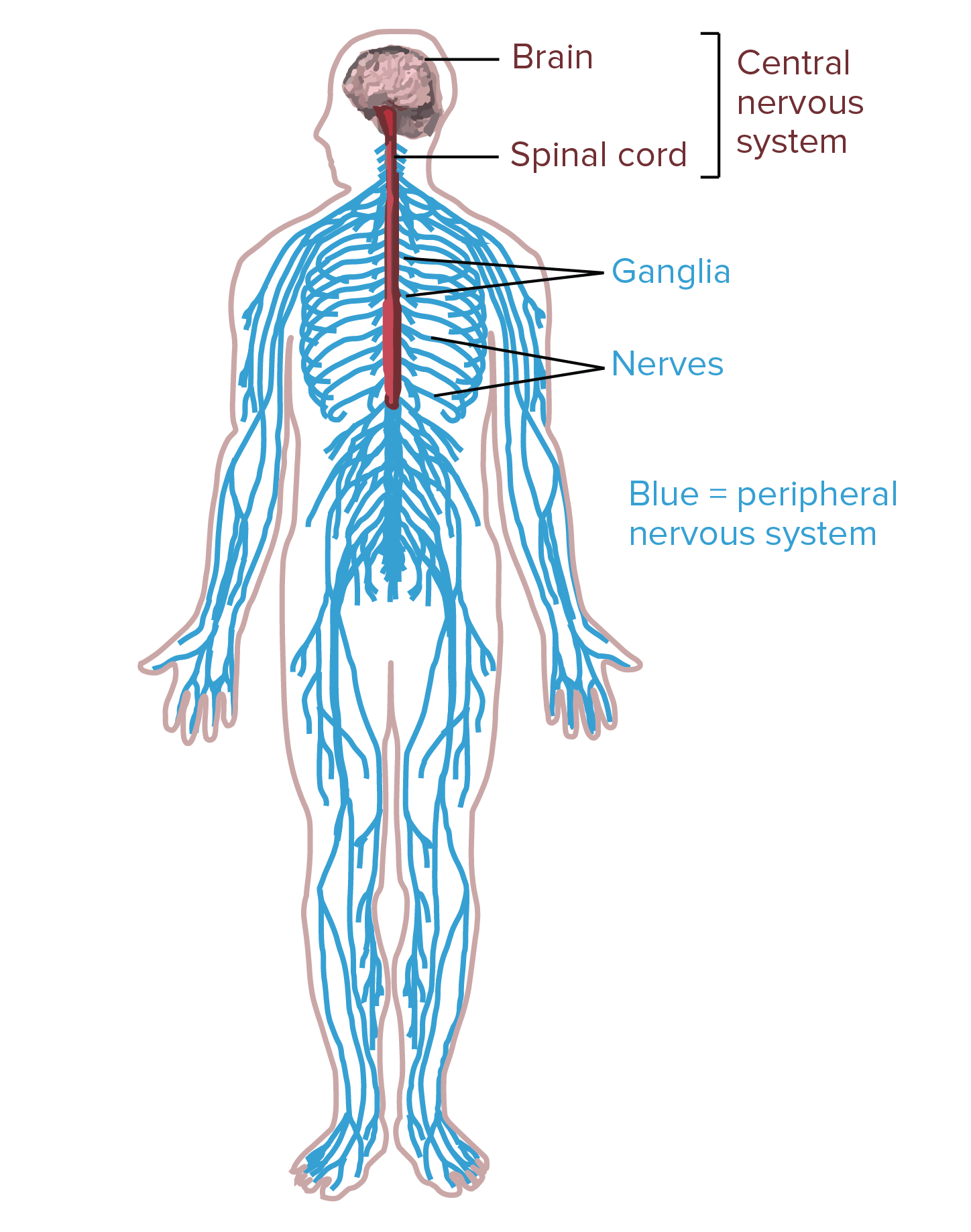
Central Nervous System (CNS)
- Brain- controls bodily functions
- Spinal cord- Connects the PNS and the CNS
Peripheral Nervous System (PNS)
- Nerves (neuron)
- Sensory: sends stimulus info to the CNS from the sensory organs (PNS → CNS)
- Ears
- Mouth
- Skin
- Nose
- Eyes
- Motor: sends stimulus info from CNS to the organs (CNS → PNS)
- Ex: muscles
<<System Interactions<<
Nervous, Digestive & Endocrine Systems:
- When an organism starts ingesting food, the nerves located on the tongue signal the stomach to start producing gastrin, a hormone that begins chemical digestion in the stomach.
Nervous & Muscular Systems:
- Balance: receptors located in the muscles provide the brain with information about body position and movement
<<Common system disorders/medical issues<<
- Stroke: When blood circulation is cut off from brain tissue and part of the brain tissue dies
- The damage/symptoms can vary, depending on how long the stroke is and where it is located
- Memory loss
- Paralysis
- Loss of sensory/organ function
- Loss of limb function
<<Profession: Neurologists<<
Neurologists are specialists who treat diseases of the brain and spinal cord, peripheral nerves and muscles. Neurological conditions include epilepsy, stroke, multiple sclerosis (MS) and Parkinson's disease.
<<Peripheral Nervous System<<
Somatic Nervous System: controls voluntary reactions
Autonomic Nervous System: controls involuntary actions
- Parasympathetic: When nothing is stimulating/stressing the organism out
- Rest and digest
- Stimulates stomach activity, slows heart rate, inhibits glucose release
- Sympathetic: When the body is introduced with a stimulus that causes the body to prepare for action
- Fight or flight
- Increased heart rate
- Stimulate glucose release
- Digestion stops
- Adrenaline/ Cortisol is released from adrenal glands
<<Reflex Arc<<
A true reflex arc involves only a few neurons and the information goes only from your body to your spinal cord! Your brain does not dictate the response.
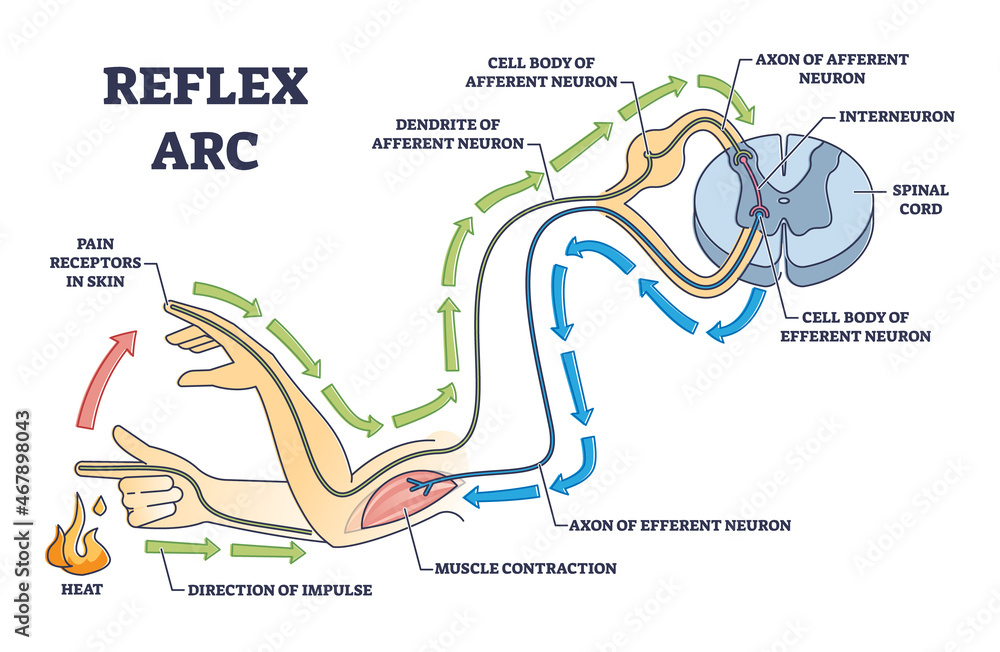 Steps in a reflex arc:
- Sensory Receptor – receptor that responds to a signal in the environment
- Sensory neuron - carries impulse to spinal cord
- Motor neuron - carries impulse away from spinal cord to the effector
- Effector - structure by which animal responds (muscle, gland, etc).