Intro to PM
Projects are everywhere
Cooking a meal for yourself vs. the entire town
Plan, Gather resources, Timeline → Proper management
Project Management in a nutshell: Knowing what you want to achieve, how to achieve it, how much time it will take to achieve
SMART goal (about the why) needs to be measurable
Phases of a project
Initiation, planning, execution, monitoring & controlling, and closing.
Initiation - brainstorming the goal you wish to achieve, identifying stakeholders(project charter & documents, stakeholder anaylsis)
Planning - arranging all strategies, resources, deadlines, and communication(time, costs, resources, risks, stakeholder management, procurement management)
Execution - Starting the project & make sure everything is running
Monitoring & Controlling - Keeping an eye on the project’s development and take steps when problems appear. Requires feedback and
Closing - Reporting the information, resources, and lessons learned for future owners(Contract closure, lessons learned, final reporting, document archival)
-note ; Implementation phase = Execution + Monitor & Controlling
Helps you learn how to make an effective workflow, find the right people for the right job, and learn how to adapt in adverse situations.
What is a project
Unique product or service; something you’re working on unique to you
Time-limited; Has a start and end date(can’t go on forever)
Project ends when the objectives are achieved or abandoned; Clean end, or sometimes stakeholders run out of time and money, or the project was out of scope, or the goal has changed
Project Success
Traditionally: on time, within budget and delivers the promised scope
Modern Approach: More effective measure: satisfied customer
Project Constraints
Cost
Anything needed to be bought
Scope
what is included and excluded. the amount of the idea you wish to achieve. exclusion
Quality
customer satisfaction
Risk
risks that may arise
an event that occurs that can either have a positive or negative impact
Resources
Time
Triple Constraint
Schedule
Scope
Cost
(Scope - Cost - Schedule) = Quality
Must regulate all three in tandem because they can have an effect on eachother
Quality is the reflection of how well you manage all three
PMBOK is a library of the best workflows, practices, terms & guidlines that are publicly accepted as a benchmark in the project management industry
PMI a non-profit institute for project managers where they can learn and get the PMP certification, and are also in charge of updating the PMBOK
PMP is a certification for project managers that reflects proof that one has leadership expertise in any way of working(takes 3 years of experience)
(WBS) Work Breakdown Structure
a work breakdown structure is the breakdown of the deliverables into manageable units of work(you need to breakdown the task)
essentially have a manageable workload that you can schedule and accomplish
Stakeholder Management
Stakeholders are people or organizations who will impact or be impacted by the project.
Always include: Project Sponsor, Project team
May include…
Project Management Methodologies
Types of methodologies
PRINCE2
Traditional methodologies: Waterfall, Critical Path Method,
SCRUM
KANBAN
Video
PM - application of knowledge, skills, tools, & techniques to meet requirements of a project
allows projects to deliver their desired outcomes
Organize, Budget, & Maintain
Poor Project Management
miss deliver dates
budget miscalculations
goals missed
Program managers - people that manage multiple projects
Always keep in mind what your project is trying to accomplish
Always help managing tasks for team members and other parts of the project
Different tools, techniques, and methodologies can be used together to make managing more effective
Culture & Project Management
Organizational culture: values, attitudes and beliefs of team members
Five approaches to conflict - avoidance, accommodation, competition, compromise, collaboration
Project Charter - An official must have “contract” created in the first week of the project; describing the goal of the project, it’s scope and more
Done in Initiation
SMART goal
Scope
Stakeholders
Team Formation
Forming - formation of teams and goals
Storming - conflicts will occur happen
Norming - resolving conflicts, getting along
Performing - acting out the plan/ideals
Adjourning - The conclusion of the project
Stakeholder Anaylsis
Knowing them allows you to keep them happy/satisfied, and benefit from them
Stakeholder register
A file to record and document everything(timeline, stakeholders, schedule, etc.)
manage all stakeholder interactions
Project Initiation: Identify Stakeholders, goals &
Top management
Your manager
Peers
Resource Managers
Internal Customers(b2b)
External Customers(b2c)
Government
Contractors, Subcontractors, Suppliers
Others
Project Sponsor
Person/Group responsible for enabling success
May be inside, but usually outside the project
Signs off that the project is complete(final phase) - the one the PM has to satisfy
Person responsible for escalating issues that are beyond control of the PM
Significant role in developing the initial charter & project plan
Politics of Projects
Environment
Goal of each stakeholder or group - goals that are open/clear or hidden agendas?
Power
Stakeholder management tools
Power/interest matrix**
Cooperation- Threat matrix
Stakeholder analysis template
Stakeholder Register**
Communication Plan
Power/Interest Matrix(Grid)
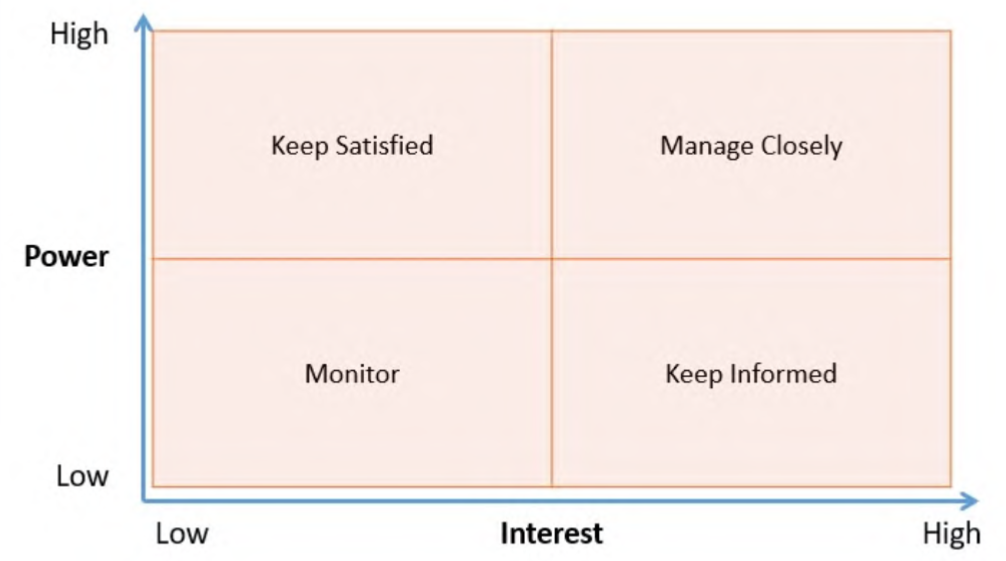
Engagement Levels
Stakeholders who are:
Unaware: Some customers
Resistant
Neutral
Supportive
Leading
SMART
Specific, Measurable, Achievable, Realistic, Time based
By the end of the fall semester, I will have enough strength to do 15 pull-ups in a row by training back exercises for 3 hours each week and steadily increasing my pull-up count every 3 weeks.
Traditional Approach to PM
Waterfall method
Completing tasks & phases in a linear manner
Each stage must be completed before starting the next
Downsides - Not that flexible, and time restrictions may get skewed
Work Breakdown Structure Creation *MIDTERM*
ALWAYS follow a numbering plan for direction (Start at 0.0 for Main, 1.0 - n.0 for tasks to achieve it, then n.1 - n.n) * you may make sub boxes for the sub boxes for more explanation
Each box should have a verb/actionable item to complete)
Can also be in outline format
May be very complex for a large project
100% rule(all sub = whole cost)
Break down the main project into workable parts, and then have sub-categories to work on those parts

**The combination of boxes of the parent should be done 100% to be considered as accomplished
Difference between WBS & Gantt chart
Time based dependencies for Schedules (Gantt)
Breakdown of tasks into workable parts(WBS)
Task Dependencies
Types of tasks that have relations to other tasks being done chronologically
Finish to start
Start to Start
Finish to Finish
Leads & Lags
Lag: One task must wait in relation to another
Lead: Task must start before the predecessor does
The Network Diagram
The Critical Path
Found on the Network Diagram
The path with the longest duration
If any task on the critical project is delayed, the project is delayed
List letters on the critical path
Numbers represent days
Slack
amount of time a task can be delayed without delaying total completion of the project
What tasks can have slack
Resource Planning
most important resource is human resources
Estimating
Bottom-up estimating*
Bottom Up Estimation
WBS Structure with different work packages on different levels
- Costs for the college event
Small outdoor meet & greet event
for 200 people for 4 hours
: Security detail (25 per guard/hour) 2 guards for 4 hours → 50 × 4 = 200, Food & Drinks 4 for pizza 1$ soda → 5$ x 200 = $1000, Sound/Audio DJ $100 per hour → $400,
Total → $200 + $1000 + $400 = $1600
Resource Leveling
Adjusting schedule because multiple activities need to use the same resource
Gold Plating
project team
adding features to the project without people asking you
unnecessary addition
might not meet customer needs
more pressure on resources
Managing Budget
Cash flow
make a plan of when money moves, so that it is always available for key purchases
Reporting Progress
Budgeted Cost vs Actual Cost
Budgeted at Completion
Total budgeted costs that you were supposed to spend
Actual Cost
The Actual cost you spent money on.
Tracked on a Project Cost Chart
Schedule Variance:
Positive #Value:
Project is ahead of schedule
Neutral #Value(0):
Project is on time
Negative #Value:
Project is behind schedule
Procurement Management
The Make or Buy decision: Expertise, Resource availability, Licensing regulatory requirements
Acquisition of products/services not made/delivered by the project team
Fixed Price, Cost reimbursable, Time & Materials
Fixed Price Contract

Cost Reimbursable Contract
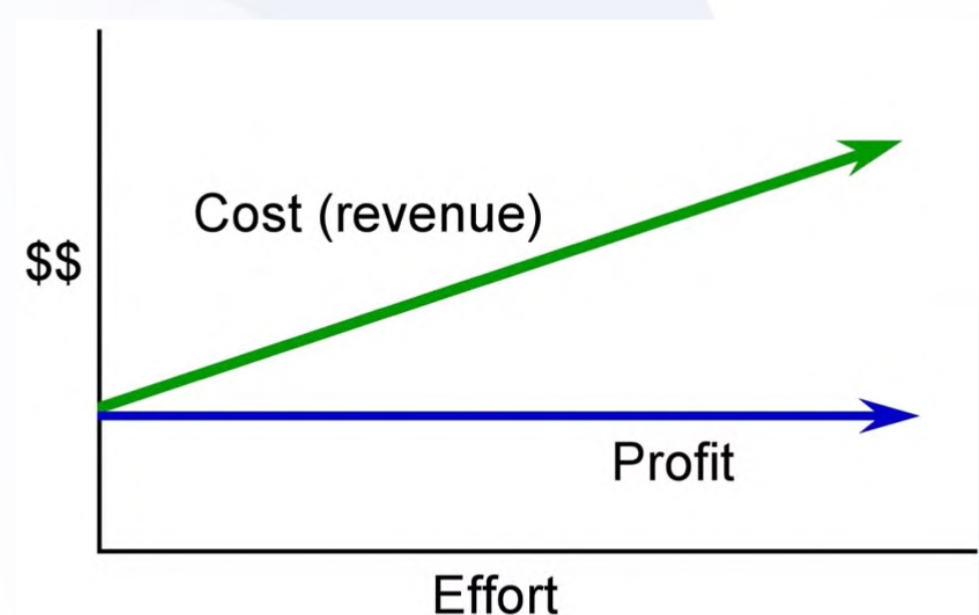
Nothing in research goals
Food included, speakers included, dj not include(ex.)
first 3 sections
Risk Appetite
Degree of uncertainty an entity is willing to take on in anticipation of a reward
Risk Tolerance
The degree, amount, or volume of risk that an organization or individual with will withstand(how much your willing to risk)
Risk Threshold
Point above which a stakeholder or organization is no longer willing to accept the level of uncertainty or impact(where you draw the line)
Risk Breakdown Structure(RBS)
Sorting actionable items into their risks at the end
Probability & Impact Matrix
Likelihood of something vs. It’s impact
High likelihood & high impact = probably happening & having an effect
Qualitative
High-Medium-Low arrangements
Quantitative Risk Anaylsis
Numbers
Multiplication of impact in probability
Quality Planning
Definition
Grade - a measure of quality(quantifiable items)
Statistics - Control limit(upper and lower standards)(measurements)
Project completion
Contract Closure
Ensure all documentation is up-to-date
Completion of testing should be noted
Provide formal notice that deliverables are satisfactory(or not)
Release the project team
Final Payments
Post-Project Evaluations
Reflection: Why might the project not meet the final deliverable satisfaction?
Lessons Learned
recorded information that reflects on both the positive and negative experiences of a project.
need to be relevant and retrievable for said project
Useful to reflect on what transpired and use to improve future projects and future stages of the current projects.
Identify, Document, Analyze, Store, Retrieve
Document Archival
Mail, Email, Discord, Github etc.
Case Study Video
Lamborari
Mid sized company
strengths - engineering(low repair rates), customer satisfaction
decline in sales(revenue decline) - competitive market
potential losses- profit, revenue, layoff hr
possible smart goal - increase profit by 30% in next 6 months
3 day plan
sales manager leading sessions
2 initiatives to increase sales
Advertising campaign- trips to exotic places offering good experiences towards wealthy customers
Build a Showroom in a trendy Area - show exhibitions of new models(new technology - augmented reality) interactive engaging way to show customers in an appealing way
Key responsibility to Project Sponsor
Feasibility Study
Project Charter created and presented to ceo
Identify who can lead projects(**Second one is important as its a new endeavor)
Interest in business analyst(Ray)
Go through object and activities(deliverables) to draft plans
Features the Cars & Exhibition should have - Scope Planning
Easy access for people to buy, Cool Features to see modular design
Creating a timeline for deliverables(Time Estimations)
Car creation, Engineering, Building
Don’t need expertise in all fields
Engineering, HR
Methodologies
Systems of practice used to guide a project from initiation to closing
Showing a framework of how a project should be managed
Waterfall most standard
Not used as much for developers because it’s not as flexible, takes a lot of resources & planning
Process based project management
6 stages
Types of Process based project management
PRINCE2
Lean Project Management
Six Sigma
Lean Six Sigma
PRINCE2
Projects in Controlled Environments
7 principles, 7 processes, 7 themes
6 Aspects
Scope, Timescale, Risk, Quality, Benefits, Cost
SAAS
Software as a service
Cloud based Software System hosted by third parties for customers to use in license
Ex. Microsoft 365
Risks
Cultural differences, Language barriers, Legal approaches to software &/or piracy
Lean Project Management
mindset for paving continuous improvement
delivering maximum value by cutting out anything unnecessary
reducing waste across all business processes(time, money, resources)
results in cost and time reductions
improves quality and profit
PDCA
Plan
Do
Check
Act
(Continuous Improvement at the Centre)
Make a plan & Test it out a few times, then check if its working and then act on it if its not so you can optimize it.
Six Sigma
A sigma rating that shows yield/percentage of defect-free products a plan/process creates
Six sigma means a defect free product 99.99966% of the time;
meaning 3.4 errors per one million opportunities.
Useful in Engineering & Pharmacy, Nuclear Industry, Bug Fixing, Financial Transactions
A Target statistic
DMADV
Lean Six Sigma
combination of reducing waste and improving quality
Customers, Processes, Employees
Customers - center of everything an organization does and support the development of the outcome
Processes - Business processes require a rework or evaluation, changing to an outside-in approach based on the value chain
Employees: Clear business processes are required across all levels of the organization.
Agile
Mindset and Philosophy, vs. waterfall - methodology
iterative approach to managing projects
Incremental development & releases
Before Agile
Software took longer to develop
Sometimes wouldn’t meet the needs of customers as time changed
3 years to push out software to market
Scrum
Working with a team led by a leader
Scrum Master
completes work required, remove obstacles
Similar to a Project Manager
Product Owner
Focuses on the product development
Scrum master focuses on process
Kanban
Project Framework
Visualization of project management process
Sticky Notes for Work needed, Work done, work in process( To Do(WBS), Doing(Process), Done)
Scrumban
Two Agile methodologies combined
Backtrack to Lean Project Management - Video
Lean Manufacturing
making products fast, cheaper, and better
making do with the scarce materials they had
modeled company on supermarket flow(make enough to to be used in the first place, then make more as they deplete) - “just in time” process
Kanban
“Kaizen” method - improve for the better
as teams identified problems, they iteratively solved them and had improvements to their system
Gradual increase in vehicle production
Mass production avoiding waste striving for constant improvement
Exploring AI in the ER
Changed the way people approached production
Extreme Programming(XP) - Methodology
Agile - Manifesto
Extreme Programming
Agile framework to produce improved quality through simplicity, communication and feedback
In-text Citations For the Assignments
Innovation - Adding new or improved ideas that weren’t originially discussed or thought of
Trying new things & thinking outside the box
Analyzing user problems
Design management is a cross-field practice which combines innovative creation and a proper flow of management. This practice is human centered to reach as many targets as possible within scope. There is also collective intelligence where people share their individual perspectives to get the bigger picture of an idea.
What is a user journey map
A user journey map is a timeline that shows the steps, thoughts, and emotional experience someone has as they interact with a product or service
Problems students might have when searching for study spaces are available rooms and locations and their noise level
Our target audience are students who need a quick, easy to use way of finding available locations of spaces to study either by themselves or in groups.