B4: Enzymes
Biological catalysts
enzymes are:
Catalysts: speed up the rate of a chemical reaction without it being changed/used up
proteins
biological catalysts
maintain reaction speeds of all metabolic reactions to sustain life
enzymes are specific to one particular substrate → complementary shape to the active site of the substrate
product made from the substrate and released
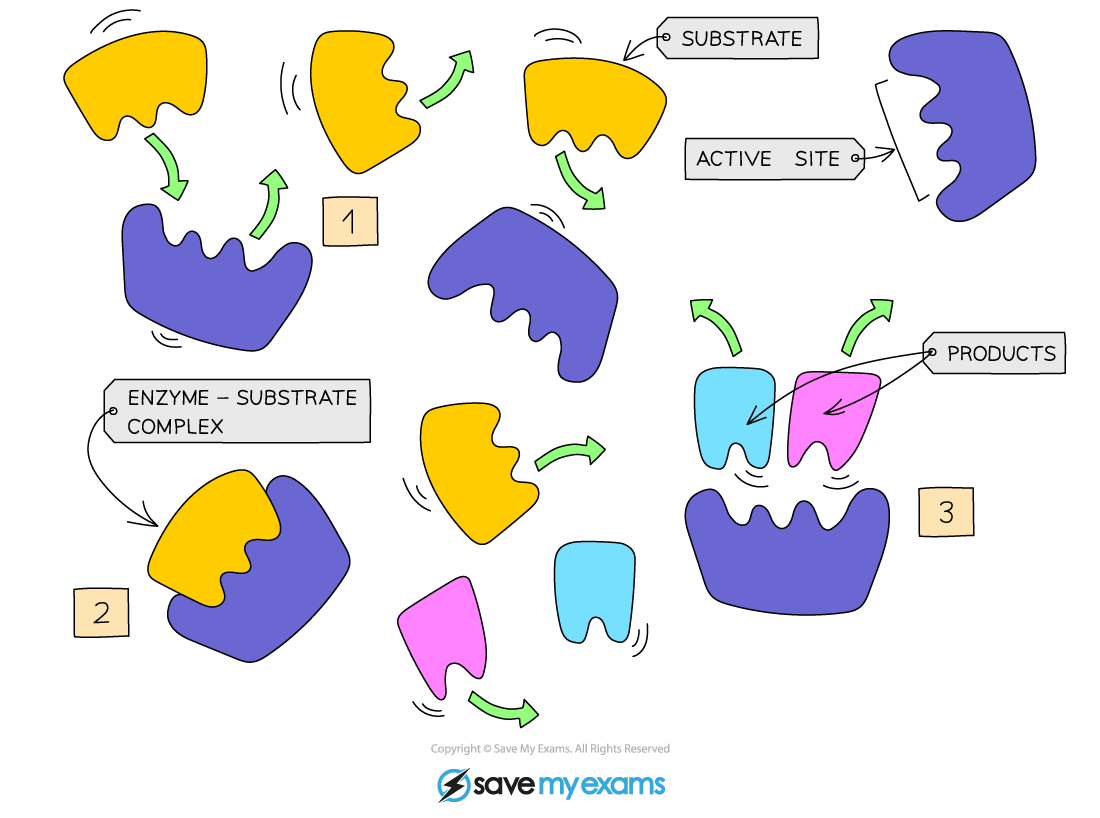
Enzyme action:
when the substrate moves into the enzyme’s active site → enzyme-substrate complex
after reaction: products leave the enzyme’s active site (no longer fit) → free to take up another substrate
enzymes and substrates randomly move about in solution
Factors that affect enzymes
Temperature
work fastest at their optimum temperature
more energy → faster they move and number of collisions with substrates increases
low temperatures do not denature enzymes (work slower)
temperature too high → denature
substrates cannot fit into denatured enzymes (active site has been lost)
denaturation is irreversible
pH
Optimum pH of most enzymes: 7
acidic enzymes: pH 2
alkaline enzymes (like duodendum): pH 8/9
pH too high/low: bonds holding chains together that make up a nutrient can be destroyed → changes shape of active site (substrate can no longer fit)
Too far from pH → enzyme denatures