Troubleshooting Devices for the Non-Device Specialist
Ventricular Beam and Issues with Pacemakers
Lead Damage: Rare issue of damaging two leads simultaneously due to a header problem.
Epoxy Resin Issue: Industrial manufacturing flaw where the leads were touching, leading to low impedance and inhibited pacing.
Atrial Fibrillation and Patient Assessment
AFib Reporting: Ensure that reported atrial fibrillation is genuine; not all hybrid episodes are AFib.
Patient Management: Multiple shocks indicate need for immediate intervention.
Emergency Room Procedures
Initial Strategy: For patients receiving shocks, immediate assessment is crucial.
Amiodarone Administration: Typically given for ventricular tachycardia (VT) or ventricular fibrillation (VF).
Electrograms and Device Behavior
Electrogram Analysis: Near-field electrogram showing sharp artifacts with each QRS indicates device malfunction, likely due to lead fracture (the movement of myocardium with contraction further displaces leads, causing this artifact).
Physiological Timing: Biological cardiac tissue has a minimum depolarization-repolarization period; signals detected with less than 100 milliseconds suggest a non-physiological source.
Tachycardia Zones: Enhancements to discrimination only occur in VT zones, not VF zones.
Shock Protocols for Patients
One Shock Procedure: If patient is stable after a single shock, follow discharge protocols.
Multiple Shocks Protocol: More than two shocks indicate potential electrical storm; refer for consultation and admission.
Pacemaker and Magnet Usage
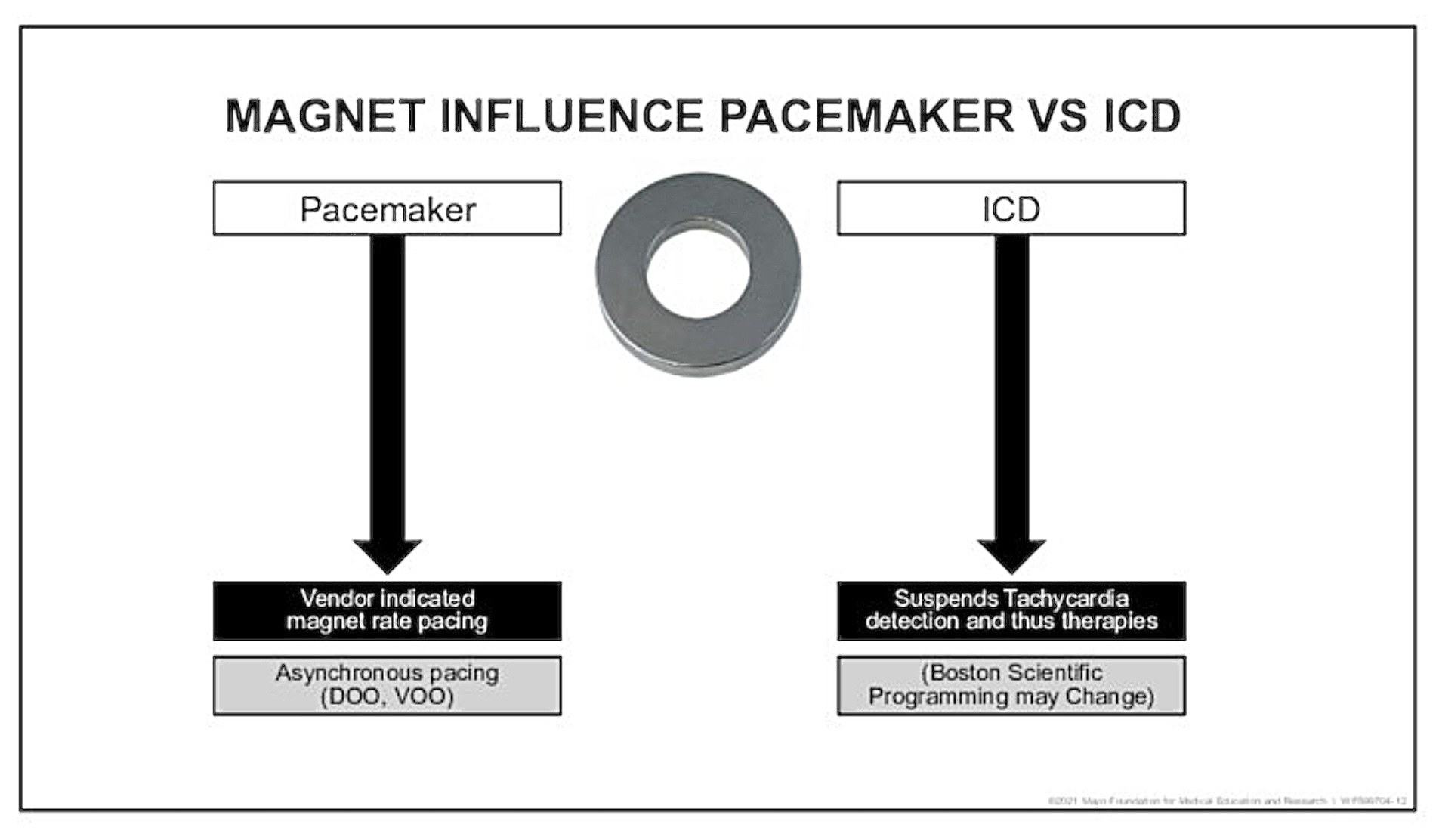
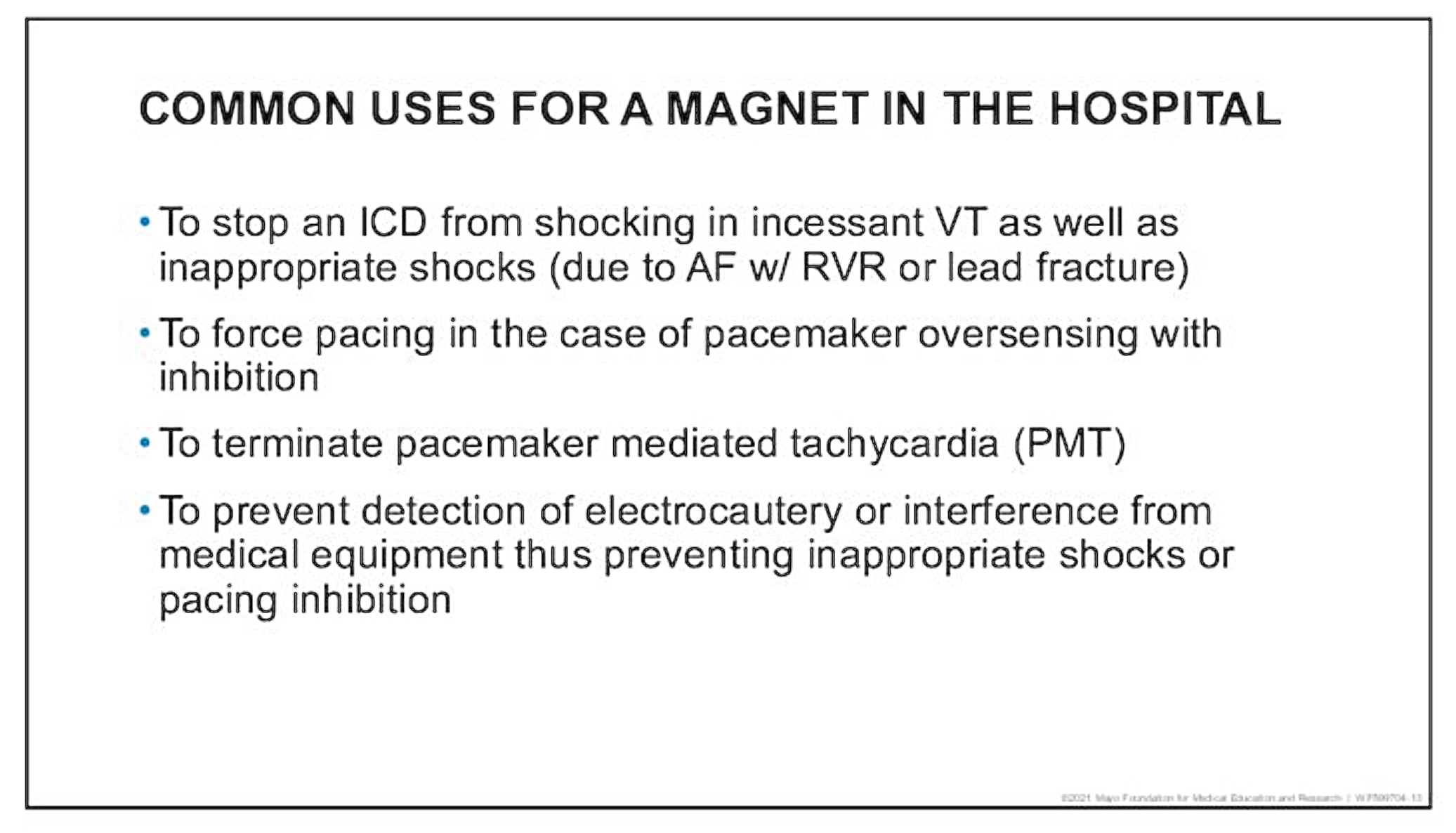
Magnet's Role: Placing a magnet on an ICD suspends tachycardia detection, crucial for certain patient management scenarios.
Lead Noise Detection: Noise can signal lead issues requiring remote monitoring and evaluation.
Atrial Fibrillation and Remote Monitoring
Impedance Tracking: Measuring resistance experienced between electrode and can. Changes can indicate potential issues like pulmonary edema or fluid accumulation.
Clinical Application: Continuous monitoring helps detect worsening cardiac conditions, including AFib.
Treatments and Long-term Management
Electrical Storm Intervention: Using medications like Quinidine can halt storms effectively within hours.
Ablation Procedures: Considered for persistent arrhythmic issues post-assessment.
Patient Outcomes: Successful management of AFib can lead to significant improvements in patient well-being.
Conclusion
Summary: Understanding device functionality and patient responses are crucial in managing complex cardiac conditions.