Anatomical Terminology and Body Regions Notes
Basic Anatomical Terminology
Anatomical Position: straight; forward looking; palms facing up; upper limbs at sides; feet flat down
Supine: lying face up
Prone: lying face down
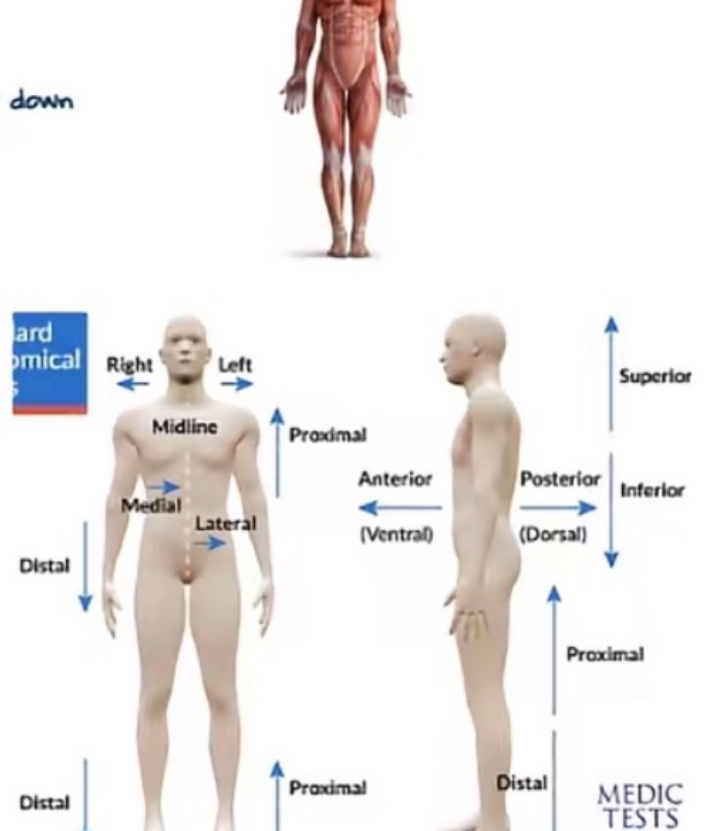
Directional terms
Head
Superior: above, towards
Inferior: below, away
Front of body
Anterior: towards the front
Posterior: towards the back
Midline of body
Medial: towards the midline
Lateral: away from the midline
Origin of a limb
Proximal: towards the origin
Distal: away from the origin
Surface
Superficial: towards the surface
Deep: away from the surface
Ventral/anterior (abdomen)
Dorsal: posterior (back)
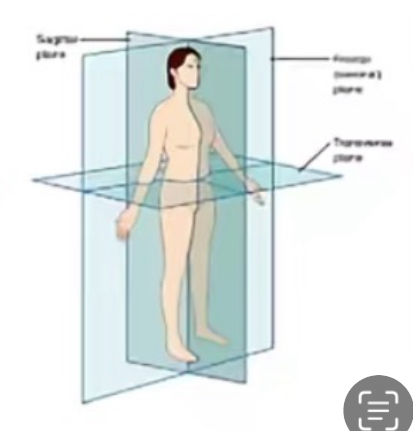
Planes & sections
Plane: an imaginary line
Sagittal vertical plane
Midsagittal plane: equal left & right
Parasagittal plane: unequal left & right
Frontal (coronal) plane: sideways cut; divides anterior & posterior
Transverse plane: horizontal cut
Oblique plane: angle cut
Regions
Trunk: anterior aspect
Chest (thoracic)
Breastbone (sternum)
Head: cephalic
Breast: mammary
Skull: cranial
Abdomen: abdominal
Back of head: occipital
Navel: umbilical
Neck: cervical
Hip: coxal
Nose: nasal
Pelvis: pelvic
Mouth: oral
Groin: inguinal
Chin: mental
Pubis: pubic
Face: facial
Trunk: posterior (back of body)
Forehead: frontal
Back: dorsal
Temple: temporal
Shoulder blade: scapular
Eye: orbital/ocular
Spinal column: vertebral
Ear: otic
Loin: lumbar
Cheek: buccal
Sacral: sacral
Between hips: perineal
Between anus and external genitals: perineal (same region)
Major surface regions (examples and note of synonyms)
Buttock: gluteal
Armpit: axillary
Thigh: femoral
Arm: brachial
Knee (anterior): patellar
Front of elbow: antecubital
Knee (posterior): popliteal
Back of elbow: cubital
Leg: crural
Forearm: antebrachial
Foot: pedal
Wrist: carpal
Ankle: tarsal
Palm: palmar
Toes: digital/phalangeal
Fingers: digits/phalangeal
Great toe: hallux
Sole: plantar
Hand: manual
Thumb: pollex
Heel: calcaneal
Body Regions & Cavities
Body cavities: spaces within the body that protect, separate, and support internal organs
Dorsal Cavity
Meninges: membranes lining dorsal cavities
Cranial cavity: formed by cranial bones; contains brain
Vertebral (spinal) cavity: formed by vertebral column; contains spinal cord
Thoracic Cavity
Pleural cavities: surround each lung
Pericardial cavity: surrounds the heart
Mediastinum: region between the lungs; contains all thoracic cavity structures except the lungs
Viscera: organs of thoracic and abdominopelvic cavities
Abdominopelvic Cavity
Abdominal cavity: stomach, spleen, liver, gallbladder, small intestine, parts of large intestine
Pelvic cavity: urinary bladder, reproductive organs, parts of large intestine
Membranes
Serous membranes: consist of epithelial and connective tissue; produce serous fluid for lubrication
Parietal layer: lines cavity walls
Visceral layer: covers the organs
Thoracic cavity membranes
Pleura: around the lungs
Pericardium: around the heart
Abdominopelvic cavity membrane
Peritoneum: lines the abdominal cavity and covers abdominal organs
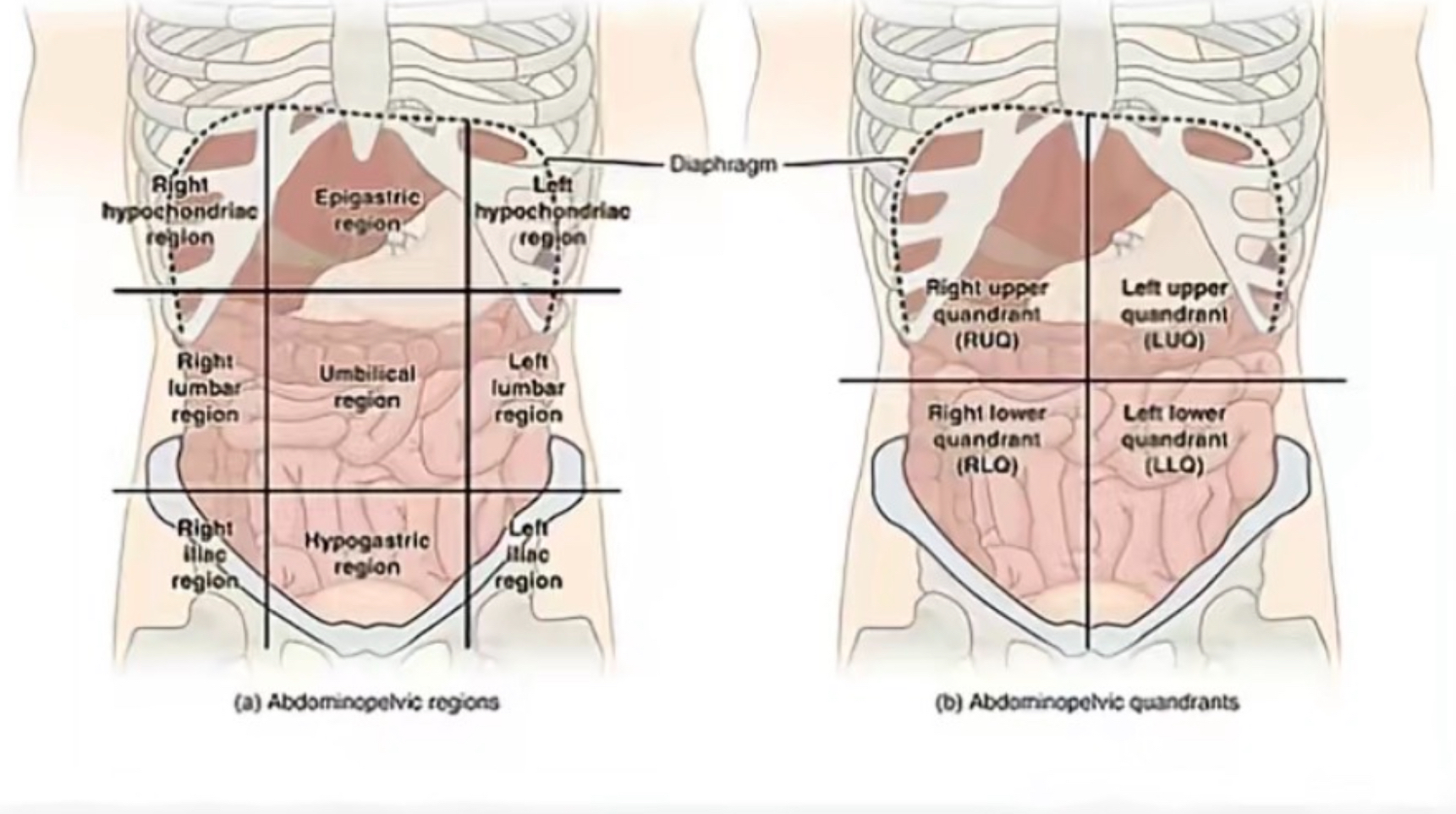
Abdominopelvic Regions & Quadrants
Nine-region plan (from top to bottom, left to right):
Right hypochondriac, Epigastric, Left hypochondriac
Right lumbar, Umbilical, Left lumbar
Right iliac (inguinal), Hypogastric, Left iliac (inguinal)
Four-quadrant plan
Right upper quadrant (RUQ)
Right lower quadrant (RLQ)
Left upper quadrant (LUQ)
Left lower quadrant (LLQ)
Boundary reference: diaphragm divides thoracic and abdominopelvic cavities; standard quadrants are delimited by a vertical midline and a horizontal transumbilical plane (note: this plane is the common reference in teaching, though not explicitly stated in the provided transcript)