Managing the Classroom
Must:
order materials
contact parents
objectives
State the importance of good management and discipline
Define management and discipline
Identify the primary goal of management and discipline
Define teacher attitudes that are important in establishing a successful classroom
State the elements of classrooms that make them complex environments
Define basic principles or recurring themes that should be applied to establishing successful management and discipline in the classroom
School administrators indicate poor management and discipline is a major reason for low evaluations as well as a primary reason why teachers are not rehired (Good & Brophy, 2003).
[Savage, Tom V./Savage, Marsha K.. Successful Classroom Management and Discipline)
so there is the fact of the teacher being competent in creating plans and paths for discipline that are creative or/andDAPs. Secondly, not over-using administration for discipline
What is classroom mgmt and Discipline
Management
the role a teacher takses in creating a classroom environment that creates functionality and ability to have robust success
based on preventative measures
how order is created and maintained based on:
physical environment
flow of lesson plans
time management
use of goals
expressing and utilizing leadership and authority
motivation and encouragement of students
is a huge and complex, staggered dynamic of prevention
creates trust, farm motivation, creates a community, hinges on engagement
should be collaborative (in some instances), holistic, and humane
Lead management (Glasser, 1990)
involves students needs, based on input
input solicited as often as needed
wrapped around what needs to be done
consider conditions work is done in or needed conditions
expectations communicated clearly and with good rapport
reciprocation of performance
students perform metacognitively at certain points
willing to listen to students and accept feedback
teacher facilitates, provide assisstance
non-coercive
non-adversarial
no stereotype threat, no
Power is a real thing in class
dont be scared, be responsible, warm, and professional
students are not powerless, use their voices to build the classroom, facilitate, meet needs, create goals.
to feel powerless is to not trust
need to be respected
leads to personal commitment and healthy TSR (can be a research topic)
some must give up unhealthy power to gain correct power
Discipline
Based on reactions
any action that facilitates the development of self-control, responsibility, and character
“What action will be the best choice in helping the student move toward self-control?”
[Savage, Tom V./Savage, Marsha K.. Successful Classroom Management and Discipline)
should be to desire and strategically orchestrate class to create productice and satisfying patterns of living and being a part of a learning or working system
with self-chosen beliefs and principles.”
the truth is that they aren’t self-chosen sometimes, and that is why connectio and utility value, even in discipline is important, without making it punitive
maybe this is where teacher attitudes come in, students, if there is trust and connection, may be inspired by these things and/or pick them up
Teacher attitudes
liking students
respecting the individuality of students
holding high expectations
making expectations practical and clear
enjoying teaching
posessing concern for welfare of each student
valuing and implementing autonomy
“peer cooperation is emphasized, and classroom management and discipline is viewed as a process of creating and maintaining a healthy learning environment rather than as a means of asserting teacher authority and power.”
[Savage, Tom V./Savage, Marsha K.. Successful Classroom Management and Discipline]
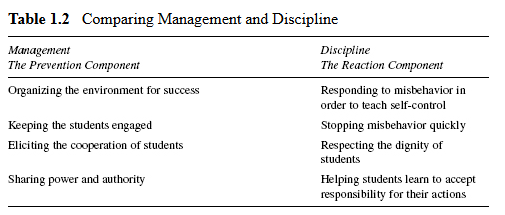
Preventative Measures
should always come first and be based on warmth
Proper Reactions
should not be reactive