Coordinated responses
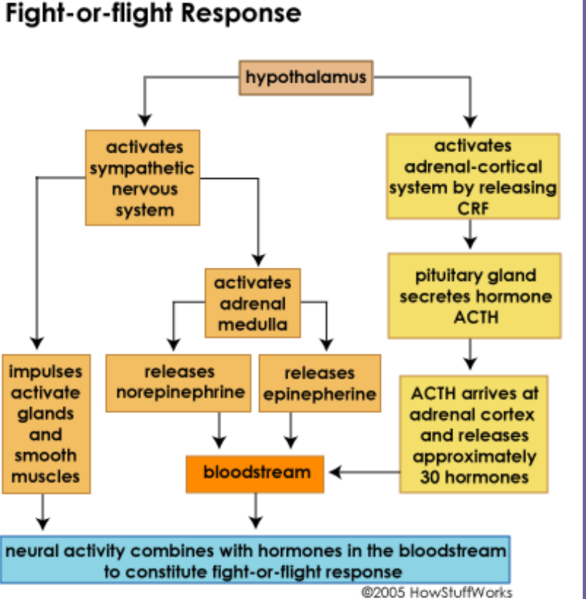
Fight or flight response
a combination of neuronal and hormonal responses
controlled by the hypothalamus
causes the release of stress hormones
corticotropin releasing factor and ACTH
activates the sympathetic nervous system
activates smooth muscle and glands
adrenal medulla releases adrenaline and noradrenaline
Adrenaline
released from adrenal medulla
triggers glycogenolysis in liver
glycogen converted to glucose
more glucose for respiration
more ATP produced
more energy for muscle contraction
hydrophilic protein hormone
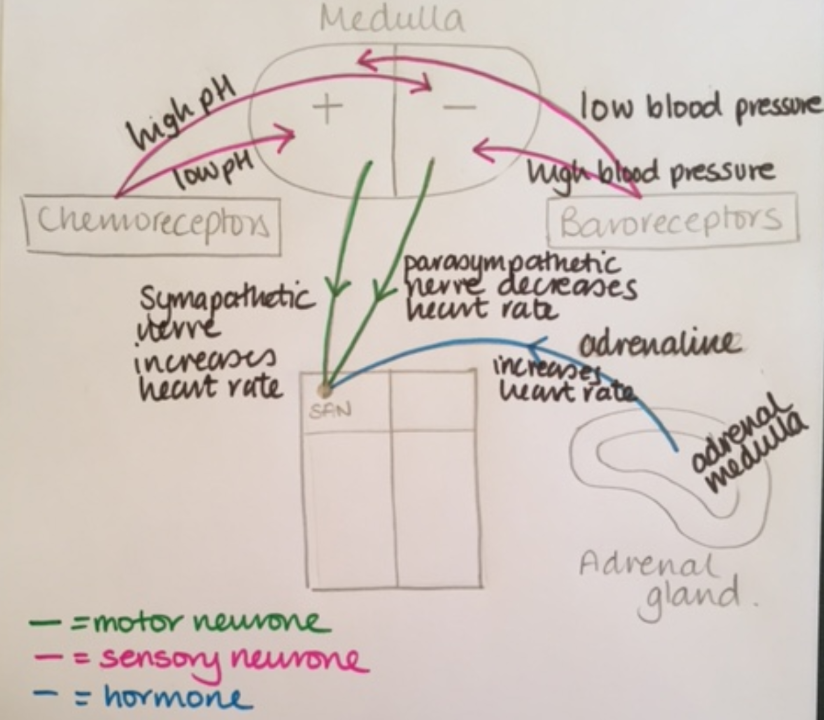
adrenaline affects SAN
causes increase in heart rate
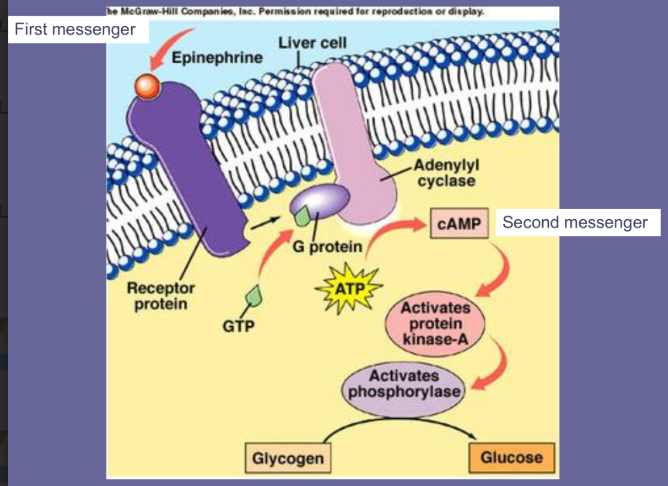
Action of adrenaline - second messenger model
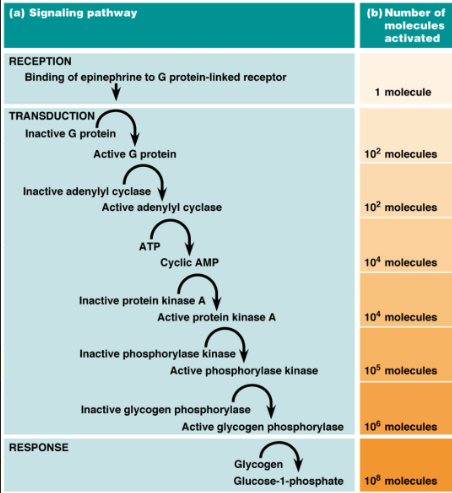
adrenaline binds to receptor on surface of liver cells
activates the enzyme adenylyl cyclase
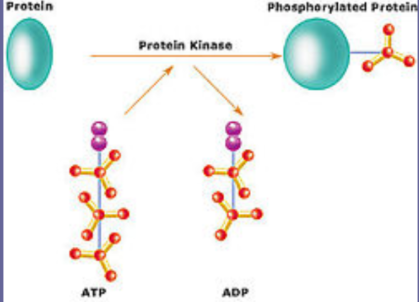
adenylyl cyclase converts ATP into cAMP
cAMP levels rise and cause activation of protein kinases
protein kinases phosphorylate and activate other enzymes
these enzymes convert glycogen into glucose
Cascade effect
small numbers of hormone molecules cause a large response
Controlling heart rate
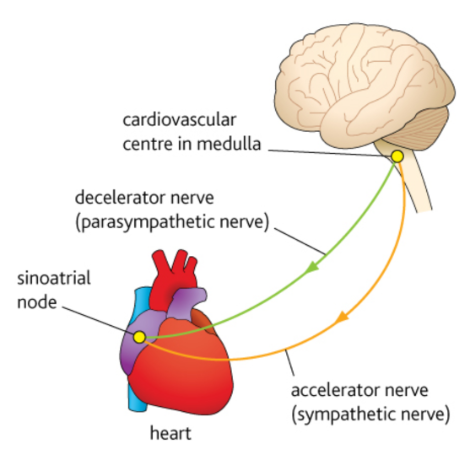
- controlled by the autonomic nervous system
involuntary
two centres within the medulla are linked to the SAN
sympathetic nerve - increases HR
parasympathetic nerve - decreases HR
receptors in blood vessels collect information and send this to the medulla
Types of receptor
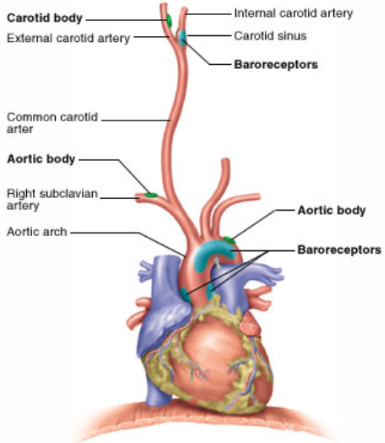
chemoreceptors
detect changes in blood pH
found in aorta, carotid artery and medulla
baroreceptors
detect changes in pressure
found in aorta and carotid artery
Increasing and decreasing heart rate mechanism (negative feedback)
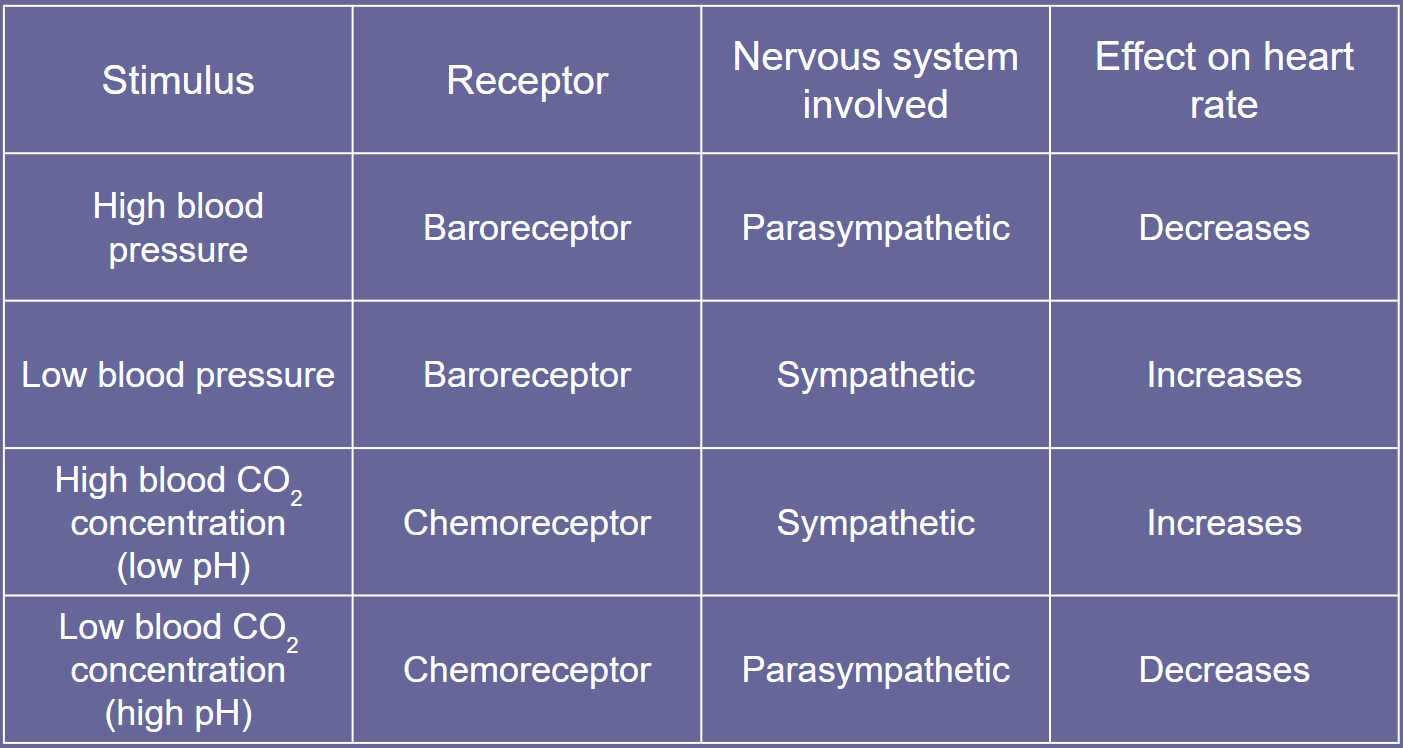
Increasing heart rate
exercise causes increase in CO2
pH falls
chemoreceptors in medulla, carotid body and aortic bodies detect fall in pH
nerve impulses are sent to the cardiovascular centre in the medulla
more impulse are sent from the cardiovascular centre to the SAN along the sympathetic nerve
SAN sends out more frequent impulses
heart rate increases
Decreasing heart rate
carbon dioxide levels fall as heart rate increases
rise in pH detected by chemoreceptors
nerve impulses sent to cardiovascular centre in medulla
more impulses are sent to SAN along parasympathetic nerve
heart rate decreases