21st LIT authors
21st Literature
YSA
Representative Texts and Authors from ASIA
Asia, the largest continent in the world, has a vast literary tradition in terms of scope and length of existence.
Literature in the Eastern hemisphere prospered and mirrored the developments in religion, war, and politics. It is wise to study the Asia literature by geographical region.
Representative Texts and Authors from CHINA
- China, one of the world’s cradles of civilization has started its unbroken literary tradition in the 14th century BCE. The preservation of the Chinese language (both spoken and written), has made the immeasurable prolonged existence of their literary traditions possible. It has retained its reputation by keeping the fundamentals of its identity intact.
- Poets like Du Fu, Li Po, and Wang Wei of the Tang Dynasty (618 – 907), the finest era of Chinese literature, has produced world-renowned literary works. Chinese writers in modern times are still creative and productive and have kept the Chinese literary tradition prosperous.
- Du Fu
He is also known as Tu fu. According to many literary critics, he was the greatest Chinese poet of all time. He wrote the poem “The Ballad of the Army Cats” which is about conscription- and with hidden satire that speaks of the noticeable luxury of the court.
- Li Po
He is also known as Li Bai, a Chinese poet who is a competitor of Du Fu as China’s greatest poet. He was romantic in his personal life and his poetry. His works are known for its conversational tone and vivid imagery. He wrote the poem “Alone and Drinking under the Moon” that deals with ancient social custom of drinking.
- Wang Wei
He was a poet, painter, musician, and statesman during the Tang dynasty (the golden ages of the Chinese cultural history). He was the established founder of the respected Southern school of painter-poets. Many of his best poems were inspired by the local landscape.
- Mo Yan
He was a fictionist who won the 2012 Nobel Prize for Literature. His first novel was “Red Sorghum”, and still his best-known work. It tells the story of the Chinese battling Japanese intruders as well as each other during the 1930s. it relates the story of a family in a rural area in Shandong Province during this turbulent time.
- Yu Hua
He was a world-acclaimed short story writer and considered as a champion for Chinese meta-fictional or postmodernist writing. His widely acclaimed novel “To Live” describes the struggles endured by the son of a wealthy land-owner while historical events caused and extended by the Chinese Revolution are fundamentally altering the nature of Chinese society.
Representative Texts and Authors from KOREA
- Korea’s literary tradition is greatly influenced by China’s cultural dominance. As early as the 4th century CE, Korean poets wrote literary pieces in Classical Chinese poetry then transformations happened at the 7th century.
- Hangul, Korean’s distinct writing system and national alphabet, is developed in the 15th century that gave new beginnings of Korean literature. In contemporary times, the Korean War has made a significant mark on Korean literature. In 1950, the themes present in the literary works are about alienation, conscience, disintegration, and self-identity.
- Ch’oe Nam-Seon
He was considered a prominent historian. Pioneering poet, and publisher in the Korean literature. He was also a leading member of the modern literary movement and became notable in pioneering modern Korean poetry.
One of his works, the poem “The Ocean to the Youth” made him a widely acclaimed poet. The poem aimed to produce cultural reform. He sought to bring modern knowledge about the world to the youth of Korea.
- Yi Kwang-su
He was also the one who launched the modern literary movement together with Ch’oe Nam-Seon. He was a novelist and wrote the first Korean novel “The Heartless” and became well-known because of it. It was a description of the crossroads at which Korea found itself, stranded between tradition and modernity, and undergoing conflict between social realities and traditional ideals.
- Kim Ok
He was a Korean poet and included in the early modernism movement of Korean poetry. He wrote the first Korean collection of translation from Western poetry “The Dance of Agony”. More Essential Texts for Reading:
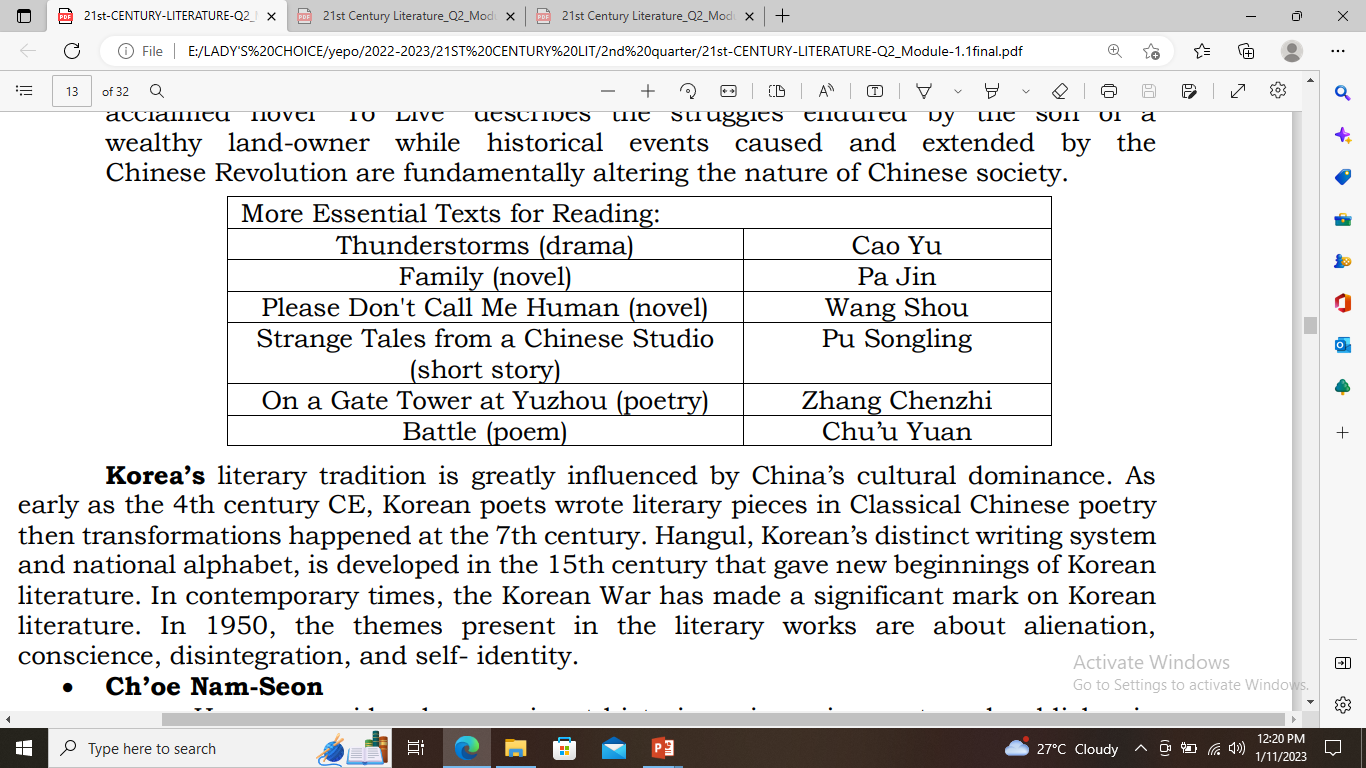
Thunderstorms (drama) Cao Yu Family (novel) Pa Jin Please Don’t Call Me Human (novel) Wang Shou Strange Tales from a Chinese Studio (short stpry) Pu Songling On a Gate Tower at Yuzhou (poetry) Zhang Chenzhi Battle (poem) Chu’u Yuan.
- Yun Hunggil
He was a South Korean novelist who won the 1977 Korean Literature Writers Award. He wrote the classic novel “Changma” (The Rainy Spell) that on a post-war family with two grandmothers and their shared grandson.
- Pak Kyongni
She was a South Korean poet and novelist. She wrote the Korean’s masterpiece and internationally acclaimed 21-volume epic novel T’oki (‘The Land”), wherein she chronicled the violent Korean history from 1897 to 1945.
Representative Texts and Authors from JAPAN
Japan has a rich and unique literary history even though it has been influenced by the Chinese language and Chinese literature. It has a world-renowned poetic genre called haiku (a short descriptive poem with 17 syllables) and the diverse forms of theatre Noh (traditional Japanese theatrical form and one of the oldest extant theatrical forms in the world) and Kabuki (traditional Japanese popular drama with singing and dancing performed in a highly stylized manner).
Japanese literature reflects simple yet complex, imperfect yet abounding with beauty – the traditional Japanese cultural identity. In contemporary times, Western influences take part in the Japanese literature, specifically in the pioneering of modern Japanese novels, translations of the poetry, and reinventions of traditional Japanese poetic forms like haiku and tanka. Playwroghts like Abe Kobo and Mishima Yukio are Japan’s notable literalists.
- Abe Kobo
He was a Japanese novelist and playwright and also known by the pseudonym of Abe Kimifusa. He wrote the best-known play “Tomodachi” (Friends) which is a story, with dark humor, reveals the relationship with the other, and exposes the peculiarity of human relations in the present age.” He also won the 1967 Akutagawa Award. He also won the 1951 Akutagawa Award for his short novel Kabe (“The Wall”).
- Kimitake Hiraoka
He is also known by the pen name Mishima Yukio, the most important Japanese novelist of the 20th century. He was one of the finalists of the 1963 Nobel Prize for Literature and won numerous awards for his works. He wrote the novel “The Temple of the Golden Pavilion” and won Yomiuri Prize from Yomiuri Newspaper Corporation for the best novel. “The Temple of the Golden Pavilion”, translated into the English language by Ivan Morris, based on the burning of the Reliquary (or Golden Pavilion) of Kinkaku-Ji in Kyoto by a young Buddhist acolyte in 1950.
- Ryūnosuke Akutagawa
He was a Japanese writer and regarded as the Father of the Japanese short story. He wrote the short story “Rashomon” that recounts the encounter between a servant and an old woman in the dilapidated Rashōmon, the southern gate of the then-ruined city of Kyoto, where unclaimed corpses were sometimes dumped. The Akutagawa Prize, Japan’s premier literary award was named after him to honor his memory after he died by committing suicide.
- Haruki Murakami
He was a Japanese novelist who won the international award Jerusalem Prize. He also won the Gunsou Literature Prize for his first novel “Hear the Wind Sing”. It featured episodes in the life of an unnamed protagonist and his friend, the Rat, who hang out at a bar. The unnamed protagonist reminisces and muses about life and intimacy. Murakami’s work has been translated into more than fifty languages.
MIDDLE EAST ARABIC
Middle East Arabic literary tradition has been flourishing in the Middle East. Islam is the foundation of culture in this region- an essential component. Its literary tradition has grown and influenced others like Persian, Byzantine, and Andalusian traditions. In return, Arabic literature has also been influenced by other literary traditions of different countries.
Even European literature followed and imitated Arabic literature. In contemporary times, Arabic writers experience difficulties in producing their literary texts due to the issue of freedom of expression and the tension between religious and secular movements.
- Abbas Mahmoud al-Aqqad
He was an Egyptian poet, journalist, and literary critic, an innovator of the 20th-century Arabic poetry and criticism. He became famous for his Abqariyat series, a seven-book compilation that covers the life of seven of the most important Sahabah (the desciples and followers of Muhammad).
- Taha Hussein
He was an Egyptian novelist, essayist, critic, and an outstanding figure in Egyptian literature. His nickname was “The Dean of Arabic Literature”. He wrote the novalized autobiography “The Days”, one of the most popular works of modern Araboc literature that deals with his childhood in a small village, then his studies in Egypt and France.
- Ali Ahmad Said Esber
He is known also as Adonis as his pseudonym. He is an award-winning Syrian-born Lebanese poet, literary critic, and is a leader of the modernist movement in contemporary Arabic poetry. He was the recipient of numerous honors, including the 2011 Goethe Prize and the 2017 PEN/Nabokov Award for Achievement in International. Some of his famous poems are “First Poems” and “Leaves in the Wind”.
- Etgar Keret
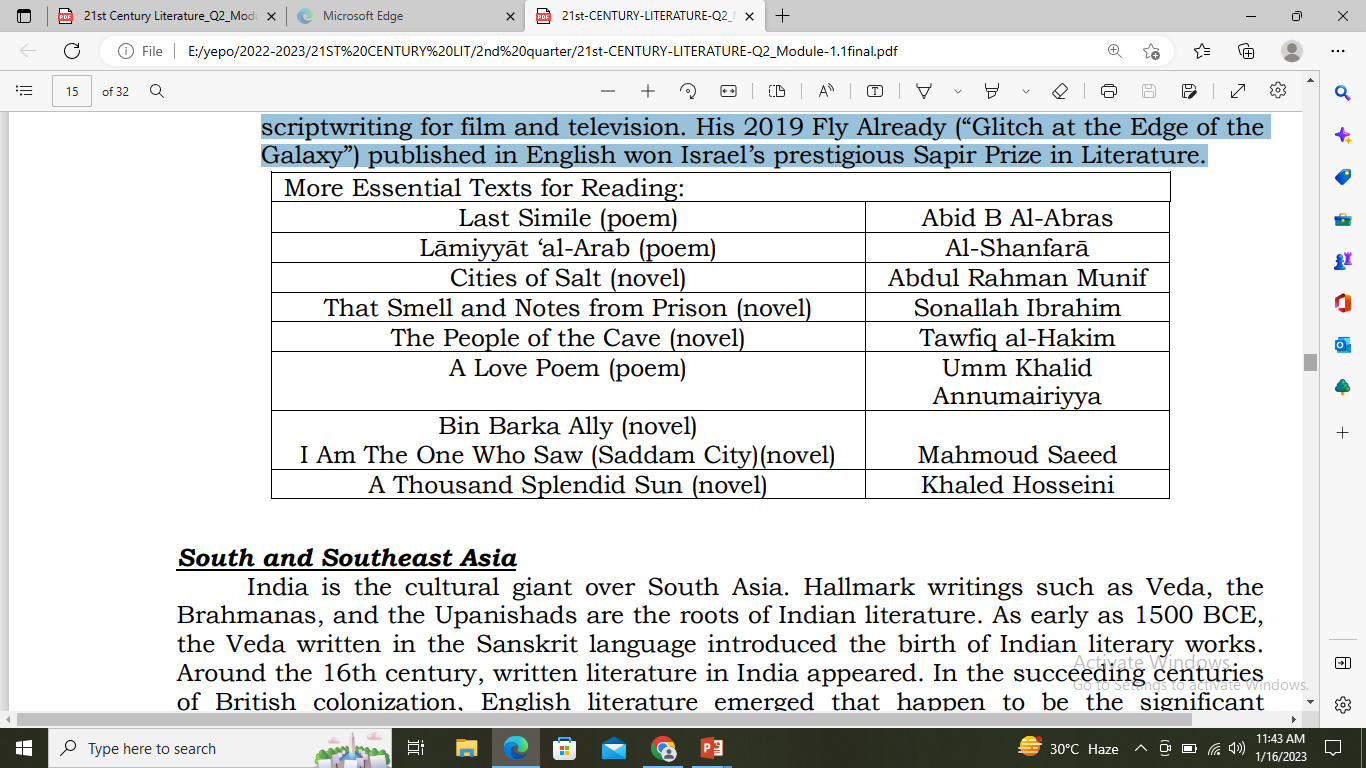
He is an Israeli writer known for his short stories, graphic novels, and scriptwriting for film and television. His 2019 Fly Already (“Glitch at the Edge of the Galaxy”) published in English won Israel’s prestigious Sapir Prize in Literature.
SOUTH and SOUTHEAST ASIA
- India is the cultural giant over South Asia, Hallmark writings such as Veda, the Brahmanas, and the Upanishads are the roots of Indian literature. As early as 1500 BCE, the Veda written in the Sanskrit language introduced the birth of Indian literary works.
- Around the 16th century, written literature in India appeared. In the succeeding centuries of British colonization, English literature emerged that happen to be the significant influence of Indian literary traditions until the 21st century period. Kalidasa is a notable and famous Indian writer considered to be the Hindu Shakespeare.
- The literary traditions of Southeast Asia possess the influences of Buddhist, Thai, and English cultures, especially in Burma literature. Malaysian and Indonesian literature reflects a large part of the Sanskrit language and Islam culture.
- In contemporary times, India still manifests the impact of colonial rule through the presence of the English language in literary traditions. Numerous Indian writers like the Rabindranath Tagore, Prem Chand, Raja Rao, and R.K. Narayan are highly accomplished and internationally known. Southeast Asia literature presents themes on colonial and postcolonial experiences in Burmese literature and western literature influences in Thailand literature.
- Rabindranath Tagore
He was a Bengali poet, short-story writer, song composer, playwright, essayist, and painter. He was referred to as “The Bard of Bengal”. He is a towering figure of world literature and the most famous modern Indian poet. He won the 1913 Nobel Prize for Literature award for his book The English Gitanjali or Song Offerings. It is a volume of poetry which is a collection of devotional songs to the supreme.
- Dhanpat Rai Srivastava
Also known by his pseudonym Prem Chand, he is a famous Indian author of novels and short stories of his modern Hindustani literature. He pioneered in adapting Indian themes to Western literary styles.
He wrote the most popular Hindi novel “Godaan” (Cow Donation) and considered one of the greatest Hindi novels of modern Indian literature. Its theme was around the socio-economic deprivation as well as the exploitation of the village poor.
- Raja Rao
He is an Indian writer of novels and short stories in the English language. His famous novel “The Serpent and the Rope”, a semi-autobiographical account of the narrator, a young intellectual Brahman, and his wife seeking spiritual truth in India, France, and England, recognized him as one of the fines Indian prose Stylists. It won him the Sahitya Akademi Award. He was also rewarded the Neustadt International Prize for Literature. His literary works in various genres had a significant contribution to Indian and to world literature.
- Rasipuram Krishnaswami Narayan (R.K. Narayan)
One of the finest Indian authors in the English language, he wrote the Sahitya Award-winning novel “The Guide” which was adopted for film and for Broadway. It was based on the fictional town in South India and describes the transformation of the protagonist from a tour guide to a spiritual guide and one of the greatest holy men of India.
- Chart Korbjitti
He is the most successful Thai writer. He was recognized by his publication of his novel Khamphiphaksa (The Judgement). His novel was named as Book of the Year by Thailand’s Literature Council and won him the S.E.A Writer Award. He was awarded the National Artist in Literature (2004) and was among the honorees of the inaugural Silpathorn Award, given to Thai contemporary artists.
- Nguyen Du
The best-loved poet and the father of Vietnamese literature, he was most known for his epic poem “The Tale of Kieu” that recounts the life, trials, and tribulations of Thuy Kieu, a beautiful and talented young woman, who has to sacrifice herself to save her family. She sells herself into marriage with a middleaged man, not knowing that he is a pimp, and is forced into prostitution.
- Tengku Amir Hamzah
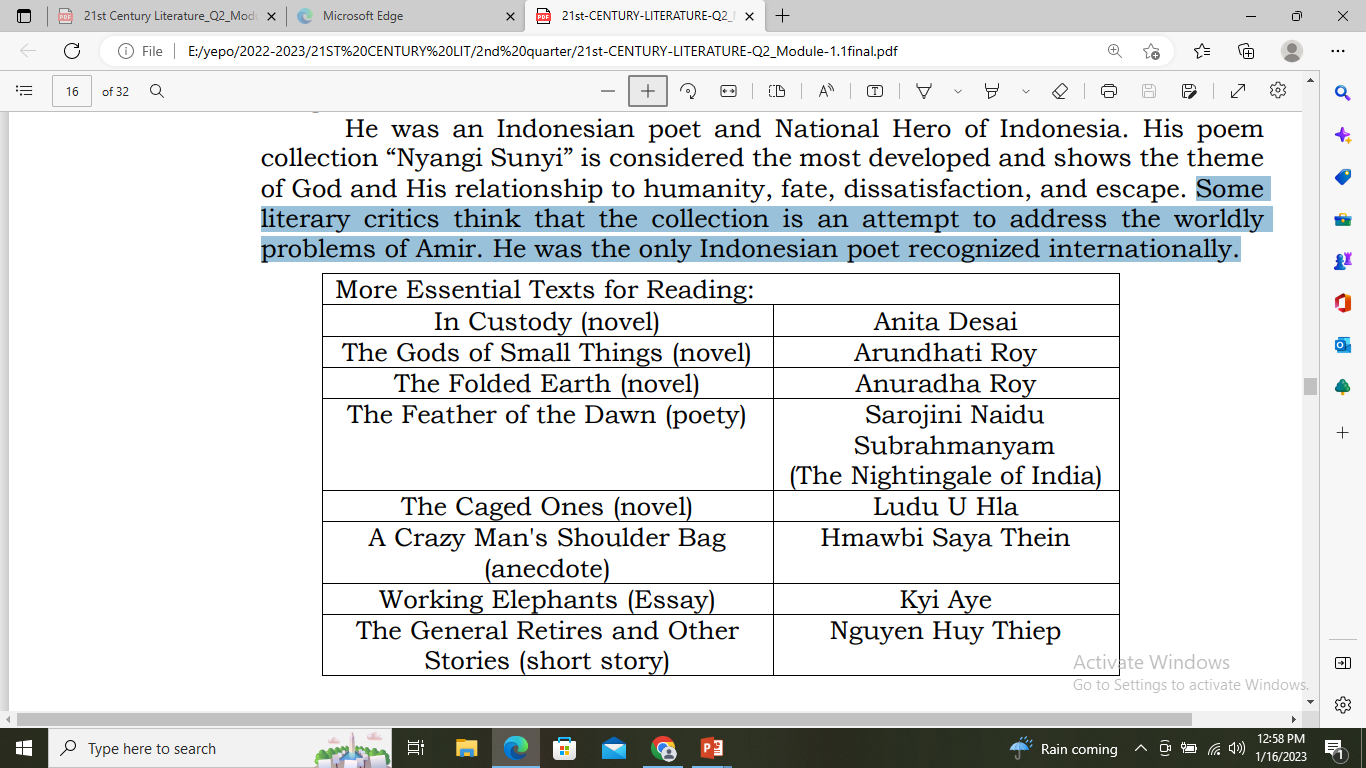
He was an Indonesian poet and National Hero of Indonesia. His poem collection “Nyangi Sunyi” is considered the most developed and shows the theme of God and His relationship to humanity, fate, dissatisfaction, and escape. Some literary critics think that the collection is an attempt to address the worldly problems of Amir. He was the only Indonesian poet recognized internationally.
CENTRAL ASIA
Central Asia literature has different literary characteristics and political in culture. In contemporary times, Russian influence continues to be present in Central Asia literature. Some of the Central Asian writers and their literary works pave their way to be known worldwide.
- Abdullah Qodiriy
He was known by the pseudonym Julqunboy. He was one of the most influential Uzbek writers of the 20th century and Soviet playwright, poet, writer, and literary translator. His most famous work is the historical novel O’tgan kunlar (Days Gone By), the first Uzbek full-length novel.
- Mukhtar Auez-uli
He was an early Soviet Kazakh writer and won recognition for the long novel “Abay” which is based on the life and poetry of Kunanbay-uli.
- Chingiz Aytmatov
He was a Soviet and Kyrgyz author and the best-known figure in Kyrgyz and Russian literature. “Jamila”, his first major novel was told from the viewpoint of a fictional character that tells the story by looking back on his childhood. The story recounts the love between his new sister-in-law Jamilya and a local crippled young man, Daniyar, while Jamilya’s husband, Sadyk is “away at the front” (as a Soviet soldier during World War II)
AFRICA
The “Cradle of the humankind” according to scientists, has a literature that is filled with the human spirit, desiring for freedom and contentment. African literature consists of oral tradition and written literature ranging from local languages brought by the colonizers (English, Portuguese, and French). The experiences of the colonization and postcolonization shape the African literature.
- Chinua Achebe
He was a Nigerian novelist, poet, critic, and professor and was honored as Grand Prix de la Memoir of the 2019 edition of the Grand Prix of Literary Associations. His first novel and masterpiece, “Things Fall Apart”, is the most widely read book on modern African literature. It concerns the traditional lgbo life at the time of the advent of missionaries and the colonial government in his homeland.
- Wole Soyinka
He was the first black African to be awarded the 1986 Nobel Prize for Literature. One of his famous works is his first important play “A Dance of the Forests” which was written for the Nigerian independence celebrations. It parodies the emerging nation by stripping it of romantic legend and by sowing that the present is no more a golden age than it was before.
- Kofi Awoonor
He was a Ghanian novelist and poet who wrote “This Earth, My Brother”, a cross between a novel and a poem. It was told on two levels each representing a distinct reality. The first level is a standard narrative which details a day in the life of an attorney named Amamu. The second level is a symbol-laden mystical journey filled with biblical and literary allusions.
These portions of the text deal with the new nation of Ghana, which is represented by a baby on a dunghill. The dunghill is a source of both rot and renewal, and in this way represents the foundations upon which Ghana was built.
- Nguni wa Thiong’o
East Africa’s leading novelist, a Kenyan writer who wrote the famous novel “Weep Not, Child”. It was the first major novel in English by an East African. It deals with the Mau-Mau Uprising, a war in the British Kenya Colony (1920-1963) between the Kenya Land and Freedom Army.
- Okotp’ Bitek
He was a Ugandan poet, novelist, and social anthropologist who wrote the three verse collections- Song of Lawino (1066), Song of Ocol (1970), and Two Songs (1971). He achieved international recognition for Song of Lawino, a long poem dealing with the tribulations of a rural African wife whose husband has taken up urban life and wishes everything to be westernized. It was followed by the husband’s reply, the Song of Ocol.
- Nadine Gordimer
A South African writer and the recipient of the 1991 Nobel Prize in Literature. She wrote the joint winner of the Booker – McConnell Prize novel “The Conservationist”. The story is a character study of a successful South African industrial executive and, by extension, a critique of South Africa.
- Jacques Rabemananjara
He was a Malagasy playwright and poet and one of Madagascar’s most prominent writers. He wrote and published his play “Les dieux malgaches”, the first modern Malagasy play in French. This play dealt with the pre-colonial past and with the coup that unseated King Radama II in 1863.
- Es’kia Mphahlele
He wrote the South African classic autobiography “Down Second Avenue” about the story of a young man’s growth into adulthood with penetrating social criticism of the conditions forced upon black South Africans by a system of institutionalized racial segregation.
- Thomas Mofolo
He was the greatest writer from the Sotho people in Africa. He created the first Western-style novels in the Basotho language. His novel “Chaka” became a classic. It was a historical novel about the story of the rise and fall of the Zulu king Shaka. Dennis P. Kunene translated the novel from Sotho to English.
NOTABLE LITERARY PIECES
- Written by Nguyen Du. This Vietnamese poem that recounts the life of a beautiful young woman who has to sacrifice herself to save her family.
The Temple of the Golden Pavilion
- Written by Kimitake Hiraoka. It is a Japanese novel based on the burning of the reliquary of Kinkaku-Ji by a young Buddhist assistant in 1950.
The Ocean to the Youth
- Written by Choe Nam Seon. It is a Korean poem that aims to produce cultural reform and modern knowledge about the world to the youth.
Red Sorghum
- Written by Mo Yan. It is a Chinese novel that relates the story of a family in a rural area in Shandong Province during a turbulent time.
The Ballad of the Army Cats
- Written by Du Fu. It is a Chinese poem that talks about conscription-with hidden satire that speaks of the noticeable luxury of the court.
Jamila
- Written by Chingiz Aytmatov. It is a Russian novel that recounts a story of a sister-in-law and a local crippled young man.
Rashomon
- Written by Ryūnosuke Akutagawa. It is a Japanese short story that recounts the encounter between a servant and an old woman in the dilapidated place where unclaimed corpses were sometimes dumped.
Abqariyat Series
- Written by Abbas Mahmoud al-Aqqad. It is an Egyptian book compilation that covers the life of the seven most important Sahabahor the disciples and followers of Muhammad.
The Heartless
- Written by Yi Kwang-su. It is a Korean novel that describes the Korean’s conflict between social realities and traditional ideals.
The Conservationist
- Written by Nadine Gordimer. It is an African novel which is a character study of a successful South African industrial executive.
Chaka
- Written by Thomas Mofolo. It is a historical African novel about the story of the rise and fall of the Zulu king Shaka.
Things Fall Apart
- Written by Chinua Achebe. It is an African novel that concerns the traditional Igbo life at the time of the advent of missionaries and the colonial government in his homeland.
Abay
- Written by Mukhtar Auez-uli. It is Kazakh novel that is based on the life and poetry of Kunanbay-uli.
T’oji (The Land)
- Written by Pak Kyongni. This is a Korean epic novel that chronicles the violent Korean History from 1897 to 1945.
Alone and Drinking Under the Moon
- Written by Li Po. It is a Chinese poem that deals with the ancient social custom of drinking.
DIFFERENT REPRESENTATIVE TEXTS AND AUTHORS FROM NORTH AND LATIN AMERICA
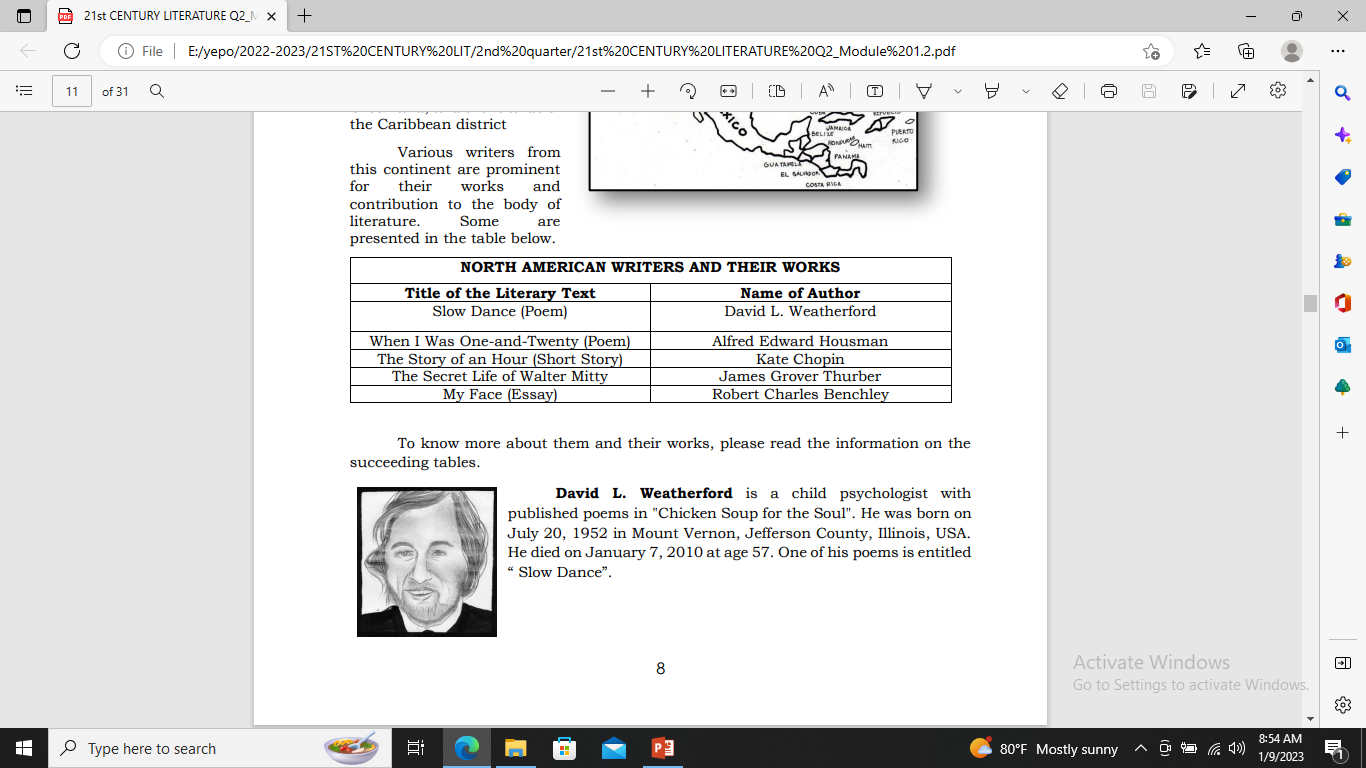
David L. Weatherford is a child psychologist with published poems in “Chicken Soup for the Soul”. He was born on July 20, 1952 in Mount Vernon, Jefferson County, Illinois, USA. He died on January 7, 2010 at age 57. One of his poems is entitled “Slow Dance”.
Fun Fact:
- he experienced kidney failure causing him to be on dialysis for the rest of his life.
- his favorite quote is from Helen Keller, “The world is full of suffering – and the overcoming of it”.
- “Slow Dance” was surprisingly one of the first poems he had ever written, and for years he did not receive the credit for the poem due to the fact, he was unaware of the its status.
Poem
- He used this to create a rhyme scheme.
- The words “bed and “head” rhyme, and “fast” and “last” (Lines 9,10,11,12).
Message: Everyone is so busy in life they forget to have fun and live in the moment, rushing through life does not get you no where but stressed out. So live in the moment and do not rush through the journey because nobody lives forever.
Alfred Edward Housman, known as A.E. Housman, was an English traditional researcher and writer, most popular to the overall population for his pattern of sonnets “A Shropshire Lad”. Melodious and practically epigrammatic in structure, the sonnets contemplatively bring out the fates and frustrations of youth in the English countryside. He was one of the premier classicists of his age and has been positioned as probably the best researcher who ever lived. One of his works is entitled “When I Was One-and-Twenty.”
“When”
The first word in the poem is “when” this lets the readers know that the speaker has moved on and is older and probably wiser than he previously was.
“One and Twenty”
The speaker lets us know that the time hes is looking back on is when he was twenty-one years old.
Theme Statement
Listen to those who are older and wiser than you because you have not lived and learned like they have.
Kate Chopin was an American creator of short stories and books situated in Louisiana. She is currently considered by some scholars to have been a harbinger of American twentieth century women’s activist writers of Southern or Catholic foundation. One of her works is entitled “The Story of An Hour.”
- Born in 1850 and died in 1904
- She is considered the first feminist author of the 19th and 20th century
- One of the most women to live as a housewife until the death of her husband.
- We can see that her short story “The Story of An Hour” is inspired by her own personal life and events.
“The Story of an Hour” SUMMARY
The story begins in the home of Brentley and Louise Mallard. Louise has a heart condition, so her sister is trying to break the news of a railway disaster that has killed her husband. With no moment of denial or disbelief, Louise bursts into tears. She retreats to her room alone, and soon her emotions calm. Then she watches through the open window, smelling the recent rain and seeing the spots of blue coming through the clouds. She hears a street seller and birds chirping. Someone somewhere is singing. The world seems to have gone on unchanged. In that moment, she stares at the sky and senses an idea coming to her. Then she says to herself, “Free.” At this point her life has changed, not only because of the loss of her husband but also from the realization that she will no longer feel repressed but can now make all choices in the direction of her life. Her sister comes to the bedroom to coax her out, and they go downstairs together. Then the door opens and in walks her husband Brentley. He was not killed after all. The shock of seeing him triggers Louise’s heart condition, and she dies. It is not the “joy that kills” that the doctor believes, but more likely the disappointment that only Louise and the reader know about.
James Grover Thurber was an American sketch artist, creator, comedian, writer, dramatist, and commended mind. He was most popular for his kid’s shows and short stories, distributed primarily in The New Yorker and gathered in his various books. Thurber was one of the most mainstream comedians of his time and commented the comic disappointments and unconventionalities of common individuals. His works have every now and again been adjusted into films, including The Male Animal (1942), The Battle of the Sexes (1959, in view of Thurber’s “The Catbird Seat”), and The Secret Life of Walter Mitty (adjusted twice, in 1947 and in 2013).
“The Secret Life of Walter Mitty” SUMMARY
Begins with one of Mitty’s daydreams. In this one, he is the commander of a Navy plane flying through a terrible storm. His daydream is soon interrupted by his wife, Mrs. Mitty, telling him that he is driving too fast. They are out running errands, Mrs. Mitty getting her hair done and Walter shopping for overshoes and puppy biscuits. After dropping off his wife at the hairdresser’s, Mitty drives on, soon falling into a second daydream, this one in which he is a world-renowned surgeon, arriving to save the life of a patient after four specialists have failed. This daydream is interrupted by the parking lot attendant telling him that he is in the wrong lane and is trying to go in through the exit. Throughout the story, even outside of the daydreaming, Mitty seems somewhat confused and unfocused. He thinks back through past blunders, growing somewhat bitter as he recalls instances of his own ineptitude and forgetfulness. After buying the overshoes, Mitty once again slips into a daydream, this time with himself as a defendant in a criminal trial. This daydream is interrupted when Mitty suddenly remembers what else it is that he is supposed to be buying: puppy biscuits. Mitty proceeds to the grocery store. The story skips forward a bit here to Mitty in the lobby of the hotel waiting for his wife to finish at the hairdressers. He begins to read a magazine but soon falls into yet another daydream, this one starring himself as a heroic captain during a war. His daydream is interrupted this time by the arrival of his wife. As they begin walking back to the car, his wife ducks into a drugstore, leaving Mitty to succumb to yet another daydream in which he bravely faces down a firing squad.
Robert Charles Benchley was an American comedian most popular for his work as a paper editorialist and film entertainer. Benchley is bet associated with his commitments to The New Yorker, where his expositions, regardless of whether effective or absurdist, impacted numerous advanced comedians. He also wrote essays. One of his works is entitled “My Face.”
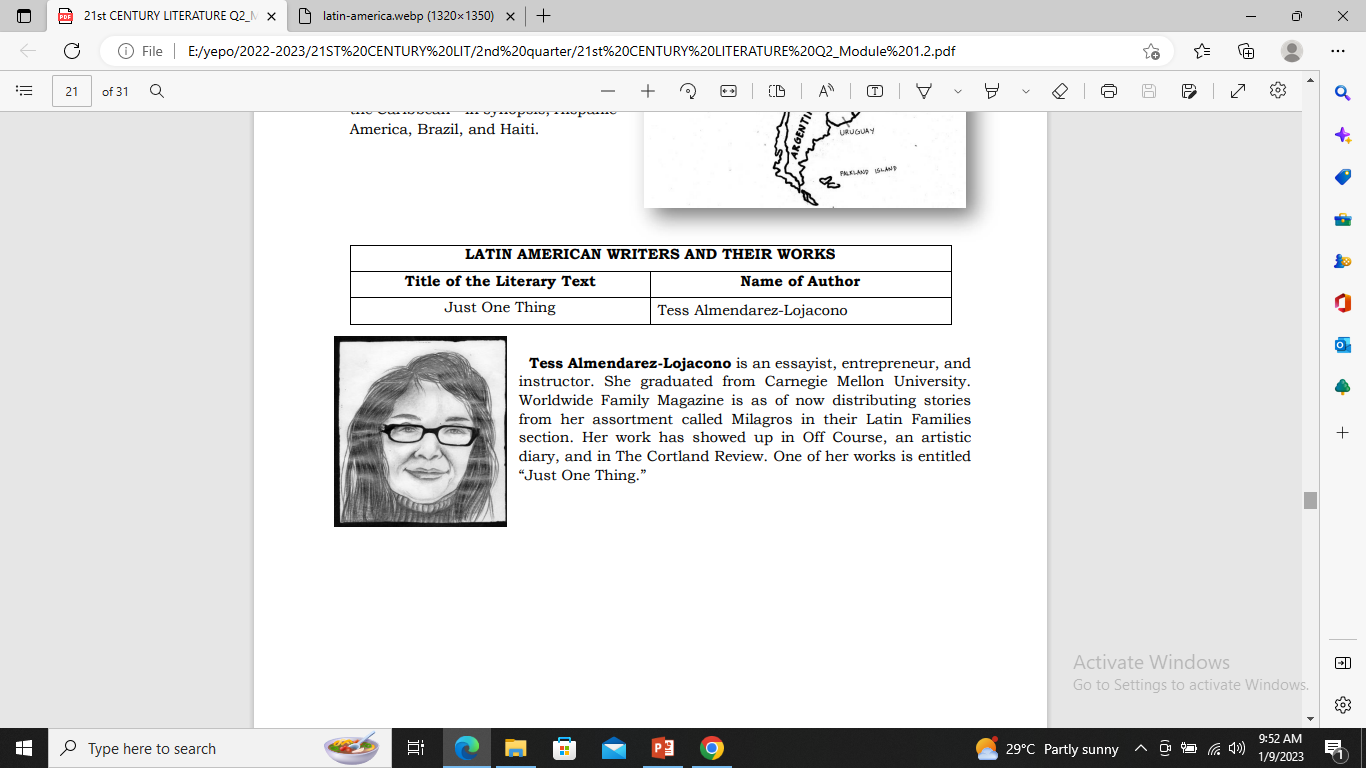
The history of European literature and of each various periods is one of the prominent figures among world literature. European literature emerges from world literature before the birth of Europe, whose classical languages are the recipients to the complex heritage of the Old World.
An additional unique feature is the global expansion of Western Europe’s languages and characteristic of its literary forms, especially the novel, the poetry, the epic beginning in the Renaissance.
The literary prominence of Europe is perceptibly known by its notable authors and their significant works. Here in this module, together we will venture towards learning their prolific literary fame.
- Old English or Anglo-Saxon (c. 450-1066)
- Encompasses the surviving literature written in Old English in Anglo-Saxon England, in the period after the settlement of the Saxons and other Germanic tribes in England c. 450 and “ending soon after the Norman Conquest” in 1066.
Genre, elements, structures, traditions:
- Epic poetry, hagiography, sermons, bible translations, chronicles, riddles
- Middle English literature (1066-1500)
- Middle English literature was written in many dialects that corresponded to the region, history, culture, and background of individual writers.
Genre, elements, structure, traditions:
- Allegorical narrative poem, drama, liturgy, folk tales, hagiographies, historiography, bible translations, romances
- English Renaissance (1500-1660)
- The English Renaissance turns to be a cultural and artistic movement. Introduced the sonnet from Italy to England
- Romances, allegorical narrative poem, drama, folk tales, vernacular literature, vernacular liturgy, sonnet, bible translations
- Elizabethan period (1558-1603)
- The rise of Edmund Spenser, Sir Philip Sidney
- Willian Shakespeare stands out in this period as a poet
- Renowned Christopher Marlowe, and Ben Jonson
- English Renaissance theatre, poetry, epic poem, songs, tragedy, romances, tragicomedies.
- Jacobean period (1603-1625)
- the birth of Shakespeare’s written genre “problem plays” and tragedy popularized the English sonnet
- problem play, tragedies, revenge play, romance, English sonnet, metaphysical poem.
- Late Renaissance (1625-1660)
- Rise of the second generation metaphysical poets
- The birth of allegory and classical allusions, and epic works
- Metaphysical poem, allegory and classical allusions, epic.
- Restoration Age (1660-1700)
- The pioneering of literary criticism
- The presentation of John Milton’s religious flux and political upheaval and his epic poem.
- Sexual comedy play, moral wisdom prose, literary criticism narratives, epic poem, fiction and journalism, political and economic writing,
- philosophical themes, allegory, novel, long fiction, fictional biographies, romance fiction, drama, comedy, satirical verse.
- Age of Romanticism (1798-1837)
- Originated artistic, literary, and intellectual movement in
- Landscape is often prominent in the poetry of this period so much so that the Romantics, especially perhaps Wordsworth, are often described as nature poets.
- Elegy, metrical romance,dramatic monologue, romantic novel, historical novel, nature poem, romantic poem, poetry and visual arts, sonnet, lyrical ballad.
- Victorian literature (1837-1901)
- The novel became the leading literary genre in English
- Charles Dickens emerged on the literary scene
- Introduction of detective novel in the English language
- Development of science fiction novels and realistic fiction.
- Vampire literature, horror fiction, invasion literature, short stories, dramatic monologue, musical burlesques, comic operas, novel, science fiction, realistic fiction, romanticism, ghost story.
- Modernism (1901-2000)
- English literary modernism developed in the early twentieth-century
- Lyric poet and major novels evolved
- Maintained a conservative approach to poetry by combining romanticism, sentimentality and hedonism
- the emergence of British writer of the early years of the twentieth-century Rudyard Kipling.
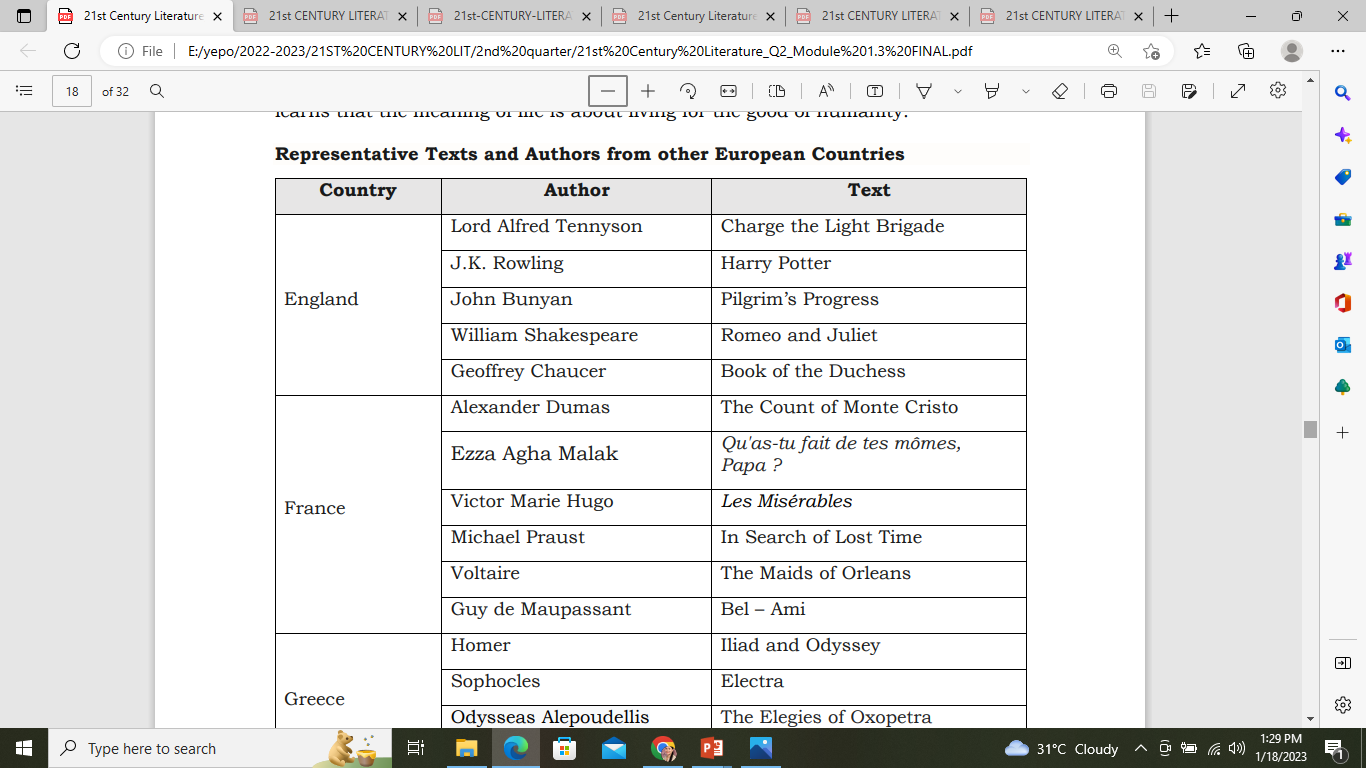
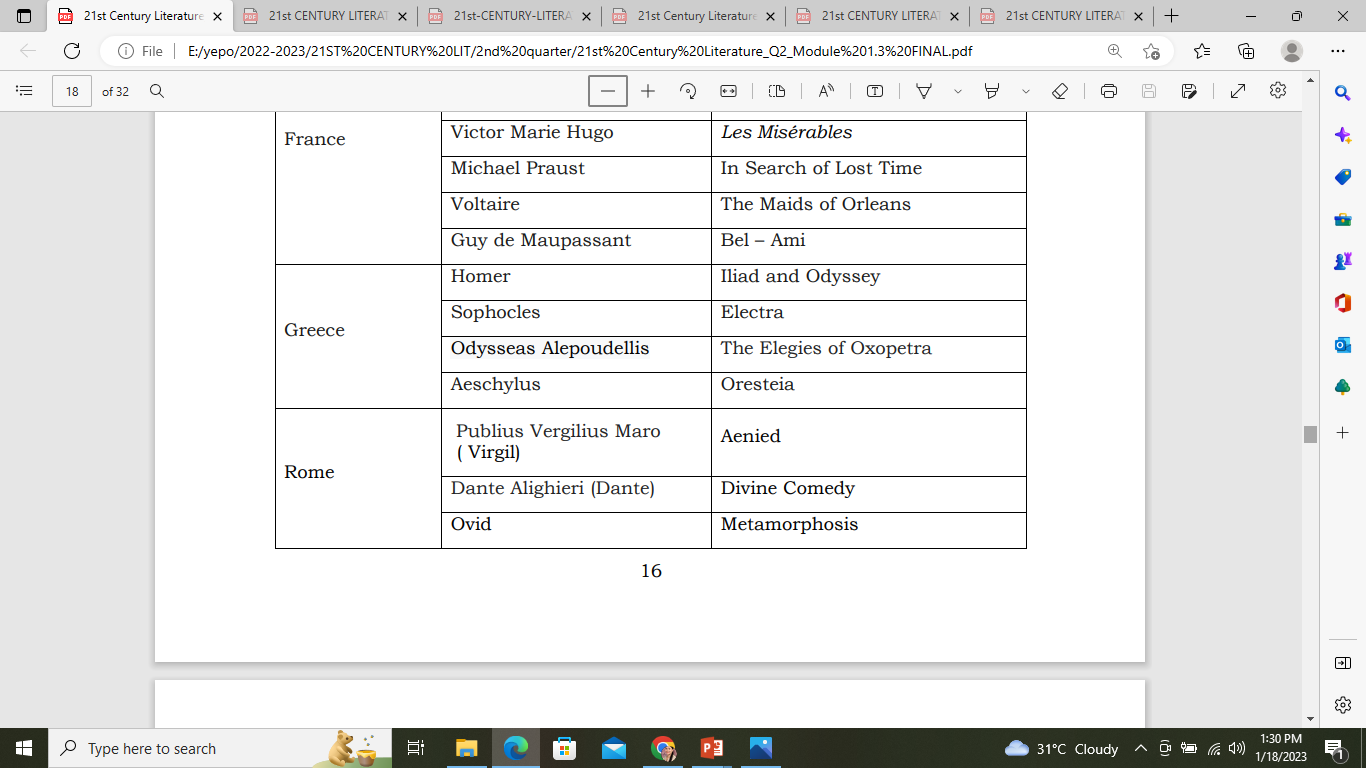
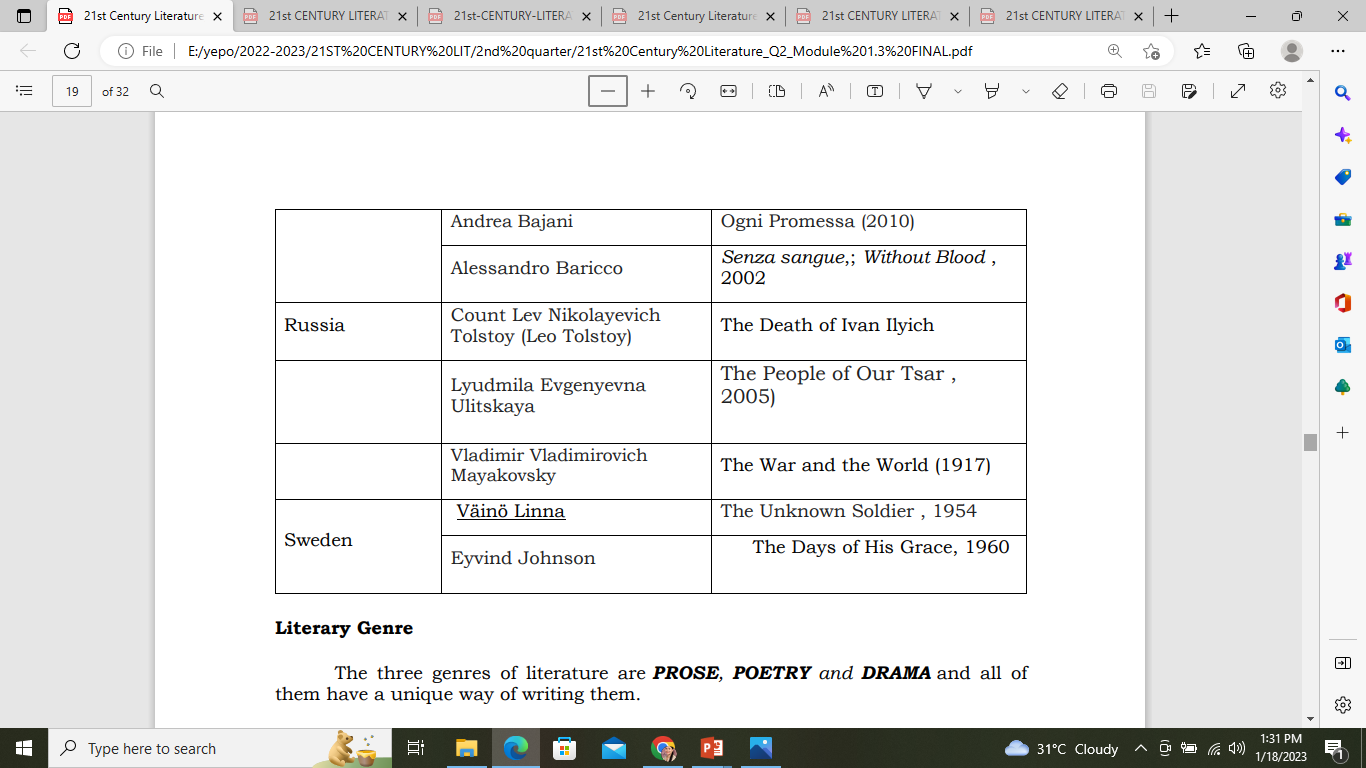
Sophocles
- the author of the literary text entitled “Oedipus the King”
Homer
- wrote “The Iliad and Odyssey”
Alexander Dumas
- wrote “The Hunchback of Notre Dame”
John Milton
- wrote “Paradise Lost and Paradise Regain”
John Bunyan
- wrote the “Pilgrim’s Progress”
Victor Hugo
- wrote “Les Miserables”
William Shakespeare
- wrote “Romeo and Juliet”
Eyvind Johnson
- wrote “The Days of His Graces”
Aeschylus
- wrote “Oresteia”
Ovid
- wrote “Metamorphosis”
Leo Tolstoy
- wrote “Anna Karenina”
Sir Ahmed Salman Rushdie
- wrote “The Satanic Verses”
J.K. Rowling
- wrote “Harry Potter”
Geoffrey Chaucer
- wrote “The Canturbury Tales”
Virgil
- wrote “Aenied”