High Roman Art - AP Art History 🇮🇹
Early Empire; The Age of Augustus
- (31 BCE), Egypt becomes part of Roman Empire.
- Cleopatra and Antony commits suicide.
- (Cleopatra is GREEK).
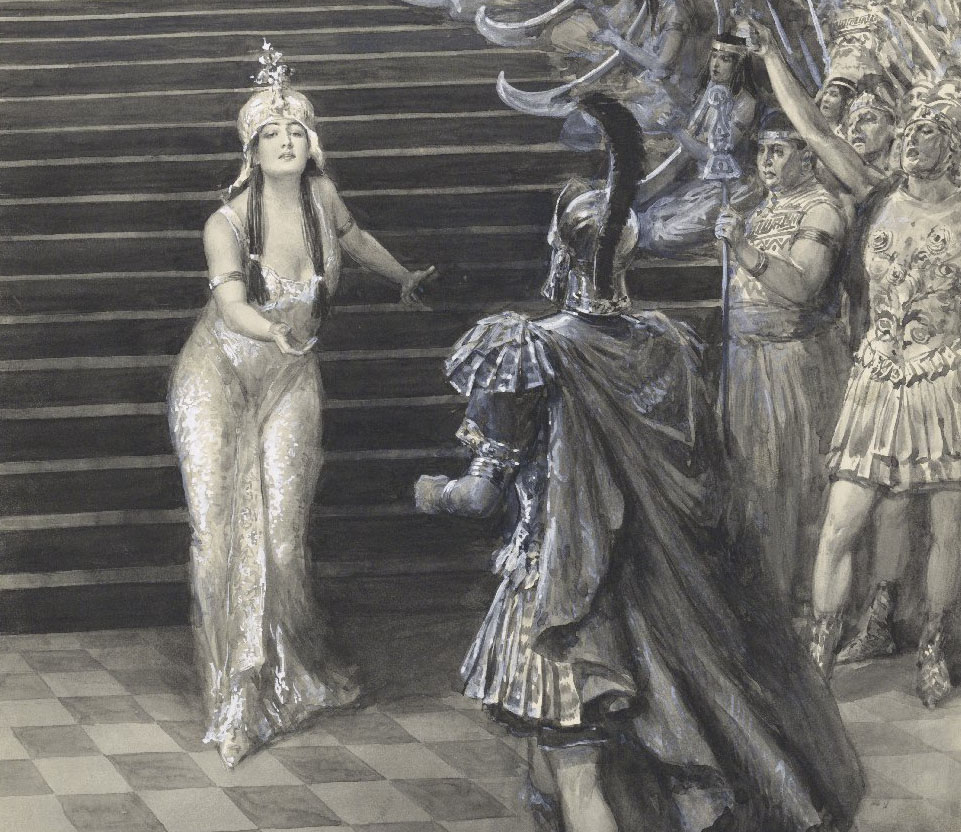
Emperor Augustus, ruler of the Roman Empire
- art style changes back from Classical Greek to Hellenistic when Augustus came into ruling.
- Verism inspires Emperor Augustus.
Augustus of Prima Porta (sculpture)
A gift commissioned by Augustus’s wife, Livia. A bas relief statue that demonstrates political propaganda and expresses the divinity of Augustus.
- more Hellenistic style.
- detailed armor and breast plate (curiass).
- marble sculpture.
- ^^similar to^^ ^^Dorisyphis statue^^ ^^by^^ ^^Polykleitos.^^
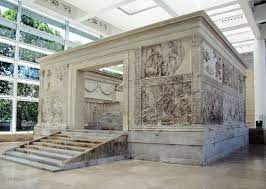
Ara Pacis (Altar of Augustan Peace)
- Altar dedicated to Augustus.
- A lot of high reliefs that contains;
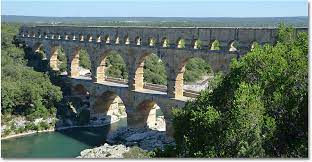
Roman Aqueducts
- type of water system that Romans used.
- provided and connected water from one city to one city.
- arches and pillars.
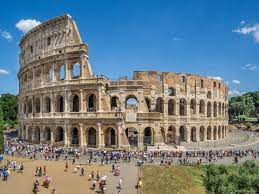
Colosseum (Flavian Ampitheater) - take notes on presentation
History
- Built by the Flavians.
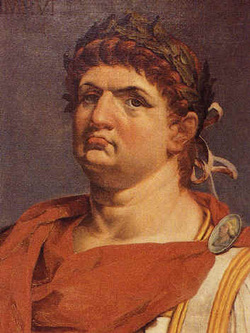
- Colosseum was named after the Colossus statue of ^^Nero^^ ^^(prior emperor to^^ ^^Vespasian^^^^)^^ that was built nearby the area.
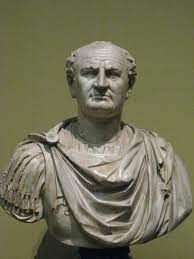
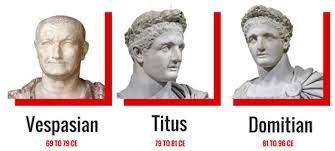
Flavian family:
- ^^Vespasian^^ (Dad and Emperor of Rome in 69 A.D.),
- ^^(^^^^Vespasian)^^ ^^his sons:^^ ^^Titus^^ ^^and^^ ^^Domitian.^^
\
\
Architecture:
- Multiple enterances (total: 76); meant for access to the many seats of the Colosseum.
- uses of arches, doric, ionic, Corinthian capitals
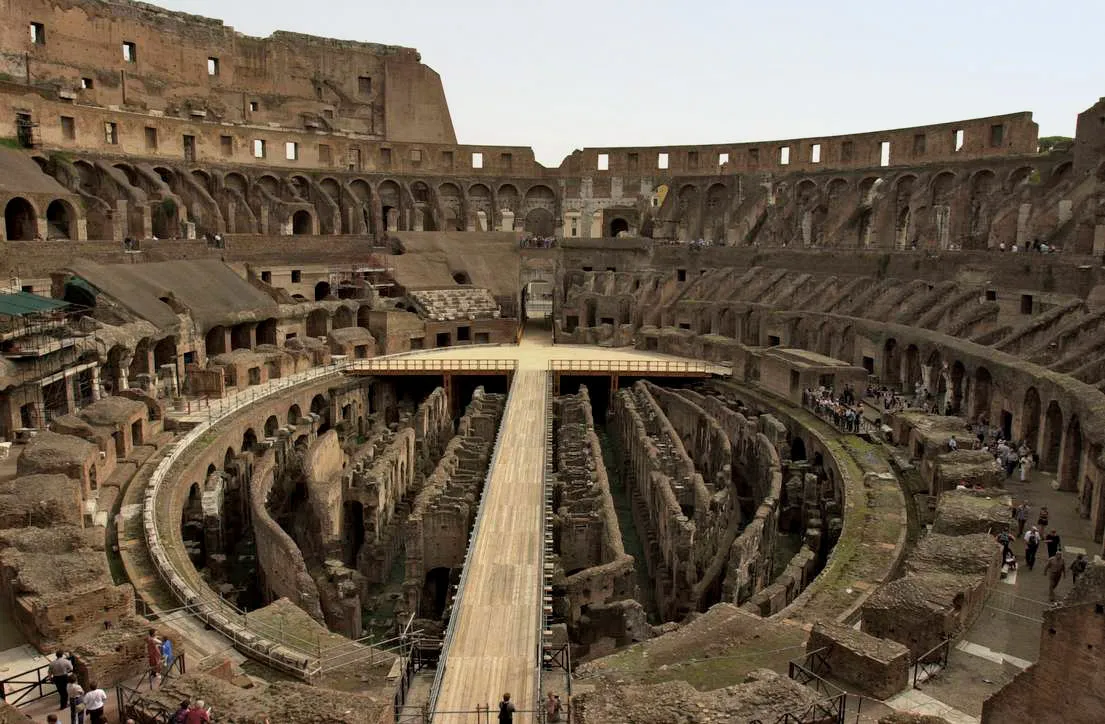
- wood platform at the core (center).
- subterranean cells for animals (under the platform) + stairwells, trapdoors
- flag staff
- canvas cover (provides protection from the sun)
- ^^barrel vaults^^
- ^^groin vaults^^
Registers:
1st level: Doric columns
2nd level: Doric columns
3rd level: Pertain columns
materials: travertine, brick, cement.
\
Augustus of Prima Porta - political propaganda and divinity
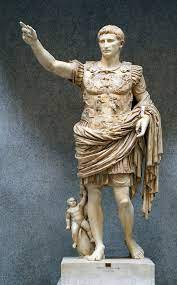
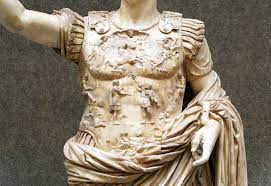
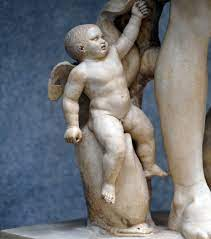
Augustus of Prima Porta
Date: early first century
Period: Roman Republic
Artist/Architect: N/A
Patron: Livia (wife of Emperor Augustus).
Original Location: Rome
Materials/techniques: marble, sculpture, relief on breastplate (curiass), originally painted, wet-drapery.
Form: idealized, not an actual portraiture of Emperor Augustus, marble sculpture, Canon of Porportions (Polykleitos), Contrapposto, Orator’s pose (to indicate speech; addressing the Roman senate).
Function: gifted by Livia, political propaganda, power and authority, divinity of Emperor Augustus.
Context: Augustus admired Greek art (mainly classical Greece) - Rome was making copies of Greek artworks.
- the sculptor modeled this statue from the Doryphoros statue ( by Polykleitos)
- Roman emperors were considered as gods.
- Augustus’ connection with the gods demonstrates divinity and political propaganda as depicted by this statue
Content: barefoot (standing on holy ground), image of cupid on top a dolphin near his calf; cupid touches the base of his robe (linking Augustus to Venus)
- cuirass shows a scene of the gods celebrating victory of Romans vs the Parthians. Arm extends to show him giving a speech to the Roman senate.
- Augustus wanted the statue to be idealized; not veristic
- statue is wearing the robe of a judge and military garb, breast plate armor with bas relief decoration. (civic events).
- expresses divinity; connections with the gods, Cupid at his side (Cupid is the son of Venus; linkage to Venus, Cupid is sitting on top of a dolphin)
- Augustus is barefoot; expresses divinity (only gods can touch the holy ground barefoot).
- Augustus considers himself a god; linkage to the gods demonstrates his divinity.
More about Augustus of Prima Porta
- visual political propaganda, power and authority; similar to the Hammurabi Steel. (armor is decorated with gods and mythical creatures)
- commissioned by his wife; placed at the South of Rome, in the Villa of Livia.
- NO PORTRAITURE
- cuirass (name of armor; depicts images of gods)
- breast plate = warrior, judge robe = civic leader
Forum of (Emperor) Trajan
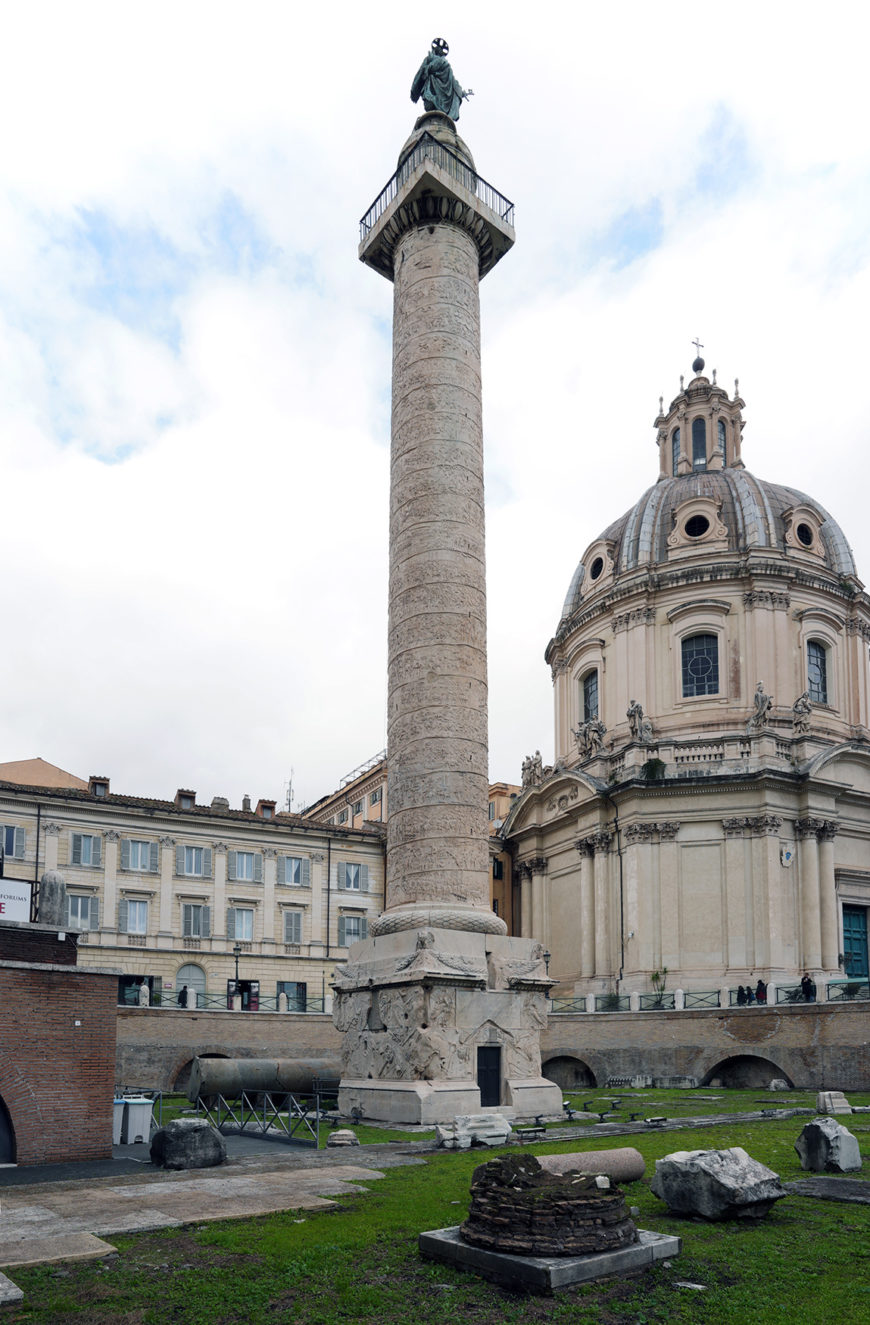
Name: Forum of Trajan
Date: 106-112 CE
Period/Style: High Empire Roman
Artist/Architect: Apollodorus of Damascus
Patron: citizens of rome - trajan
Original Location: Rome
Materials/Techniques: Brick and concrete, marble.
Form: forum (complex or series of buildings)
Column of Trajan:
- column was 128 feet tall, 1
- 50 bands went across the column
Function: demonstrates the power and authority of Emperor Trajan to visitors.
- provides guest/visitor quarters.
Context: Dedicated to Trajan’s victory over the Dacians.
- Trajan loses to the Decians first; but defeats the Decians afterwards.
Content:
- Equestrian center: Roman military would show their expertise with their horses (train horses everyday for battle).
- Basilica: for civic events( Trajan does all of his business for the state)
- Libraries - contains scrolls of in 2 languages (Latin and Greek)
- Temple of Trajan: dedicated to the Emperor (god) Trajan..
- Column of Trajan: Trajan's tomb; stores ashes of Trajan.
Column of Trajan:
625 ft of battle scenes that spirals up the column, 2500 figures on the column, 150 episodes depicted on the column, 23 different registers spiraling up the column, bas relief, Bronze statue of Trajan on top of column which was later replaced by the christians.
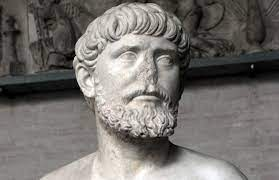
Column of Trajan:
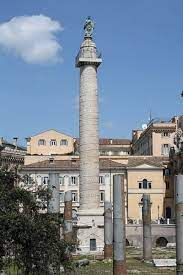
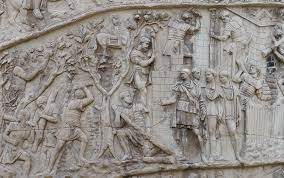
Facts about the Column of Trajan:
- 625 fr of battle scene artworks that spirals upwards the column.
- 150 Bands.
- 2500 figures.
- 150 episodes.
- 23 different registers.
- bas relief.
- theme of the column: bottom is dedicated to Decians defeating Trajan; top - Trajan defeating Decians (power and authority)
The Pantheon (Rome)
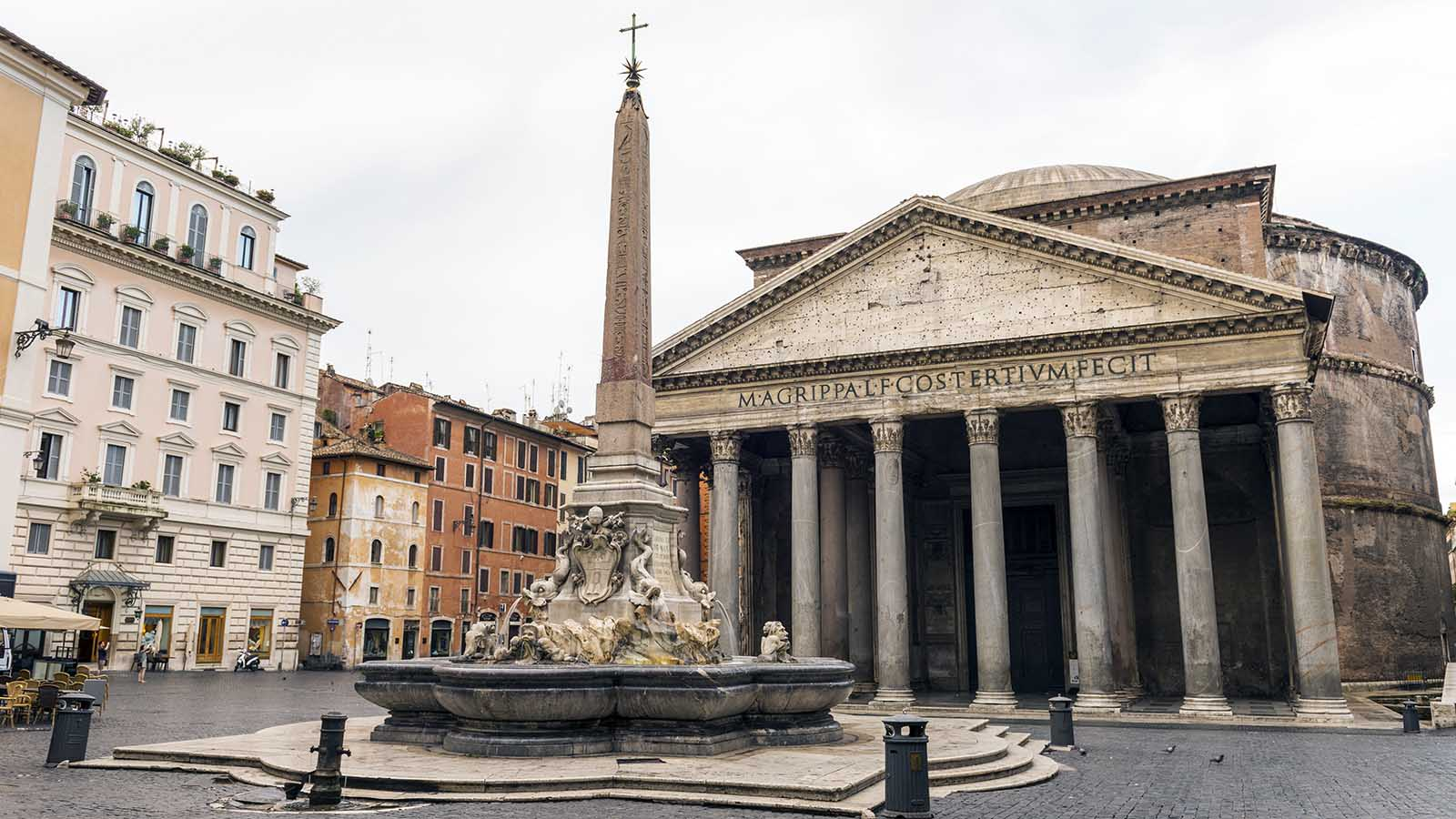
Name: Pantheon
Date: 125-128 CE
Period/Style: High Roman Empire
Artist/Architect: N/A
Patron: Hadrian
Original Location: Rome
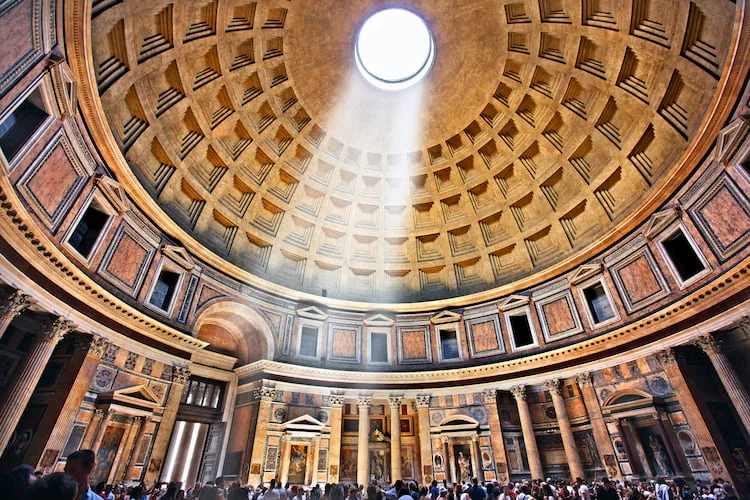
Materials/Techniques: cement, oculus (eye), coffers, layers of cemen^^t (decreases in size as it builds up to make the dome)^^, oculus hole on top to relieve stress from dome structure.
Form: contrast of circles and square marble patterns.
- width of the Pantheon is a perfect circle (Hemisphere)
- walls are 20 ft thick
- curved floor for rain drainage
- oculus is the only light source; meant for visitors to look up as symbolic as looking up to the heavens.
- coffer walls
- niches - to place statues of gods, including Hadrian.
Function: Hadrian knew of the original Pantheon that was burnt down, he decides to rebuild the Pantheon to dedicate to all the gods. The Pantheon was appropriated into a Catholic church.
Context: the first Pantheon was destroyed by fire in 80 CE.
- Hadrian decides to build a new one with the help of Marcus Agrippa.
Content: portico porches, columnade, corinthian columns, frieze above the capital with inscription dedicated to Marcus Agrippa, double-pediment (one triangular and one rectangular).
- Frieze inscription at the fountain in front of the Pantheon - “Marcus Agrippa, son of Lucius having been consul three times built it”.
- 12 ft coffers > 8 ft > 6 ft > 2 ft (upwards, grows more thinner, smaller stones are implemented), cement mixed with tuffa.
- No windows (indicates visitors to look up), isolating feeling.
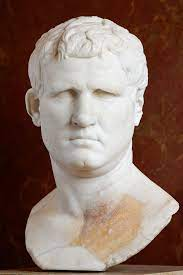
Significance of the Pantheon:
The Pantheon is important because Hadrian demonstrated many architectural features iconic to ^^The^^ ^^Pantheon^^ ^^such as^^ ^^double-pediment, corinthian columns, oculus wind, coffer, a perfect hemisphere and the contrast of circle and square patterns.^^ ^^The Pantheon also demonstrates^^ ^^Hadrian’s^^ ^^dedication to the art of architecture and building rather than fighting by rebuilding the Pantheon when the original one was burnt down.^^ The Pantheon was built dedicated to other gods, since the word Pantheon means many gods. The Pantheon wouldn’t still stand today if the Catholic church did not appropriate the Pantheon into a Catholic building. ^^The^^ ^^oculus^^ ^^of^^ ^^The Pantheon^^ ^^is the only window and light source, which was meant to make the visitors look up, as it’s symbolic of looking up at the heavens due to its theme of having many gods.^^
Hadrian statue (located at the Pantheon)
\
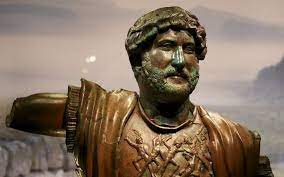
About Emperor Hadrian:
- beards were considered barbaric to the Romans.
- wore armor in this sculpture (cuirass breastplate)
- hated fighting; was a builder.
- dedicated himself to art and building.
- Hadrian is not meant to be represented as a warrior/soldier despite his appearance.
- known for building Hadrian’s Wall.
Harian’s Pantheon:
- Pan = many, theo(n) = gods.
- Built the Pantheon (dedicated to many gods).