4.6 Effects of the Market Revolution on Society and Culture
LEARNING OBJECTIVE: Explain how and why innovation in technology, agriculture, and commerce affected various segments of American society over time.
INTRODUCTION
Wide impact of market revolution resulted from innovations in technology, agriculture, and commerce
Affected all group of people in growing nation
- resulted in the development of a distinctively American culture, increase in religious fervor, and support of vairous reform movements.
Specialization on the farm, the growth of cties, industrialization, and the development of modern capitalism meant the end of self-suffiencent households and growing of interdependence among people
- farmers provided food to feed workers in cities, who in turn provided mass-produced goods to farm families
- standards of living increased for most Americans
- adapting to the impersonal, fast-changing economy—→ challenges and problems
WOMEN
The nature of work and family life changed as a result of urbanization and industrialization
Women no longer worked next to their husbands on family farms
- women seeking employment were limited to domestic teaching or services
- factory jobs (such as the Lowell system) were not common
- majority of working women were single (if they were married, they left their jobs and took up duties at home)
Women gained relatively more control over their lives
- women took on new responsibilities as men worked away from home
- they became moral leaders within the home, a development known as the cult of domesticity
- arranged marriages became less common, some women had fewer children
- legal restrictions remained on women’s rights (sufferage)
ECONOMIC AND SOCIAL MOBILITY
Real wages improved for most urban workers
Gap between very wealthy and very poor continued to increase
- social mobility (ability to move up in income or social status) occured from one generation to the next
- economic opportunities in the US were greater than europe
- poor, hard-working people becoming millionaires was rare
POPULATION GROWTH AND CHANGE
Population growth provided laborers and consumers required for industrial development
US population doubled, and continued to double
- high birthrate accounted for most of this growth
- immigrants from europe supplemented population after 1830
- the nonwhite population (blacks and natives) also grew
- enslaved population increased steadily despite the ban of importation on enslaved Africans after 1808
- 1/3rd of the population lived west of the Alleghenies, while both old and new urban areas were growing rapidly.
IMMIGRATION
In 1820, about 8000 immigrants arrived from europe, and in 1832, there was sudden increase
New arrivals in 1832 never fell below 50,000, and in 1854 they climbed as high as 428,000.
- nearly 4 million people from northern europe crossed the atlantic to start a new life in the US
Surge of immigration was cheifly the result of:
- the development of inexpensive and relative rapid ocean transportation
- famines and revolutions in europe that drove people away from their homelands
- growing reputation of the US as a country offering economic opportunities and political freedom.
Arriving by ship in the northern seacoast cities, many immigrant remained where they landed or traveled to farms and cities of the old northwest
- few journeyed to the south (plantation economy and slavery limited opportunities)
Immigration strengthed US economy and provided stable labor and an increased demand for mass-produced consumer goods
URBAN LIFE
North’s urban population grew 20% in 50 years
Result of rapid growth was expanded slums
- crowded housing, poor sanitation, infectious diseases, and high rates of crimes became the characteristics of large working-class neighborhoods.
Nevertheless, opportunities offered by the industrial revolution continued to attract people from farming communities
- included natives and immigrants from europe.
NEW CITIES
At key transportation points, small towns grew into thriving cities (Buffalo, Cleveland, Detroit, Chicago, Cincinnati, St. Louis)
The cities served as transfer points
- processed farm products for shipment to the east
- distributed manufactured goods from the east to their region
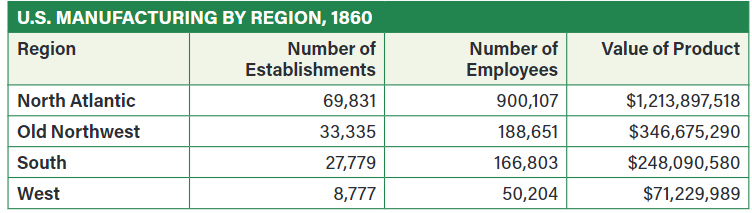
ORGANIZED LABOR
As manufacturing became increasingly important in the economy, goods became less expensive
Living standard improved for thouse who could afford goods
- shift in economy also create a small class of people who were very wealthy (bankers, factory owners), and a growing middle class of people
Industrial development meant a large number of people became dependent on wages earned in factories
- many workers used to earn their living as independent farmers and artisans
common problems of low pay, long hours, and unsafe working conditions led to the organization of unions and local political parties to protect interest
- first US labor party succeeded in electing a few members of the city council
- an increasing number of urban workers joined unions and participated in strikes
Organized labor acheived notable victories
- Massachusetts supreme court ruled in Commonwealth v. Hunt that “peaceful unions” had the right to negotiate labor contracts with employers
- some legislatures in the North passed laws establishing ten-hour workdays for industrial workers
Improvement for workers continued to be limited by:
- periodic depressions
- employers and courts that were hostile to unions
- abundant supply of low-wage immigrant laborers