Gastrointestinal System
Gastrointestinal System
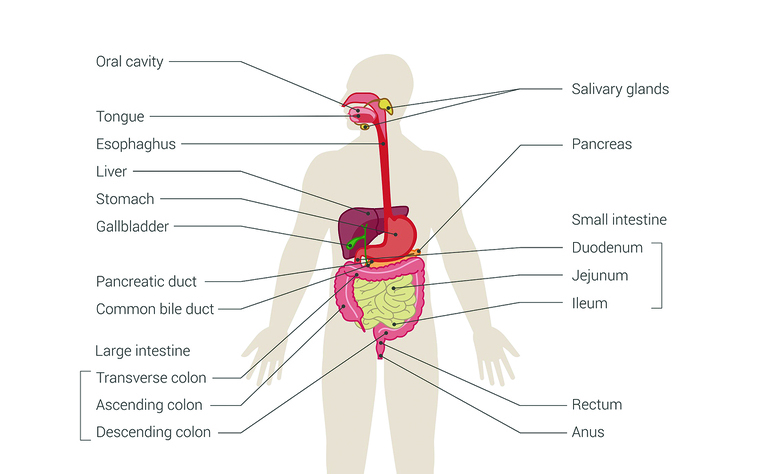
Gastrointestinal system: Digests and transport food. Absorbs nutrients and eliminates body wastes.
Begins with a long muscular tube to the mouth, esophagus, stomach, small intestine, large intestine and anus
Organs
Mouth: the buccal cavity, first stage of digestion
Tongue: contains taste buds
Teeth: breaks down food so it can be swallowed easily
Salivary glands: produces saliva and chemical breakdown to lubricate the mouth to make swallowing easier. Produces 1-1.5 quarts of saliva each day
Hard palate: roof of mouth that separates the mouth and the nasal cavity
Soft palate: separates mouth and nasopharynx’
Uvula: prevents food from entering the lungs during swallowing
Pharynx (throat)
After food is mixed with saliva through the throat as a bolus. When the bolus is swallowed,
Esophagus
A muscular tube that carries the bolus to the stomach.
Stomach: chemical digestion begins, can hold food for 1-4 hours
Receives food from the esophagus. Mucous membrane lining esophagus that contains rugae that disappears as the stomach fills
Cardiac sphincter: located between esophagus and stomach
Pyloric sphincter: between small intestine and stomach
Chyme: semisolid material in the stomach.
Gastric juices: has HCl acid (kills pathogens), aids iron absorption, activates pepsin (breaks down protein), contains lipase (breaks down fats into fatty acids and glycerol)
Small intestine
The intestines is where most of the absorption during digestion takes place
The small intestine has three parts: Duodenum, Jejunum, and ileum
Duodenum: digests food coming from the stomach to the jejunum
Jejunum: the middle part of the small intestine. Digests food and located between the duodenum and the ilium
Ileum: the last part of the small intestine. It connects to the cecum, the first part of the large intestine
Large intestine
Cecum- connected to the ileum or small intestine
Ascending colon: cecum to lower part of intestine
Transverse colon: across intestine
Descending colon: From the transverse colon to the anus
Sigmoid Colon: located between the anus and the descending colon
No digestive enzymes are found n the large intestine
Some vitamins and minerals are absorbed into the bloodstream
More CHO are are activated upon bacteria
Water is absorbed to turn wastes into solid
Any nutrient available are absorbed before they are eliminated
Absorption of B-complex vitamins and vitamin are produced by bacteria
Appendix
Function is unknown. Appendix is not needed and can be removed
Liver
Located below the diaphragm
Functions:
Helps control amount of protein and sugar in the blood
Stores sugar and vitamins
Produces blood proteins (prothrombin and fibrinogen)
Produces bile (carried to the small intestine to help with digestion and absorption). Bile is stored in the gallbladder.
Detoxifies bacteria and substances in the blood from the small intestine
Gallbladder
Located at the underside of the liver
A small muscular sac that holds 2 ounces of bile
Releases bile into the small intestine for absorption
Pancreas
Located behind the stomach
Produces digestive enzymes: trypsin and chymotrypsin (breaks down proteins), lipase and steapsin (breaks down fats)
Both endocrine and exocrine
Aids the digestion in the duodenum
Produces insulin and glucagon into the bloodstream
Aging Changing in the Digestive System
Decrease in taste buds and digestive enzymes
Loss of Bowel tone
Slowing of peristalsis
Slower absorption of nutrients
Decrease of chewing capacity
Diseases and Conditions of the Gastrointestinal System
Diverticulosis and Diverticulitis
Overview: Diverticulosis is the formation of Diverticula (small bulging pouches/holes that stick out of the descending colon of the large intestine). It comes with little to no symptoms. Overtime, this leads to diverticulitis the inflaming of the diverticula
S/S:
Diverticulosis:
There are little to no symptoms of diverticulosis. In some cases, you will experience abdomen pain and changes in bowel.
Diverticulitis
Fever
Changes in bowel, can be noticeable in diarrhea and constipation
Nausea
Tenderness in abdomen when touched
Treatment and Preventions
Preventions: Exercise regularly, maintain a healthy weight, eat fiber, quit smoking and alcohol use, and maintain proper fluid balance
Treatment: have a liquid diet (uncomplicated diverticulitis), antibiotics and surgery (complicated diverticulitis)
Helicobacter Pylori
Overview: the infection or weakening of stomach lining and duodenum caused by the bacteria Helicobacter Pylori. Can lead to gastritis
S/S: burning sensation in stomach, ulcers, nausea, loss of appetite
Dx: blood test, breath test, stool culture
Tx: H-2 Blockers, Proton pump inhibitors, stomach lining protectors
Anal Fissure
Overview: Tearing of the small tissue lining the anus. Caused by passing large stools, or constipation
S/S: pain during and after bowel movements, blood on stool and toilet paper
Tx: Increased fiber and regular fluid intake is needed to heal for a few weeks
Steatorrhea
Overview: when there is an excessive amount of fat in the stool. Occurs when the digestive system has trouble breaking down and absorbing fats. Caused by conditions that affect the pancreas, liver, and bile ducts
S/S: excessive oil in stool, bulky and smelly stool
Tx: Dietary changes such as increased fiber intake, less fat/oil intake, medication, and monitoring of the stool
GERD
Overview: Known as Gastroesophageal Reflux Disease. Occurs when acid from the stomach overflows into the esophagus and mouth
Symptoms: Dysphagia, vomiting, heartburn, and chest pain
Tx: Diet changes, surgery, antacids
Hernia
Overview: occurs when a body part in the abd pushes through a weakened area or a natural opening of a body wall
S/S: heartburn, stomach distension, dysphagia, chest pain
Tx: small meal, surgical repair, staying upright after meals
Cirrhosis
Overview: when your liver is scared and permanently damaged, causing liver failure
S/S: Liver enlargement, Anemia, Indigestion, Nausea, Edema in the leg and feet, Hematemesis, Nosebleed, Jaundice, Ascite
Tx: Rest, alcohol avoidance, and proper nutrition
Gallstones
Overview: occurs excess bile and cholesterol in the gallbladder accumulates into small lumps
S/S: sweating, fever, tachycardia, jaundice, light colored urine, dark colored stool
Tx: Medication, gallbladder removal
Irritable Bowel Syndrome:
Overview: chronic long term disease that affects the stomach and digestive tract
S/S; Cramps or abdominal pain usually related to passing stool, Diarrhea or constipation, Changes in the stool, mucus will make it looks whitish, Excessive gas and bloating
Tx: Increase intake of fiber and fluids, Rifaximin (abx), limit amount of dairy and gluten
Crohn’s Disease
Overview: Inflammation of the digestive tract, thought to be an autoimmune disorder
S/S: diarrhea, cramping/pain in abdomen and weight loss
Tx: No cure but drugs that reduce activity in immune system can help
Ulcerative Colitis:
Overview: an inflammatory bowel disease that inflames the colon/large intestine and rectum
S/S: Diarrhea, Abdominal pain, Bloody stools, Anemia, Delayed growth and development of children
Tx: No cure but treatment is available like surgery or an autoimmune drug
Gastroenteritis
Overview: Known as the stomach flu. Caused by food poisoning, infection, and toxins
S/S: abdominal cramping, fever, NVD
Tx: Medication, rets, abx
Intussusception
Overview: when one segment of the intestines folds into another. Not life threatening, but it is better to treat asap
Sx: bloody stool, abdominal pain, emesis
Tx:
Children: Enema of air and water through the intestines
Adults: removal of bowels
Colorectal cancer
Overview: occurs when cancer cells attack the large intestine
S/S: Diarrhea, changes in bowel, abdominal pain, wt loss, bloody stool
Tx: Surgery and Chemotherapy
Celiac disease:
Overview: when the immune system reacts to the consumption of gluten. It damages the small intestine lining and disables it from absorbing nutrients
S/S: Diarrhea, Wt loss, cramping/abdominal pain, bloating, fatigue, constipation
Tx: Diet modifications (eat gluten free meals)
Pancreatitis
Overview: Inflammation of the Pancreas
S/S: dehydration, tachycardia, swollen belly, bleeding, wt loss
Tx: diet modifications and regular intake in fluids