DNA Damage and Mutations-021
Overview
Process of Gene Expression:
In transcription, the information in the DNA is used to create a molecule of RNA
In translation, that RNA is used to produce a protein that can be carried out the functions of the cells
Mutation
Heritable change to the DNA
Once the mutation occurs, it is passed down to daughter cells
Spontaneous and random
Point mutation: one or a few nucleotides affected
Mutations may be beneficial, harmful, or neutral
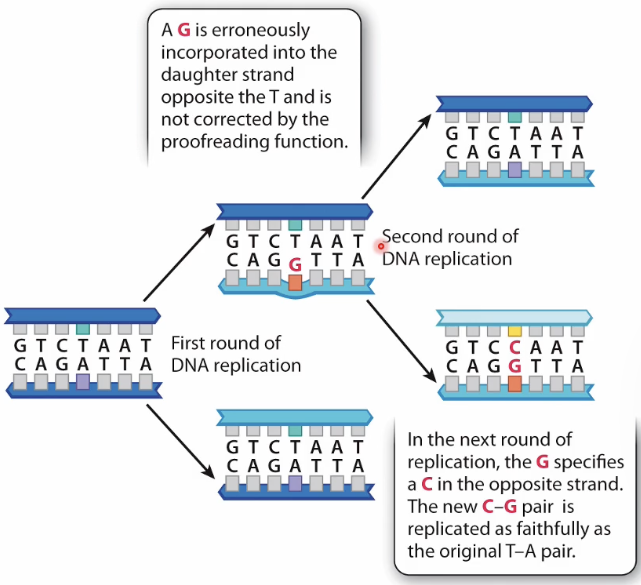
Errors or damage become mutations after replication has occurred
Replication error: DNA polymerase makes a mistake in replication of DNA
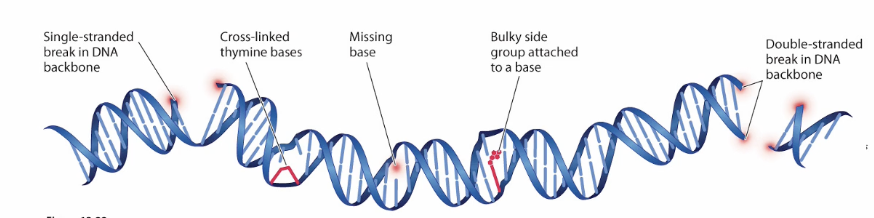
DNA Damage: caused by spontaneous reactions or exposed by mutagens
Damage or errors are not mutations! They become mutations after replication
Summary
Mutations are heritable changes in the DNA
Errors or DNA damage that has been replicated
Most mutations are spontaneous and random
Mutations may be beneficial, harmful, or nuetral
Mutations are key drivers of change!
Repair of Replication Errors
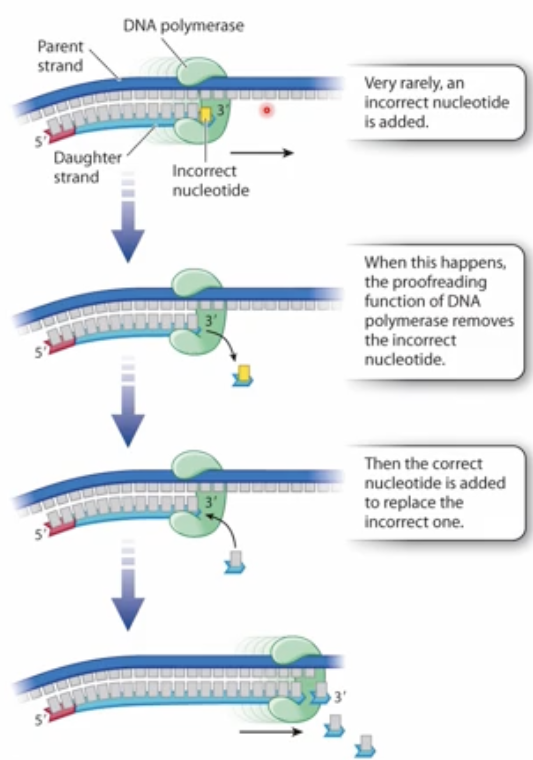
Errors during the replication process are often detected by DNA polymerase
DNA replication occurs in the S phase
Proofreading: when the DNA polymerase is actively working and it catches an error
How does DNA polymerse sense this error
Due to DNA Polymerase is very accurate it is able to detect that error
Errors just after the replication process
S phase or G2 of the cell cycle
DNA polymerase has already moved on from this part of the genome
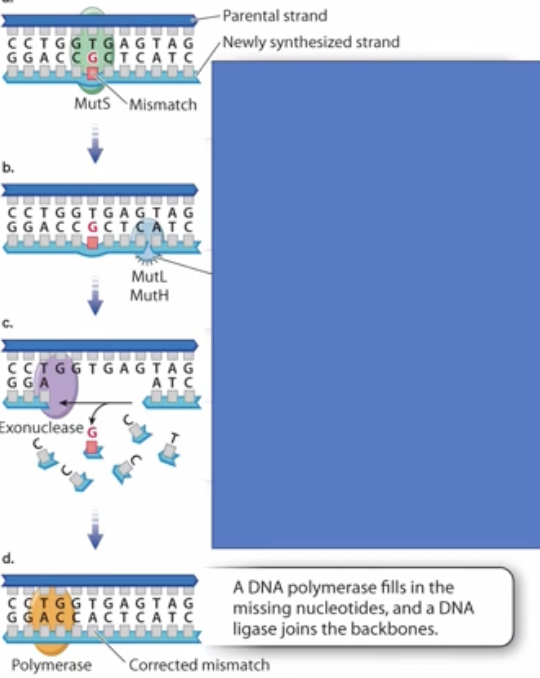
How does the cell sense this error?
There are chemical difference between the parent strand that was used as the template in replication between the parent strand and the newly synthesized daughter strand, and the cell can detect what is new and what is old
How strand likely contains the error?
The daughter strand
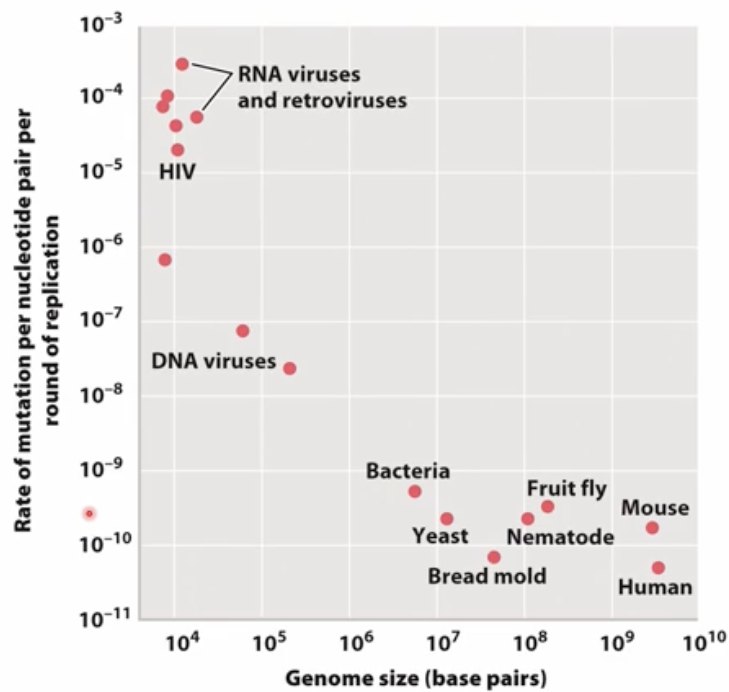
Every time a cell replicates its genome, there is an opportunity for mutations to occur
The overall mutation rate in humans is very low per each round of replication
What about viruses?
RNA viruses have a higher mutation rate than DNA viruses
Summary
Mutations can be cause by replication errors
Less than 1 error per 10 billion nucleotides replicated in humans
Erros are rate due to
high accuracy of DNA polymerase
DNA polymerase proofreading
Error detection and repair just after replication
Before replication errors can lead to mutations, cells that divide more are more likely to have mutations
DNA polymerase can synthesize and proofread a DNA sequence
Detection and Repair of DNA Damage
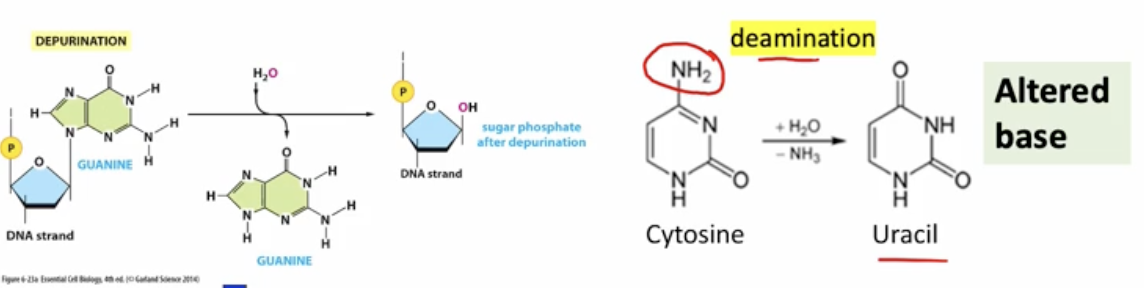
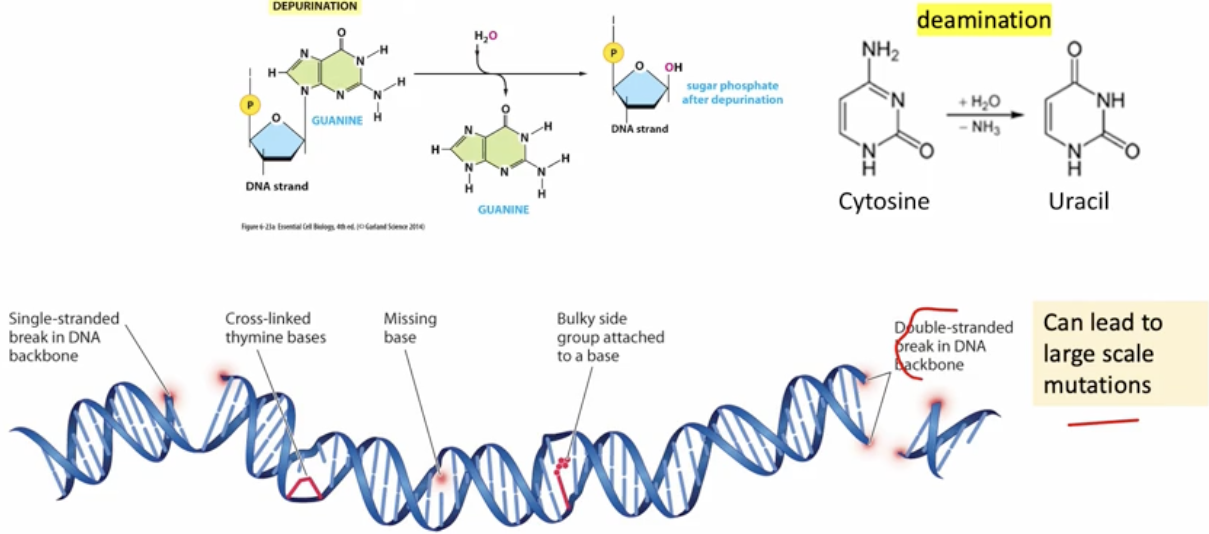
DNA can be damaged by spontaneous events
Spontaneous DNA damage can occur at any time in the life of a cell
Reactive oxygen species
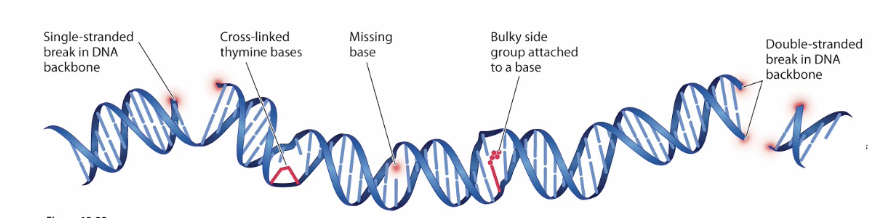
Various environmental exposers can be mutagenes
UV rays
Cross-linked thymine bases
Tobacco smoke
Bulky side group attached to a base
X-rays
Double-stranded break in DNA backbone
Some chemicals cause insertion or deletions of nucleotides
General strategy for correction of error or damage
Recognize damage
Fix damage
Remove damage(specialized enzymes)
Use undamaged strand as template for repair(DNA polymerase)
Or Join broken strands(DNA Ligase)
Repairs occur throughout the cell cycle
Deamination:is the removal of an amino group
Summary
Spontaneous DNA damage is common in cells
Damage can also be cause by mutagens (UV light, X-rays, chemicals)
Many different DNA repair processes are constantly working to detect and accurately repair DNA damage
Overall, mutations in human cells are quite rare
Small and large-scale mutations
Point mutations arise from errors in replication and DNA damage that alter the DNA
Point mutations in protein-coding regions
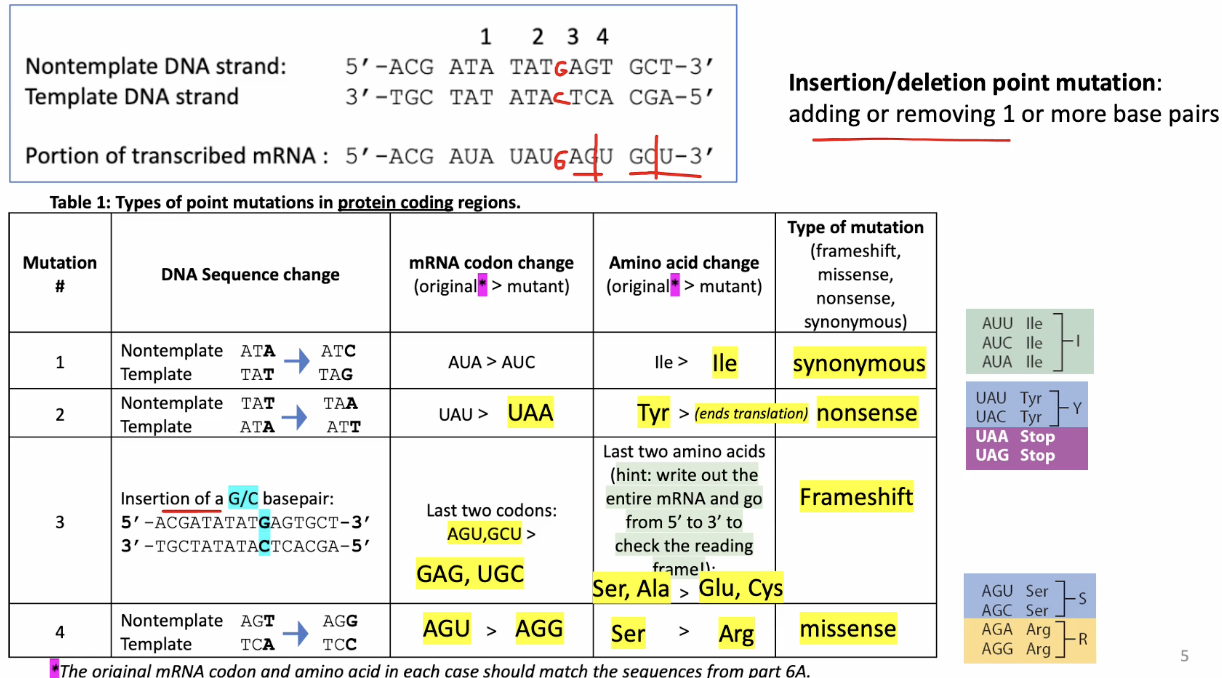
Point Mutations in protein-coding regions classified by effect on the amino acid sequence
Substitution mutation: change one base pair to another
Synonymous mutations: Does not change the amino acid
Most amino acids are coded for by more than one codon
Does not change the protein structure
Missense mutation: changes an amino acid
This may affect the protein structure if the mutation results in an amino acid with different properties
Nonsense mutation: creates a stop codon
May shorten the protein
Insertion/deletion mutation: add or delete one or more base pairs
Frameshift: Insertion that changes the reading frame in translation
Anything other than a multiple of 3 base pairs
Changes many amino acids after the site of the mutation
Indel without frameshift: insertion that does not change the reading frame in translation
Multiple of 3 base pairs
Adds or deletes one amino acid
Large-scale Scale Chromosomal mutations arise from double-strand breaks
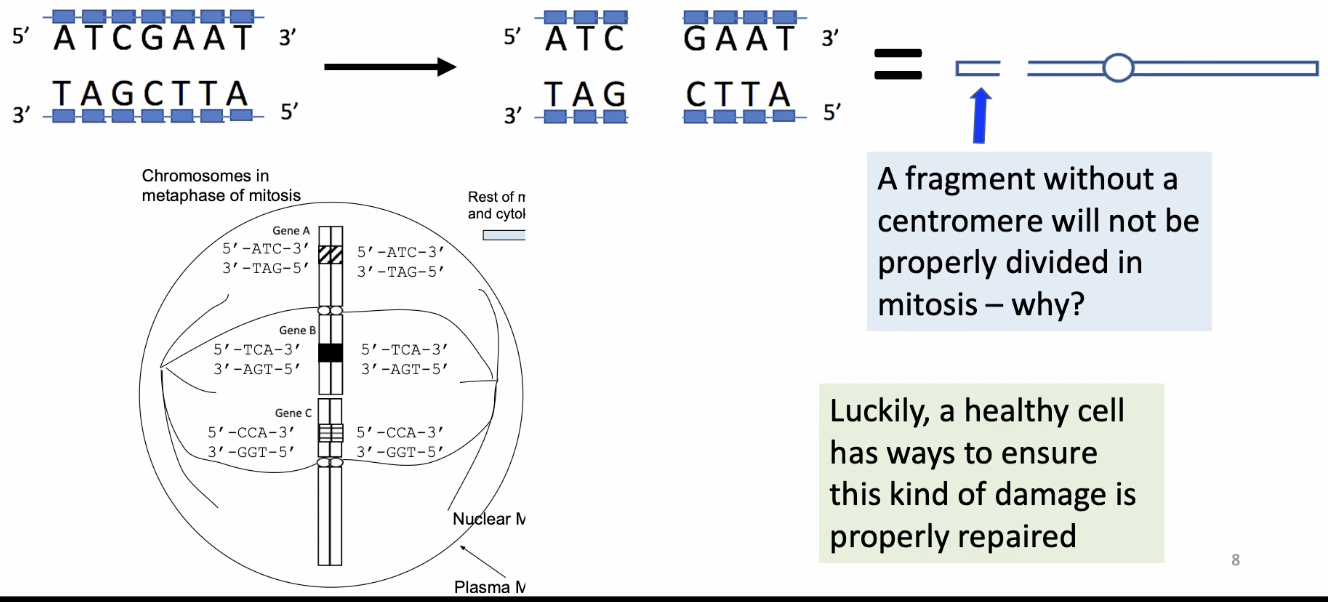
Double-stranded break in the DNA backbone
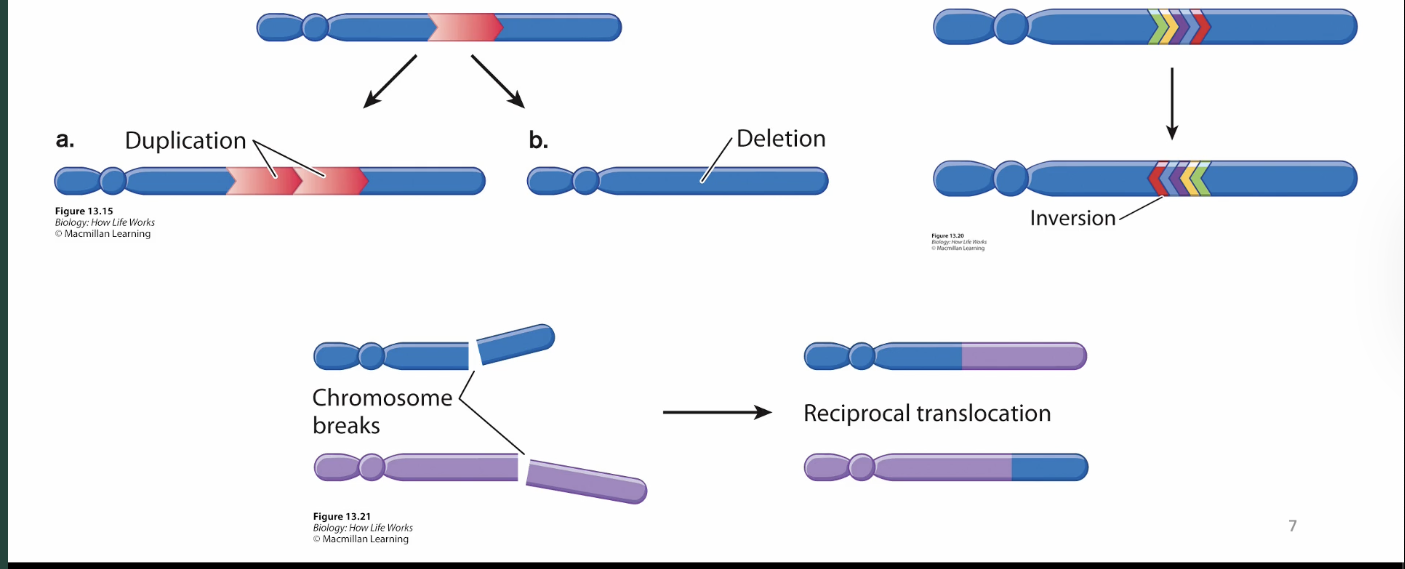
Double-strand breaks can lead to information loss
A reciprocal translocation is a type of large chromosomal damage
Summary
Mutations can be point mutations(single base-pair changes & small insertions/deletions) or large-scale changes(chromosomal mutations)
Point mutations in protein-coding sequences, including synonymous, missense, nonsense, and frameshift mutations
Of these, nonsense and frameshift mutations have the greatest effect on protein structure
All mutation that alter amino acids have the potential to alter protein function