Paper 1 Psych
Memory in Psychology
Central Idea
Memory
Main Branches
Types of Memory
Sensory Memory
Short-Term Memory
Long-Term Memory
Processes of Memory
Encoding
Storage
Retrieval
Factors Affecting Memory
Attention
Emotion
Stress
Memory Models
Multi-Store Model
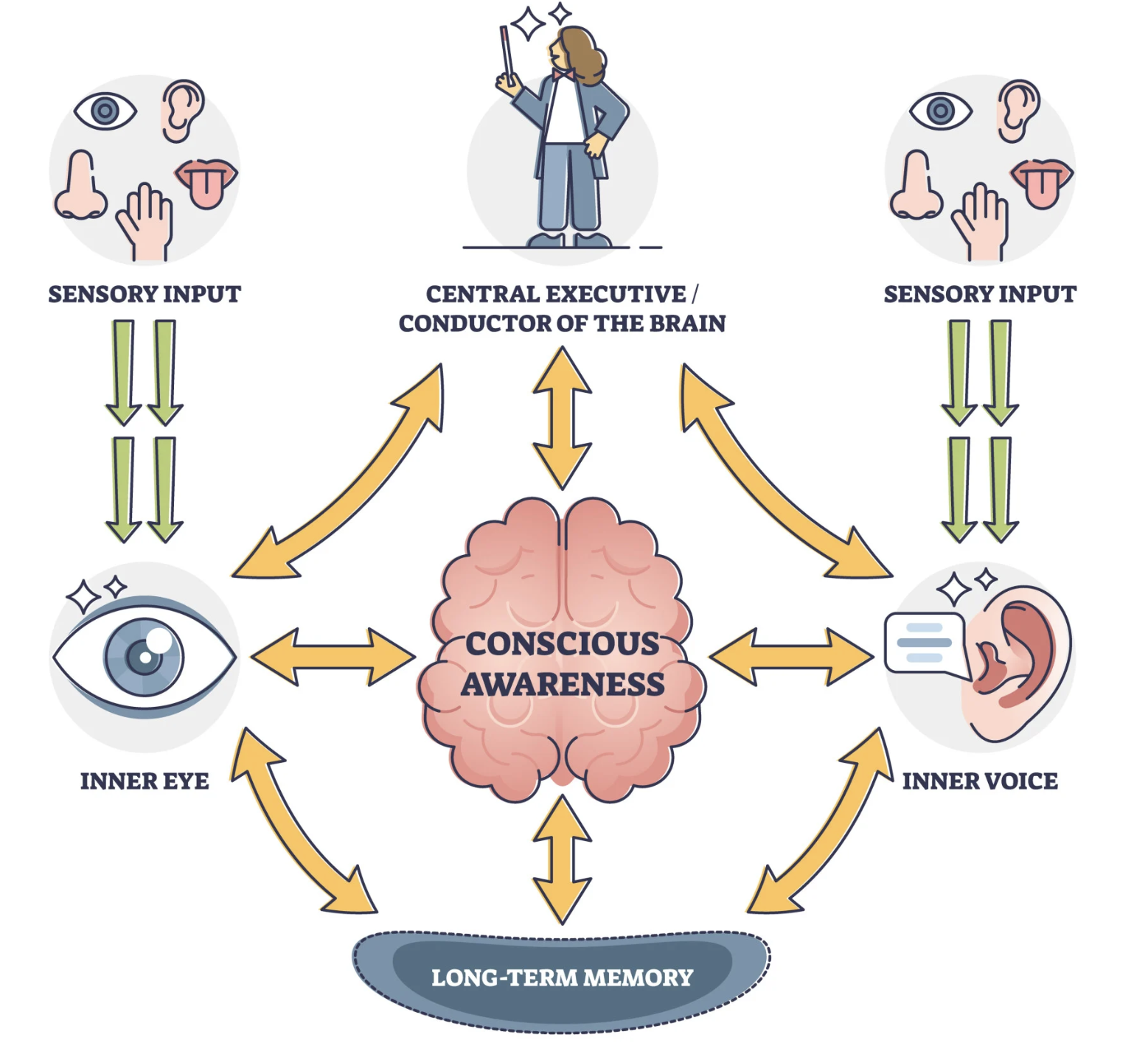
Working Memory Model
Levels of Processing Model
Sub-branches
Types of Memory
Sensory Memory
Iconic Memory
Echoic Memory
Short-Term Memory
Capacity
Duration
Long-Term Memory
Explicit Memory
Semantic Memory → facts/not time stamped, learned or thought (languages, capital cities, movies, square root of 100)
Episodic Memory → personal/time stamped, experienced not learnt (where last holiday was, first memory, last meal, 16th birthday)
Implicit Memory
Procedural Memory → learned with motor skills/ unconscious, automatic (muscle memory, walking, talking, sport)
Priming
Processes of Memory
Encoding
Visual Encoding
Acoustic Encoding
Semantic Encoding
Storage
Maintenance Rehearsal
Elaborative Rehearsal
Retrieval
Recall
Recognition
Relearning
Factors Affecting Memory
Attention
Selective Attention
Divided Attention
Emotion
Flashbulb Memories
Mood-Congruent Memory
Stress
Effects on Memory Consolidation
Effects on Retrieval
Memory Models
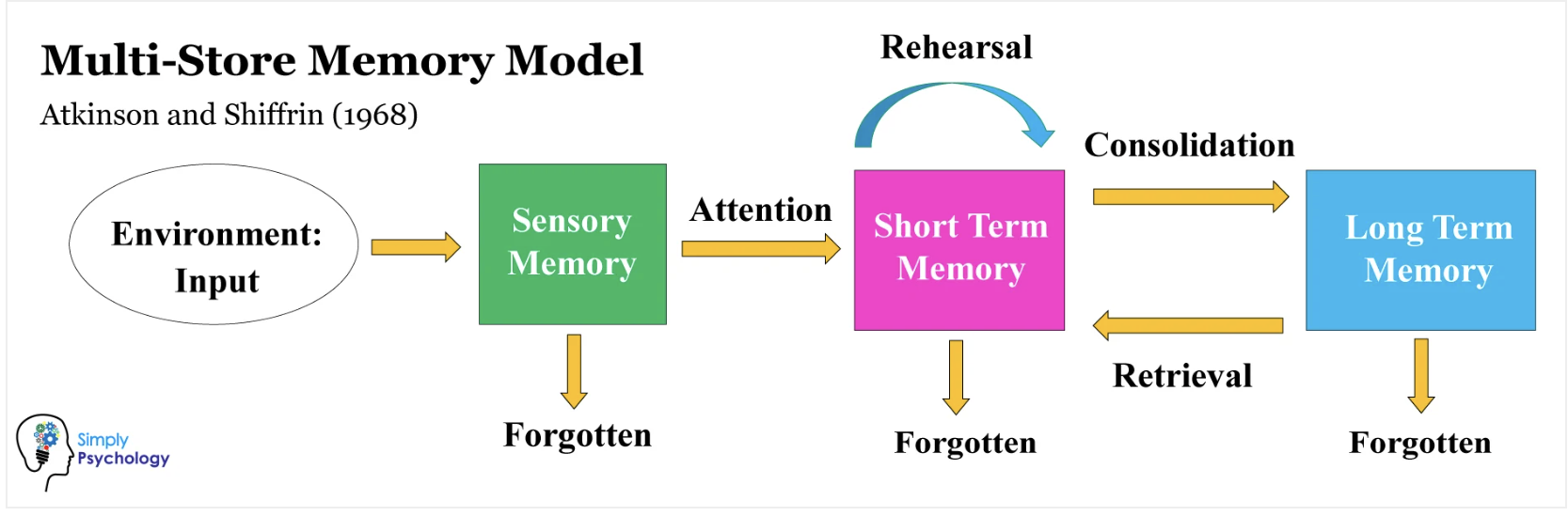
Multi-Store Model
Sensory Register
Short-Term Store
Long-Term Store
Working Memory Model
Central Executive
Phonological Loop
Visuospatial Sketchpad
Levels of Processing Model
Shallow Processing
Deep Processing
Case studies:
H.M provided evidence that there are different memory systems in the brain.
H.M suffered from epileptic seizures after he fell of a bike at age 7. it was assumed that seizures were connected to fall , and he became increasingly incapacitated. at age of 27, William Scoville performed experimental surgery to stop seizures. Tissue from medial temporal lobe, including hippocampus was removed on both sides of the brain.
post surgery, H.M suffered from amnesia. he could not create new episodic or semantic memories, but he was able to learn a few procedural memories. his personality remained unchanged and no general intellectual impaired sustained.
Clive Wearing
in both cases of H.M and Wearing, they were not able to create new episodic memories and some semantic memories. however H.M was able to recall most old episodic memories whereas Wearing remembered very few. in addition both men could remember procedural memories even if they don’t actually remember learning them, they were still able to perform certain tasks through practice. their unconscious memory of drawing a star or learning the piano shows that some parts of long-term memory were undamaged whereas some were very damaged