Unit 4
4.1 - Plate Tectonics
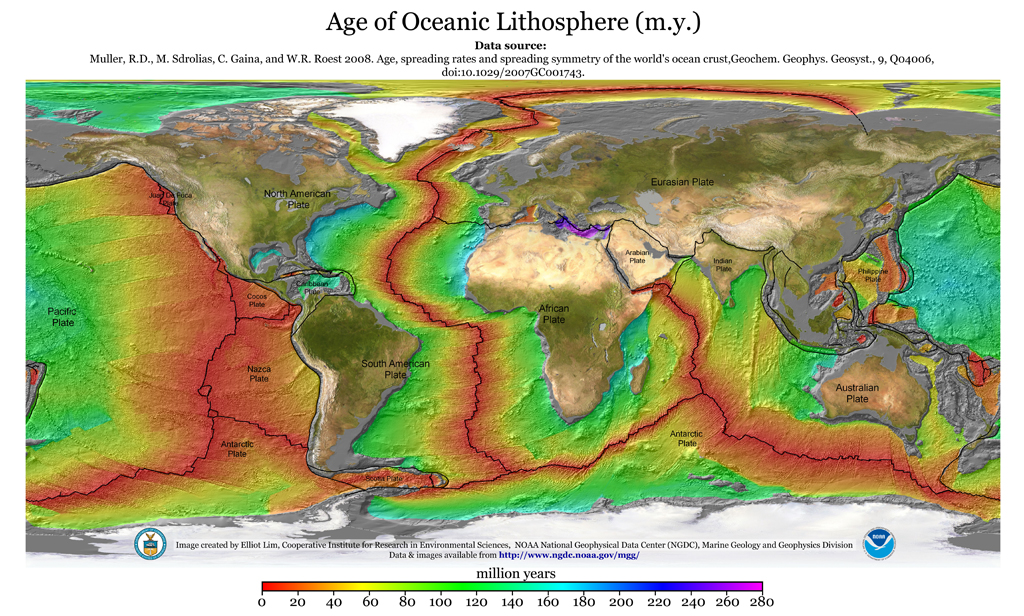
younger in the ocean bc the oceanic crust recycles there
CONVERGENT
plates move toward each other causing one to subduct
causes earthquakes and volcanoes
ex: Himalayas
DIVERGENT
plates move apart
creates new crust
forms mid-oceanic ridges
ex: red sea
TRANSFORM
plates slide past each other
can cause slight earthquakes
ex: San Andreas Fault(Cali)
Hot Spot - localized area where the mantle is very hot and the heat rises
ex: Hawaiian islands
4.2 - Soil Formation & Erosion
physical weathering -
chemical weathering -
soil horizons
4.3 - Soil Composition & Properties
loam
4.4 - Atmosphere
Troposphere
has 80% of air bc air pressure is greatest
all weather occurs here
temps decrease
Stratosphere
Ozone layer here
temps increase w altitude
Mesosphere
temps decrease w altitude
Thermosphere
hottest layer
air is thin asf
literal space
temps increase
4.5 - Global Wind Patterns
hadley cell - large-scale atmospheric circulation systems that move air around earth
eastern trade winds - east → west *equatorial region*
westerlies - west → east *30-60 latitude*
4.6 - Watersheds
watershed -
4.7 - Solar Radiation & Seasons
albedo effect - ability of a surface to reflect sunlight
4.8 - Geography and Climate
rain shadow effect - when a mountain range blocks precipitation from leeward side -
leeward - dry asf bc it has the rain “shadow”
windward - wetter bc wind+rain face it
4.9 - El Niño & El Niña
*caused by pacific ocean near equator
El Niño
water is warmer than usual
wetter and stormier in West
warmer and drier in East
La Niña
water is cooler than usual
wetter and stormier in East
warmer and drier in West