The Immune System
The Immune System
In progress: Practice set
What is it?
- It is a system that protects your body from outside invaders aka germs like bacteria, viruses, fungi, and toxins (chemicals made by microbes)
- It is made up of different organs, cells, and proteins (they all work together)
What are the different parts?
- It is made up of 2 parts!
- The Innate immune system- (general)
- The Adaptive immune system (specialized)
The innate immune system
- Body’s first line of defense, a rapid response to foreign bodies (things from outside of the body)
- It is made up of: the skin, the eye’s cornea, and the mucous membrane that lines the respiratory, gastrointestinal, and genitourinary tracts.
- With help from the acquired immune system, it makes special blood proteins called antibodies to protect your body from a specific invader
- When a foreign object enters your body, the immune system responds. The foreign object produces and antigen- a toxin of other foreign substance that induces and immune response in the body
- This response causes the production of antibodies (special blood proteins)
Innate or Natural Defenses
- Physical and chemical barriers
- Skin and mucus membranes
- Body secretions
- Inflammatory response
- WBC action
- When this system recognizes an invader, it goes into action right away. The phagocytes, white blood cells of the immune system surround and cover the invader.
- The innate system is inherited.
The acquired immune system:
- This is the system that houses the immunity you develop during your life
- Divided into 2 groups
- Active immunity- immunity you develop after you're exposed to an infection or from getting a vaccine
- Natural- antibodies made after exposure to an infection
- Artificial- antibodies made after getting a vaccination- working now
- Passive immunity- immunity you get from someone else or something else
- Natural- antibodies transmitted from mother to baby (via mothers milk)
- Artificial- antibodies acquired from an immune serum medicine- you get it from medicine, not used in the form of a vaccine, but it does provide antibodies that can be used when needed
The role of your skin in the fight:
- Dead skin cells are constantly shed, making it hard for bacteria to colonize
- Sweat and oils contain antimicrobial chemicals, including some antibiotics
The role of mucus and cilia*:*
- Mucus contains lysosomes, enzymes that destroy bacterial cell walls.
- The normal flow of mucus washes bacteria and viruses off of mucus membranes
- Cilia in the respiratory tract move mucus out if the lungs to keep out viruses and bacteria
The role of saliva:
- Saliva contains chemicals that break down bacteria
- Thousands of different types of bacteria can survive these chemicals
The role of Stomach acid:
- Swallowed bacteria- broken down by the acids in your stomach(same ones used to break down food)
- The stomach produces a coating of special mucus in order to protect the stomach lining
The role of White Blood Cells:
- White blood cells (phagocytes) are the key players in your immune system.
- Made in your bone marrow and are part of the lymphatic system,
- WBC moves blood and tissue throughout your body looking for foreign invaders.
- One found, they launched an immune attack.
- WBC include lymphocytes B-cells, t-cells, natural killer cells etc.
- lymphocytes make up 18 and 42% of circulating white bloodcells
- B cells and t cells are the two main types of lymphocyte
- Trigger the production of an antibody
- This antibody (Immunoglobulin) is a large y-shaped protein used by the immune system to identify and neutralize foreign objects. The antibody recognizes the pathogens antigen
- It can take several days for antibodies to form but after the first exposure, the immune system will recognize the invader and defend against it. These antibodies stay in your body and will continue to fight these particular invaders.
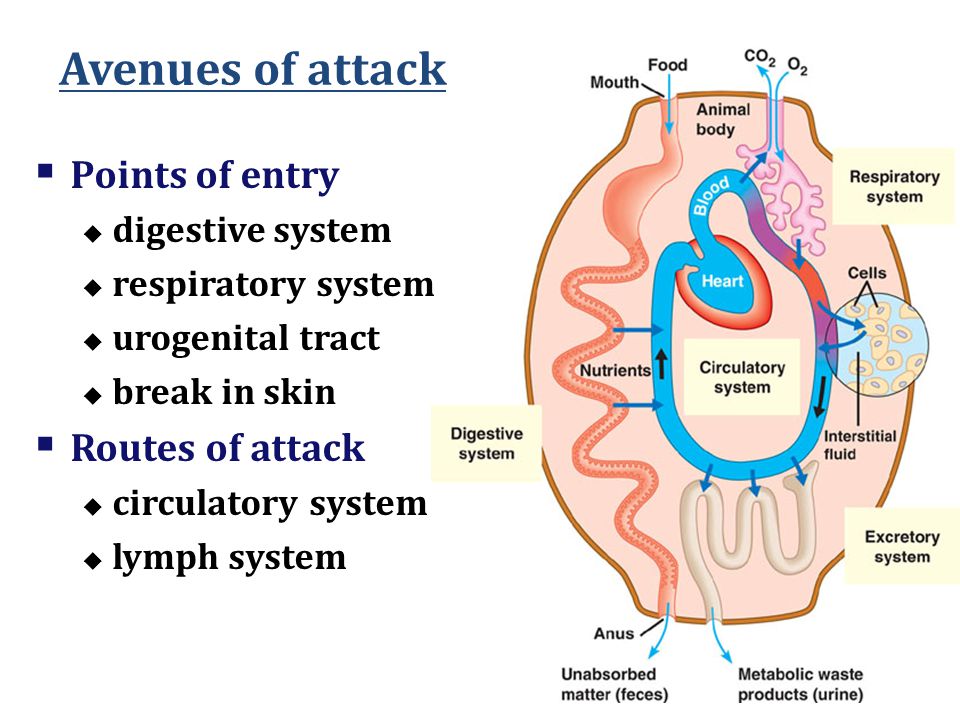
Avenues of Attack:
Points of entry;
- Digestive system
- Respiratory system
- Urinary system
- Genitals
- Break in the skin
Pathways for attack;
- Circulatory system
- Lymph system
Why an Immune System:
- Attack from the outside and inside
- Lots of organisms want you for lunch
- We are a tasty vitamin packed meal
- Cells are packages of proteins, carbohydrates, and fats
- No cell wall
- Animals must defend themselves against invaders
- Viruses
- HIV,flu,cold,measles,chicken pox, SARS
- Bacteria
- Pneumonis,menegitis, tuberculosis
- Fungi
- Yeast
- Protis
- Ameba,lyme disease, malaria
How Invaders are Recongnized:
- Antigens
- Chemical name togas on the surface of every cell
- “Self” vs. “Invader”
- One of your cells says “I belong here”
- Disease causing virus: Antigens say “I am an invader”
- Disease causing bacteria: Antigens say “ I am an invader”
First line of defense:
- Broad, external defense
- Skin, mucus membranes, cell membranes
- Excretion
- Sweat, stomach acid, tears, mucus, saliva
Second line of defense:
- Broad, internal defense
- Phagocytes,
- WBC’s attacks invader that get through the skin
- Phagocytes or macrophages “Big eaters”
Third line of defense:
- Immune system
- Specific acquired immunity
- Lymphocyte WBC’s and Antibodies
- B & T Cells
- Specific defense
- Respond to the invaders
- B & T cells will recognize foreign antigens
- White Blood cells - B Cells and Antibodies and T cells
Why do injuries swell:
- Inflammation
- Injured cells release chemical signals
- Histamines: released by WBC’s are chemicals that react to foreign material
- Increases blood flow
- Brings more WBC’s to fight bacteria
- Brings more RBC’s to cause clotting
- Often triggers allergens
Fever:
- When a local response is not enough
- Full body response to infection
- Raises body temperature
- Higher temperature helps in defense by slowing germ growth
- Helps trigger macrophages to start working
- Speeds up tissue repair
Antibodies:
- Proteins made by white blood cells (B cells) that tag invaders in the blood so macrophages can eat them
- Tag says “This is an invader”
- Biological “handcuffs”
- Antibody attaches to invader
B Cells immune response:
- invader - B cells recognize- memory b cells reserves- B cells release antibodies patrol blood forever
Vaccinations:
- Exposure to harmless version of germs (Pathogens)
- Stimulates immune system to produce antibodies to invader
- Rapid response is future exposure
- Most successful against viral diseases
Jonas Salk:
- Developed first polio vaccine on April 12th, 1955
Protecting you from disease:
- Vaccinations
- Advantage
- Don’t get illness
- Long term immunity
- Produce antibodies for life
- Works against many viruses and bacteria
- disadvantage - not possible against all invader
Breastfeeding:
- A mother’s milk gives baby antibodies and keeps baby healthy
T Cells:
- T cells help mature in Thymus
- Helper T cells (Sound alarm for the rest of the immune system
- Killer T cells ( Destroys infected cells)
- Remembers invader and reacts quickly the next time around (Memory T cells)
Lymphoid cells which have developed from specific stem cells in the bone marrow migrate to the thymus to complete their antigen- independent maturation into functional T-cells
In the thymus , T cells Develope specific T cell markers
Disease of the Immune System:
- HIV: Human Immunodeficiency Virus
- Helper T cells can’t activate rest of immune system (Body doesn’t hear the alarm)
- AIDS: Acquired Immunodefieceny Disease
- Infections by opportunistic diseases
- Death usually from other invading disease or cancer
Protecting yourself from disease:
- Antibiotics
Advantages:
- Kill bacteria that have successfully invaded you
- Makes you well after being sick
Disadvantages:
- Use only after sick
- Only good against bacteria
- Possible development of resistance by bacteria ( If don’t use correctly)
Immune System malfunctions:
Auto- Immune diseases
- Immune system attacks on their own cells
- Lupus
Rhemeumatoid Arthritis
- Antibodies causing damage to cartialge and bone
Diabetes
- Beta- islet ells in the pancreas are attacked and destroyed
Multiple Sclerosis
- T cells attack myelin sheath of brain & spinal cord nerves
Allergies
- Over-reaction to harmless compounds
- Allergens ( protein)
- Protein on pollen
- Proteins from dust mites
- Proteins in animal saliva
- Body mistakenly thinks they are attackers
Body Parts of the Immune System:
Chapter Notes:
Page 399-433?
Innate (nonspecific) body defense- refers to the mechanical barriers that cover body surfaces and the acting cells/chemicals protecting the body from invaders!
Table-12.1
- Surface membrane barriers
- Empidermis- mechanical barrier, preventing entry to pathogens
- Acid mantle- the film/surface on the epidermis made of skin secretions