FLAG TEST 2 REVIEW
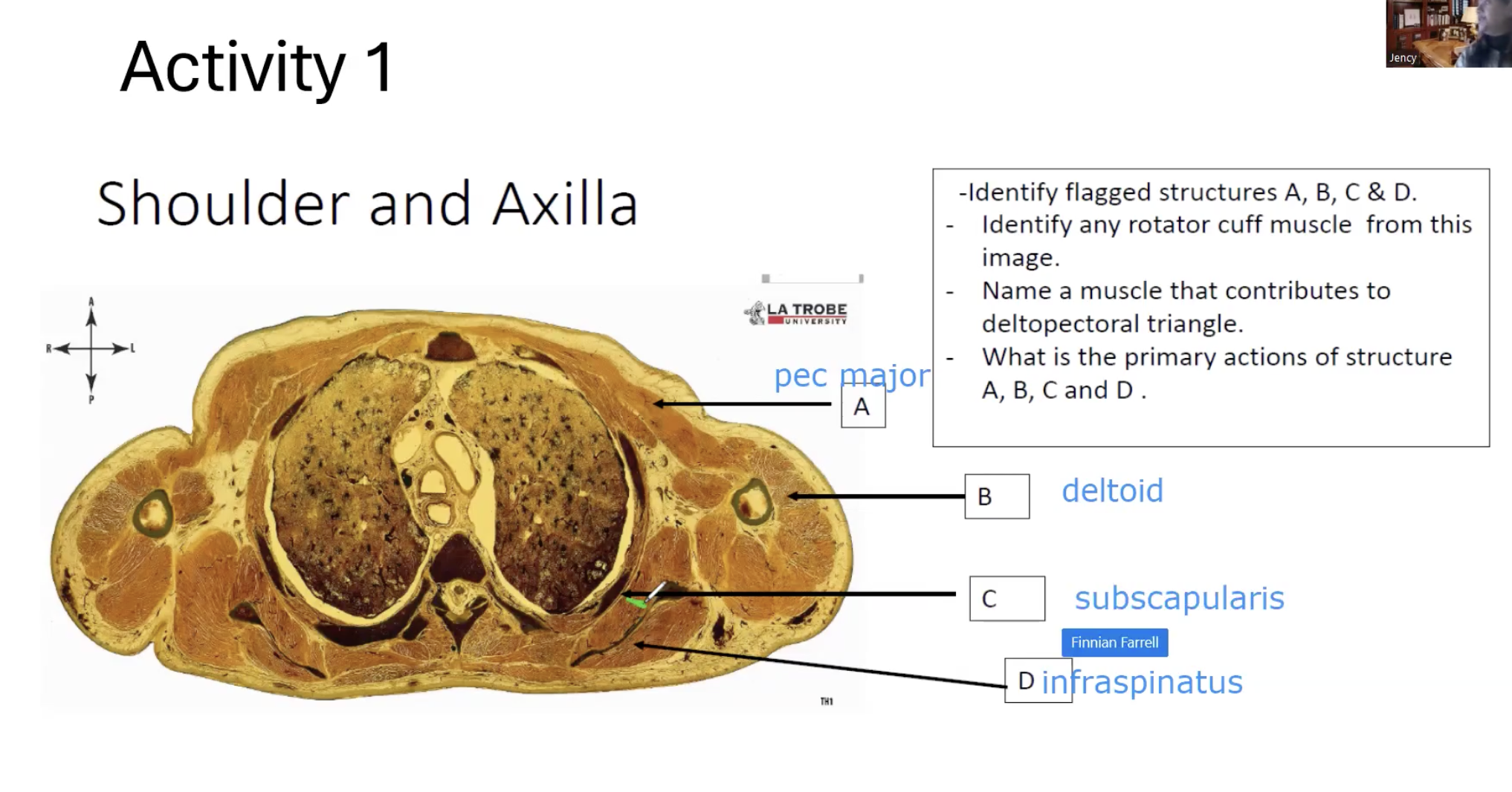
Activity 1: Shoulder and Axilla
I
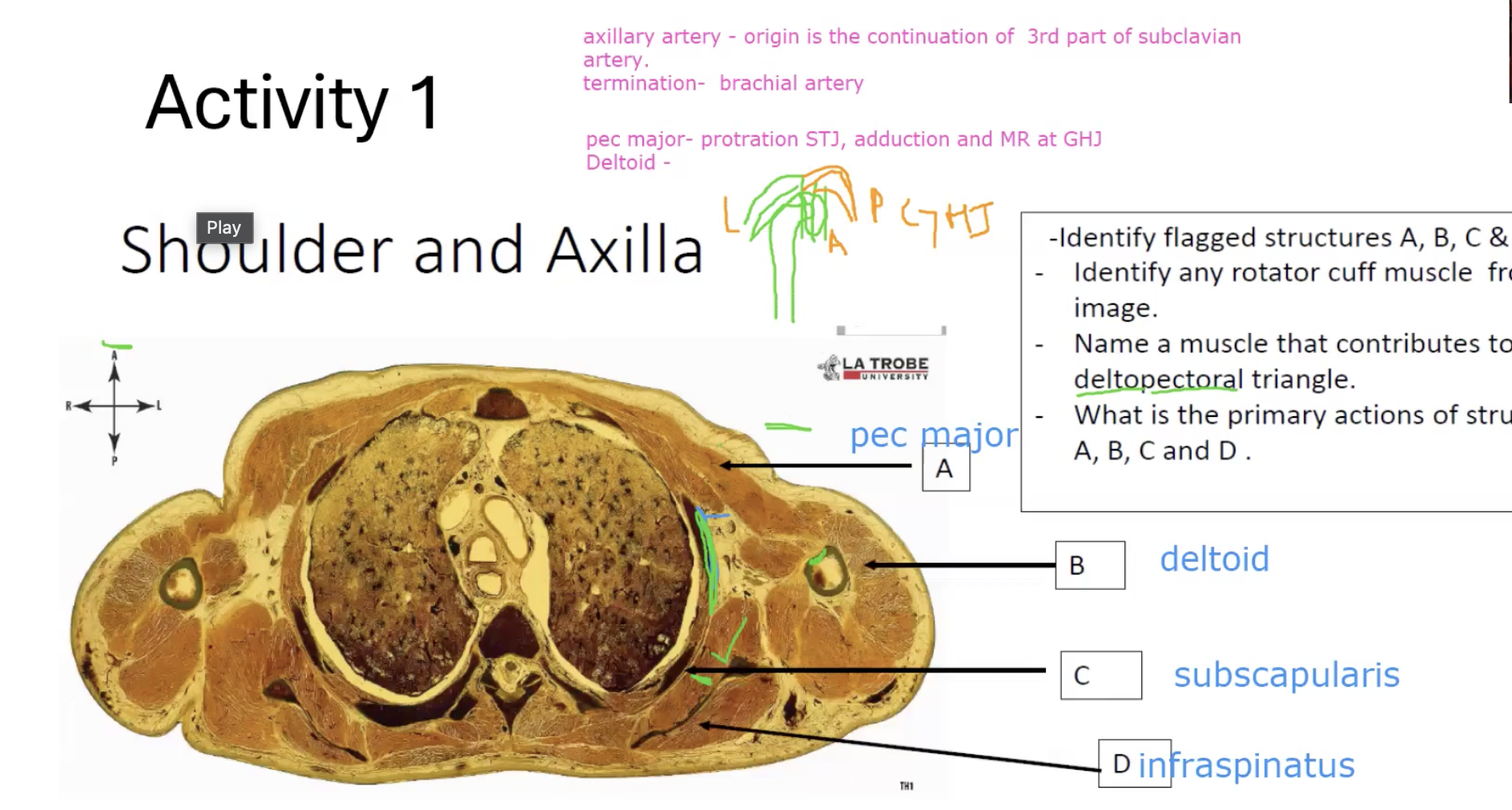
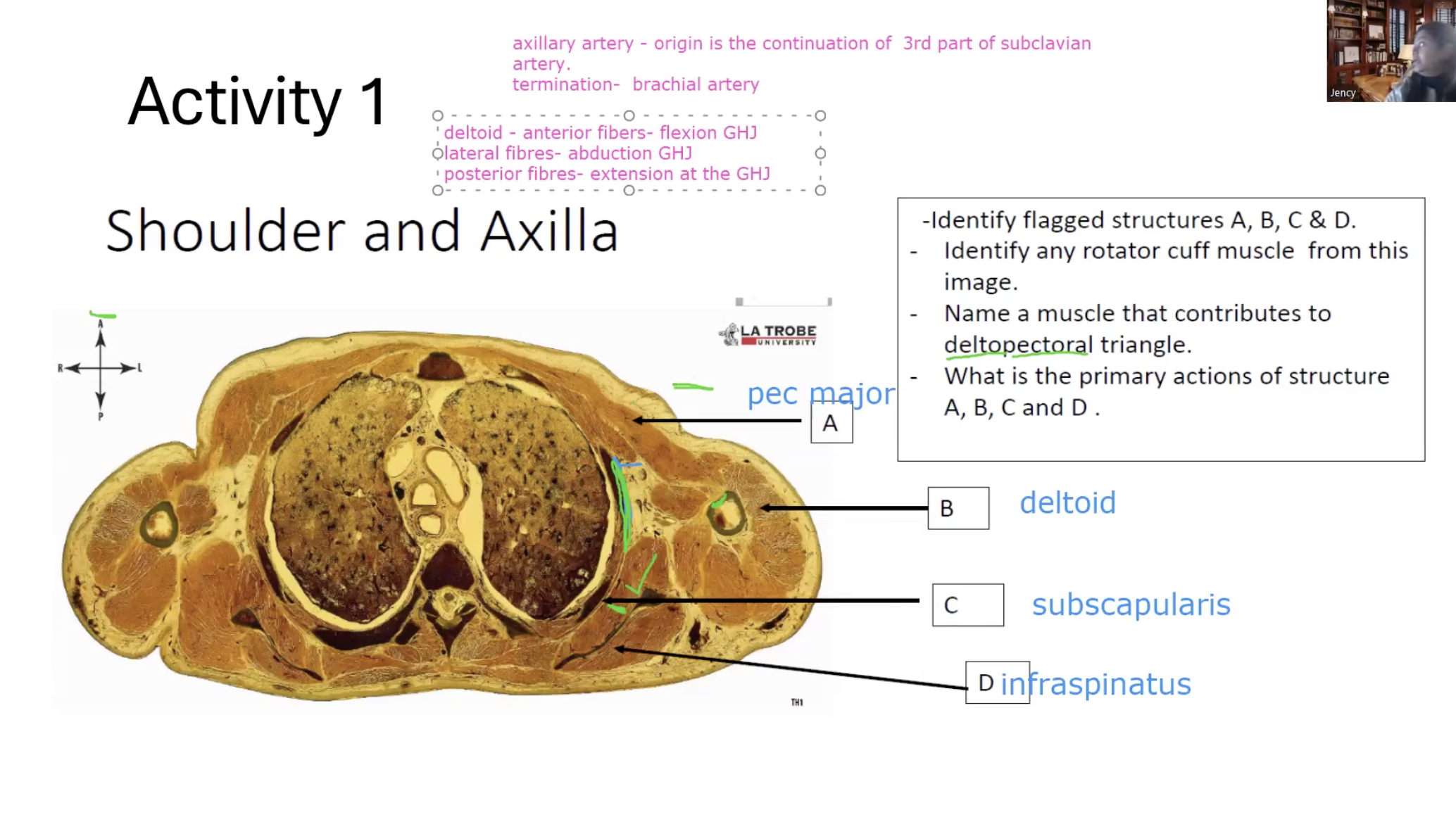
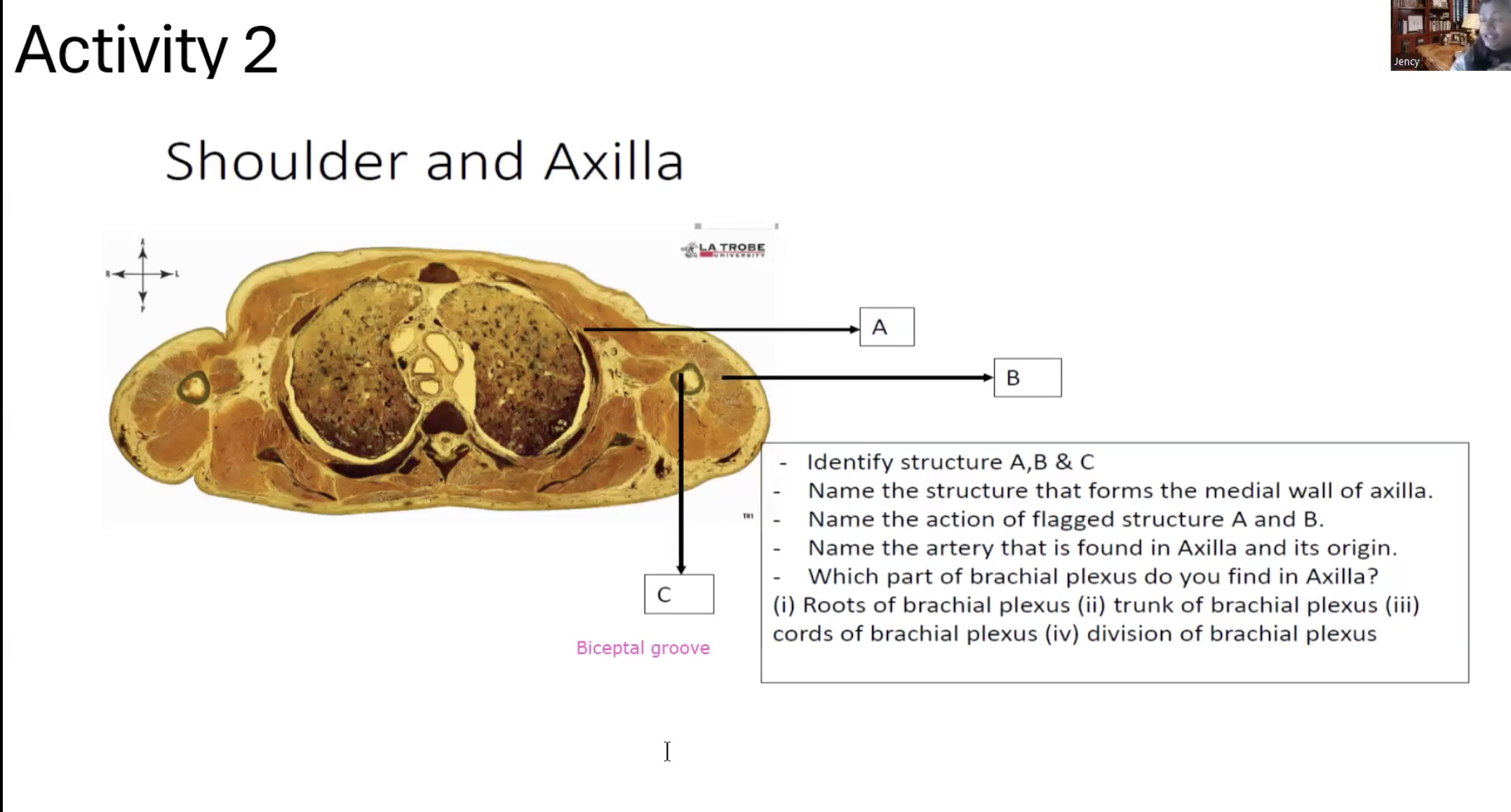
Activity 2: Shoulder and Axilla
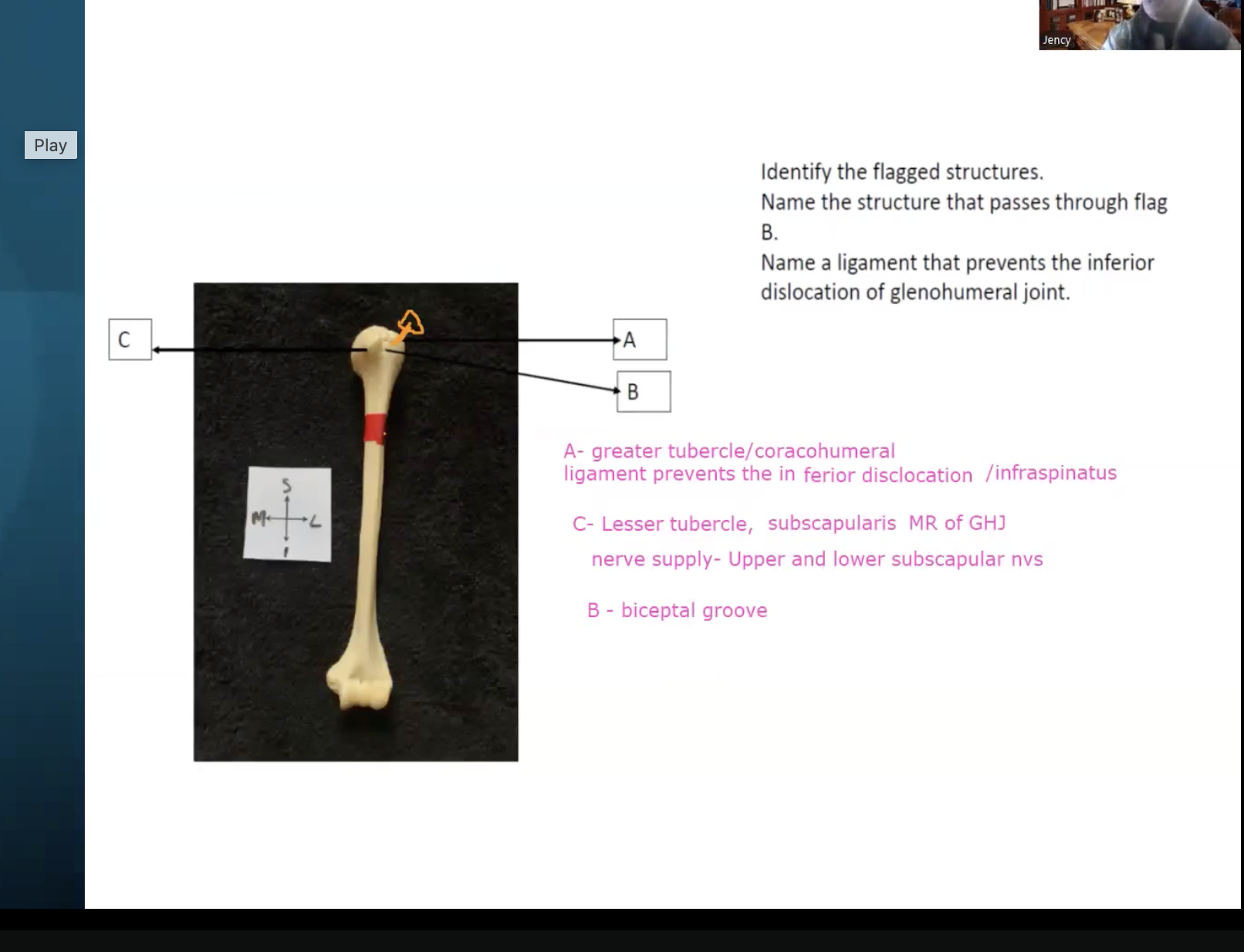
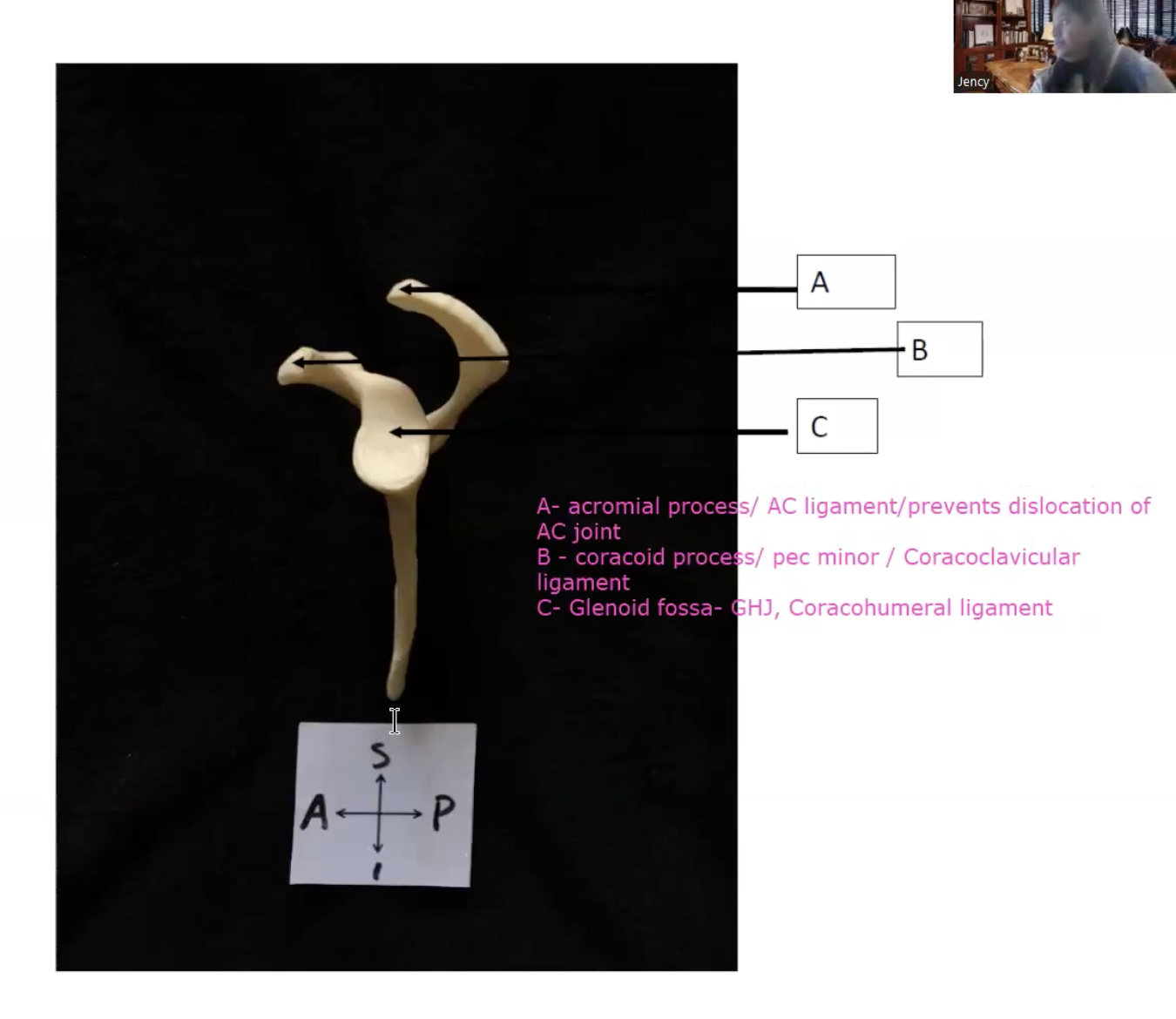
Identify Structures A, B, C:
Structure A: (Specific structure to be identified)
Structure B: (Specific structure to be identified)
Structure C: (Specific structure to be identified)
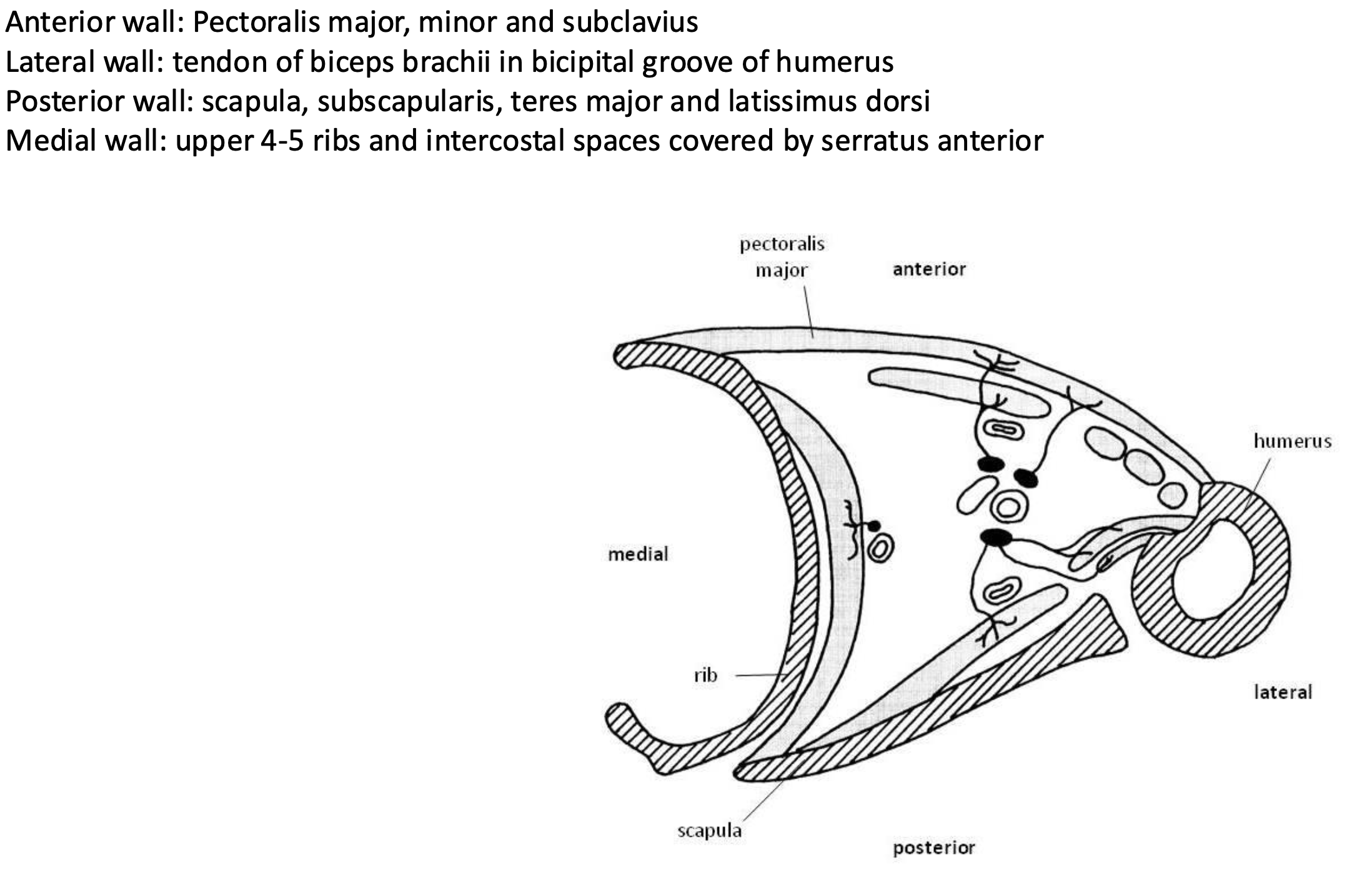
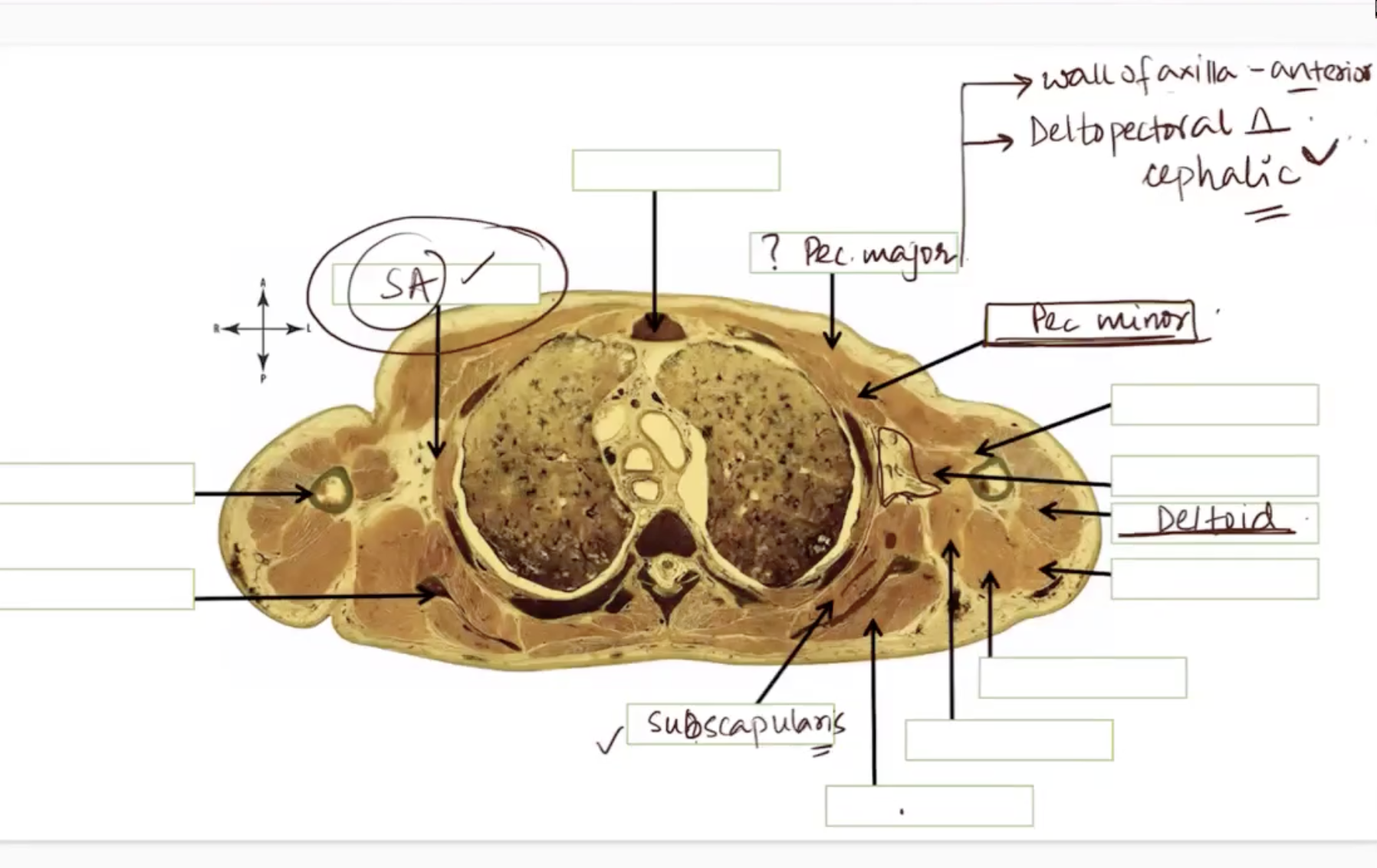
Medial Wall of Axilla Structure:
Name the structure that forms the medial wall of the axilla: Serratus Anterior.
Actions of Flagged Structures A and B:
Action of Structure A: (Describe action)
Action of Structure B: (Describe action)
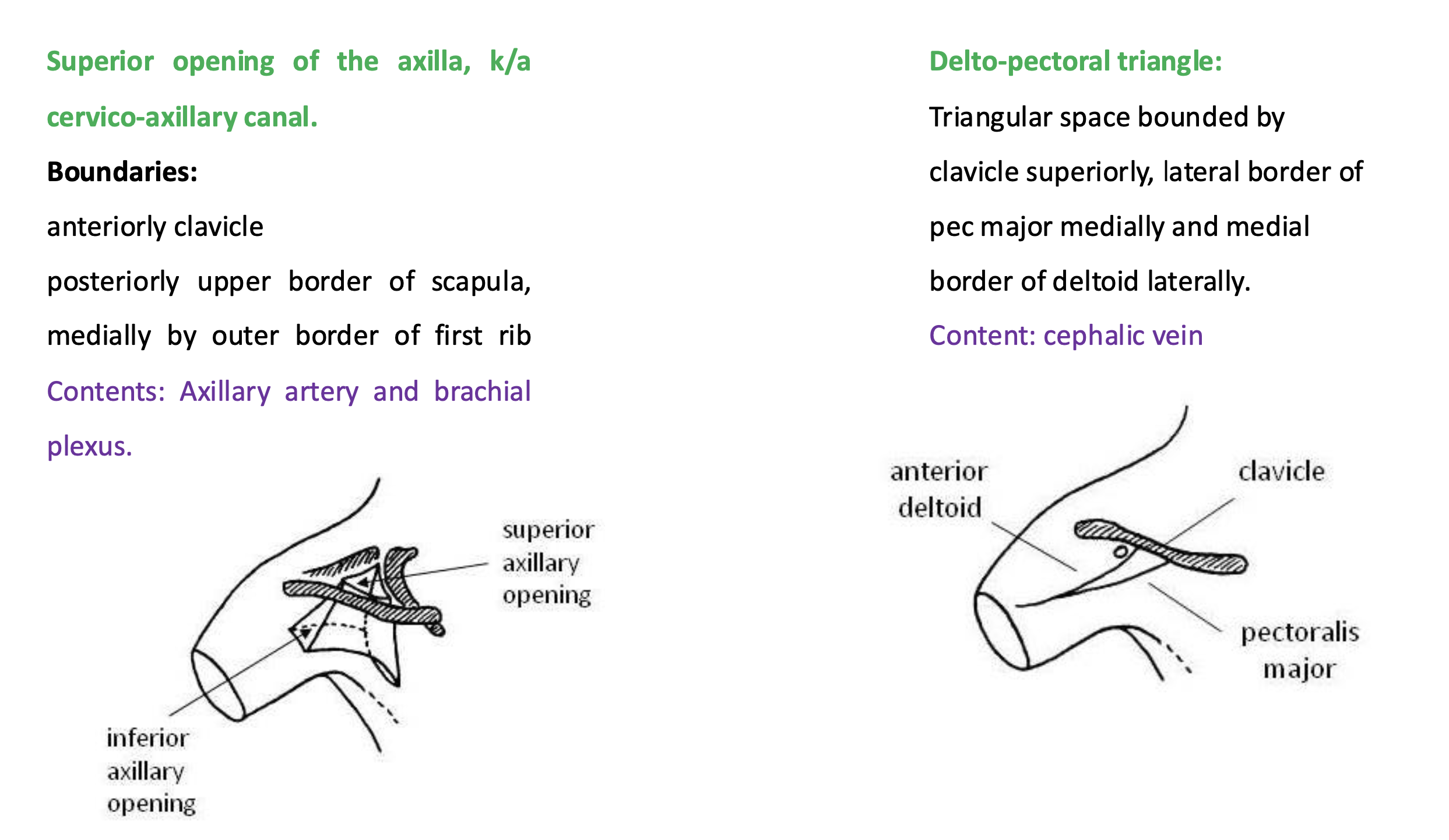
Artery in Axilla:
Name the artery found in the axilla: Axillary Artery, which originates from the Subclavian Artery.
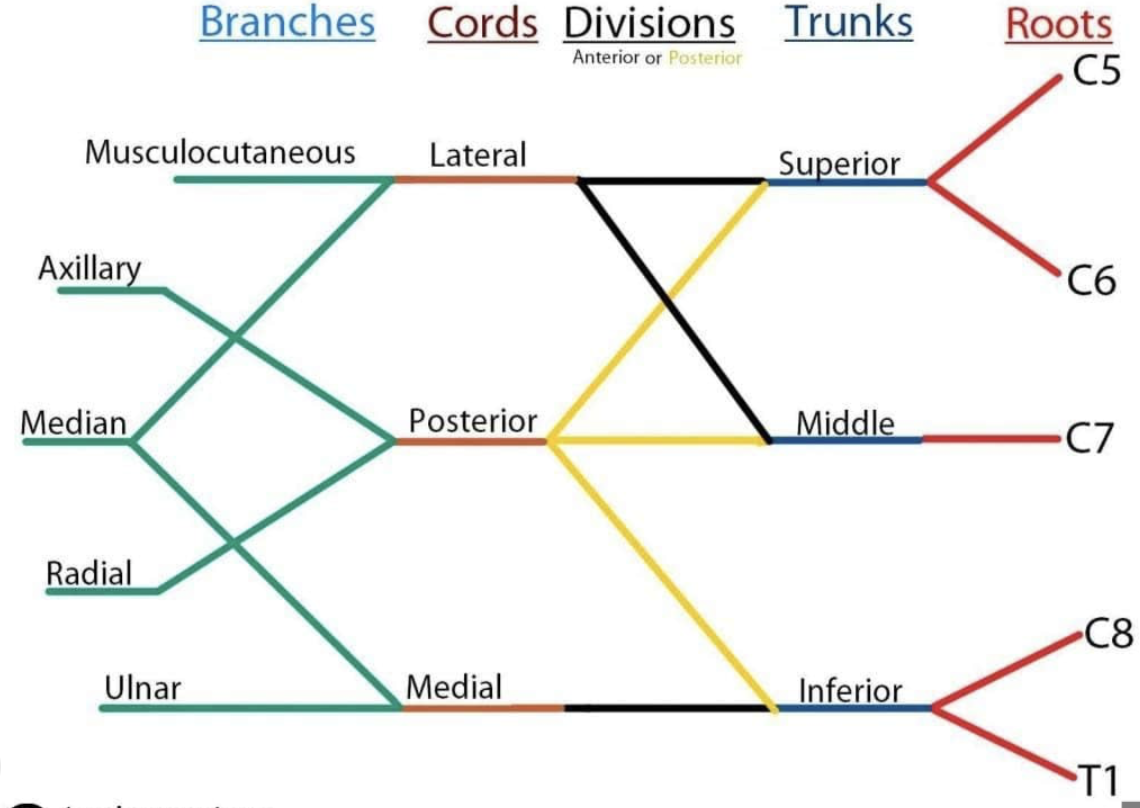
Parts of Brachial Plexus in Axilla:
Identify which part you find in the axilla:
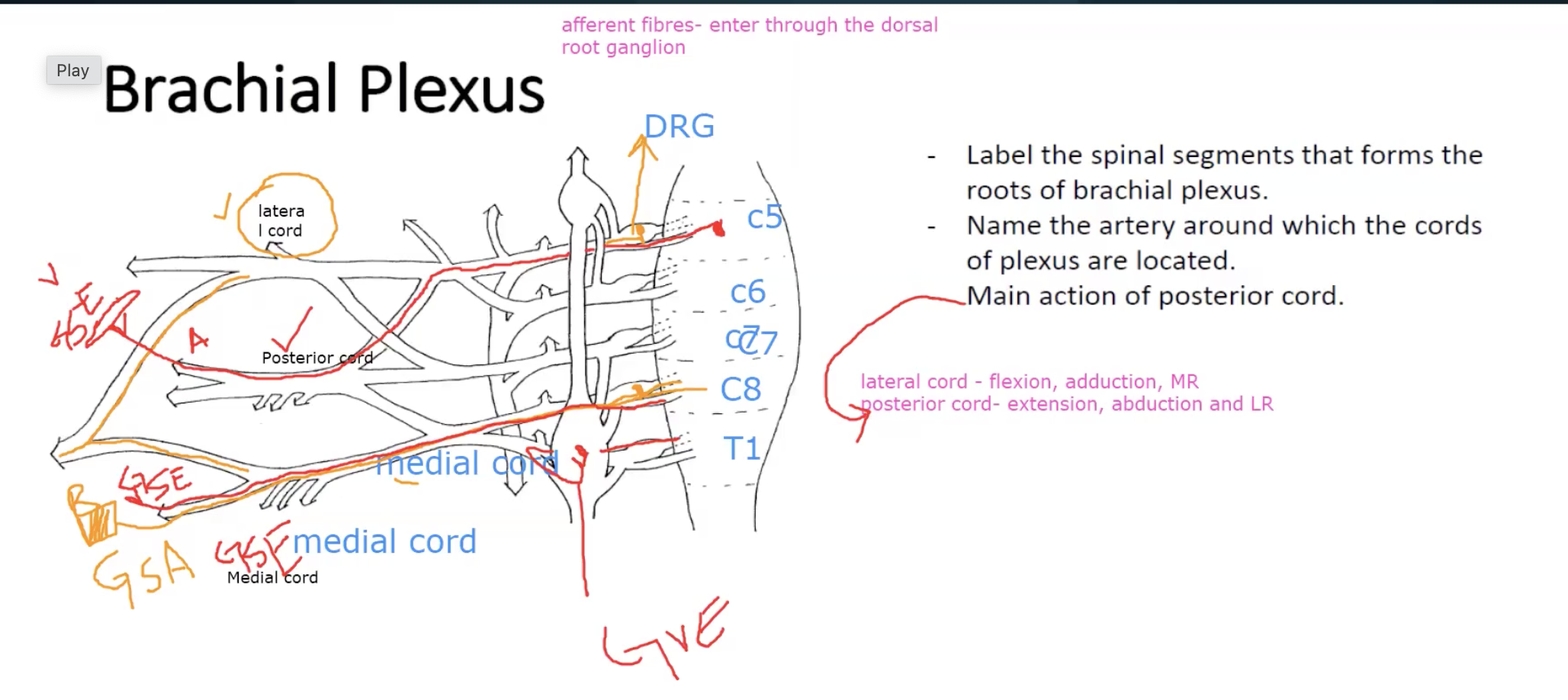
(i) Roots of Brachial Plexus
(ii) Trunks of Brachial Plexus
(iii) Cords of Brachial Plexus
(iv) Divisions of Brachial Plexus
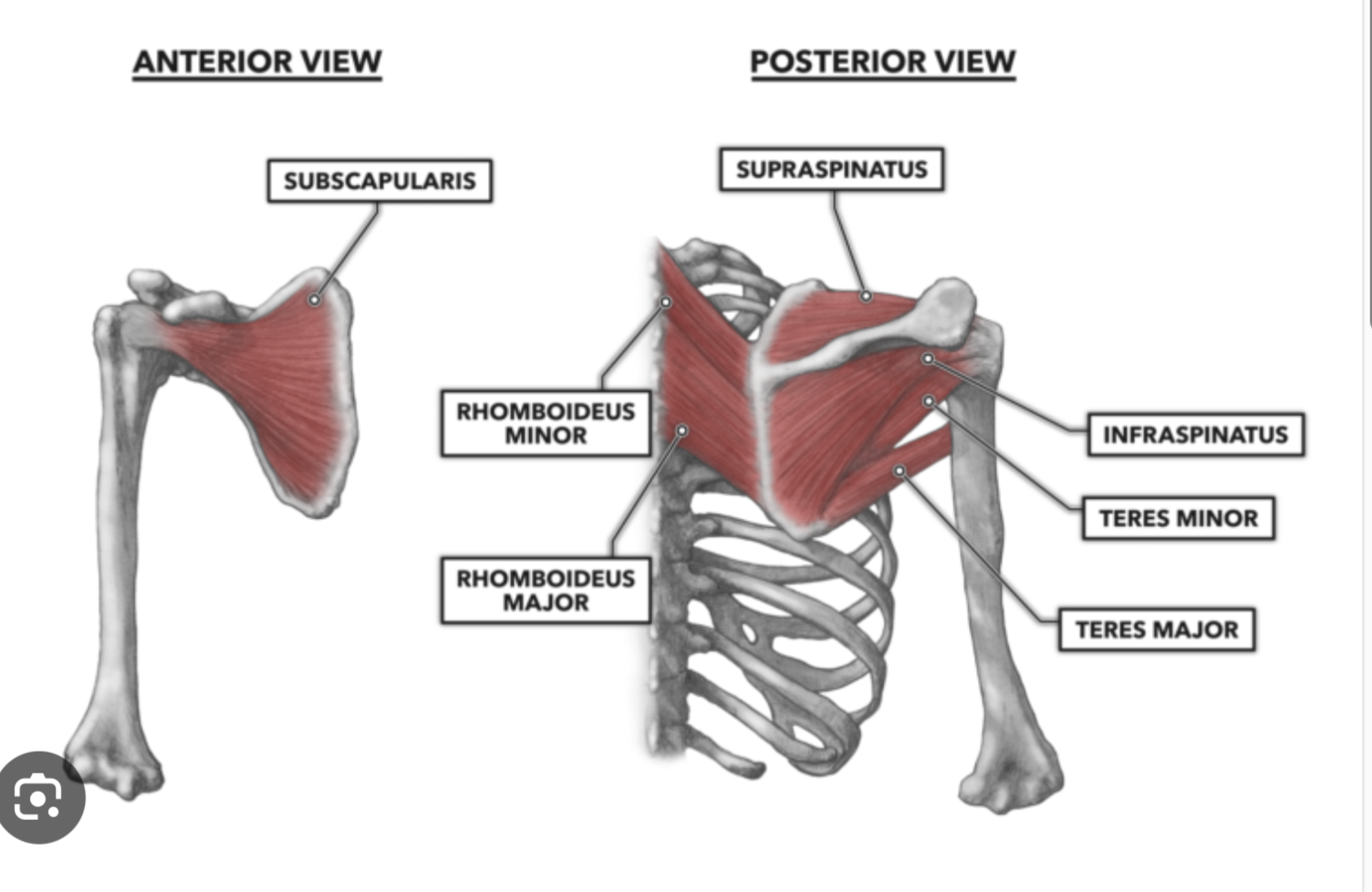
create a table of actions of the pectoralis major, latisimus dorsi, rhomboid minor and major muscle and the trapezius muscle:
Muscle | Action |
|---|---|
Pectoralis Major | Flexion, adduction, and medial rotation of the shoulder |
Latissimus Dorsi | Extension, adduction, and medial rotation of the shoulder |
Rhomboid Minor | Retraction and elevation of the scapula; assists in downward rotation |
Rhomboid Major | Retraction and elevation of the scapula; assists in downward rotation |
Trapezius | Elevation, retraction, and rotation of the scapula; assists in shoulder elevation. |
muscles supplied by muscultaneous, axillary, radial, medial and ulnar nerves of brachial plexus:
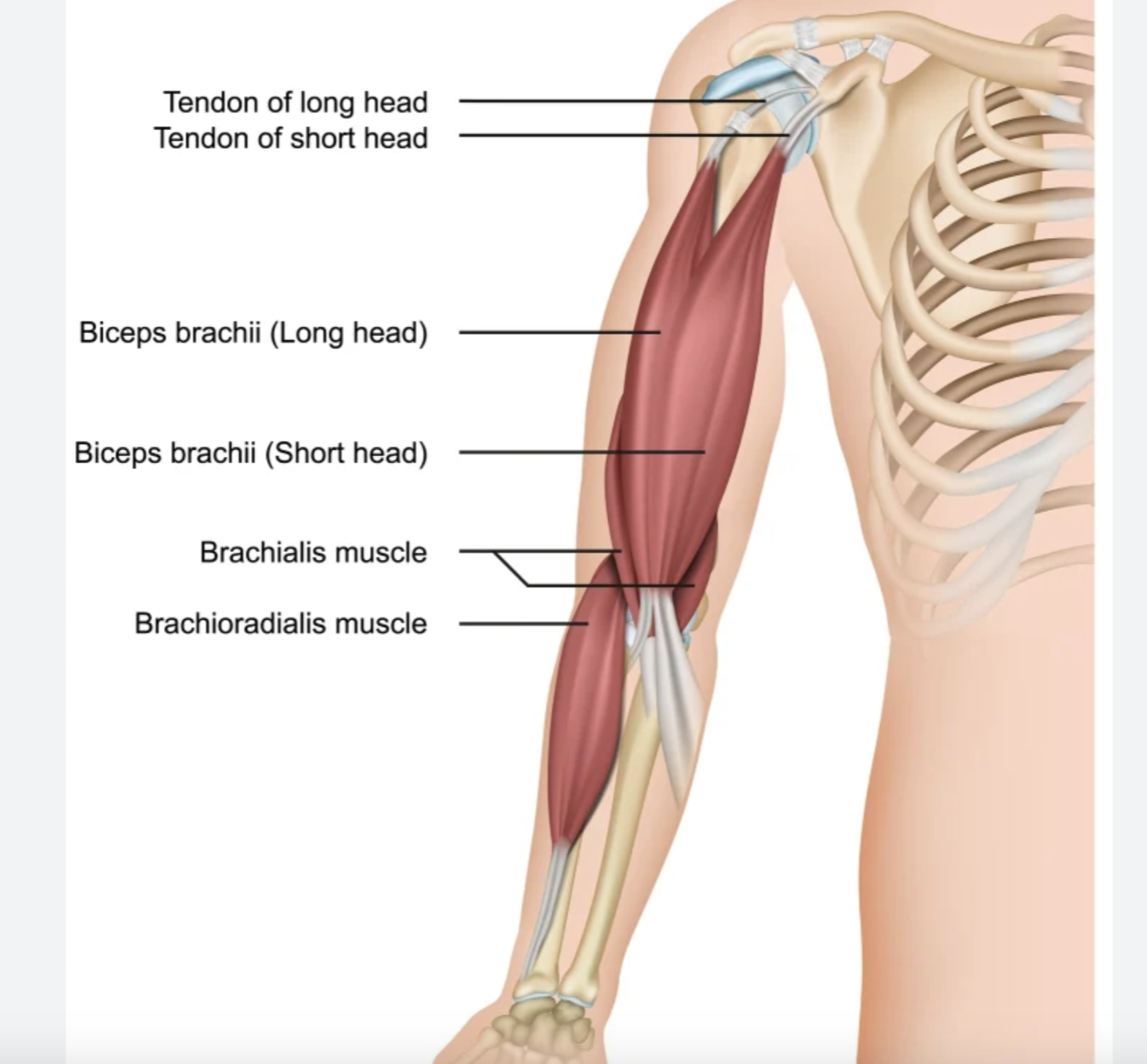
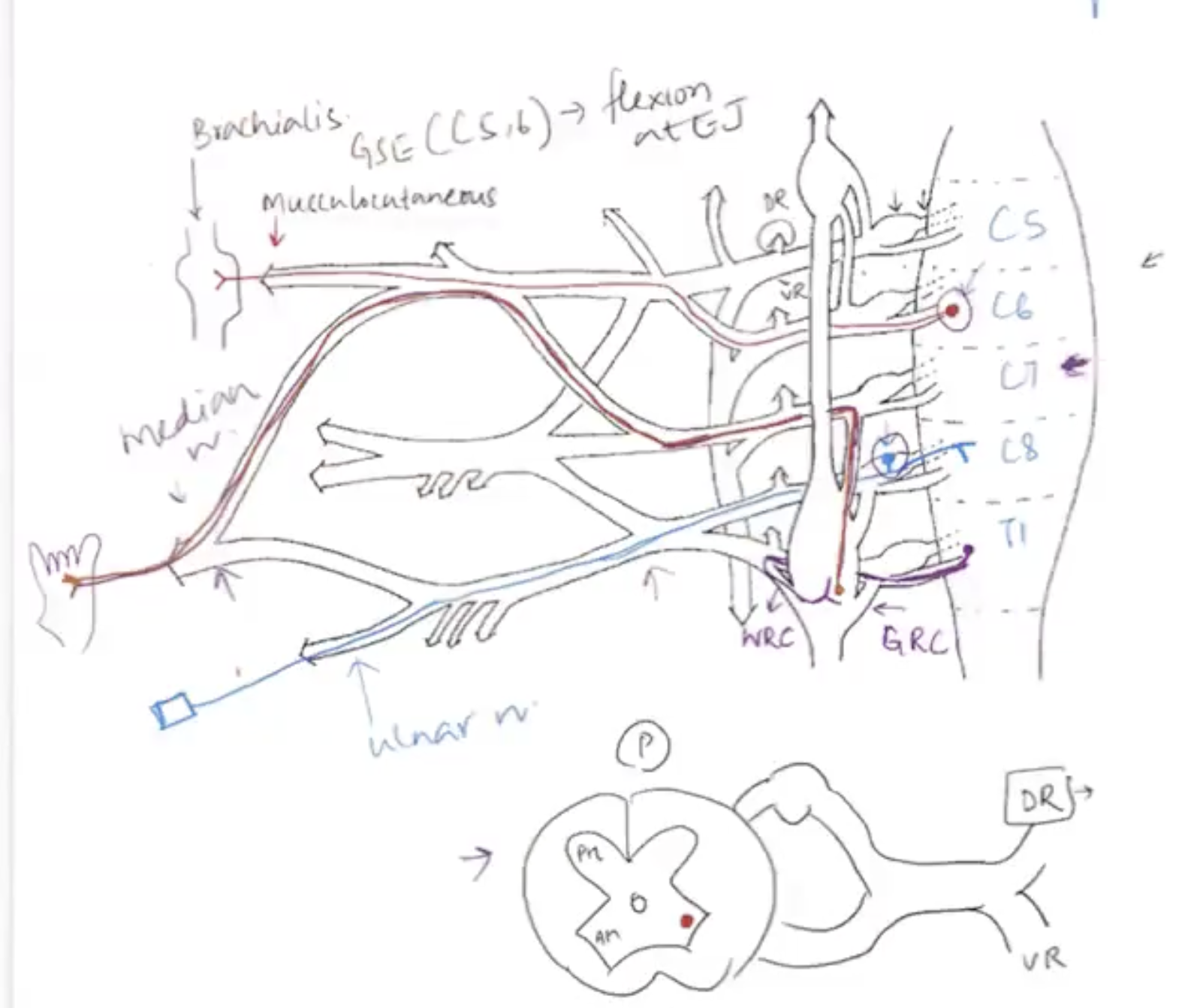
Biceps Brachii, Corecobrachialis and brachialis.: Responsible for elbow flexion and forearm supination, supplied by musculocutaneous nerve.
Deltoid and Teres minor: Facilitates shoulder abduction and flexion, innervated by the axillary nerve.
Triceps Brachii: Primarily involved in elbow extension, supplied by the radial nerve.
Flexor Group of Forearm: Includes muscles that flex the wrist and fingers, innervated by the median and ulnar nerves.
So which wall of the axilla is formed by Pectoralis major ? The anterior wall of the axilla is formed by the Pectoralis major, which plays a crucial role in shoulder movement.
create table of upper half of the upper body muscles and their actions : include serratus anterior
Muscle | Action |
|---|---|
Pectoralis Major | Flexes, adducts, and rotates the humerus |
Serratus Anterior | Protracts and stabilizes the scapula |
Deltoid | Abducts, flexes, and extends the humerus |
Trapezius | Elevates, retracts, and rotates the scapula |
Latissimus Dorsi | Extends, adducts, and medially rotates the arm |
Muscle | Action |
|---|---|
Pectoralis Major | Flexes, adducts, and medially rotates the shoulder |
Deltoid | Abducts, flexes, and extends the shoulder |
Biceps Brachii | Flexes the elbow and supinates the forearm |
Triceps Brachii | Extends the elbow |
Coracobrachialis | Flexes and adducts the shoulder |
Supraspinatus | Abducts the arm |
Infraspinatus | Externally rotates the arm |
Teres Minor | Externally rotates the arm |
Subscapularis | Internally rotates the arm |
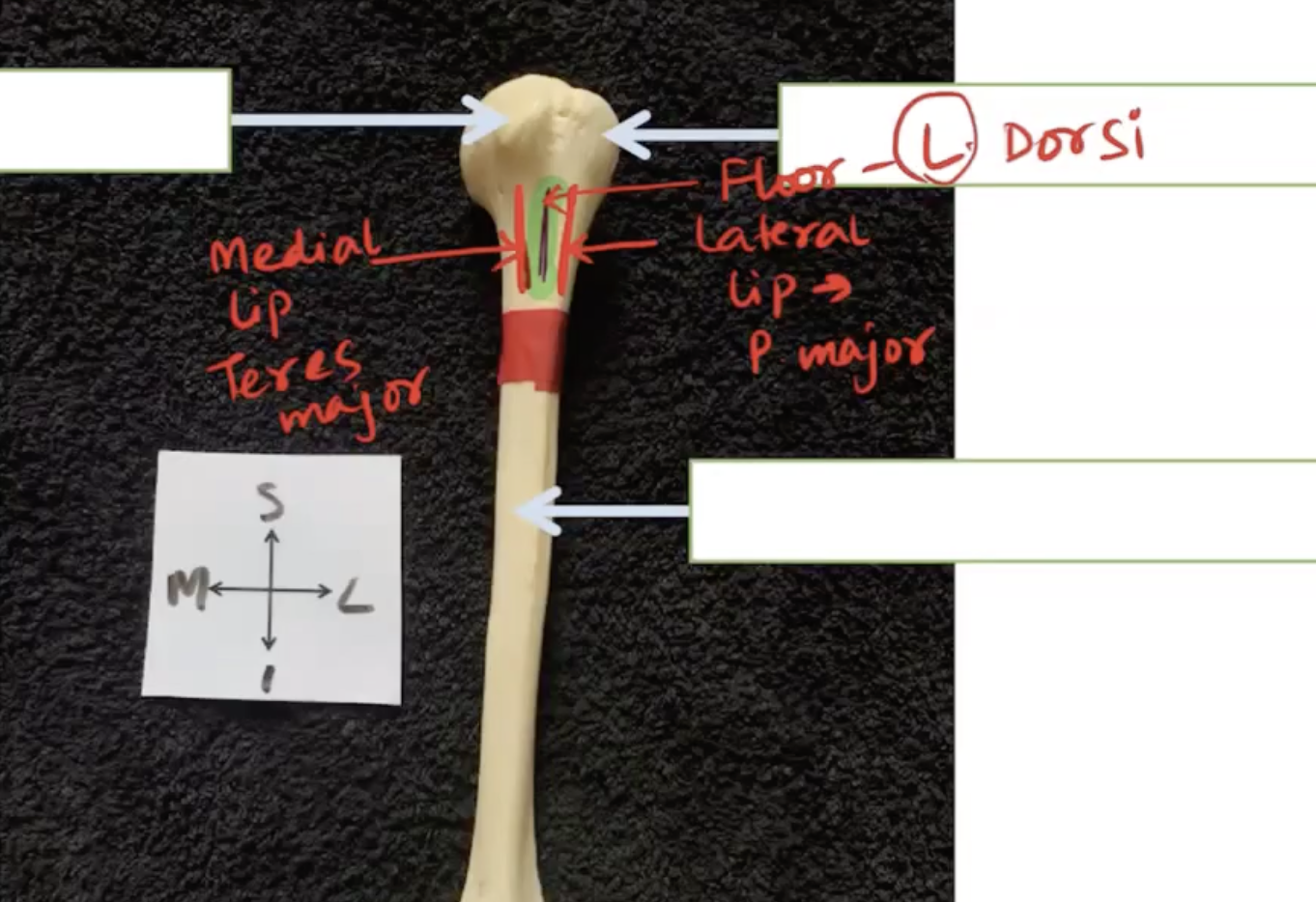
which mucles attach to bicipital groove?
Pectoralis Major
Latissimus Dorsi
Teres Major
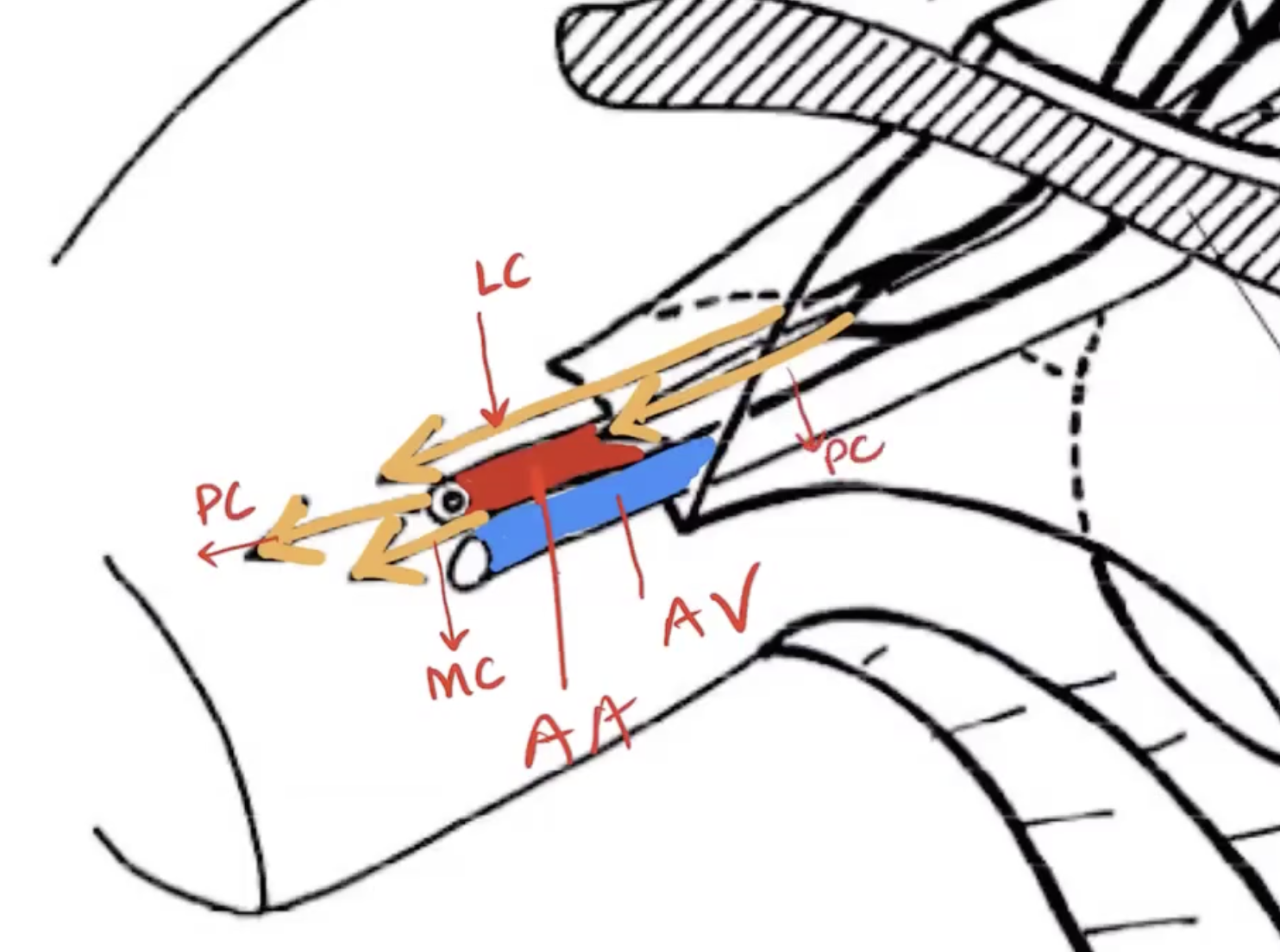
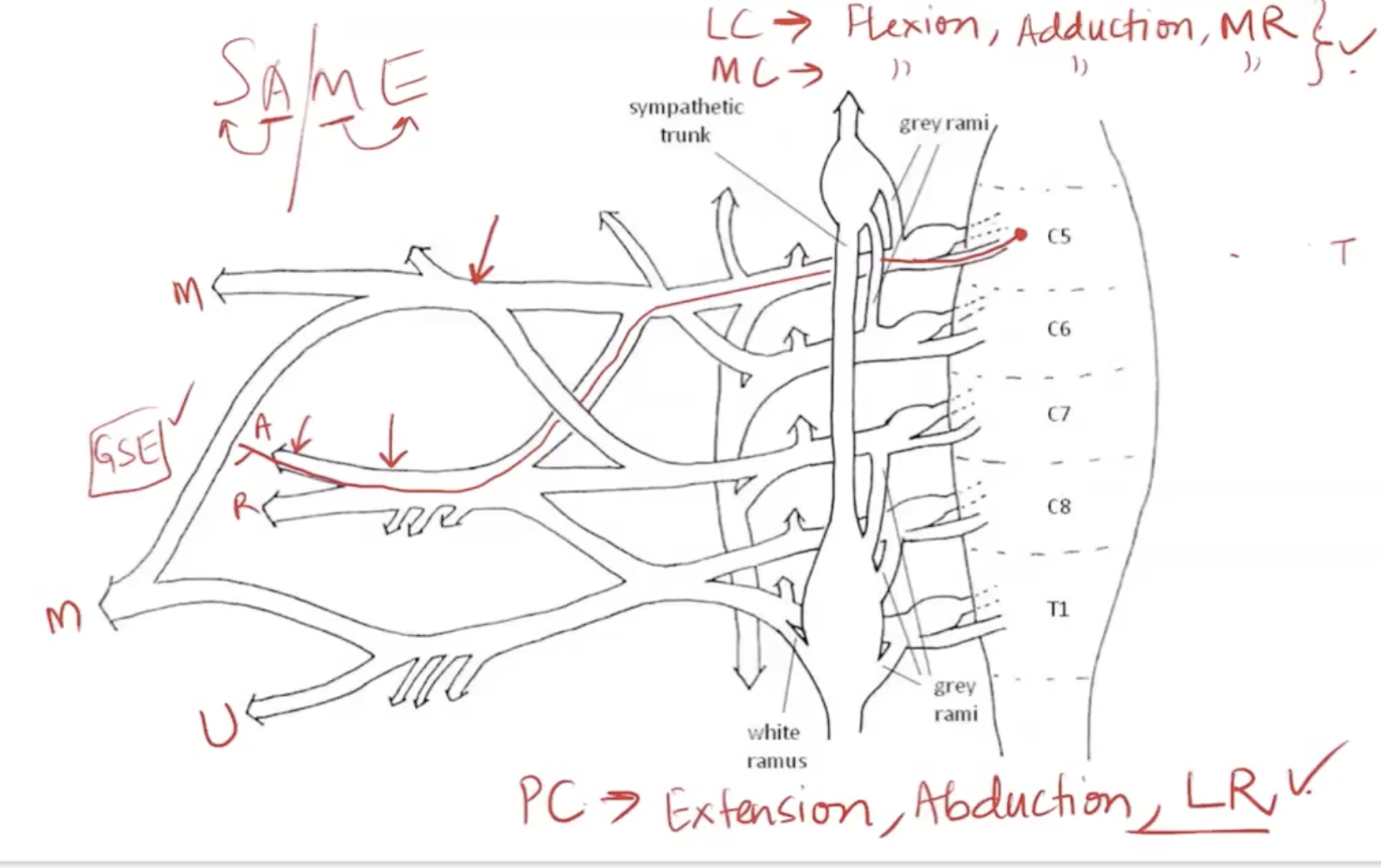
Axillary Artery - RED
Axillary Vein- Blue
LC-lateral Cord
PC- Posterior Cord
MC-Medial Cord
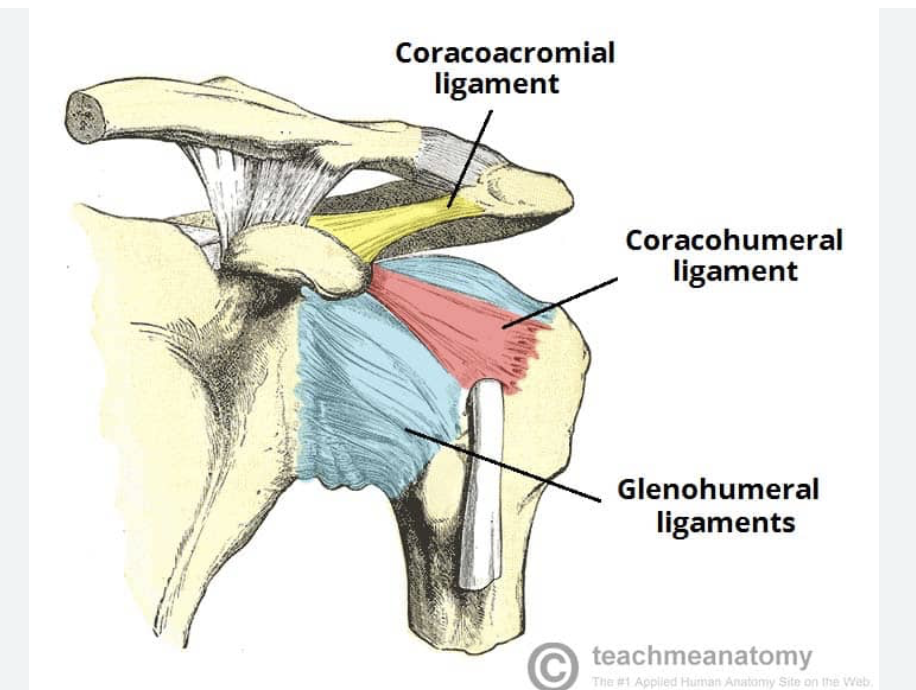
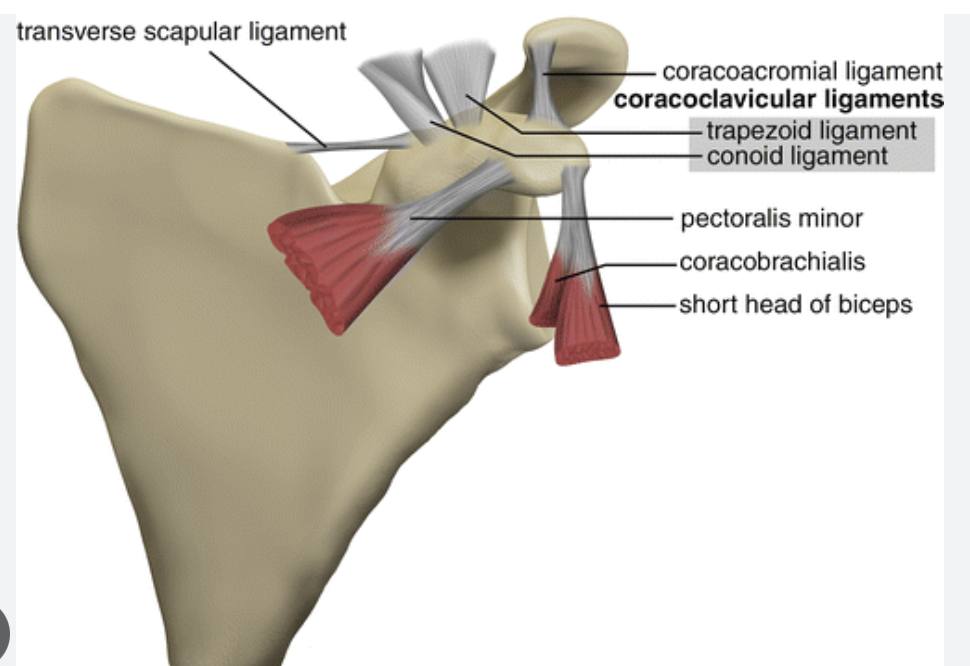
create table of which muscles and ligaments are attches to corocoid process, acromion process, scpaula and clavicle and greater, lesser tubercle, head of humerus:
Location | Muscles/Ligaments Attached |
|---|---|
Coracoid Process | - Coracobrachialis |
- Short head of Biceps Brachii | |
- Pectoralis Minor | |
- Conoid ligament | |
- Trapezoid ligament | |
Acromion Process | - Deltoid |
- Upper Trapezius | |
Scapula | - Subscapularis |
- Infraspinatus | |
- Supraspinatus | |
- Teres Major | |
- Teres Minor | |
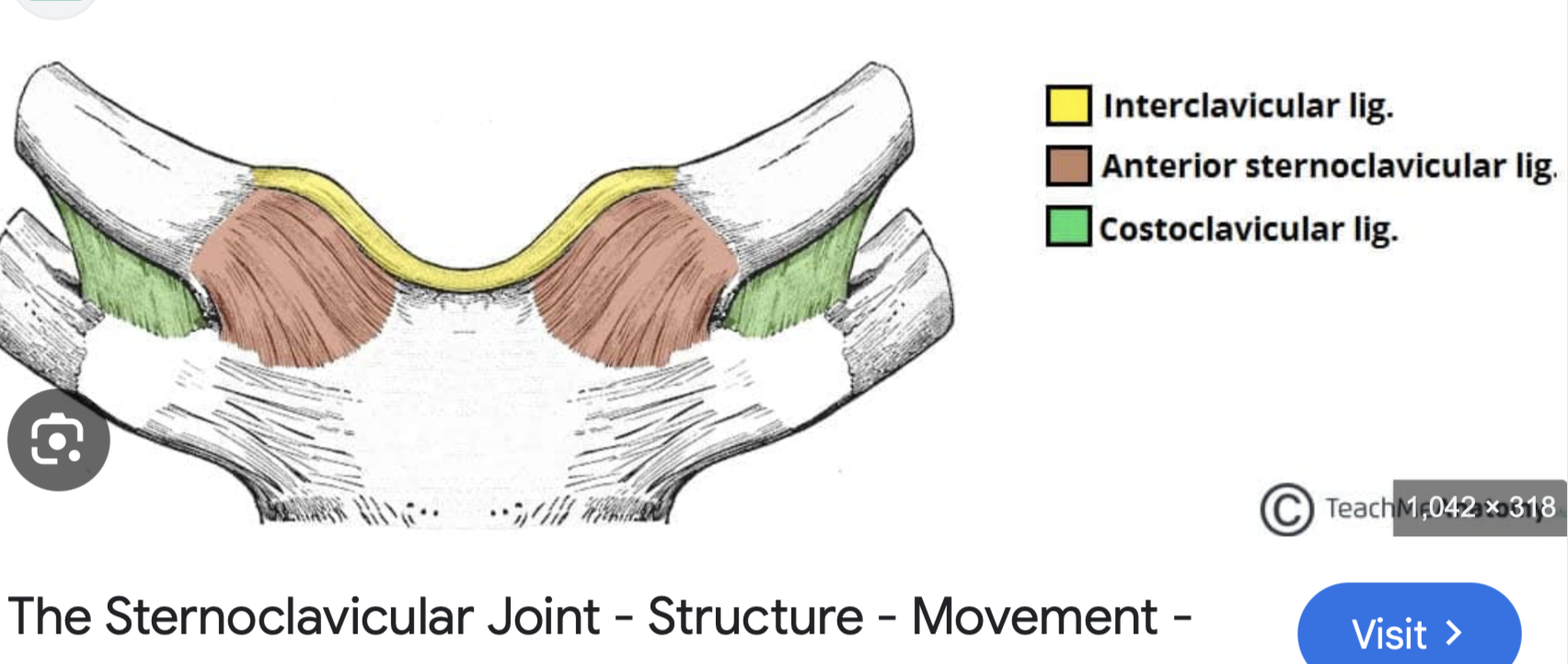
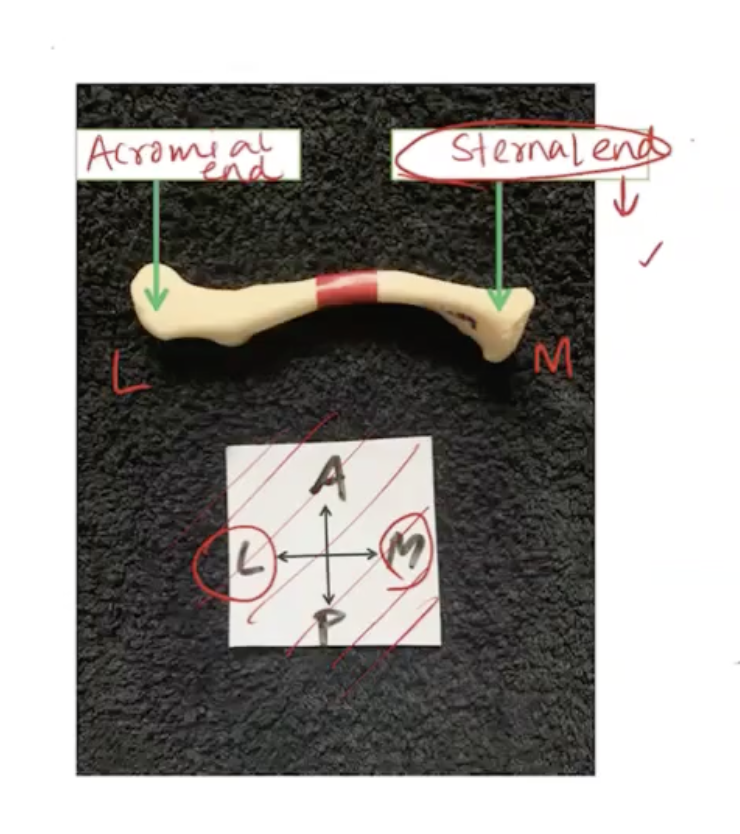
Clavicle | - Sternocleidomastoid |
- Pectoralis Major | |
Greater Tubercle | ALL SITS MUSCLES ROTATOR CUFF- Supraspinatus |
- Infraspinatus | |
Lesser Tubercle | - Subscapularis |
Head of Humerus | - Long head of Biceps Brachii |
- Rotator Cuff Muscles (overall support from all four) |
Create table, Musculotaneous, Axillary, Radial, Median and Ulnar nerves and which muscles do they supply?
Nerve | Muscles Supplied |
|---|---|
Musculocutaneous | Biceps Brachii, Brachialis, Coracobrachialis |
Axillary | Deltoid, Teres Minor |
Radial | Triceps Brachii, Anconeus, Extensor muscles of the forearm |
Median | Flexor muscles in the forearm (except for flexor carpi ulnaris), some hand muscles |
Ulnar | Flexor carpi ulnaris, Flexor digitorum profundus (medial half), most intrinsic hand muscles |