Week 5 Lecture Notes: Globalisation and Trade in International Health
Globalisation and Trade: Impacts on International Health
Overview of Key Concepts
Globalisation: Characterized by cross-border trade in:
Goods and services
Money
People
Technology and ideas
Liberalisation: The relaxation of government restrictions on economic and social policies.
Privatisation: Transfer of ownership or operation of a state-owned or public sector undertaking to the private sector.
Trade Liberalisation and Neoliberal Economic Model
Neoliberals: Thinks that state should play a smaller role in managing economy and meeting public needs, advocating instead for market-driven principles that prioritize individual entrepreneurship and competition.
Underpinned by the World Trade Organisation (WTO) and the neoliberal economic model, which posits:
Free markets drive economic growth.
Growth is synonymous with development.
Growth is essential for poverty reduction (increased income leads to improved health).
State interference is seen as preventing efficient market operation.
All countries engaging in international trade, with provisions for developing countries.
Developing countries are encouraged to produce exports to generate income for population welfare.
'Aid for Trade' initiatives promote women's economic empowerment, exemplified by the Buenos Aires Declaration on Women and Trade, aiming to achieve SDG (gender equality through empowerment of women and girls).
Protectionism: Economic policy where a country restricts imports to protect its domestic industries, jobs and businesses from foreign competition
Pathways to Globalisation: Accelerated Trade Growth
Globalisation boom occurred between , driven by:
Free Trade Zones & Economic Processing Zones: Areas where tariffs (taxes), quotas, regulations, and protections are lowered to attract new business and foreign investment through incentivised subsidies.
Dominance of Western-based transnational capital and market logic worldwide.
Main Objects of Trade (and their influences):
Primary commodities: Food, raw materials, fuels (influences prices).
Manufactured goods: Food supply and consumption, employment, production, working conditions, access to income.
Services: Skills, labor migrations, changes in income and living conditions; commodification of healthcare, education, water, sanitation.
Pharmaceuticals: Medicinal imports and exports, access to drugs, legal and illegal trade.
Trade influences employment patterns linked to working conditions, income, environment, and individual/population health.
Debating the Neoliberal Economic Model
Proponents of neoliberal globalisation argue it:
Raises income in poor countries.
Improves the health of the poor.
Promotes healthcare and behavior change via policies.
Offers social and political benefits.
Improves economic performance through integration.
Critiques on rapid neoliberal globalisation highlight:
Negative effects on economies of poor countries.
Jeopardizing health; worsening infant/child mortality; decreased life expectancy.
Dual intellectual property rights.
WTO is undemocratic, favoring Transnational Corporations (TNCs) over national governments and human life.
Social services, health, sanitation, education are not equally distributed.
Economic performance improvements are not sustainable, vulnerable to global shocks (war, price fluctuations, supply shortages, climate change).
billion people in economies exposed to rising food/energy prices and tighter financial conditions.
million out of billion are poor, and million are undernourished.
Key Structural Players Facilitating Trade
Trade is facilitated by markets, technology, ideology, business, and policy, involving:
International agreements and protocols (e.g., General Agreement on Trade in Services - GATS, Trade-Related Aspects of Intellectual Property Rights - TRIPS).
Transnational/multinational corporations (TNCs, MNCs).
International institutions (e.g., WTO, International Monetary Fund - IMF, World Bank).
Governments.
Transnational Corporations (TNCs) & Multinational Corporations (MNCs)
Often employ consulting firms (e.g., PWC, KPMG, Ernst&Young).
Concerns regarding consulting firms and privatization:
Contracted to do government work, potential misuse of information for commercial gain.
Big Four help multinationals minimise tax and maximise profit for partners
Loss of tax income for countires
Conflicts of interest, poor culture and lack of transparency, companises polic and audit their own behaviour — unethical and unchecked
Bain & Co contracted to restructure South African revenue service — colluded to weaken it and centralise procurement
McKinsey provided guidance to Purdue to push opioid use, resulting in opioid crisis which killed hundreds of thousands of Americans
GATT — General Agreement on Tariffs and Trade: international agreeement that regulates trade in goods by reducing tariffs and barriers to encourage fair, non-discriminatory
GATS — General Agreement on Trade in Services: WTO agreement that governs trade in services, promoting transparency, fairness and gradual liberalisation across service sectors
Trade Impacted by Pandemic
COVID-19
2020 was rapid and intense recession period
Cost of living crisis from Ukraine-Russia war climate change and global inflation
Asymmetries between countries exposed
Resources to deal with and recover from pandemic
Social prevention for vulnerable groups
Access to vaccines
Losses
Human loss
Job losses
Poverty reduction reversed — Increased inequality and access to education
Trade Policy Response to Pandemic
Economic support measures: removal of tariffs, stimulus packages, fiscal and financial measures
Higher economic support measures for developing countries
Trade in medicine products and food stuffs made easier
Trade in Goods
Trade in Pharmaceutical Products
WTO agreement on Trade Related Aspects on Intellectual Property Rights
Controls pharma drug pricing and distribution
Protects companies — members to abide by patents covering medicine
Allows companies to initially charge more for the product to recoup investment
Overly restricts generic competition — blocks large producers of generics
Provides exception when protecting public health e.g. pandemic, war
Global imports and exports of medical goods: US and Europe dominate global trade
Shift to Asia for production of less technology intensive products such as personal protective products at the time of COVID
Debate about Equitable Trade and Access to Medicinal Products
Control quality of products — control counterfeit or contaminated drugs
Industry is growing at a rapid rate
US is the biggest importer
Trade in exports/imports controls access to lower cost medicine
Increase in drug disorders for developed and developing countries
US — opioid crisis
Pharmaceutical crime creates barrier to reducing morbidity and mortality
Cost to society through loss of productivity, increased health care costs, increased costs for criminal justice, social welfare, other social consequences
Coordinated COVID-19 Vaccination Supply Chain System
Consolidated demand and allocation of supplies
Coordinated purchasing of vaccines
Streamline delivery through international hubs, strategic cargo airlifts, tailored supply chains for each product category
Funding deployed by WHO + partners e.g. Gates Foundation
189 countries supported — more supplied given to low-income countries and less given to high-income countries
No support for frontline humanitarian workers and NGO programs
Specifications of what was ‘essential’ differed between buyers
CSCS in competition with the whole world for PPE and diagnostics
Some governments took control of all stockpiles in their country, only allowing use with their borders — made it harder for CSCS to buy from them
Consequences of COVID-19
92% of essential services acutely disrupted by 2021 and 84% still disrupted in 2022
Caused 25 million children under 5 years to miss routine vaccinations
Continued disparity in access to COVID-19 vaccines — LICs 34% vaccinated vs HICs 74% vaccinated
Intellectual Property Rights, Innovation and Public Health
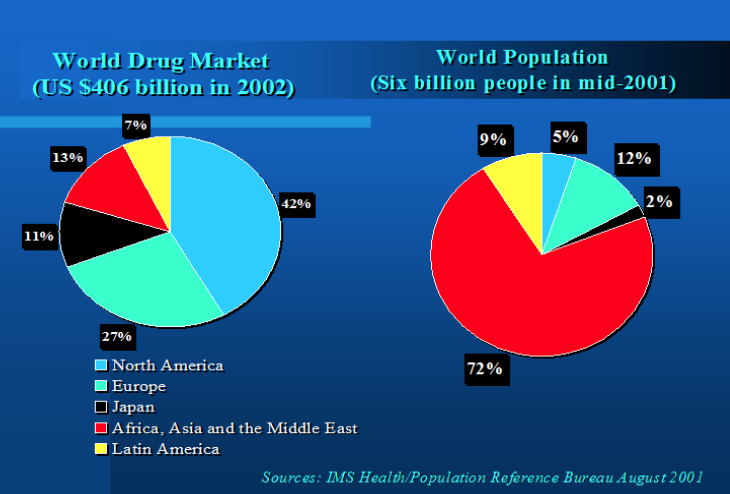
Benefits of new drugs do not reach a significant proportion of the world’s population, especially in developing countries
Due to multiple reasons
Weak, inefficient supply chain + unaffordable prices
IPR (Intellectual Property Rights) can often restrict access to essential medications, as patent protections make it difficult for generic versions to enter the market and provide affordable alternatives.
IPR gives companies ownership over new drugs, which limits how others can make or distribute them
However, IPR gives companies incentives to innovate since they can profit from their research investments
Companies or international bodies may lower prices for developing companies to to improve access
Ultimately, IPR and trade rules around medicine should balance company profits with ensuring medicines are accessible and affordable
WHO Recommendation on Essential Medicines
Essential medicines should not be subjected to tariffs
Tariffs raise retail price of imported medicines
Higher prices limit people’s access to treatment
Limited access poses a threat to public health objectives
WHO Universal Health Coverage Model
Primary health care approach — inclusive, equitable, cost effective, efficient
Protect people from paying out of pocket expenses for health and reduce the risk of being financially pushed into poverty
Global Governance and Collaborative Tasks
3 areas where WTO and WHO can collaborate in carrying out their mandated tasks
Trads in goods
Trade in health services
Intellectual property rights
Trade in Goods
All countries have the right to prevent trade for products that pose risks to health
The Agreement on Technical Barriers to Trade (TBT)
Trade in Services (GATS)
Trade in health services particularly affect the availability of health services
Increased brain drain
Increased siphon off trained staff — lesser availability of essential health services
Trade and Social Determinants of Health
4 key factors that link trade policy to social determinants of health
Income
Inequality
Economic insecurity
Unhealthy diets
Income: Greater access to clean water, food, housing, sanitation, education, quality health services
More important for health in poor countries
Not everyone will gain from new wealth — uneven distribution
Inequality: Caused by rise in demand and rewards for skilled labour — educational inequalities transformed into wage equalities
Increases in mortality caused by stress-related diseases and reduced access to health and social services
Social stratification and income inequality associated with difference in material living standards
Economic Insecurity: Financial liberalisation heightens economic insecurity and risk of financial crises, currency devaluation, rapid changes in labour markets and employment
Associated with enhanced psychosocial stress (e.g. rise in alcohol consumptions, alcohol related illness, violence, suicide, homicide
Decline in life expectancy
Death caused by heart disease, hypertension, mental health disorders, accidents, ulcers and cirrhosis
Unhealthy Diet
Open economies and trade liberalization has facilitated
Rapid urbanisation which alters food environment and choices
Cheaper, highly processed, calorie dense, nutrient-poor food — poor households more sensitive to food price changes and more likely to change diet accordingly
Increased desire for unhealthy food
Solutions
Domestic policies and regulations are designed to enhance social protection, stabilise incomes, distribute gains and sustain development
Low income countries do not have financial resources to fund social protection initiatives and require long-term poverty reduction interventions
Third World Debt Crisis
Developing countries borrowed large sums of money at low interest rates from Western banks — Western government protected their economies from oil shocks, and raised interest rates so loans became expensive to repay
Push for global free trade before economies were ready made poorer countries vulnerable to crises and inequality
Global Contagion and Asian Financial Crisis
Global liberalisation = financial markets became more interconnected
Weakness in one country’s economy could quickly spread to others
Asian financial crisis began in Thailand (currency collapse) and spread to Indonesia, South Korea
Structural Adjustment Programs (SAPs): Economic policies imposed on low-income countries since early 1980s in order to meet concessional financial lending conditions for loans or low interest subsidies
Designed to modify structure of economy to maintain its growth rate and correct trade and domestic budget imbalances
Involved: cut government spending, trade liberalisation, privatisation, capital market liberalisation
Argued that SAPs worsened poverty
Cuts in subsidies — made life more expensive
Redued public services
Unemployment and falling incomes due to privatisation and austerity
Market opening forced local producers to compete with Western goods, often destroying local industries
Less public spending and lower household income — worsened health outcomes
Power Asymmetries in WTO
Favours developed countries by:
Forcing developing countries to lower tariffs and liberalising trade
Allowing developed countries to keep agricultural subsidies for their own farmers, making it harder for poorer nations to compete
Global Reorganisation of Manufacturing
MNCs relocate production to low-cost countries or Export Processing Zones
Created global value chains, each stage of production placed where it is cheapest or least risky
Benefits: emerging economies see rapid growth and access to industries like generic pharmaceuticals
Risks: developing countries often remain locked into low-wage, vulnerable positions within global supply chains
Trade and SDGs
COVID-19 slowed progress on poverty reduction, food security and decent jobs
Trade still essential for recovery, particularly in least developed countries but structural inequalities make progress difficult
UN warns of possible “lost decade” for sustainable development
Case Study: Sub-Saharan Africa
Challenges
Unequal economic growth
Food insecurity worsened by COVID, Ukraine war, droughts
High debt
Energy poverty — 43% of population lack electricity
Climate risks — Up to 90 million people displaced by 2050 due to water stress crop failure and sea level rise
Opportunities
Resource-rich countries could grow through jobs and investment with good governance
Non-resource countries must diversify into services and manufacturing
Human capital
Weak outcomes due to poor education, high child mortality and malnutrition leading to lower future productivity
Programs invest in women’s education, health and empowerment to strengthen demographic transition
Health systems
Low COVID vaccination rates, weak disease surveillance
Need stronger public health infrastructure, vaccines and emergency response capcity