Tide
REPRESENTATION
We can bring in Stuart Hall’s Representation Theory here:
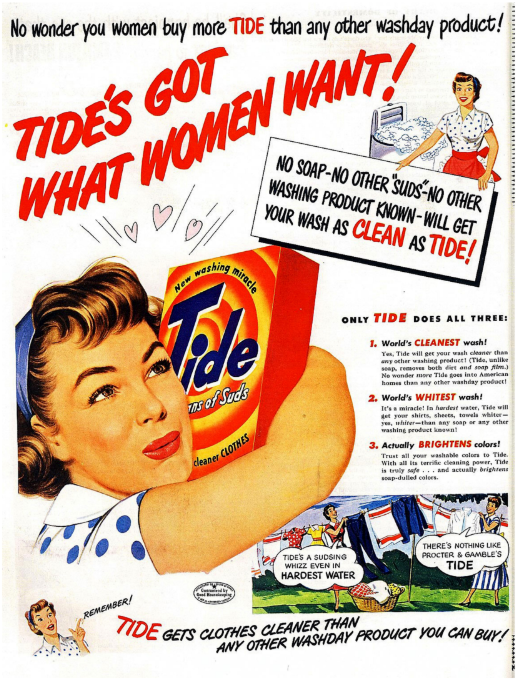
Stereotypical Gender Roles: The central image of a smiling, glamorous housewife hugging a box of detergent reinforces 1950s domestic stereotypes — that women belong in the home, and find joy and identity in cleaning. Hall would argue this "preferred reading" encodes the idea that a woman’s primary role is to be a homemaker.
Idealised Femininity: Her perfect makeup, hair, and bright clothing reflect an idealised image of the “perfect wife.” This representation suggests women should aspire to look good while doing housework, reinforcing the idea of appearance-based validation.
🎥 MEDIA LANGUAGE
You can apply Roland Barthes’ Semiotics:
Anchorage Text: The slogan “Tide’s Got What Women Want!” uses anchorage to direct our understanding of the image — implying that a cleaning product is the ultimate desire for women.
Codes and Connotations:
Hearts above the woman's head connote love and passion, implying she’s emotionally attached to Tide.
Red & White colour scheme connotes cleanliness, femininity, and love.
Bold sans-serif font gives a sense of urgency and authority.
Myth: Barthes would argue this ad builds a myth around domestic bliss — the idea that a clean home equals a happy woman. It hides the reality of domestic labor under a glossy, idealised image.
Binary Oppositions: Clean vs Dirty, Domestic vs Public, Good Housewife vs Bad Housewife. The ad uses contrast (before and after washing) to present Tide as the solution to an undesirable state.
👥 AUDIENCE
Using Stuart Hall’s Reception Theory again:
Preferred reading: Female consumers accept the message — that using Tide will make them better wives and earn approval.
Negotiated reading: A modern audience might recognise the product's quality but question the outdated gender norms.
Oppositional reading: Feminist or progressive audiences reject the idea that women should be confined to domestic roles.
Also, Uses and Gratifications Theory (Blumler & Katz):
Women might use the ad for personal identity ("I’m a good homemaker") or social integration ("I use what other women use").