Unit 6 atrial Rhythms
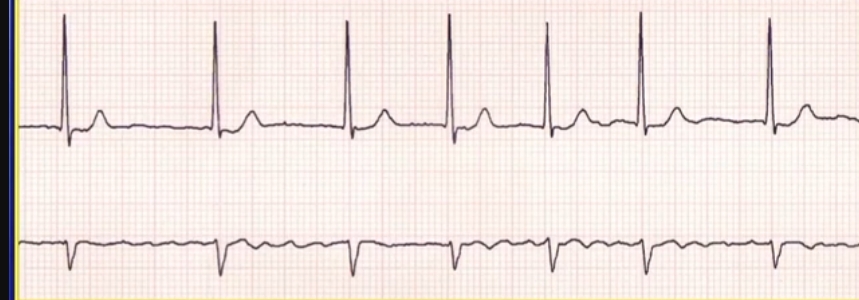
Ectopic Atrial Rhythm: looks like a sinus rhythm in everyway except for a negatively deflected P wave in an inappropriate lead
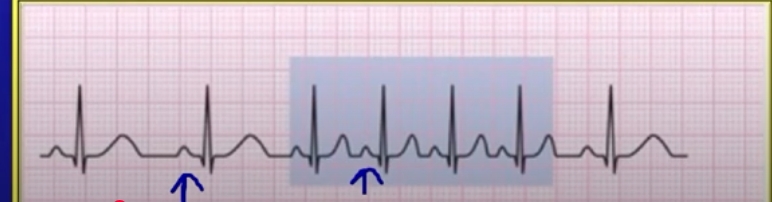
Ectopic Atrial Tachycardia
Does not have to have a negatively deflected P wave (It might) but it doesnt necessarily have to have one.
These stats will be the identifiers:
Rate: 100-180bpm
Rhythm: Regular
P wave: Present, may be different w/ ectopy or Tachycardia (P wave morphology will be inconsistent)
P:QRS ratio 1 to 1
PR interval: Normal, different w/ ectopy (Spacing for PR intervals will be different than other PR intervals, thats how you know its a Ectopic Atrial Tachycardia)
QRS width: < 120 milisecs (0.12)
Wandering Atrial Pacemaker
-Impulses originate from varying points in atria
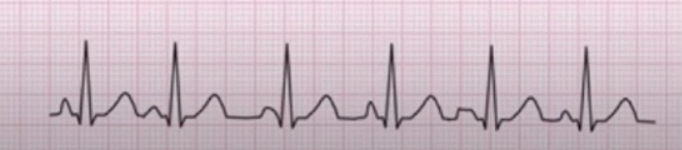
Rate: < less than 100bpm
Rhythm: irregularly- Irregular
P wave: At least 3 different morphologies
P:QRS ratio: 1:1
PR interval: Variable (will change)
QRS Width: <120 Milisecs (0.12 sec)
Multifocal Atrial Tachycardia
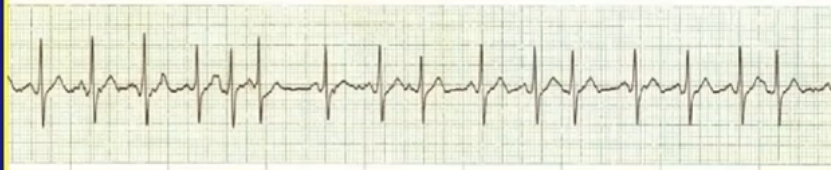
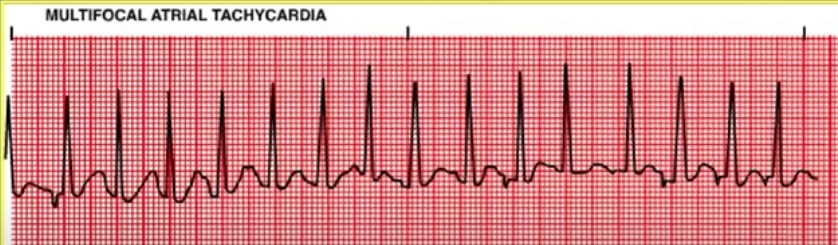
Rate: >100bpm
Rhythm: irregularly-irregular
P wave: at least 3 different morphologies
P:QRS ratio: 1 to 1
PR interval: Variable
QRS width: < 120 milisecs (0.12 sec)
Is basically the same as wandering Atrial Pacemaker except the rate is greater than 100
Atrial Flutter
Is considered re-entry tachycardia, somewhere in the atria depolarization will occur, and the depolarization will be stuck in a re-entry of the branches that carry the impulse from the SA node to the AV node
-occurs 250-300 times per minute, which means the atriums are working extremely fast, not normal
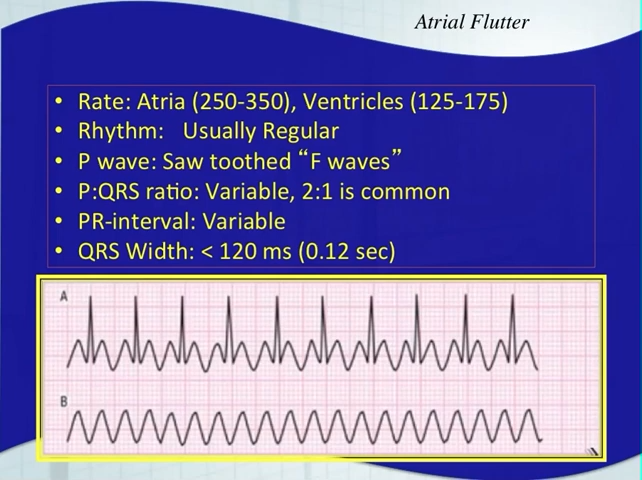
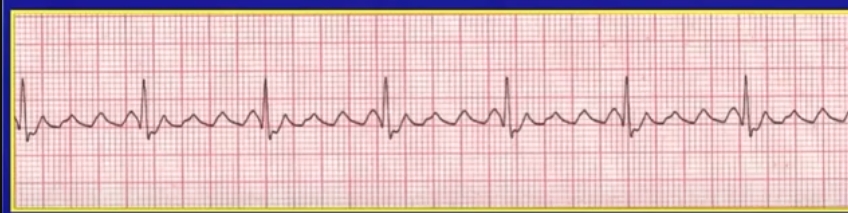
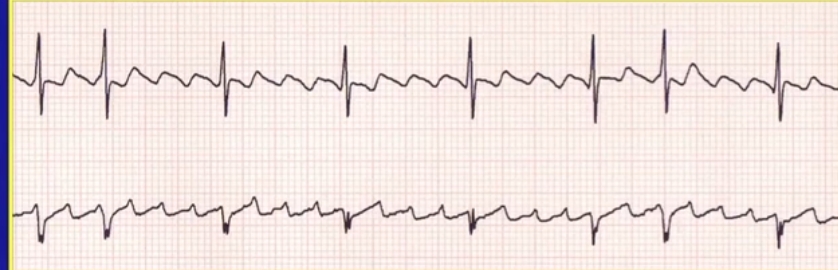
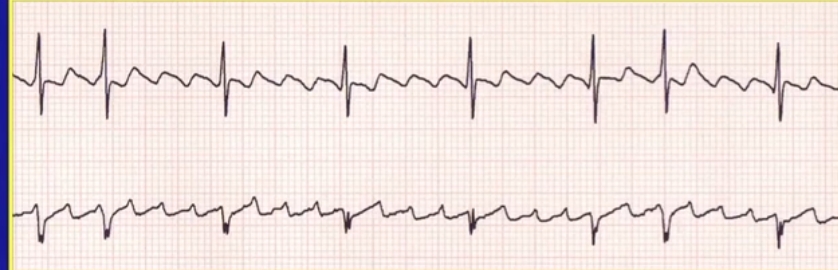
Rate: Atria (25—350 per min), Ventricles (125-175 per minute)
Rhythm: Usually Regular
P wave: Saw toothed “F waves”
P:QRS ratio: Variable, 2:1 is common
PR interval: Variable
QRS width < 120 millisecs (0.12)
The flutter waves will go right into and continue through the QRS complex and T waves
Atrial Fibrillation A-Fib
-common occurance in cardiac patients such as the elderly
-caused by a fibrillating atria, the atria is quivering, not depolarizing normally. It depolarized close to 800 times per minute, which is not sustainable with life
-The entire atria is quivering sending signals down to the ventricles almost 800 times per minute
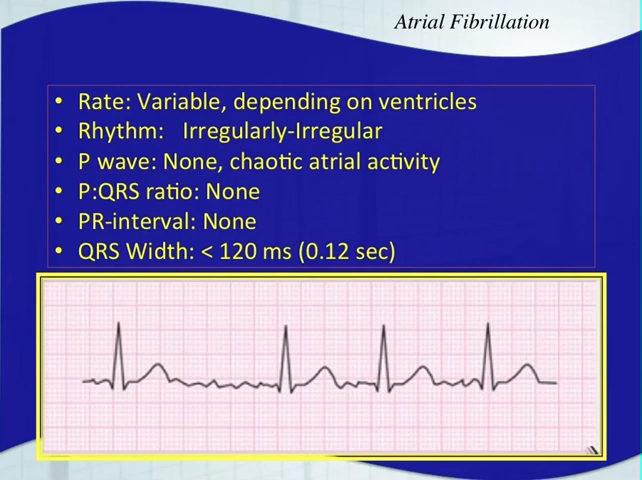
There are No P waves in atrial difibrillation
chaotic atria activity
There is no true Rhythm
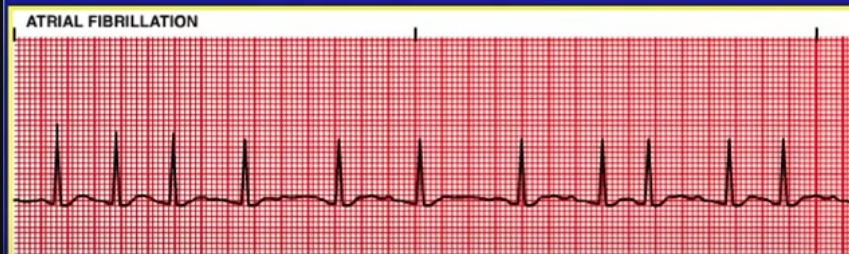
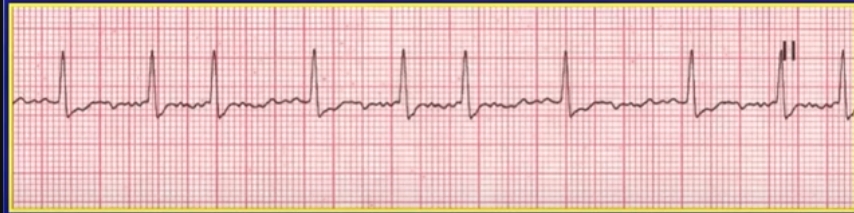
Controlled A-Fib: close to 100 bpm
Rapid A-Fib: will exceed 100bpm, will become in need of treatment depending on the patients condition