8: Leaves
-phyll= leaf
(phylloplane= surface of the leaf)
(phyllosphere= microclimate of the leaf)
A. SOME LEAF FUNCTIONS—WHAT PROCESSES OR ACTIVITIES OCCUR IN THIS PLANT ORGAN?
photosynthesis
storage
protection (spikes on cacti)
transpiration → loss of water vapor via stomata
climbing → tendrils
prey capture (carnivorous)
B. VARIATIONS IN LEAF MORPHOLOGY
LEAF MORPHOLOGY:
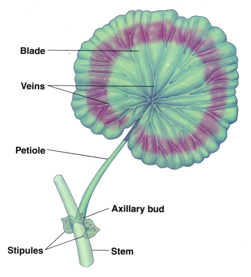
Some leaves may have leaf-like appendages at their bases called stipules.
Not all leaves have a distinct petiole.
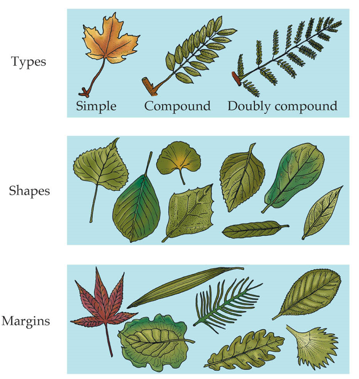
Leaves are perhaps the most varied plant structures. Botanists have developed ways to describe them based on certain characteristics. Among the most common, in addition to their arrangement on the stem, are the following:
BLADE SHAPE (many types)
specific appearances of the base and/or the tip of the blade may be used
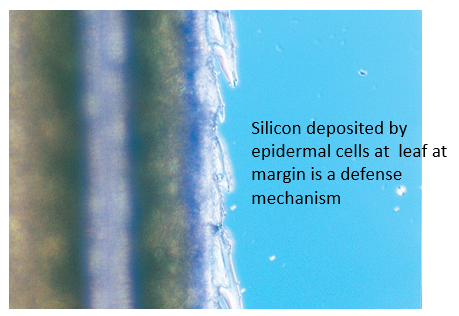
BLADE MARGINS (again, many types)
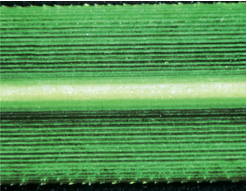
VENATION: What are veins in a leaf? Are they similar to human veins?
Pinnate, Palmate, (Netted/reticulated forms → common in dicots)
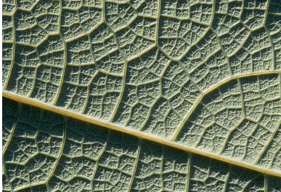
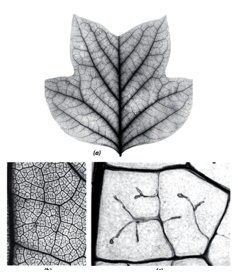 (Pinnate. Pinna: feather. Midrib/midvein with lateral veins and minor veins)
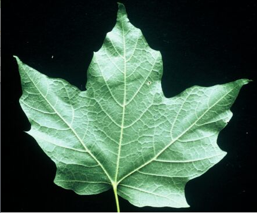 (palmate: palm-like, several major veins radiate from base)
and Parallel/Linear (More common in monocots)
COMPLEXITY
Simple: One intact blade
Compound: Blade separated into leaflets
C. LEAF ANATOMY
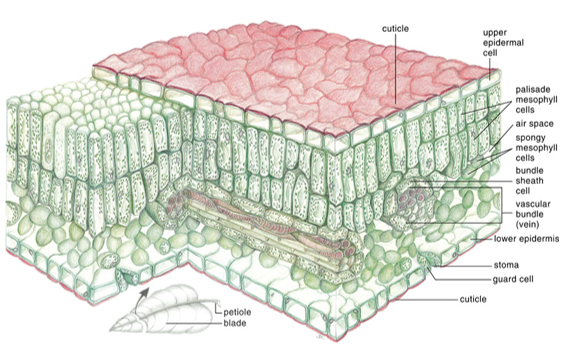
Epidermis (lower and upper): outer coverings of leaf that produces cuticle
numerous stomata regulated by guard cells
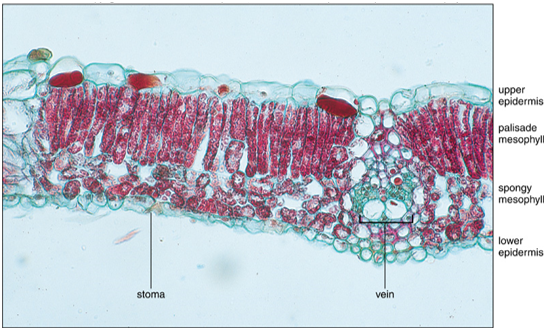
Cuticle: prevents water loss
waxy, hydrophobic
provides protection
Trichomes: hairs on leaf → reflect light, decreases air flow across leaf, may be defensive, reduce water loss
Mesophyll: bulk of blade, ground tissue, may be columnlike in shape → if so, palisade
may be air spaces between cells → sponge
Vascular Bundle: veins: xylem and phloem surrounded by bundle sheath cells
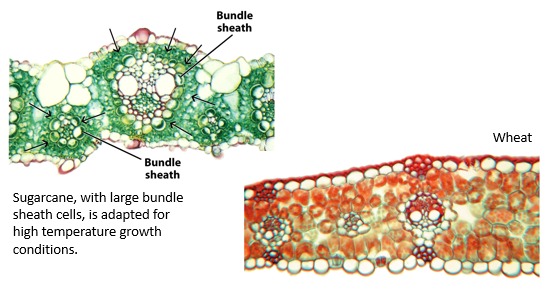
Some anatomical differences between dicot and monocot leaves:
Mesophyll Composition:
Monocots: may be spongy, typically not palisade
Dictors: often have palisade and spongy mesophyll
Stomatal Density (average number of stomata per cm²):
Monocots:
Corn → Upper: 5,500, Lower, 6,800
Oat → Upper: 2,500, Lower: 2,300
Wheat → Upper: 3,300, Lower: 1,400
Dicots: (lower is usually much higher)
Bean → Upper: 4,000, Lower: 28,000
Coleus → Upper: 0, Lower: 14,100
Geranium → Upper: 1,900, Lower, 5,900