A. 1.5 State Building in Africa

Development In Africa
Ibn Battuta’s Commentary on Mali society sheds light light on the cultural forces at work in Sub-Saharan Africa during the 14th cen. He was well versed in Islamic Law.
A scholar from Morocco on the northwest coast of Africa,
Islamic governments in Mogadishu (east Africa) and Delhi (India) sought his advice nè welcome him to their land.
Ibn Battuta’s travelogue demonstrated how Islam’s phenomenal growth increased connections among cultures of Asia, Africa, and southern Europe. As Ibn Battuta’s make clear that African societies that had adopted Islam kept many of their traditions.
Some parts of Africa resisted Islam, They defend themselves against attacks by Islamic forces, they built churches with labyrinths, reservoirs, and tunnels.
Political structures in Inland Africa
The developments of Sub-Saharan Africa was heavily shaped by the migrations of Bantu-speaking people outward from west-central Africa.
By the year 1000, most of the region had adopted agriculture.
People needed more complex political relationships to govern themselves.
Sub-Sahran Africa died not centralize power under one leader or central government.
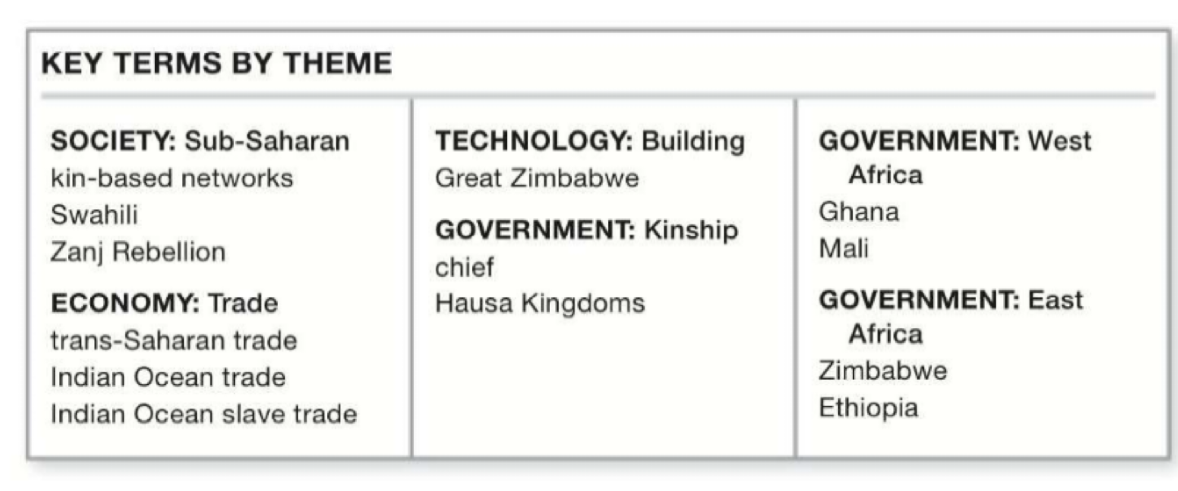
Communities formed Kin-based networks, where facilities governed themselves. A male head of the network, a chief medicated conflicts and dealt with neighboring groups.
Groups of villages became districts, and a group of chiefs decided among themselves how to solve the district[s problems.
As the population grew, the Kin-Based network became more difficult to govern. Competition among neighbors increased.
(The Hausa Kingdoms)
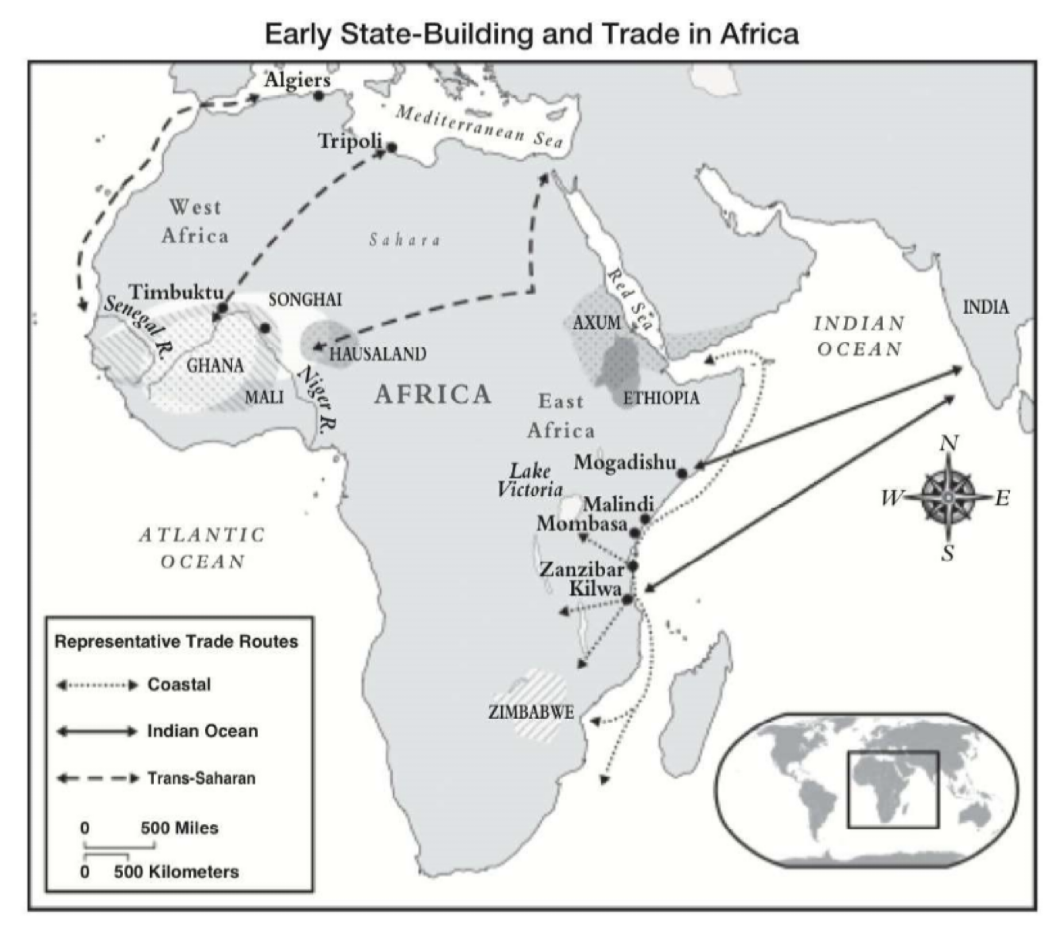
People of the Hausa ethnic group formed seven states, the Hausa Kingdom.
These states were loosely connect through kinship ties, though they too had no central authority.
Through the region lacked access to the sea, connect with people from outside the region was important. Many Hausa benefitted from the thriving trans-Saharan trade - a network of trading routes across the great deserts.
A state on the western edge of the regions specialized in military matters and defended the states against attack.
B/c of the states lacking a central authority, they were frequently subjected to domination from outside.
Political structures of West and East Africa
Kingdoms on both the western and eastern sides of Africa benefited from increasing trade.
The exchange of goods brought them wealth, political power, and cultural diversity.
The spread of Islam added to the religious diversity of the continent, where animism and Christianity were already practiced.
Four of these kingdoms were Ghana, Mali, Zimbabwe, and Ethiopia.
(Ghana)
Nestled between the Sahara and the tropical rain forest off the West African coast, the kingdom of Ghana.
Ghana’s rulers sold gold and ivory to Muslim traders in exchange for salt, copper cloth, and tools.
Ghana’s capital city, Koumbi Saleh, the king ruled a centralized government aided by nobles and an army equipped with iron weapons.
(Mali)
By the 12th century, wats with neighboring society had permanently weakened the Ghanaian state. In its places arose several new trading societies, the most powerful of which was Mali.
Mali’s ruler allowed Mali’s wealth to grow tremendously.
(Zimbabwe)
In East Africa, the architecture demonstrated the growing wealth of one kingdom.
Zimbabwe built its prosperity on a mixture of agriculture, grazing, trade and, above all, gold. Like Ghana and Mali on the other side of the continent.
Zimbabwe had rich gold fields, and traces on the transport of gold made the kingdom wealthly.
Ghana and Mali relied on the costal city-states, Zimbabwe had relation to the Indian Ocean trade.
B/c of this, this connect East Africa, The Middle East, South Asia, and East Asia. Creating a new language called Swahili.
(Ethiopia)
Christianity had spread from its origin along the East coastal of Mediterranean Sea south into Egypt and beyond.
It prospered by trading goods obtained from India, Arabia, the Roman Empire, and the interior of Africa.
Social Structures of Sub-Saharan Africa
In Sub-Saharan Africa, strong Central government ruling over large territories were uncommon.
Sub-Saharan Africa’s small communities were organized around several structures: Kinship, age, and gender. Kinship connections allowed people to identity first as member of a clan or family. Age played a major role in social markers.
Male dominated most activities that required a specialized skill.
Women generally engaged in agriculture and food gathering. They also took the primary responsibilities for carrying out domestic chores and raising their family’s children.
(Slavery in Sub-Saharan Africa and Southwest Asia)
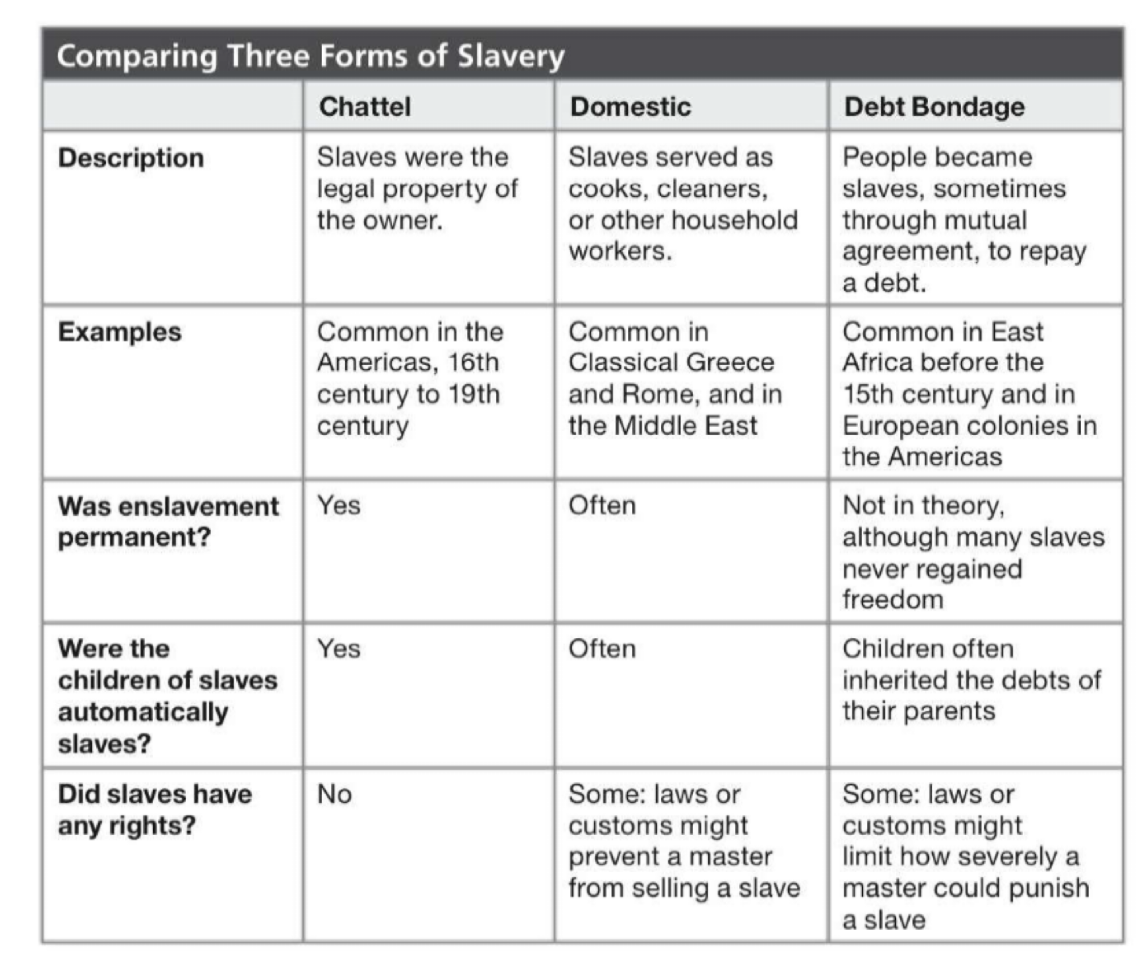
A strong demand in the Middle East for enslaved workers resulted in an Indian Ocean Slave Trade between East Africa and the Middle East.
Between 869 and 883, they and many Arab workers mounted a series of revolts known as the Zanj Rebellion.
Cultural Life in Sub-Saharan Africa
Music, visual arts and telling stories played a big role in Sub-Saharan Africa.
(Griots and Griottes)
Literature were storytellers that told encyclopedic knowledge of family lineages and the lives and deeds of great leaders.
In general, they adept at mystic singing their stories and accompanying themselves on instruments.
Griottes provided women with a sense of empowerment in a patriarchal society.
Summary:
Main Topic: Development In Africa
Key Points:
- Ibn Battuta's Travels
- Moroccan scholar and traveler.
- Demonstrates Islam's influence across Asia, Africa, and Europe.
- Adoption of Islam while preserving traditional practices.
- Resistance to Islam
- Some African regions resisted Islamic forces.
- Built defensive structures like churches, labyrinths, and tunnels.
- Political Structures in Inland Africa
- Bantu migrations led to the adoption of agriculture.
- Communities organized through kin-based networks.
- Male heads of networks mediated conflicts.
- The Hausa Kingdoms
- Seven loosely connected states formed by the Hausa ethnic group.
- Dependent on trans-Saharan trade.
- Lack of central authority made them susceptible to domination.
- Political Structures in West and East Africa
- Increased trade brought wealth, political power, and cultural diversity.
- Islam contributed to religious diversity.
- Key Kingdoms
- Ghana: Traded gold and ivory with Muslims. Centralized rule.
- Mali: Emerged as a powerful trading society.
- Zimbabwe: Prosperity through agriculture, trade, and gold. Access to Indian Ocean trade.
- Ethiopia: Flourished with Christianity and trade.
Cultural Aspects
- Social Structures
- Kinship, age, and gender determined social roles.
- Male-dominated activities, while women focused on agriculture and domestic duties.
- Slavery
- Indian Ocean Slave Trade.
- Zanj Rebellion in the Middle East.
- Cultural Life
- Griots and Griottes: Storytellers preserving family lineage and history.
- Empowered women in a patriarchal society.
This summary provides insights into the developments in Africa, focusing on the impact of Islam, political structures, key kingdoms, and cultural aspects, as per the provided content.