Notes on Soil Degradation
Definition and Scope of Soil Degradation
Definition: Soil degradation is defined as the decline in both the quantity and the quality of soil.
Primary Components of Degradation:
Erosion: Caused by the forces of wind and water.
Biological Degradation: Involves the loss of humus and the reduction of plant and animal life within the soil.
Physical Degradation: Characterized by the loss of soil structure and changes in permeability.
Chemical Degradation: Includes acidification, the decline of fertility, changes in soil , salinisation, and chemical toxicity
Types and Global Statistics of Soil Degradation
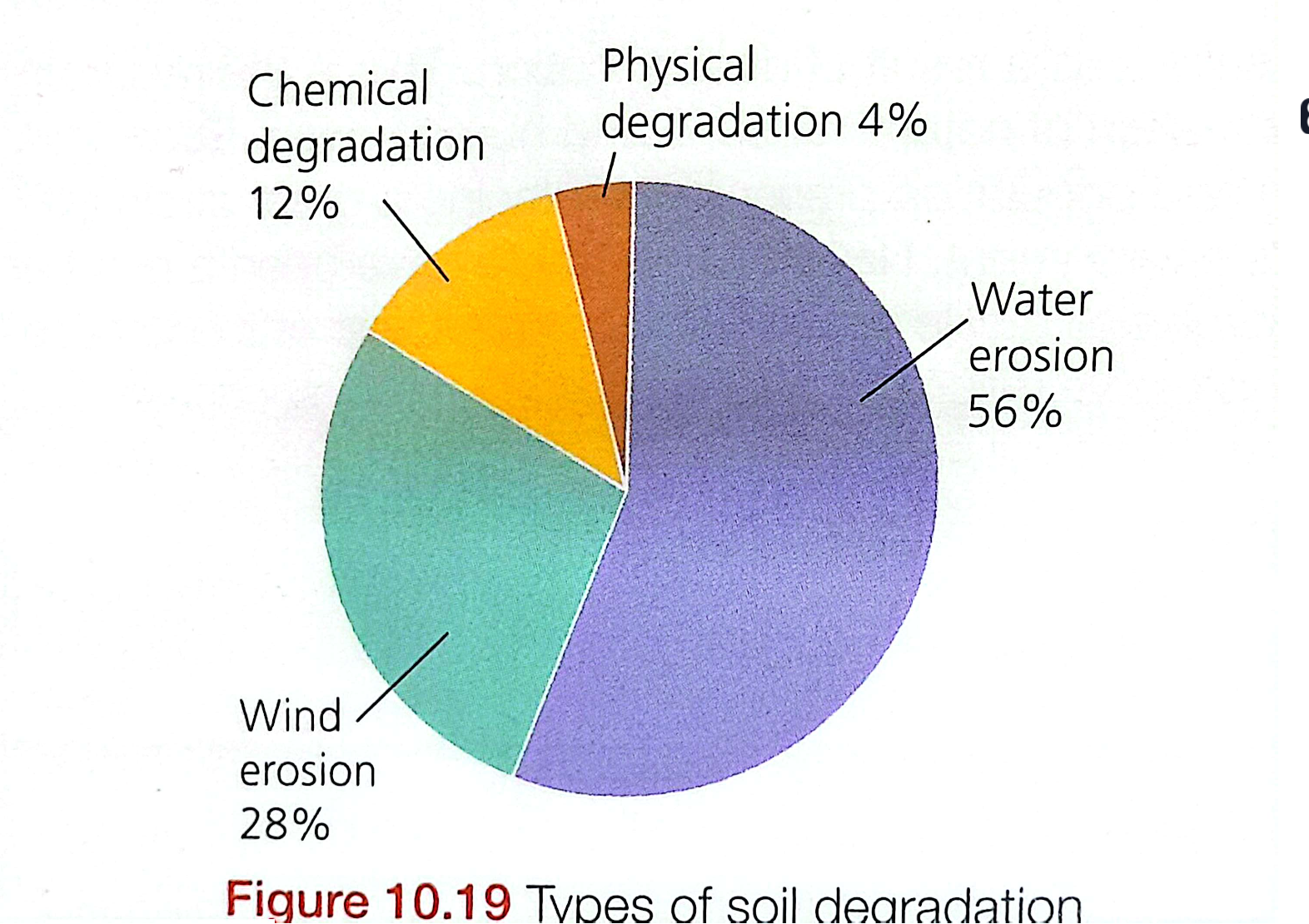
Specific Chemical and Physical Processes:
Acidification: A change in chemical composition that may trigger the circulation of toxic metals.
Wind Erosion: Accounts for of degradation. It involves the removal of fine-grained loess and silt-sized materials.
Eutrophication (Nutrient Enrichment): May degrade groundwater quality.
Groundwater Over-abstraction: Can lead to the drying out of soils.
Salinisation: Found in marine-derived sediments, coastal areas, and hot arid regions where capillary action brings salts to the surface. Soil salinity is a major issue in Australia following vegetation removal for dryland farming.
Atmospheric Deposition: The buildup of heavy metals and persistent organic pollutants that makes soil less suitable for original land cover or use.
climate change: will probably intensify the problem; its likely to affect hydrology and hence land use.
Climate Change and Soil Impacts
Hydrological Impacts: Climate change is likely to affect hydrology and land use, intensifying soil issues.
Direct Impacts of Higher Temperatures and Changing Precipitation:
Higher temperatures increase the decomposition rates of organic matter, which is vital for nutrients and moisture storage.
Increased flooding leads to higher rates of water erosion.
Increased droughts lead to higher rates of wind erosion.
Indirect Impacts and Feedback Loops:
Loss of degraded land may create a need for more agricultural land elsewhere.
Carbon Dioxide Fertilisation: Increased atmospheric levels may lead to higher yields for major European grain crops by allowing increased levels of photosynthesis.
These indirect effects (land loss vs. increased yield) appear to balance each other out.
Human Activities and Anthropogenic Degradation
Global Assessment Statstics: Human-induced damage has occurred on of the world's total land area ( light and moderate damage; severe and very severe damage).
Economic Impact: The negative economic impact is most severe in countries heavily dependent on agriculture for income.
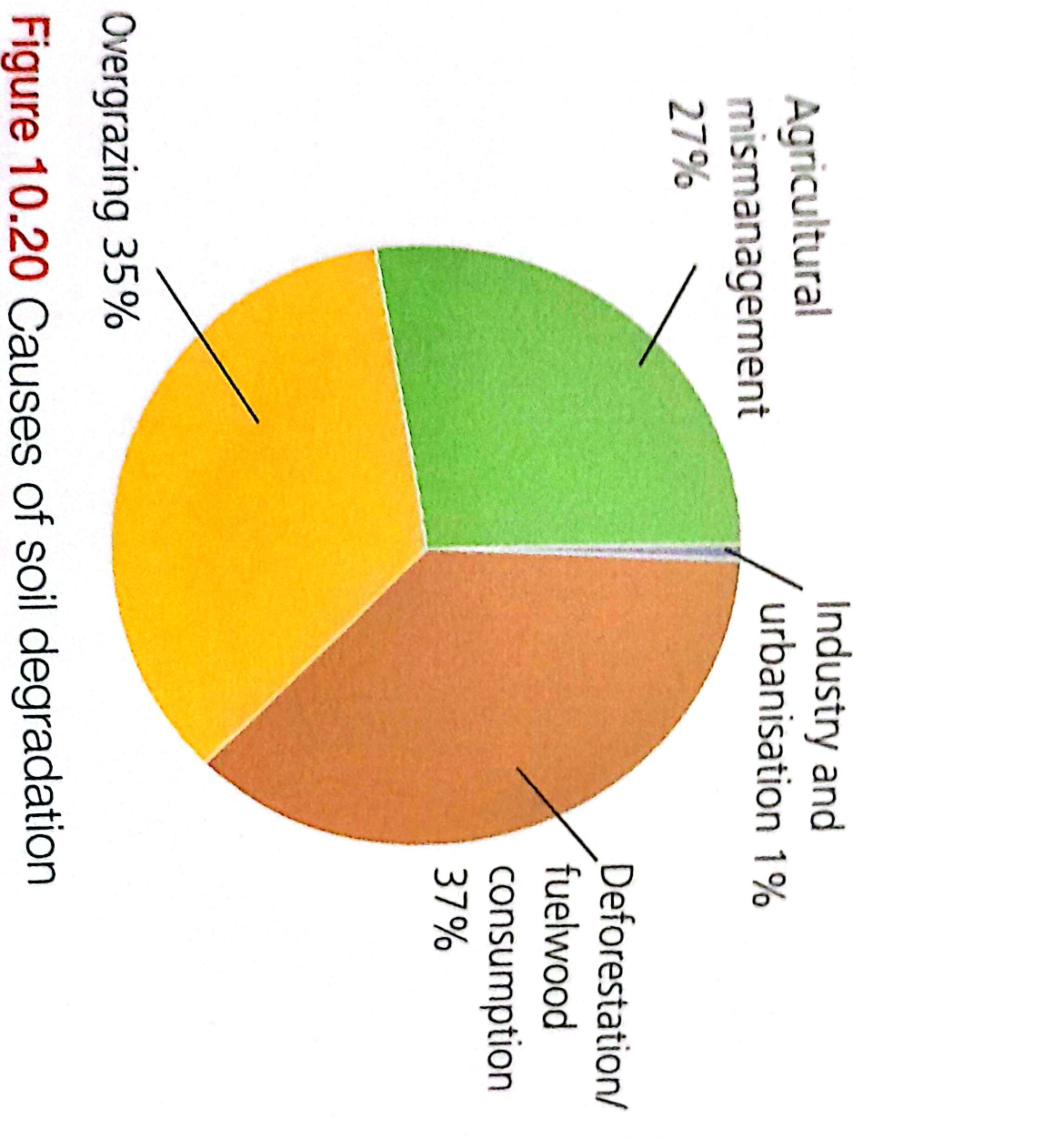
Specific Actions and Effects
Removal of Woodland/Ploughing Pasture: Kills roots that bind soil; exposes soil to wind and water, particularly on slopes.
Cultivation: Exposes bare soil before planting and after harvesting. Sloped cultivation generates large runoff and creates rills and gullies.
Grazing: Overgrazing reduces vegetation cover. Animal grouping leads to overtrampling and bare patches. Dry regions become susceptible to wind erosion.
Roads or Tracks: Reduce infiltration, causing water collection that forms rills and gullies.
Mining: Results in the exposure of bare soil.
Managing and Abating Soil Degradation
Management Strategies: Includes afforestation, organic farming, pasture extension, and benign crop production.
Mechanical Methods:
Physical Barriers: Embankments and windbreaks.
Water Management: Reducing overland flow by increasing infiltration.
Specific Techniques: Bunds, terracing, and contour ploughing.
Contour Ploughing: Utilizes ridges formed at right-angles to the slope to prevent or slow the downward accretion of soil and water.
Terracing: Practiced on steep slopes with heavy rainfall, such as monsoon areas in South East Asia. The slope is broken into level steps with bunds (raised levees) at the edge, allowing cultivation on otherwise unsuitable land.
Shelterbelts: Rows of trees or hedgerows that act as barriers to wind, reducing wind speed and its ability to disturb topsoil and particles.
Cropping Techniques for Erosion Prevention:
Maintaining crop cover for as long as possible.
Keeping stubble and root structures in place after harvesting.
Planting grass crops to bind soil and minimize the action of wind and rain.
Increasing organic content to improve water retention and stabilize soil structure.
Careful use of heavy machinery on wet soils to prevent structural damage.
Management of Salt and Chemical-Affected Soils
Techniques:
Flushing the soil and leaching the salt away.
Applying chemicals such as gypsum (calcium sulphate, ) to replace sodium ions on clay and colloids with calcium ones ().
Reducing evaporation losses to limit the upward capillary movement of water in the soil.