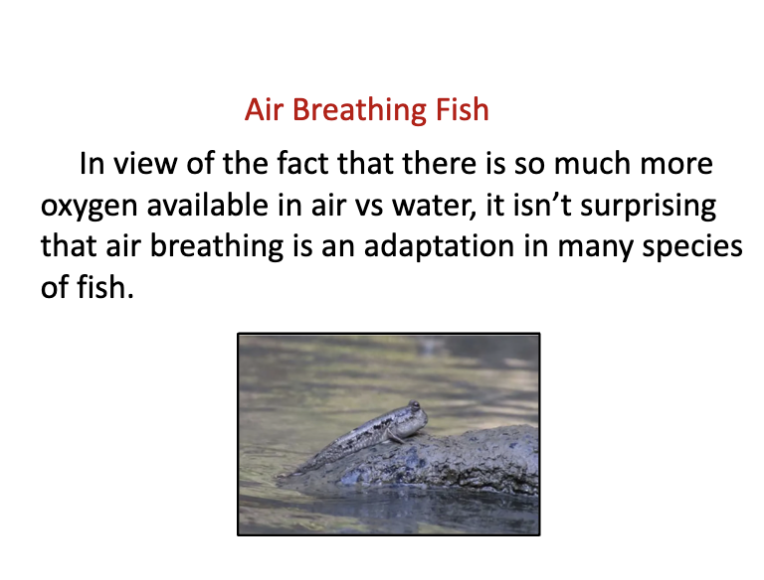
Air Breathing fish
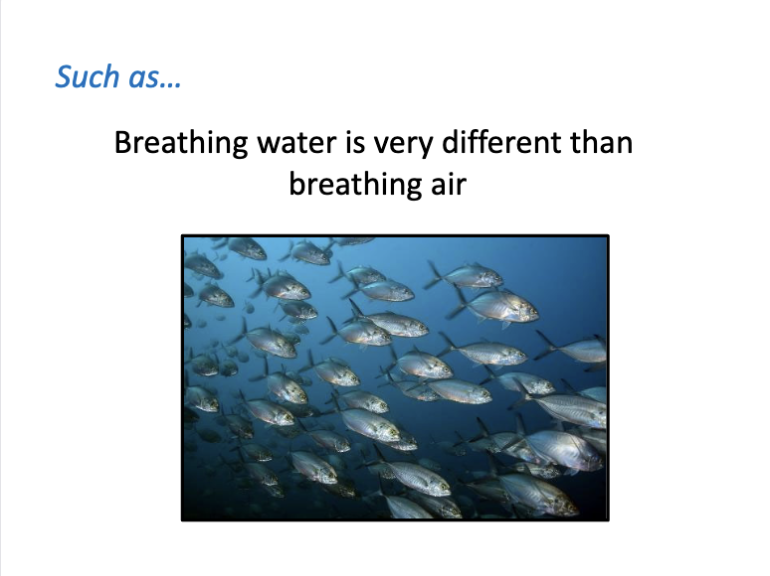
How do water properties differ from air
there is so much more oxygen available in air
that explains why so many more aquatic fish and species can breath air
Most of the 400 air breathing fish are fresh water species because of the variability in there enviroments
some air breathers only relay on air breathing (obligate)
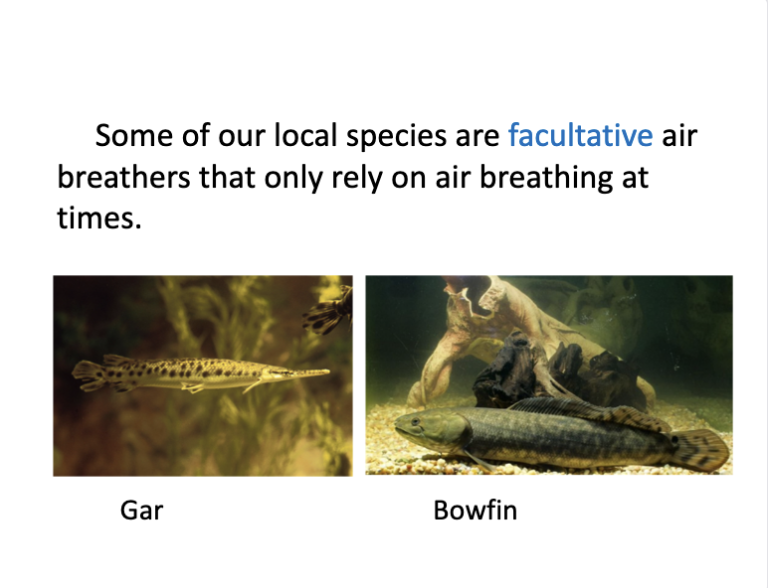
facultative = dont jneed to breathe air under normal conditions
air breathing might only be used in stressful situations
in the summertime they will take big gulps of air to get warm or because they are warm?
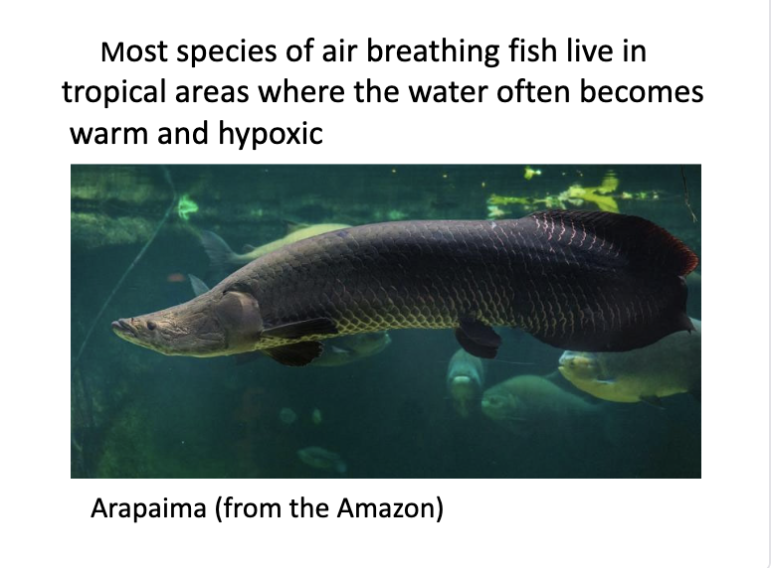
most facultative air breathing fish live in tropical areas
it gets very warm
lots of vegetation
have combination of high tempuratures and hypoxic water
*remeber high tempurture increases metabolic rate so they create adaptations
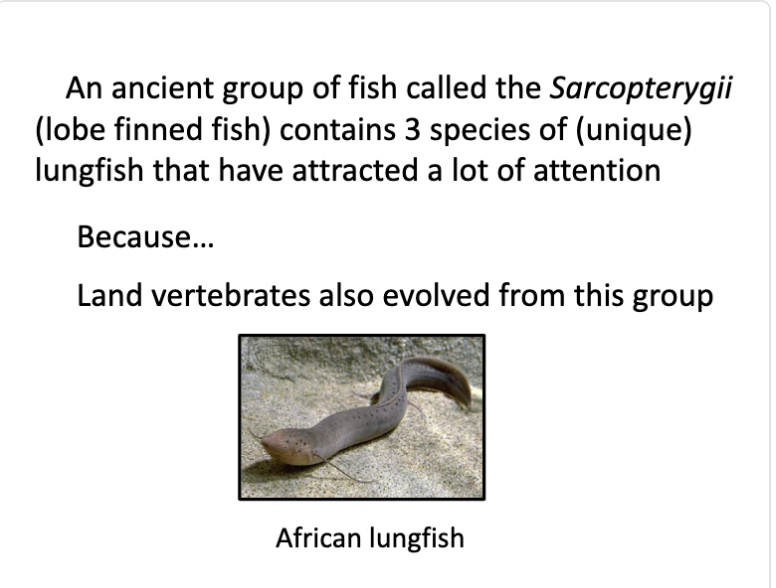
this is an african lung fish from agroup called the lope finfish
tetropods evolved from lode fin fish
three species that are still alive (true lung fish)
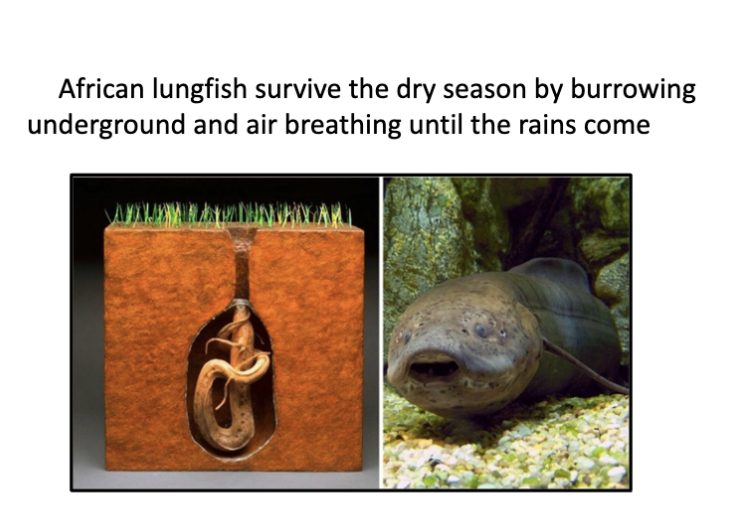
whats facinating abou then is that they burrow in dry season so they dont dry up
have tube to breath air and wait till rain (can be months)
they spring up again out the whole and then behave like a fish again
air breathing what thought to evolved in oxygen poor waters
in place's like the amazon we look at facultative air breathers to see why they started breathing air or why they needed to breath more air
usually because of oxygen demand and environment does not have enough (higher temp, increase activity..)
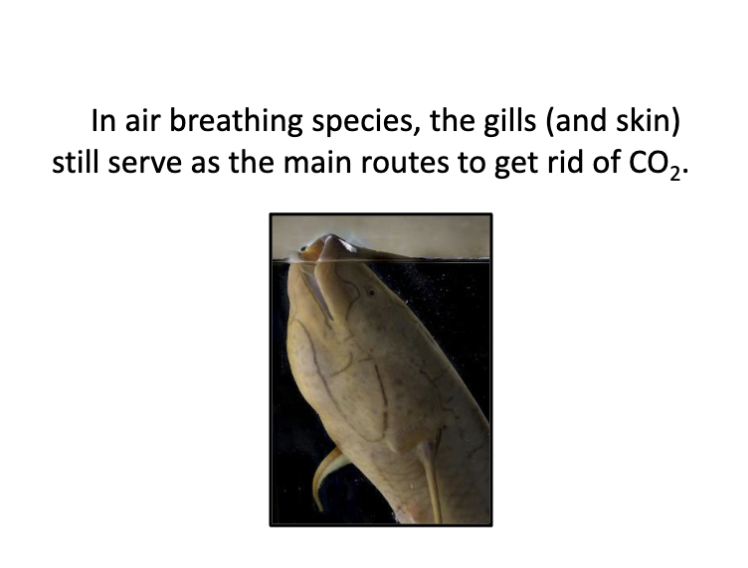
why do air breathing fish get rid of all carbon dioxide in water?
carbon dioxide is really soluble in water
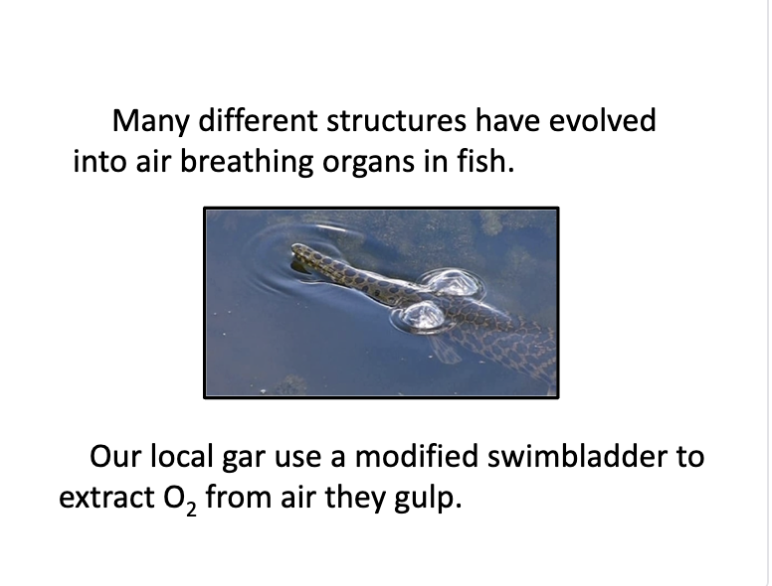
this is a car
stick snout out take a breath of air
use a modify swim bladder
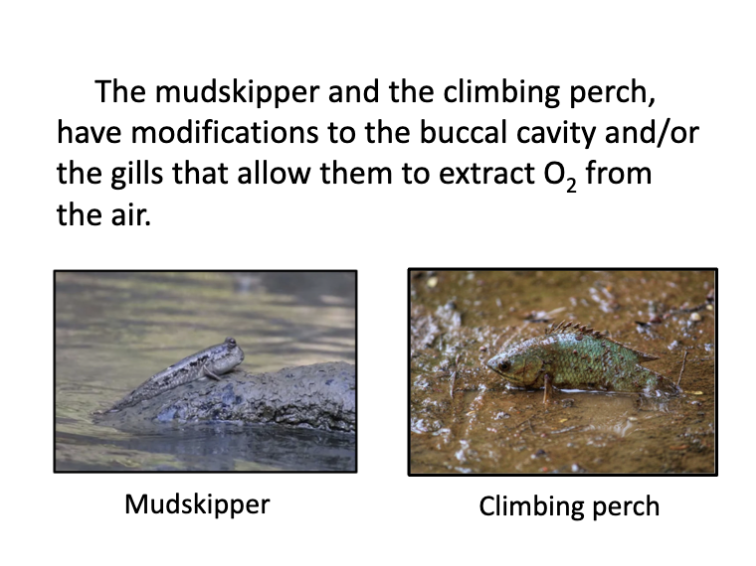
Mud Skipper and climbing perch
have structure modifications in throats/mouth an skin
use skin for gas exchange where air breathiong organs are located
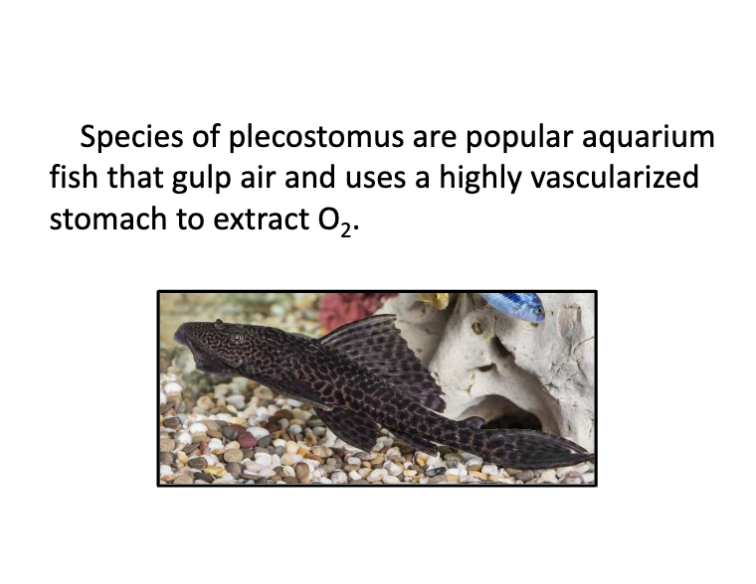
they will sit and adhere to the side of the tank cause they eat the algae
gulp of air goes into the stomac and the stomac is well vascularized in membrane circulation.
air breathing has evolved many diff times
evidence of this is the diff structures (some of the structures are common and can be seen in multiple air breathers)
this is the buccal cavity,gill chambers,stomach,intenstine,swim bladder,lungs
they also have a thin membrane, a lot of surface area and a rich flow supply.
Amphibiant and air breathing
Amphibians have gills, but your book points out that the gills are different developmentally for other on the gills.
gills of aquatic amphibians from different origin.
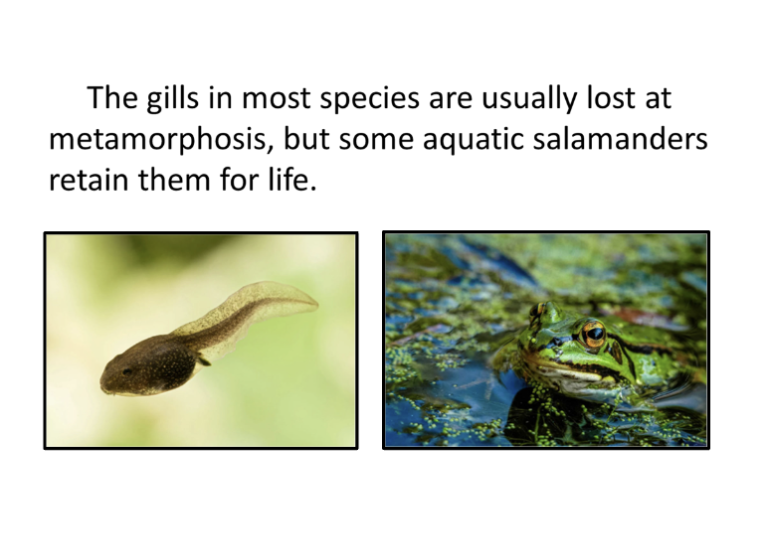
one of the exceptions is tadpoles, because they actually get a operculum overing the gills during the tadpole stage, kind of like fish do.
most MKVs, the gills are lost at metamorphosis.
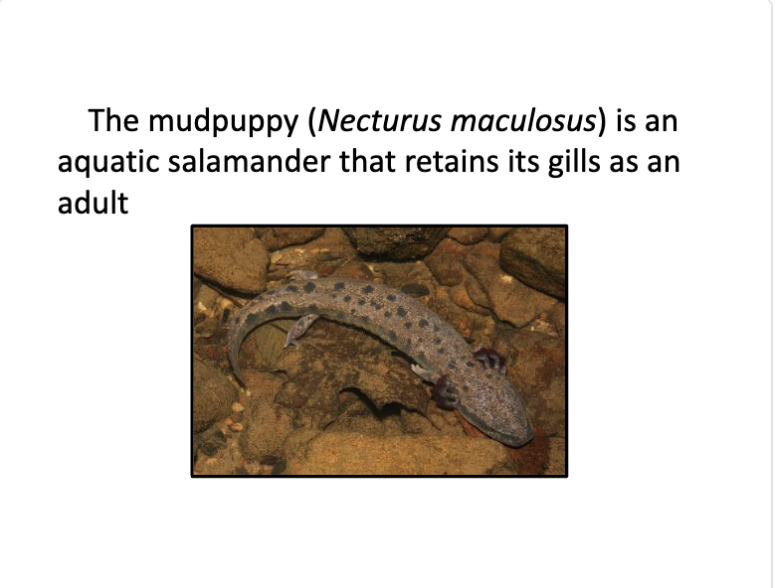
mud puppy or natural maculosis
got outgrowths and gills. as an adult, this salamander retains its gills and uses it for gas exchange
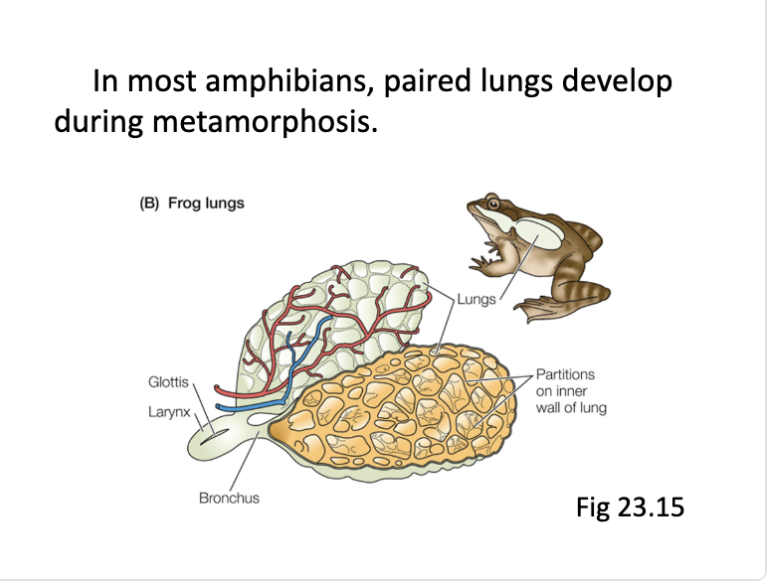
gills disappear and the animals develop
frogs are the classic example.
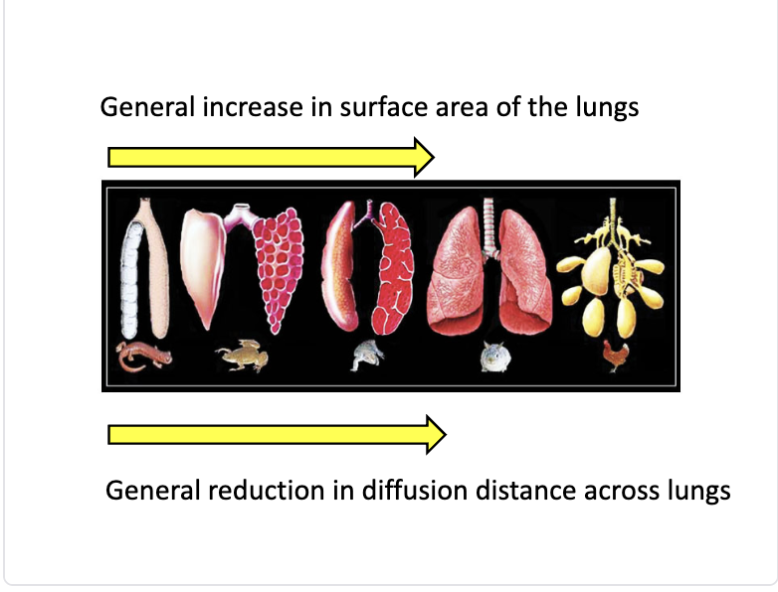
lungs of frogs are a pretty simple sac.
they are well vascularized, it's a membrane, but it doesn't have a ton of surface area.
how do amphibians use the different things they have available for gas exchange?
In adults, for example, frogs have their skin that they can use potentially for gas exchange,and they also have their lungs. tadpoles have their gills
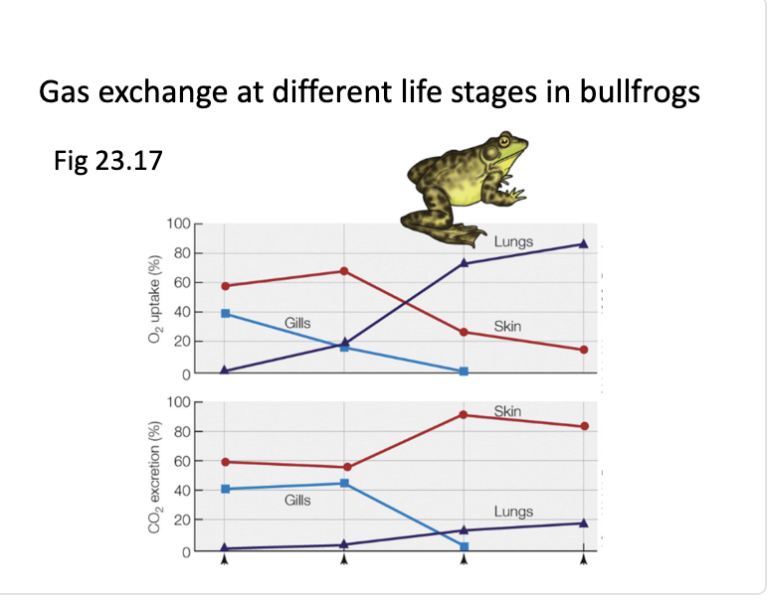
two panels there, the top part is oxygen uptake and the bottom part is CO2 excretion. the places where there's vertical lines, you see things changing is as we go from tadpoles on the far left to adult frogs on the far right.
first table
Tadpoles can split about 50, 50 between the skin and the gills washing up in.They don't have lungs yet, so lungs are down here at the bottom.
And then as they evolve to adult frogs, they develop lungs, gills disappear, gills aren't part of the picture anymore. skin still plays a role, the oxygen uptake.
*Cold, dead of winter, they don't need a lot of oxygen and the skin can actually account for everything you need.
second table begining of table
No lungs in a tadpole, but even in an adult frog, carbon monoxide excretion improves at about 20% across the plums. Because water is a really good soluability for carbon dioxide. 9A lot of the carbon dioxide just pour down across the skin. (A lot of the carbon dioxide just pour down across the skin. )
Textbook:
Amphibians can exchange gases across three major sites:
Gills (only in larvae)
Lungs
Skin (cutaneous respiration)
Because amphibians can breathe through their skin, their patterns of gas exchange change dramatically over development and with environment.In the aquatic tadpole stage, the gills and skin play equal roles in both O 2 uptake and CO 2 excretion.
Once the animals metamorphose into adults, the lungs take over most of the O 2 uptake, but the skin excretes most of the CO 2 .
This makes a lot of sense if we remember that there is a lot more O 2 in air, but CO 2 has a much higher solubility (absorption coefficient) than O 2 in water (from ch 22). Things to note in Fig 23.17
Early tadpoles have no lungs, so all gas exchange occurs via:
Gills → ~50% of O₂ and CO₂ exchange
Skin → ~50% of O₂ and CO₂ exchange
Both surfaces are important and roughly equally used.
in tadpoles as lungs develop, lungs increasingly take over O₂ uptake. However, even as lungs become functional, CO₂ is still mostly eliminated by skin and gills. This shows that lungs are good for O₂ uptake, but not the primary route for CO₂ elimination.
Lungs → primary O₂ uptake site
Skin → primary CO₂ elimination site
Gills are gone after metamorphosis, so skin compensates, especially for CO₂ loss.
This “lungs for oxygen / skin for carbon dioxide” pattern is typical for many adult amphibians at moderate temperatures.
Some species hibernate underwater in ponds during winter.
In winter, frogs rely entirely on cutaneous respiration for both O₂ uptake and CO₂ elimination.
This works because:
Metabolic rate is extremely low at cold temperatures → low O₂ demand and low CO₂ production.
Skin is highly permeable, which allows efficient gas exchange underwater (but also causes dehydration risk on land).
Thus their skin’s permeability, which is a disadvantage on land, becomes an advantage underwater.
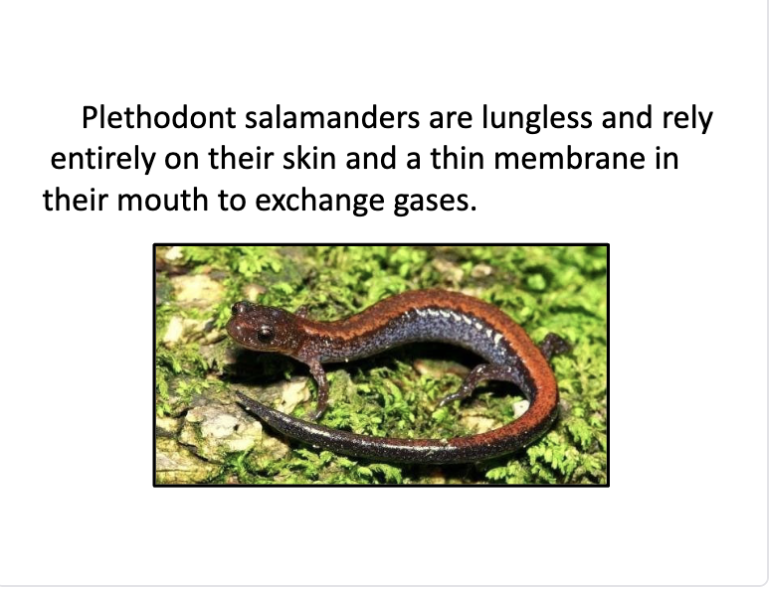
red back salamander are air breather, but it doesn't have lungs.
gets all of the oxygen it needs across the skin
they have an area developed that is highly vascularised.
it is also a long, thin animal. So the fusion distances aren't going to be huge.
being long and thin adds surface area.
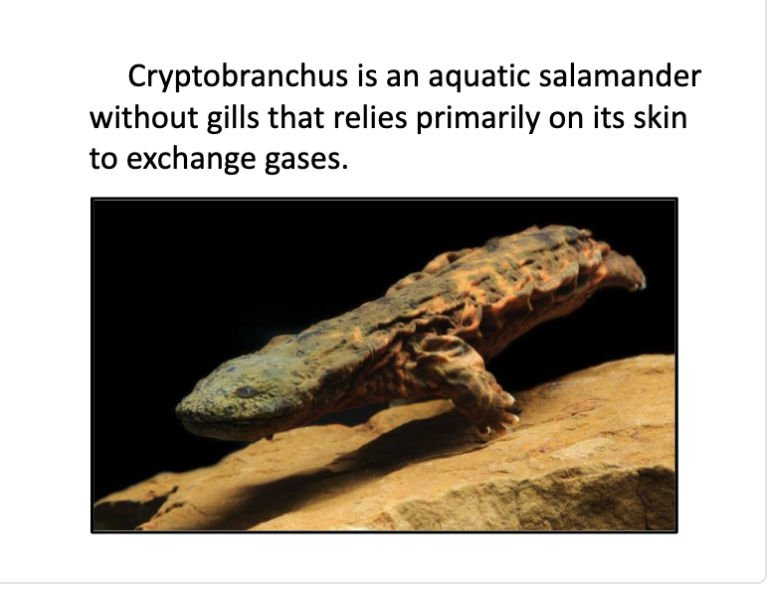
wrinkle skin allows for more surface area
so the body is able to provide enough oxygen to itself. That big body largely across the skin that would also be used for CO2 exchange
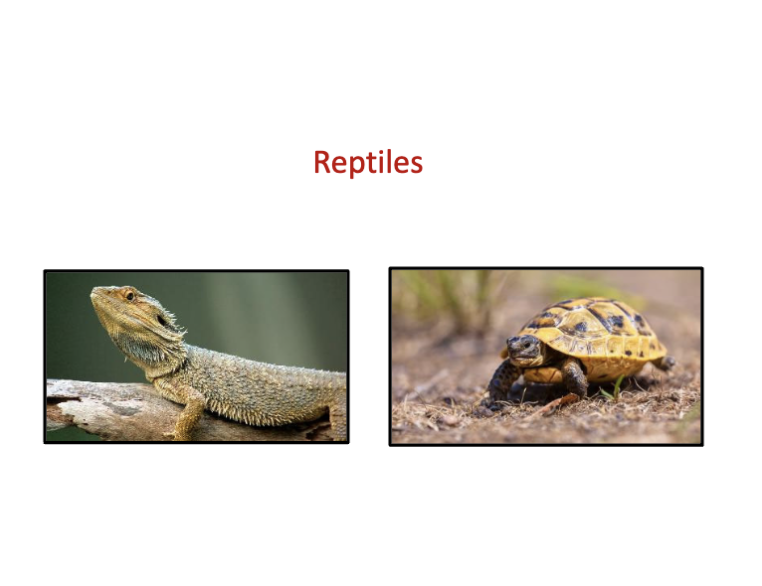
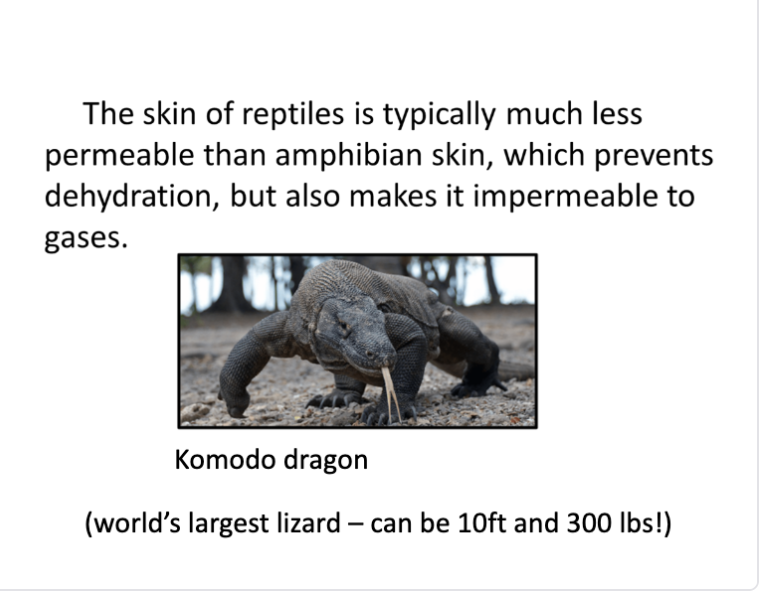
Reptiles have a skin that's really good at preventing desiccation, preventing water loss, which allows them to be more independent from water than amphibians, but it also prevents gas exchange.
They don't have gills. So in most reptiles, the lungs do everything
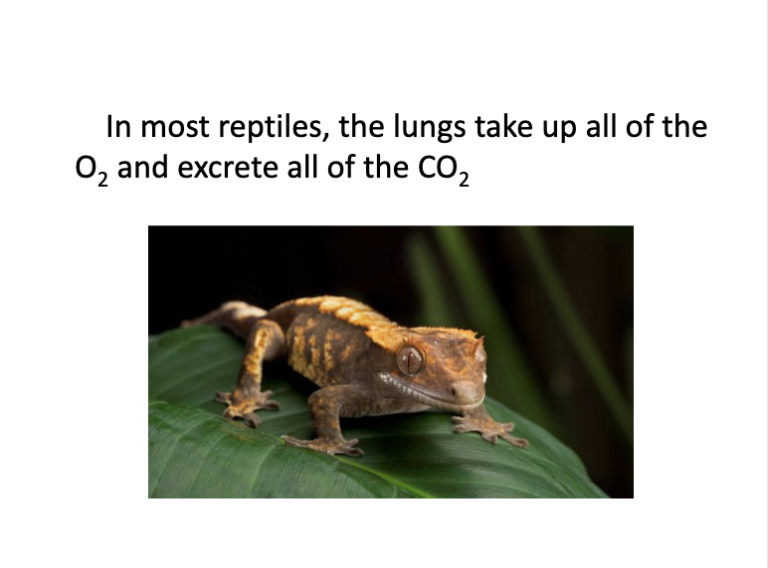
skin is very impermeable to water and they use their lungs for gas exchange.
unicameral lungs = some have very simple lungs that are just basically a balloon with maybe a few septum in there to increase surface area, but not a lot. they also only have one chamber
multicameral = reptiles have lungs that have more chambers. They have increased the surface area.
provides more potential for gas exchange.
probably helps aid in the kind of active lifestyle
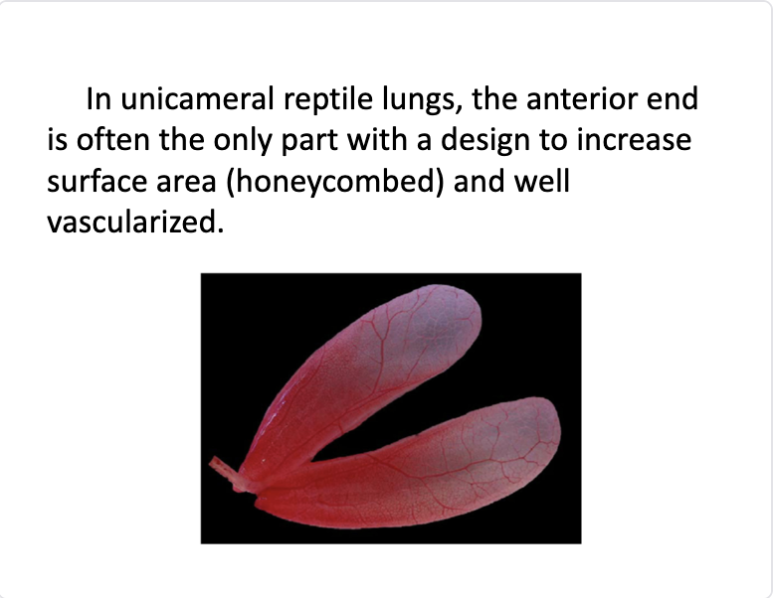
These are categorized, we might call transitionary animals in terms of the evolution of respiration.
In simple unicameral lungs, one sac like a balloon. You can see that they're vascularized in some parts. And in other parts, there's not a lot of blood supply.
Breathing in birds
In birds, the air flow is in one direction. T
hey have air sacs which help to push and pull the air along the system in one direction.
Somewhere in the system there is going to be sites of gas exchange.
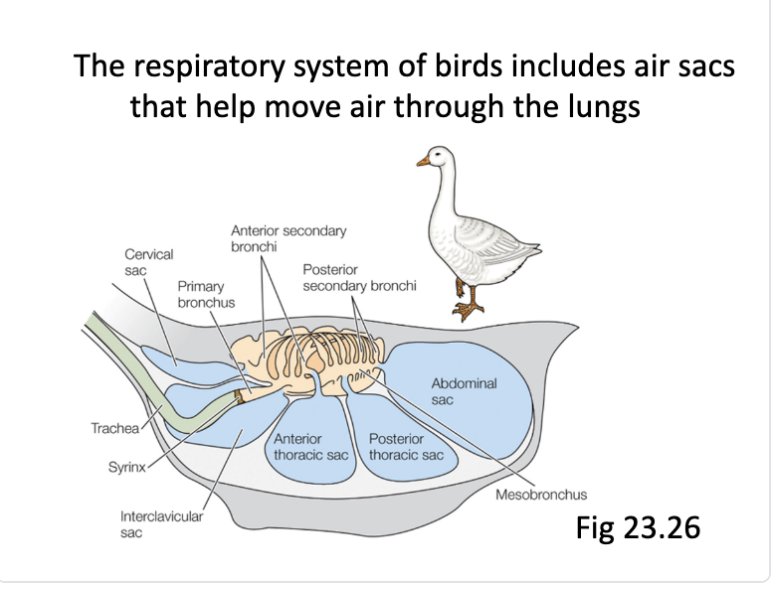
blue thing = air sac
airtight sac stay in lost space and they expand and contract.
white is area of the lungs
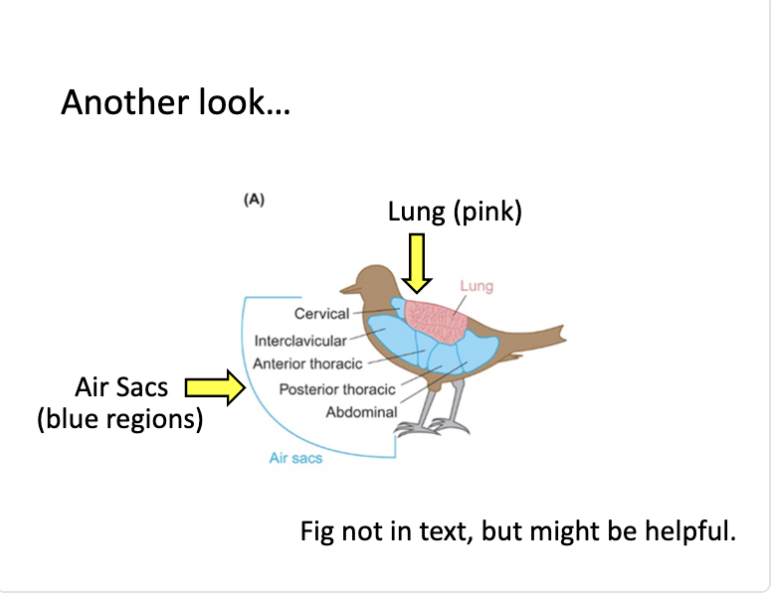
relationship again between the lung area and the air sacs and the fact that there's a lot of the respiratory system devoted to air sacs.
non respiretory is important in bird / mammal
air capillaries are attached to parabronchi where gas exchange happens
at the site where the air capillaries are, that'd be a rich blood supply, Very thin membrane and a rich blood.
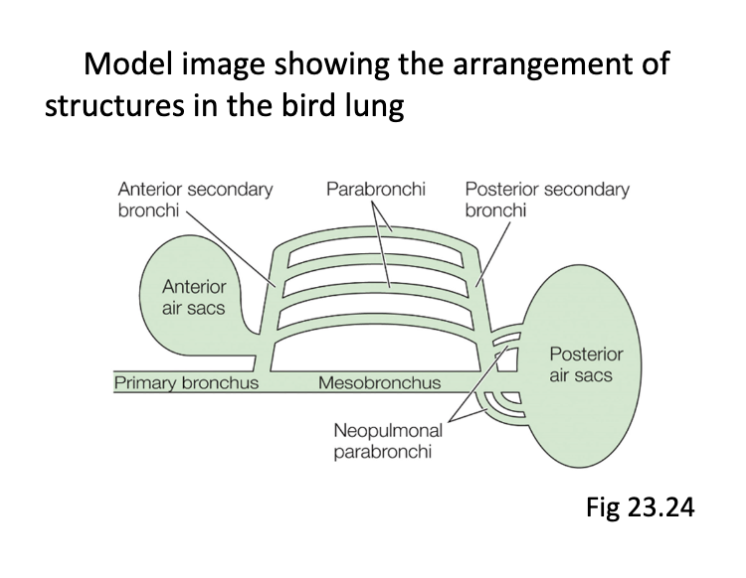
That bottom tube called the primary bronchus would actually lead to the trachea and to the outside (where air comes in)
on the right are what's called posterior air sacs.
Air flows in along that tube on the bottom and the posterior air sacs help with that.
then it's going to flow up. You see those four bars going across there? Those are what's called the paragronchi. So the ear is going to go up from the bottom across those and then back towards the front or the anterior air sockets.
doing a loop
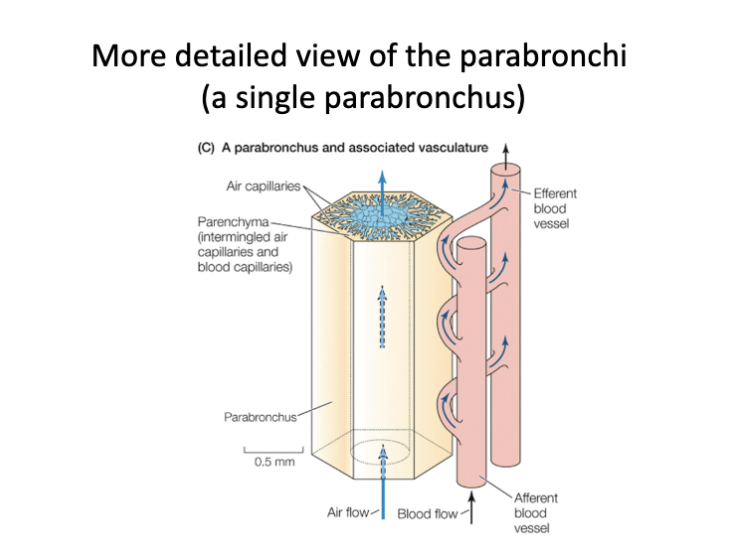
those four tubes that went across the top of a pair of bronchi, if you took one of them, turned it on its side and sliced it. (thats what this is)
There's a, a hole in the middle, a lumen in the middle.
at the top, you can see, see all these little fingers radiating out of that lumen in the middle those are going to be the air capillaries.
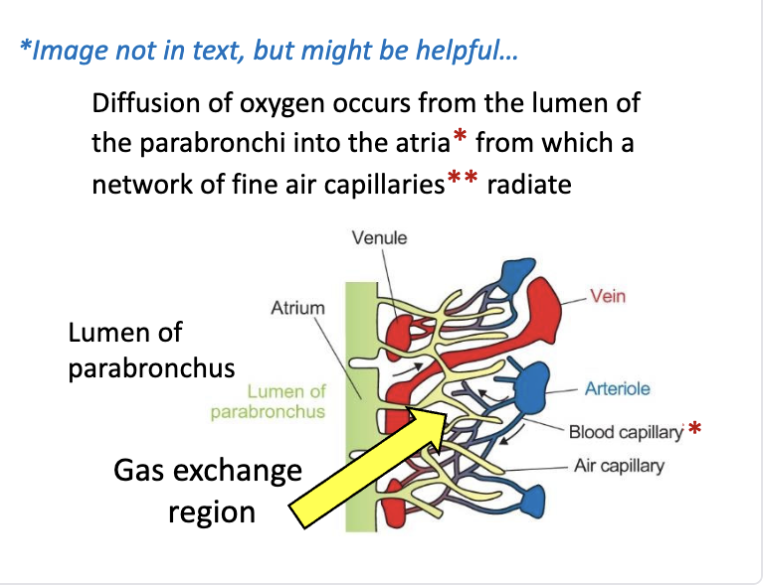
The lumen or the opening in the middle of the peribronchi was down the middle and we're just looking at one side of it,
On the side there are these branches called air capillaries that are the green things. Around them very tightly are woven capillaries, on the arterial side and the bead side.
that's the region where gas exchange happens
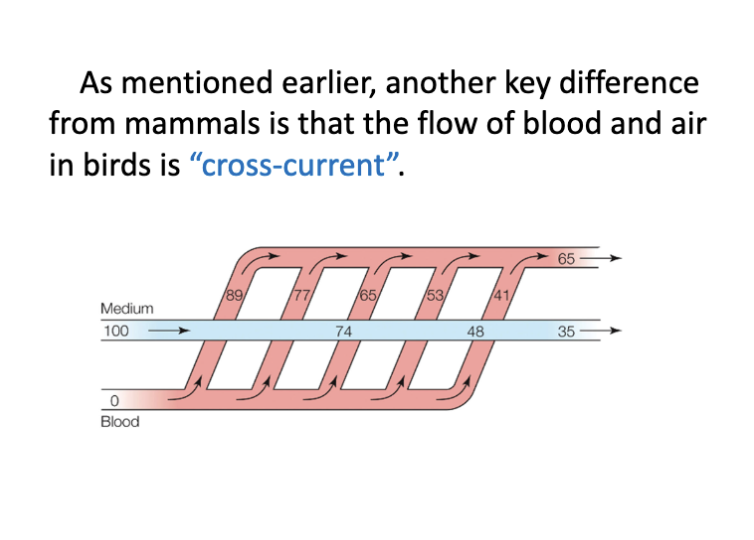
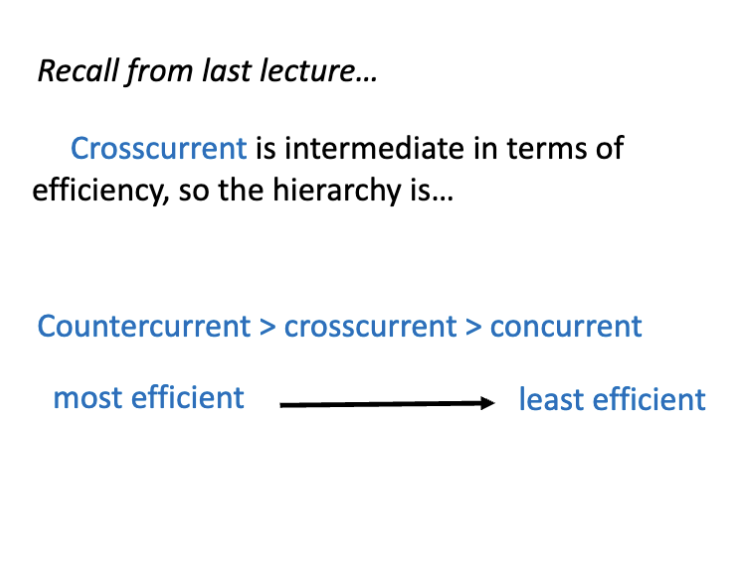
counter current being highly efficient, concurrent being crappy and not very efficient.
in the middle is cross current.
that's what birds use
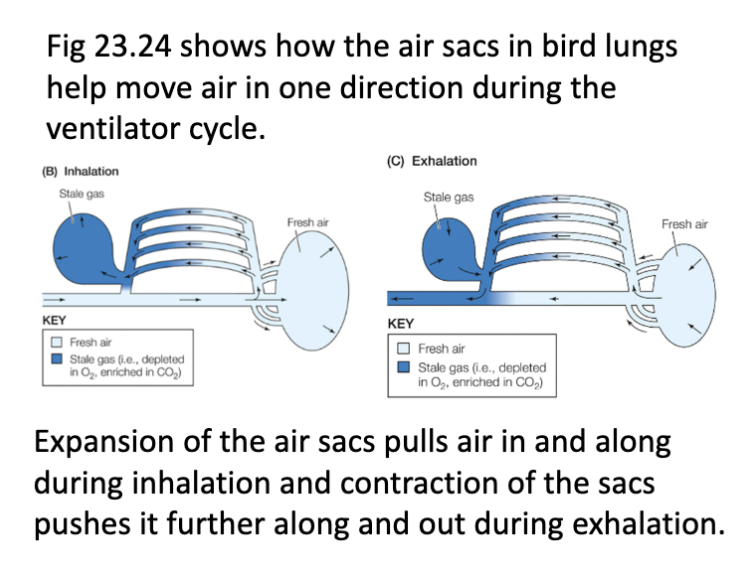
just got two air sacs on there, but there are more air sacs involved.
during the inhalation phase in a bird, both air sacs expand.
And if you think of it as a loop, they're just halfway along each of them, and they pull air and push air.
They pull air through the system. So initially, it's just pulling or inhaling air when they expand the posterior air sac
the posterior air sac expands. It pulls air into the trachea, into the animal and it pulls air across the parabronchis
the air sacs just contract during exhalation.
Some of the largest changes in the respiratory system probably took place to support homeotherapy.
Metabolic rates and homeotherms are 10 to 15 times higher.