M3: Lipids
Lipids
A diverse group of organic compounds that play important roles in the body.
- biomolecules that are soluble in organic solvent and insoluble on water
- contain many nonpolar C-c and C-H bonds; few polar bonds
- not defined by a particular functional group
- have variety of structures and functions
Categories (Classifications):
1. Hydrolyzable
- can be converted into smaller molecules by hydrolysis
- waxes (makeup)
- triacylglycerol (fats, oil)
- phospholipids (complex/combined lipids)
2. Nonhydrolyzable
- cannot be cleaved into smaller molecules by aqueous solutions
- steroids
- fat-soluble vitamins (Vitamin A)
- eicosanoids
(by structure) ff:
Simple Lipids (hydrolyzable)
- triacylglycerol
- fats
- oils
Compound/Complex
- in combination with other kinds of molecules
- glycolipids (carbohydrates + lipids)
- lipoproteins (proteins + lipids)
- Phospholipids (phosphorus atom + lipids)
Derived Lipids (nonhydrolyzable)
- steroids
- prostaglandins
Functions of lipids:
- Main:
- Energy Storage & Source (in the form of triacylglyceride triacylglycerol)
- Main Component of Cell Membranes
- Phospholipids
- Insulation and Protection
- Hormone Production (vitamins of hormones)
- Absorption of Fat-Soluble Vitamins
Fatty Acids
Building Blocks
- hydrolyzable lipids are derived from these
- carboxylic acids (RCOOH) w/ long chains of C chains of 12-20 C atoms
- ex. Palmitic acid: CH3(CH2)14COOH
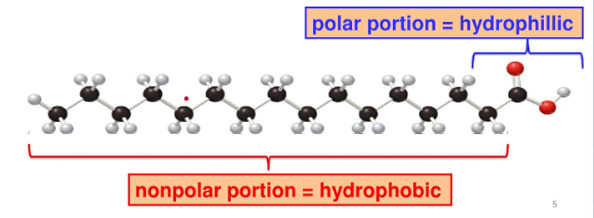
- naturally occurring have an even number of C atoms
- number of bonds increase : melting point decrease
- geometric isomers or cis-trans isomers
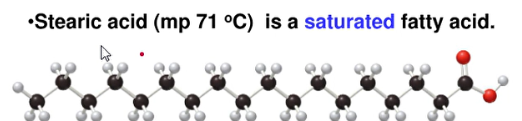
Saturated fatty acids
- no double bonds
- ex. solid (in bol
- strong dispersion forces, larger area of contact
Unsaturated fatty acids
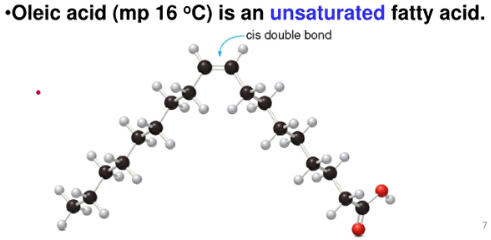
- 1 or more double bonds (generally cis) in their long hydrocarbon chains
- ex. liquid
- may bali, weaker dispersion forces, smaller area of contact
Essential
- cannot be produced by the body
- must be consumed
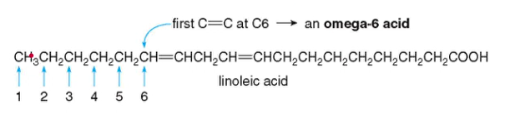
- Linoleic and;
- linolenic acids
- omega-6 acid;
- position of the first C=C in the nonpolar chain
- condensed structural formula
- CH3(CH2)4CH=CHCH2CH=CH(CH2)7COOH
- Numeric Formula
- number of carbons : number of double bonds delta (count from carboxyl)/omega (count from methyl) symbol superscript number of carbon on 1st C bond
- 18:2 omega symbol^6
hydrolyzable lipids (simple)
Waxes
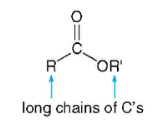
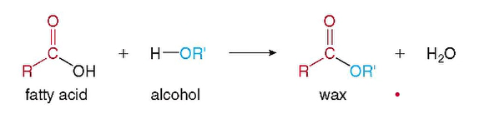
- esters form from a fatty acids and a high molecular weight alcohol
- general structure
- general formation (esterification, less carbon)
ex.
- Spermaceti wax
- isolated from the heads of sperm whales
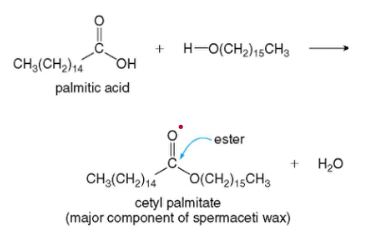
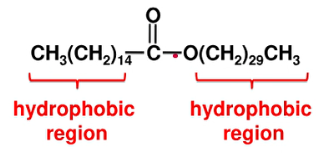
- long nonpolar C chains, hydrophobic
- form protective coatings on bird’s feathers and sheep’s wool and make up beeswax
- beeswax (myricyl palmitate)
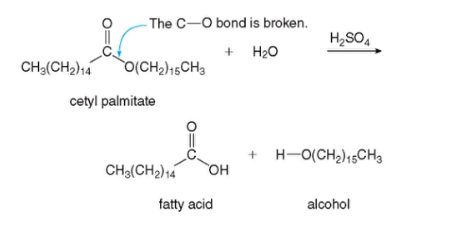
- hydrolyzed with water in the presence of acid or base to re-form the carboxylic acid and alcohol they came from
Triacylglycerols
Fats and Oils (Triglycerides)
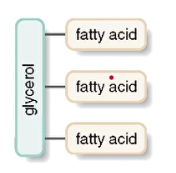
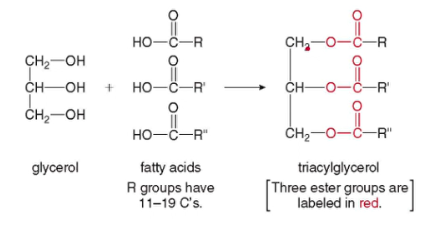
- three esters formed from glycerols and three molecules of fatty acids
- block diagram
- general reaction formation
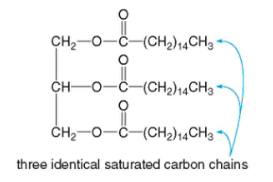
Simple triacylglycerol
- three identical fatty acid side chains
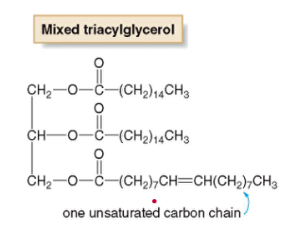
Mixed triacylglycerol
- two or thee different fatty acids
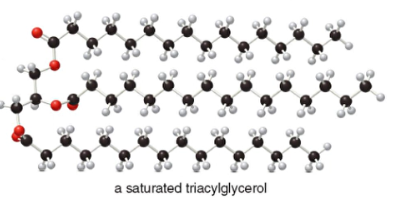
Saturated triacylglycerol
- saturated fatty acids,
- make up most animal fat
- solids at room temperature
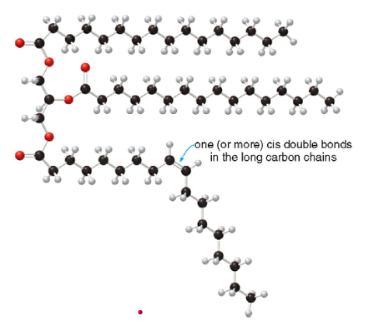
Unsaturated triacylglycerol
- at least one unsaturated fatty acid
- make up most vegetable oils
- liquids at room temp.
- increase double bonds = decrease room temp.
- the higher mono and poly the healthier
- Monounsaturated triacylglycerol
- 1 C=C bond
- Polyunsaturated triacylglycerol
- many C=C bonds
Importance in Diet
Fats
- higher melting points
- solids at room temp.
- derived from fatty acids with few double bonds
- used to build cell membrane, insulation and store energy
- no more than 20-35%
- high intake of saturated triacylglycerol linked to heart disease
Oils
- lower melting point
- liquids at room temp
- derived from fatty acids with larger double bond
Saturated fats
- Increased Risk of Heart Disease
- stimulates cholesterol synthesis which can lead to cholesterol plaques building up inside arteries
- results in high blood pressure, heart attack and stroke
Unsaturated triacylglycerol
- lower risk of heart disease
- decreases level of cholesterol
Omega-3 fatty Acids
- helpful in lowering the risk of heart attack
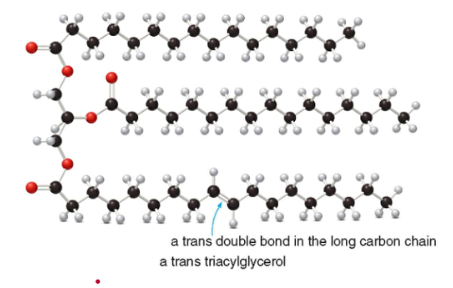
Trans Fats
- double bond of unsaturated triacylglycerol
- primarily synthesized not naturally occurring
- act like saturated fats and increases cholesterol levels
- ex. margarine
Hydrolysis
- triacylglycerol are hydrolyzed with water in the presence of acid, base, or enzymes (in the body)
- enzyme - lipase
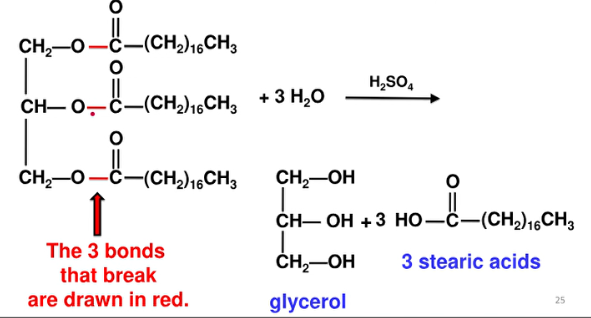
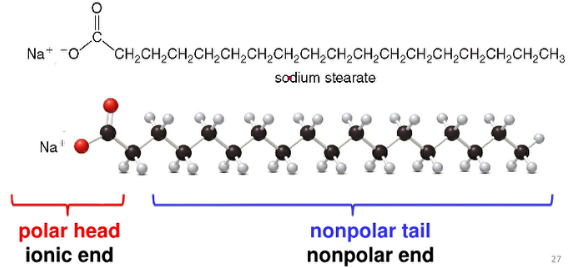
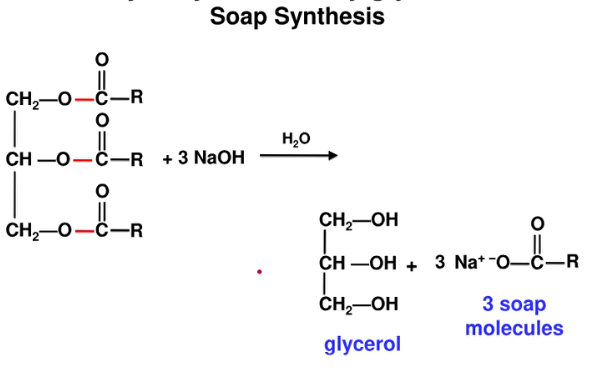
- soaps are metal salts of fatty acids prepared by basic hydrolysis (saponification)
- soaps are made from lard, tallow, coconut oil, palm oil
- nonpolar tail dissolve grease and oil and the polar end dissolves in water making dirt soluble in water
Focus on the human body
Metabolism
- store energy in adipose cells below the surface of the skin, breast, and surrounding internal organs of adipose cells in constant
- weight gained or lost causes them to swell or shrink, but not decrease/increase in number
- to metabolize triacylglycerol for energy, esters are hydrolyzed by enzymes-- lipases
- complete metabolism yields CO2, H2O, great deal of energy
Phospholipids
- hydrolyzable and compound/complex lipids
- lipids that contain a P atom
- 2 common types
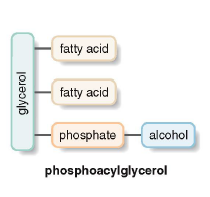
- phosphoacylglycerol
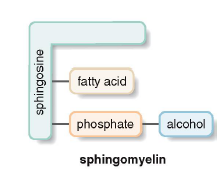
- sphingomyelin
1. Phosphoacylglycerol
- main component of most cell membranes
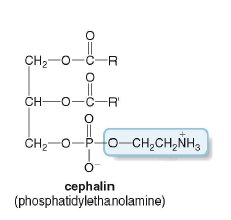
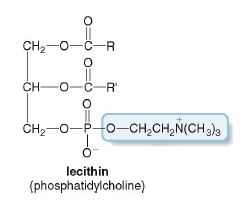
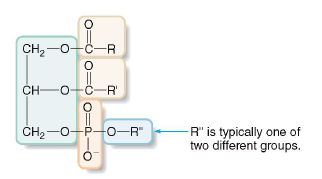
- structure resemble a triacylglycerol except third fatty acid is a phosphodiester bonded to an alcohol
- main types:
- cephalin (phosphatidylethanolamine)
- ox brain
- lecithin (phosphatidylcholine)
- good emulsifying agent
- abundant in eggs
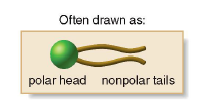
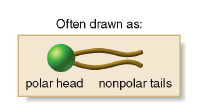
- two fatty acid chains from two nonpolar “tails” that are parallel to each other
- the phosphodiester end of the molecule is a charged or polar “head”
2. Sphingomyelin
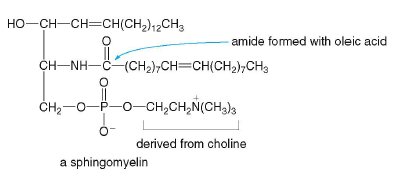
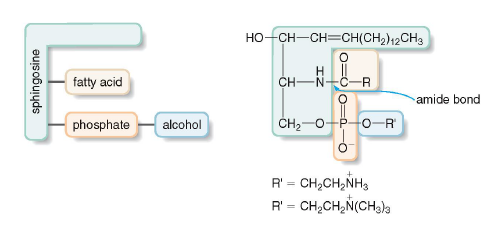
- do not contain a glycerol backbone but a Sphingosine backbone
- do not contain an ester; amide bond
- example:
- myelin sheath
- coating that surrounds nerve cells
- rich in sphingomyelins
- lack of it results in multiple sclerosis
Cell membrane
Structure
- the basic unit of a living organism is the cell
- surrounds the cytoplasm
- acts as a barrier to stop the passage of ions and molecules into and out of the cell
- allows nutrients in and waste out
- selectively permeable
- main component:
- Phospholipids
- polar head and nonpolar tails
- lipid bilayer (when mixed with water)
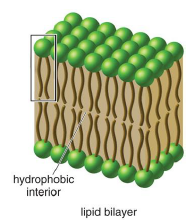
- composed of lipid bilayers
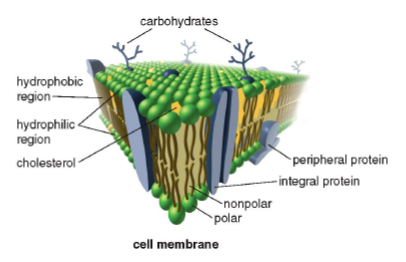
- proteins and cholesterol molecules are embedded in the lipid bilayer membrane
- Peripheral proteins are embedded within and extend outward one side only
- integral proteins extend through the entire layer
- forms glycolipids and glycoproteins (when carbohydrates are attached to the exterior of the cell)
Transport Across a Cell Membrane
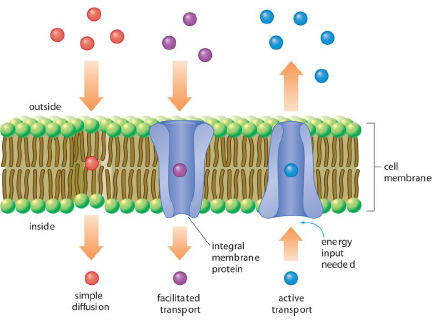
small molecules like O2 and CO2 can diffuse
- from higher to lower concentration
larger molecules need facilitated transport
- ions like C- or HCO3- travel through integral protein channels
active transport
- Na-, K+, and Ca^2+ move against the concentration agent-- requires energy input
Health & Medicine
Steroid
- nonhydrolyzable
- group of lipids whose carbon skeletons contain several fused rings:
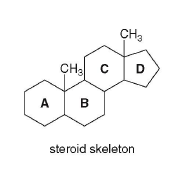
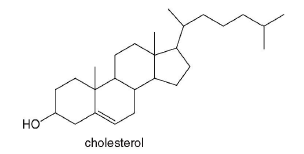
1. Cholesterol
- most prominent steroid
- synthesized in the liver
- found in almost all body tissues
- Sobtained in the diet from many sources
- meat, cheese, butter, eggs
- elevated levels of cholesterol in the bloodstream lead to coronary artery disease, heart attack, etc.
- insoluble in aqueous medium of blood
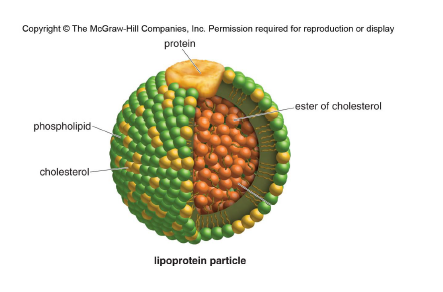
- transported through the bloodstream by lipoproteins, aggregates of phospholipids and proteins
- Low-density lipoproteins (LDLs)
- transport cholesterol from the liver to the tissues
- High-density lipoproteins (HDLs)
- transport cholesterol from tissues back to the liver
- recommended level:
- total serum cholesterol < 200 mg/dL
Bad Cholesterol (LDLs)
- deposit cholesterol on the walls of arteries when they carry more than is needed to form cell membrane
- forms plaque, restricts blood flow
- recommended level:
- LDL < 100 mg/dL
Good Cholesterol (HDLs)
- reduce the level of cholesterol in the bloodstream
- brings excess back to the liver
- recommended levels:
- HDL > 40 mg/dL
2. Hormone
- a molecule that is synthesized in one part of an organism which elicits a response at a different site
- 2 important classes:
- sex hormones
- female sex hormones:
- estrogens and progestins
- male sex hormone:
- androgens
- adrenal cortical steroids
Female sex hormones
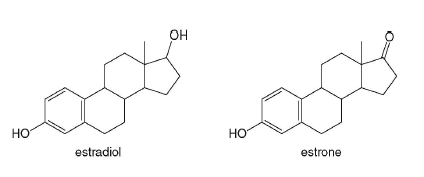
Estrogen
- estrogens estradiol and estrone
- control the development of secondary sex characteristics
- regulate the menstrual cycle
- made in the ovaries
Progestin
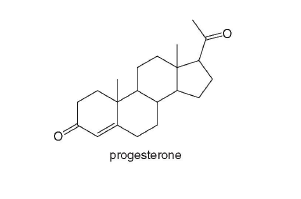
- progestin progesterone
- pregnancy hormone
- responsible for the preparation of the uterus for implantation of a fertilized egg
Male sex hormones
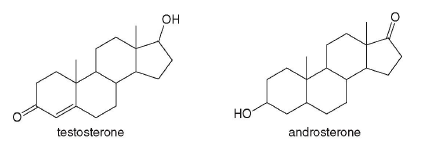
Androgens
- testosterone and androsterone
- made in the testes (endocrine system)
- control development of secondary sex characteristics
Anabolic steroids
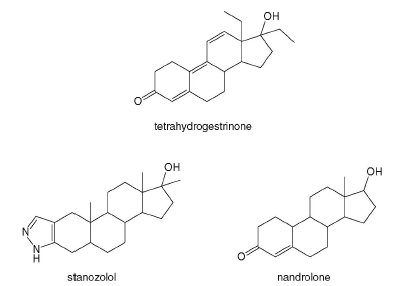
- synthetic androgen analogues
- promote muscle growth
- same effect as testosterone but are more stable so they are not metabolized quickly
- used by athletes and body builders but are not permitted in competitive sports
- prolonged use can cause physical and psychological problems
Adrenal Cortical Steroids
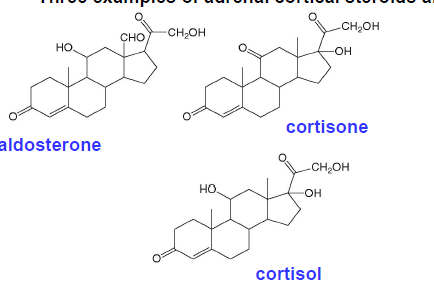
Aldosterone
- regulates blood pressure and volume by controlling the concentration of Na+ and K+ in body fluids
Cortisone and Cortisol
- anti-inflammatory agents
- also regulate carbohydrate metabolism
- Prolonged use of these steroids can have undesired side effects
- bone loss & high blood pressure
- Prednisone
- synthetic alternative
- has similar anti-inflammatory properties
Vitamins
Fat-Soluble
- organic compounds required in small quantities for normal metabolism and must be obtained from the diet
- either water soluble or fat soluble
- four fat soluble vitamins:
- A, D, E, K
- found in fruits, vegetables, fish, liver, and dairy products
- stored in adipose cells to be used when needed
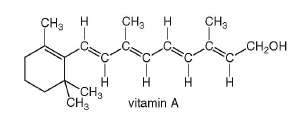
Vitamin A
- found in liver, fish, and dairy products
- made from beta-carotene
- needed for vision and for healthy mucous membranes
- Vitamin A deficiency causes night blindness and dry eyes and skin
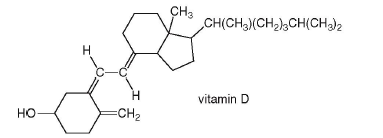
Vitamin D
- synthesized from cholesterol
- can be obtained in the diet from many foods, especially milk
- helps regulate Ca and K metabolism
- Vitamin D deficiency causes rickets (bone malformation)
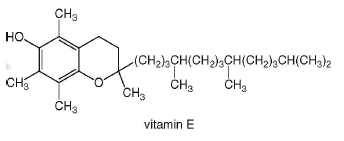
Vitamin E
- an antioxidant
- protecting unsaturated side chains in fatty acids from unwanted oxidation
- deficiency causes numerous neurological problem, although rare
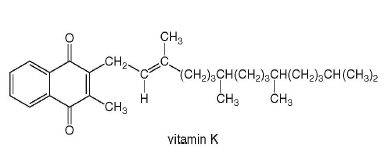
Vitamin K
- regulates the synthesis of clotting proteins (prothrombin)
- deficiency leads to excessive or fatal bleeding
Eicosanoids
- very potent compounds
- not stored in cells but rather synthesized in response to external stimulus
- unlike hormones, they are local mediators
- perform their function in the environment in which they are synthesized
- two types:
- prostaglandins
- leukotrienes
1. Prostaglandins
- carboxylic acids
- contain a five-membered ring
- have a wide range of biological activities
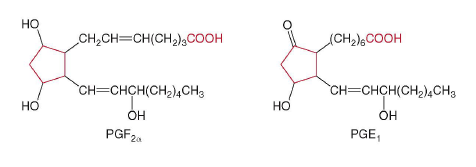
- responsible for inflammation
- Aspirin and Ibuprofen
- relieve pain and inflammation by blocking synthesis of these molecules
- also decrease gastric secretions
- inhibit blood platelet aggregation
- stimulate uterine contractions
- relax smooth muscles
- 2 different cyclooxygenase enzymes responsible for prostaglandin synthesis**:**
- COX-1
- involved in the usual production
- COX-2
- responsible for additional prostaglandins in inflammatory diseases like arthritis
- Nonsteroidal inflammatory drugs (NSAIDs) like aspirin and ibuprofen inactivate COX-1 AND -2, but increase risk for stomach ulcer formation
- Drugs sold as Vioxx, Bextra, and Celebrex block only the COX-2 enzyme without affecting gastric secretions
2. Leukotrienes
- molecules that contribute to the asthmatic response by constricting the smooth muscle of the lung
Asthma
- characterized by chronic inflammation
- inhaled steroids to reduce this inflammation are commonly used
- new asthma drugs act by blocking the synthesis of leukotriene C4
- which treats the disease instead of just the inflammation symptoms