4.6b: Social Cognitive Theories of Psychology
Social-Cognitive Perspective: a view of behavior as influenced by the interaction between people’s traits (including their thinking) & their social context
the interaction of our traits w/ our situations
incorporates behaviorism and cognitive psychology to explain personality development
Bandura
Reciprocal Determinism: the interacting influences of behavior, internal cognition, and environment
Bandura’s view of the person-situation interaction
His explanation of how the factors of environment, personal characteristics, and behavior interact to determine future behavior
→ Simple Example:
You like psychology (internal factor: cognition)
You spend time in the psychology department (an environment)
You interact with psychology students & faculty (behavior)

Self-efficacy: individual’s expectancy of how effective his/her efforts to accomplish a goal will be in any particular circumstance
→ (another definition): refers to our personal beliefs of how capable we are in performing specific tasks and behaviors
can be high or low depending on past experiences
specific to a particular behavior
→ Impacts of Self-Efficacy:
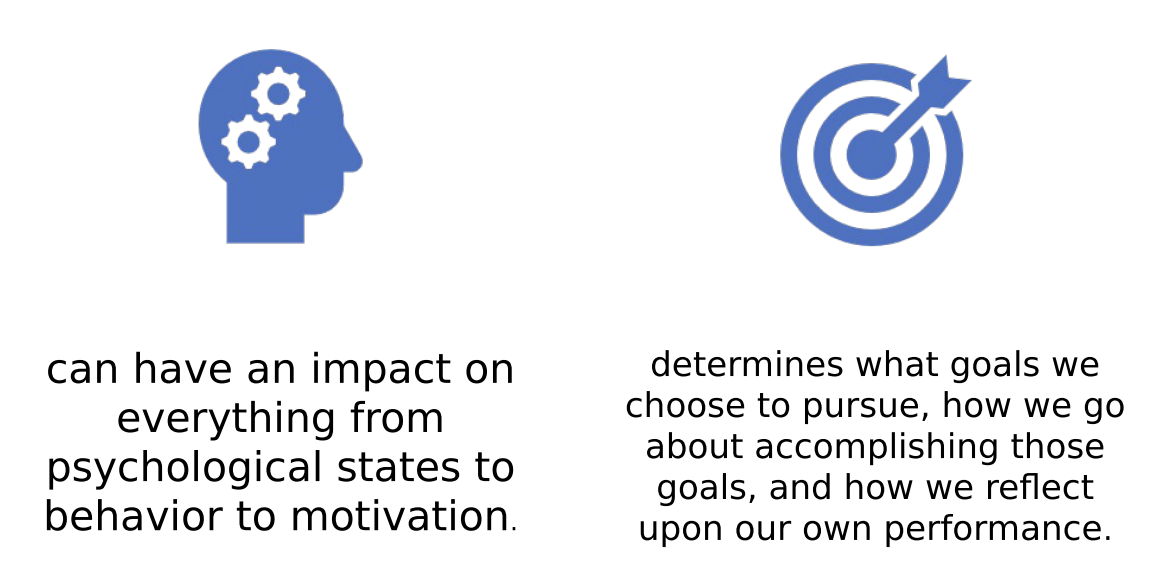
Comparison of Self-Esteem & Self-Concept