The cell cycle/cell division
the series of events involved in cell growth and cell division. It involves mitosis (a type of cell division), which allows for the growth, repair and asexual reproduction of cells.
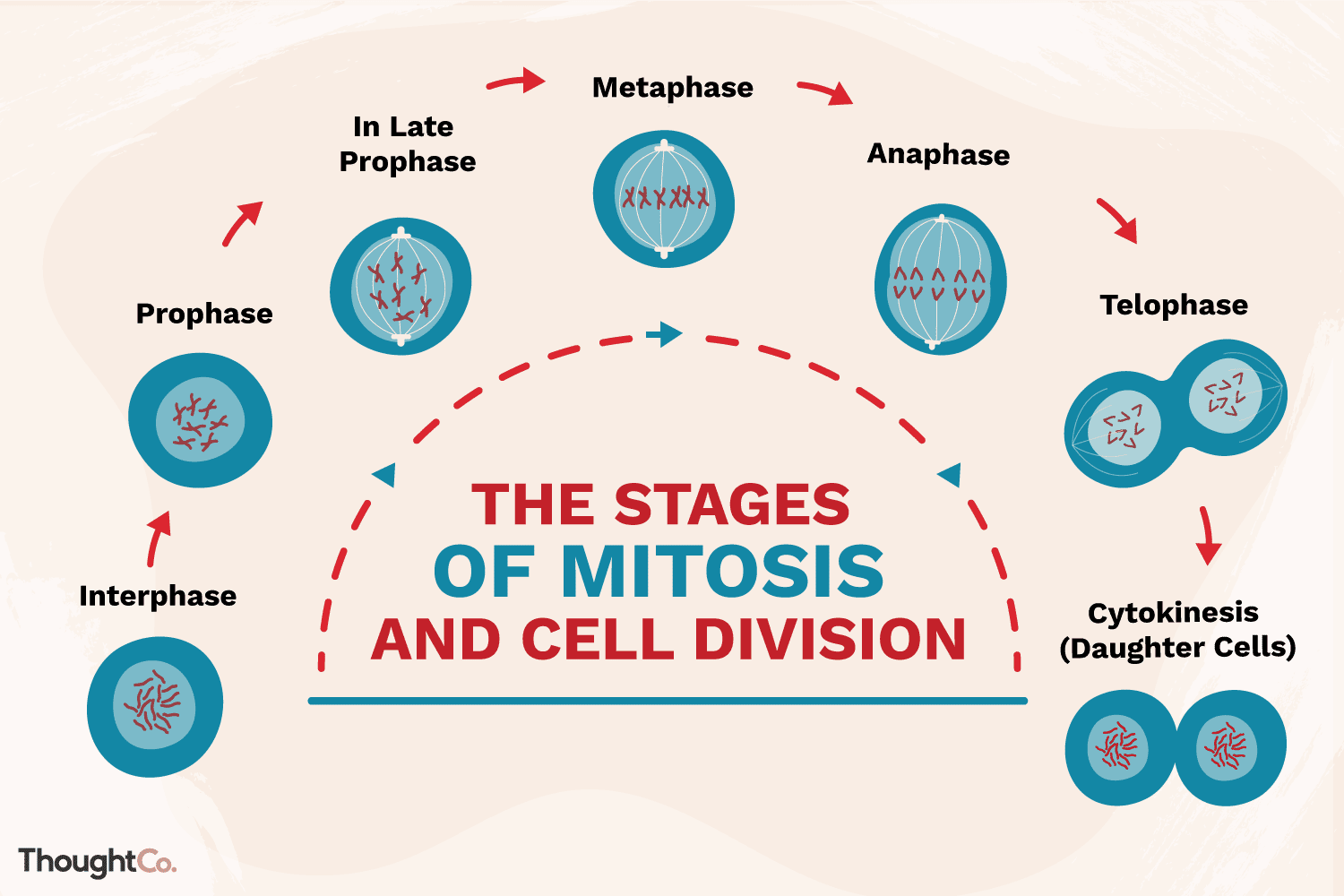
Interphase
1st stage of cell growth
extra ribosomes,mitochondria and other organelles are produced
the cell’s chromosomes are replicated so that there are 2 sets of the cell’s chromosomes
Mitosis is a nuclear division that forms 2 genetically identical diploid (23 chromosomes) daughter cells. It’s required for:
growth - produces new cells
repair - replaces damaged or dead cells
asexual reproduction - produces offspring genetically identical to the parent
Prophase
DNA condenses, chromosomes become visible and nuclear membrane breaks down
Metaphase
Chromosomes align in the middle of the cell
Anaphase
Spindle fibres split the chromosomes down the centre and pull them to opposite ends of the cell
Telophase
Nucleus splits and 2 new nuclei form
Cytokinesis
final stage of the cell cycle
the cell cytoplasm + membrane divides to produce 2 genetically identical diploid daughter cells - each new cell has a copy of each of the chromosomes
Uncontrolled cell division
Cells in the body divide by mitosis to produce more cells - this is essential for growth and to repair damaged cells
For example, the cells of the intestines are constantly dividing to replace those that are shed as food moves through the digestive system
Cancer is caused as a result of mutations in the DNA of cells that lead to uncontrolled cell growth and division - this can result in a mass of cells forming called a tumour
Usually, tumours form as a result of loss of control of the cell cycle
Types of TumourThere are 2 main types of tumour:
Benign tumours - non cancerous
growth of abnormal cells contained in a single area (usually within a membrane) and don’t invade other parts of the body
Malignant tumours - cancerous
the cells of these tumours invade neighboring tissues and spread to different parts of the body via the blood + lymphatic system where they form secondary tumours
- they’re more likely to disrupt the organ’s original function that they originate in as they invade healthy tissue and can lead to death