Bio Cram
Unit 3
Photosynthesis Learn
Light dependent rxns
light-dependent rxns capture light energy by using light-absorbing molecules (pigments)
pigments transform light energy to chemical energy → stored in NADPH
light-dependent rxns facilitate ATP synthesis
ATP + NADPH store chemical energy to power the Calvin Cycle
oxygen produced from hydrolysis
Chlorophyll
capture energy from sunlight → convert to high energy electrons
electrons energized (have energy) → establish proton gradient AND reduce NADP+ to NADPH
Photosystems I and II
photosystem is a light-capturing unit in chloroplast’s thylakoid membrane
Why is hydrolysis of water necessary for PSII and light-dependent rxns?
water splitting → hydrogen molecules released into thylakoid space → electrochemical/proton gradient
How are PSI/PSII functionally related to ETC?
PSII and PSI pass high-energy electrons to the ETC
proton gradient → ATP synthesis
PS uses form of passive transport to generate ATP from ADP
ATP synthase needs protons to create ATP
Calvin Cycle
Reactants: ATP, NADPH, CO2 → Products: carbohydrates (i.e. glucose, cellulose, etc)
Remember plants get CO2 from environment
General stuff to know
matthew said i need to know the # of NADP+ to nADPH or somehting
C/R Learn
C/R + fermentation release chemical energy from organic molecules
fermentation and anaerobic respiration are NOT the same
Glycolysis pyruvate oxidation Krebs Cycle ETC
ETC
membranes of chloroplasts and mitochondria + cell membranes of prokayotes
allows for controlled and efficient TRANSFER of energy
ETC’s use the energy in electrons to establish electrochem/proton gradients across membranes
NADH + FADH2 are electron carriers (bring e- to ETC)
The energy from electrons → conformation change in proteins → pump H+ → electrochemical gradient
Oxidative Phosphorylation
process of making ATP using stored energy of proton gradient
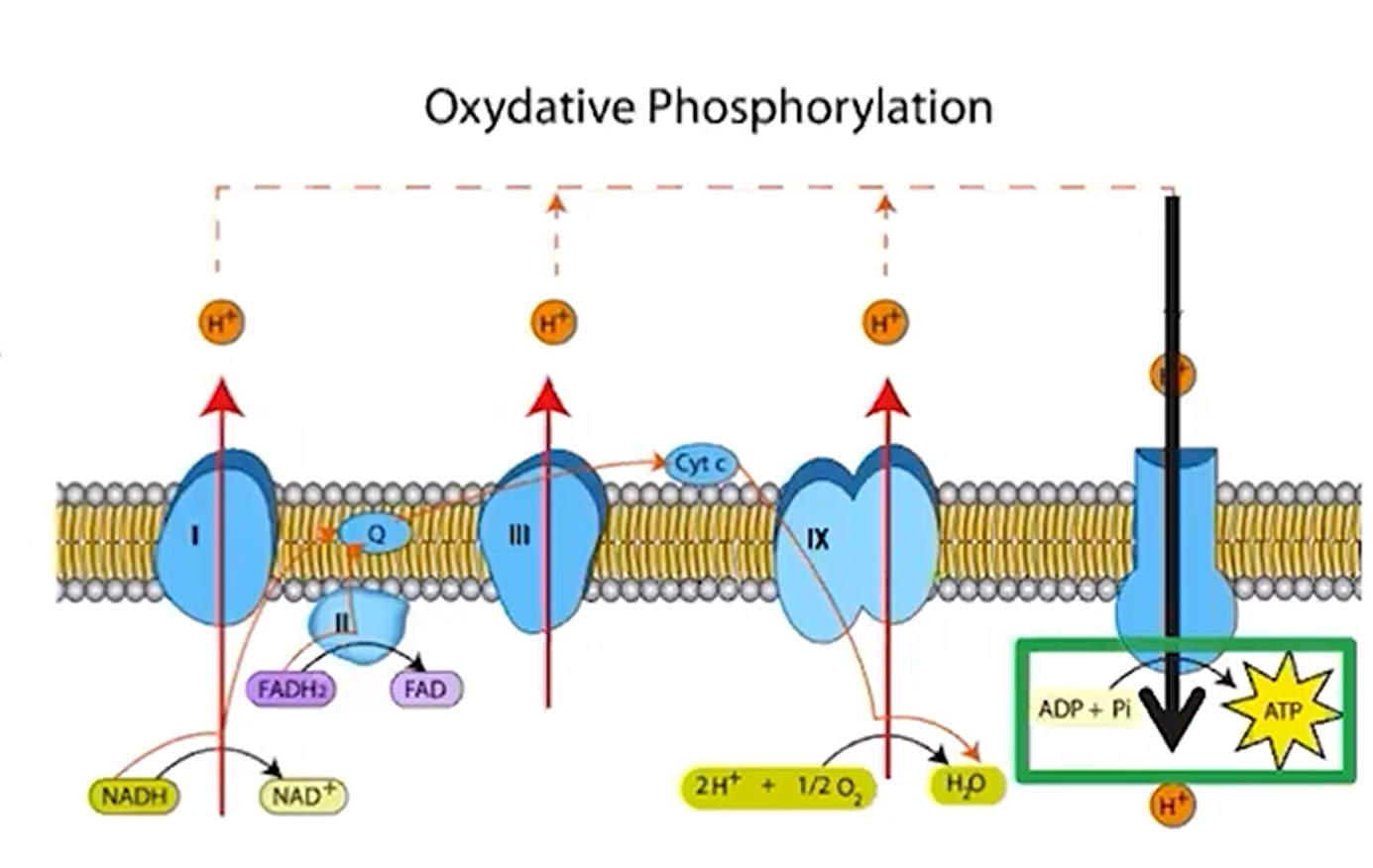
decoupling oxidative phosphorylation means → not all H+ flowing back to the matrix passes through ATP synthase → energy is released as heat → endotherms use to regulate body temp
Glycolysis
results in production of pyruvate, NADH, and ATP
NAD+ gets reduced into NADH (way less than Krebs)
pyruvate is actively transported through mitochondrial membranes to matrix
pyruvate oxidized → product of the pyruvate oxidation enters Krebs Cycle
Krebs
Krebs is what recharges NADH and FADH2 to keep bringing electrons to ETC to power oxidative phosphorylation
Krebs also makes tiny amount sof ATP
Fermentation
allows glycolysis to proceed w/out oxygen
lactic acid and ethanol byproducts
General
Oxygen is the terminal electron acceptor
Unit 6
MCQ
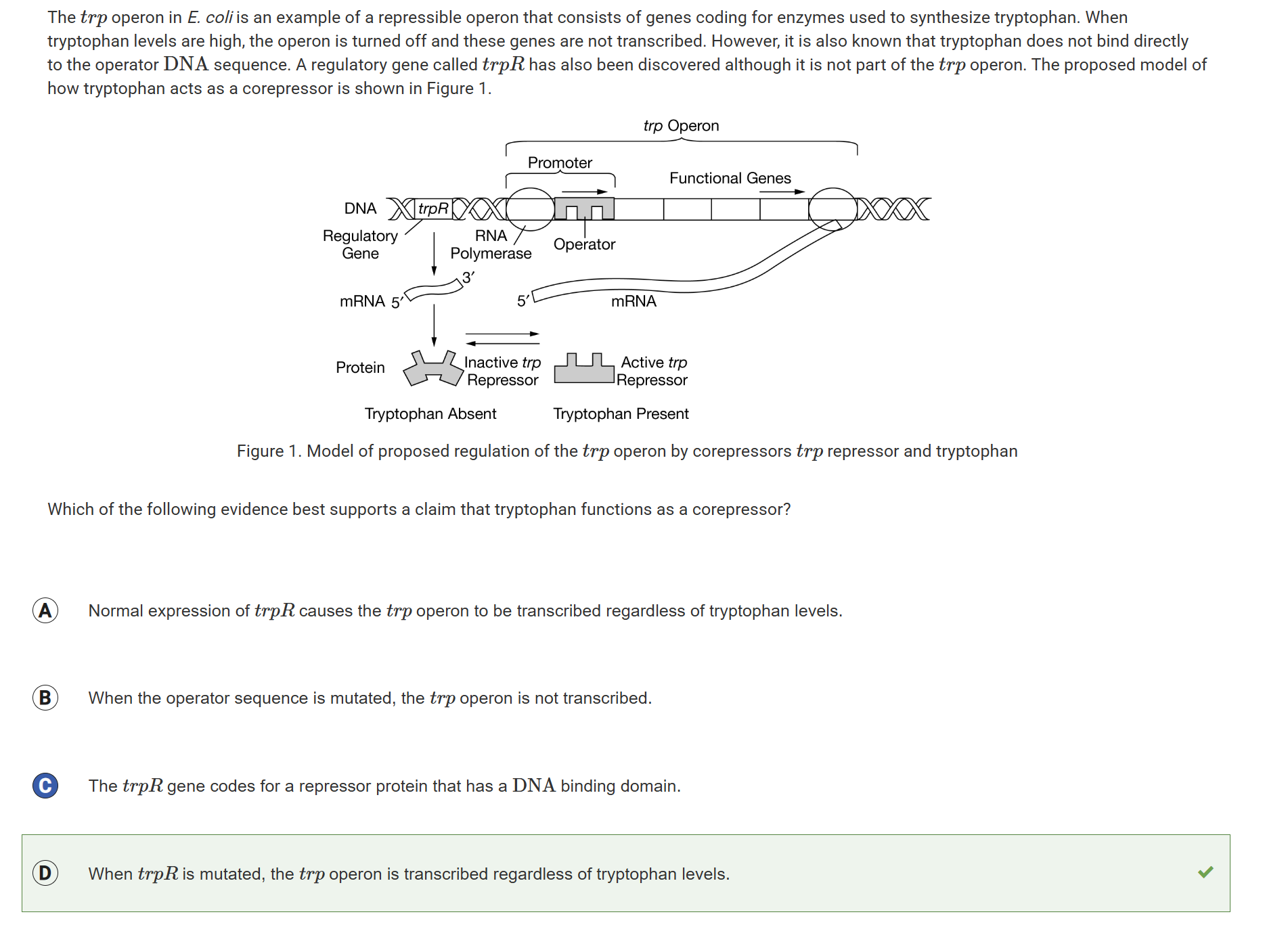
A corepressor is a molecule that binds to a repressor protein and activates it, allowing the repressor to bind to the operator and block transcription.
U7
General
don’t get ap stats chi squared confused w bio’s