L14- Brood Parasitism
Intraspecific Brood Parasitism→ exploiting paternal care of individuals within the same species, e.g.:
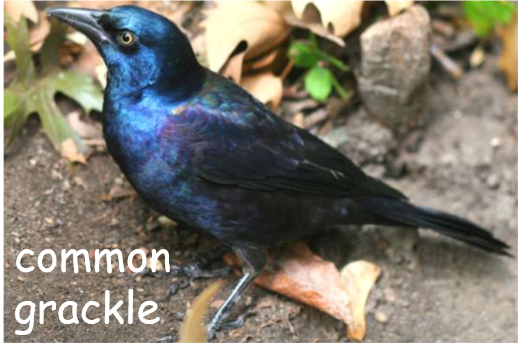
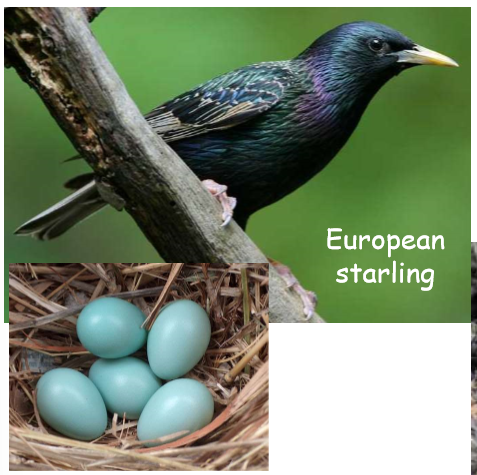
European starlings→ replacing egg with own
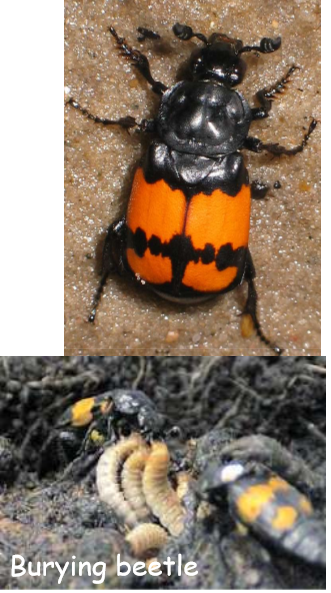
Burying beetle→ lay eggs near others when they are feeding on a carcass
Cliff swallow→ marked eggs from nests but noticed that some eggs were in the wrong nest, realised after many years that it was parasitism
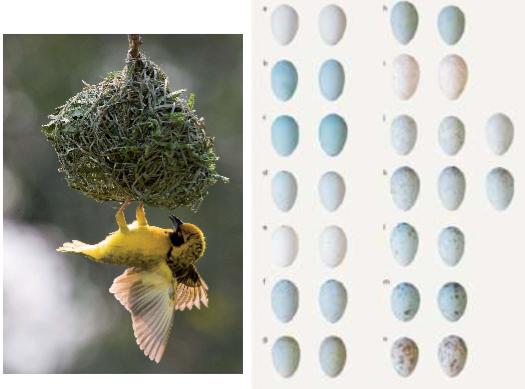
Masked weaver→ breed in large colonies with a 23-35% parasitism rate
has been strong selection for egg divergence and recognition
American coot→ 41% of pair eggs are parasitised but 43% of hosts reject at least one of these eggs
Q→ how are parasitic eggs recognsied?
experiment→ looked at variation in egg colour in a nest, ranked colours, looked at differences between each egg colour
results→
one colour matches very closely, one does not
are more likely to accept eggs similar in colour to own eggs
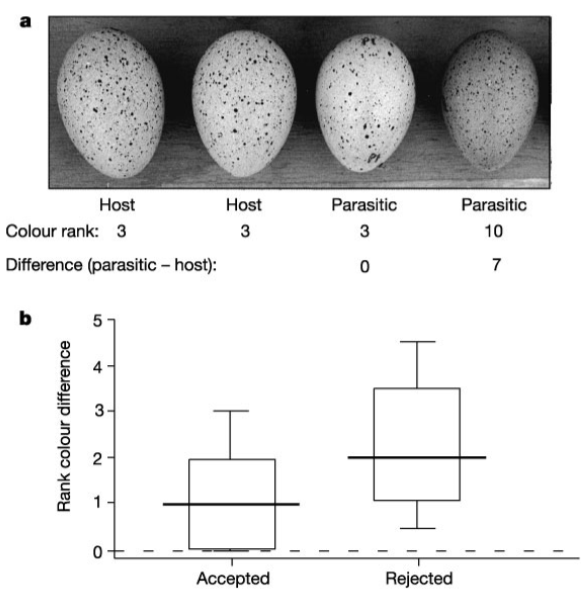 → there are defences evolving to prevent egg parasitism
Interspecific Brood Parasitism→ exploiting paternal care of individuals from a different species, e.g.:
cuckoo catfish lay eggs onto cichlid eggs, male puts all eggs into mouth, catfish egg comes out first and eats all the rest
pin-tailed whydah parasitise waxbills→ are obligate interspecific brood parasites (100 species→ 1% of birds)
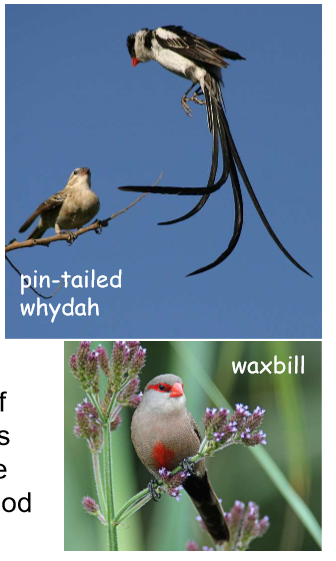
Co-evolutionary Arms Races between Cuckoos and Hosts:
there are 10 host species of cuckoos in Europe
cuckoo female lays 15-20 eggs per season→ more than she can raise
cuckoo removes one egg and deposits hers in nest instead
have unusual egg-laying behaviour
cuckoos are always the same species but have specialisation of host species→ their eggs mimic specific hosts→ can be grouped into gens
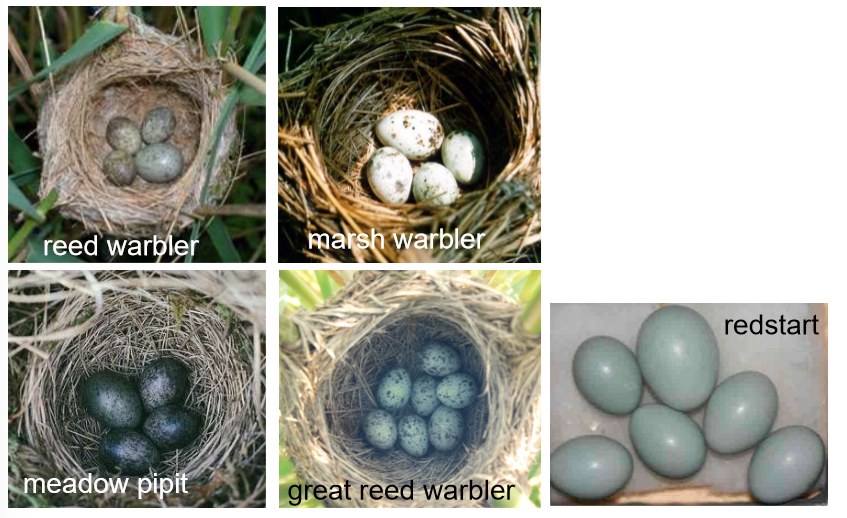
What happens when cuckoos hatch?
chick hatches quicker than host eggs→ incubate egg for longer
cuckoo kicks out other eggs and monopolises all the parental care
→ parasitism results in 0 reproductive success for hosts
→ expect adaptations and counter-adaptations to evolve:
Q→ Have cuckoos evolved in response to hosts? (Davies & Brooke)
performed experiments looking at the different unusual behaviours to see if these are adaptations to get around host defences:
Why do mothers wait until hosts lay to lay their eggs?
m→ placed egg in nest before and after laying
r→
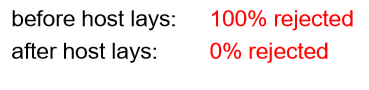 → strong selection to lay after host lays her eggs
Why do mothers lay their eggs in the afternoon?
m→ placed egg in nest in the morning and the afternoon
r→
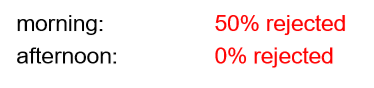 → unsure why they do this but may be more vigilant in the morning
Why do mothers lay their eggs so quickly?
m→ placed cuckoo near a nest for 5 minutes
r→
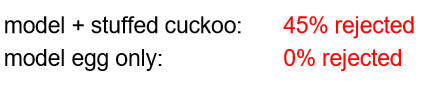 → laying quickly reduces ability of host detecting mother laying her own parasitic eggs
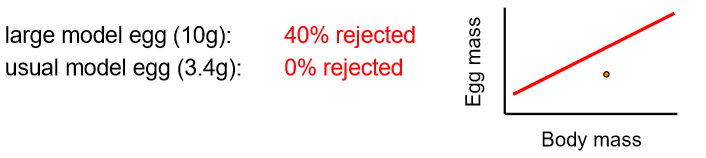
Why do mothers lay small eggs?
should lay 10g eggs compared to body size but lay 3.4g eggs
m→ placed a 10g egg in nest
r→
Why do mothers lay eggs that mimic host eggs?
placed the egg of different gens in reed warbler nests
r→
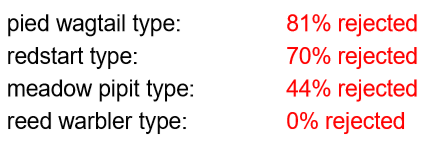
→ cuckoos have evolved these adaptations in response to host defences
Q→ Have hosts evolved in response to cuckoos?
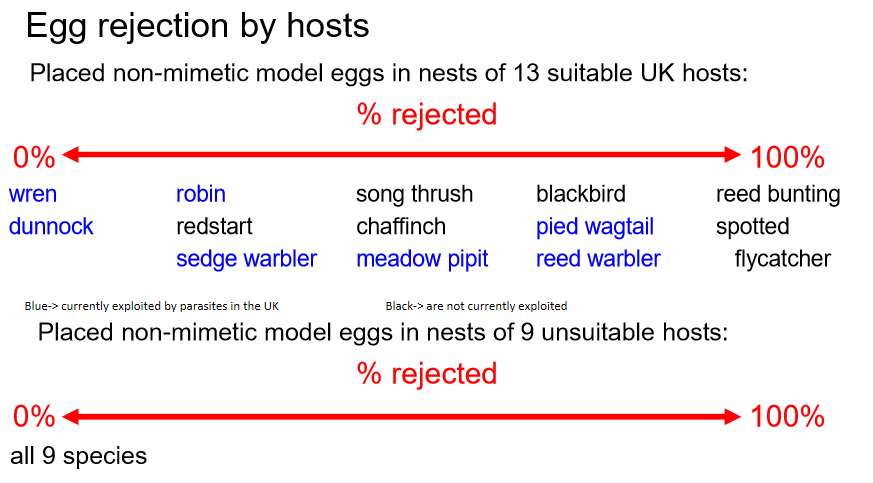
m→ placed eggs in 13 nests of suitable host species and in 9 nests of unsuitable host species
r→
there are variable egg rejection rates of non-mimetic eggs across the suitable species
all 9 species of unsuitable hosts did not reject the non-mimetic eggs
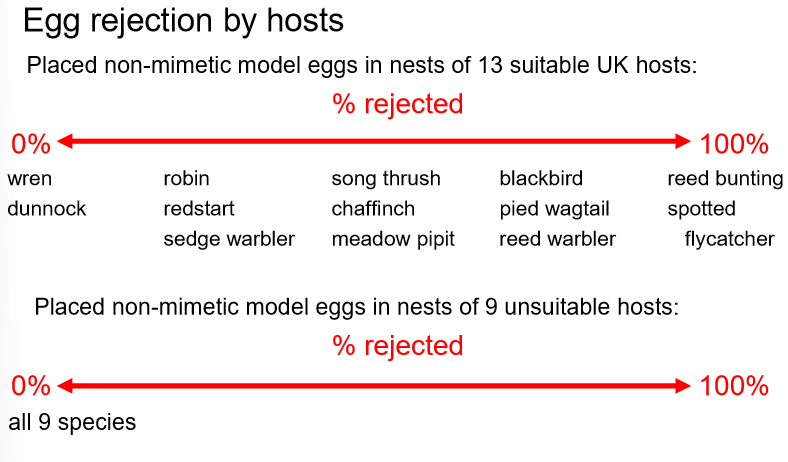 → egg rejection has only evolved in parasitised species
Experimental Evidence for Co-Evolution:
Sympatry→ Host species lives with cuckoos
Allopatry→ Host species does not like with cuckoos
predict→ there will be host defences (rejection) evolved in sympatry (UK) but not in allopatry (Iceland)
results→ much higher rejection in sympatry than allopatry
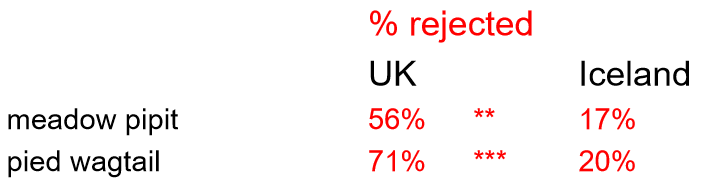 → presence of cuckoos has led to selection for higher rejection
e.g. great-spotted cuckoo and magpie-
cuckoo used to only be in south spain but now i found in north spain too
experiment→ placed eggs into nests at three sites
results→ ancient sympatry had the highest rejection, recent sympatry has a medium amount of rejection and there was no rejection in allopatry
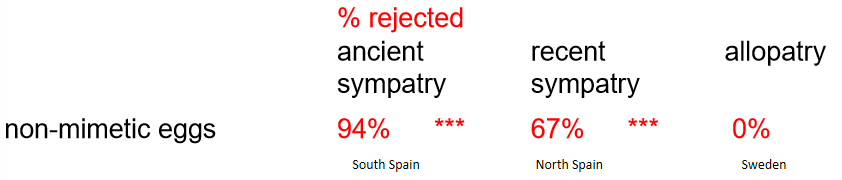 → host defences can evolve very quickly
→ parasitism had led to the evolution of egg rejection
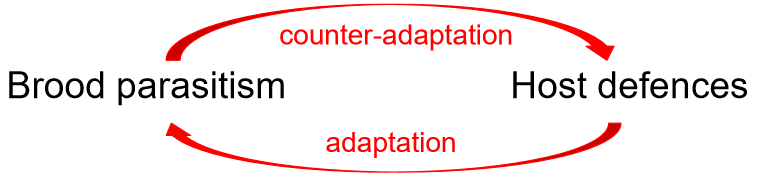 → co-evolution
Example of a rapid co-evolutionary change- Cuckoo finch and Tawny-flanked prinia:
observational evidence→ Spottiswoode & Stevens, 2012
prinia have a 20% parasitism rate→ very high
observations:
prinia eggs have more diverse polymorphisms than any other bird
the host uses several aspects of the parasite egg’s appearance to reject it
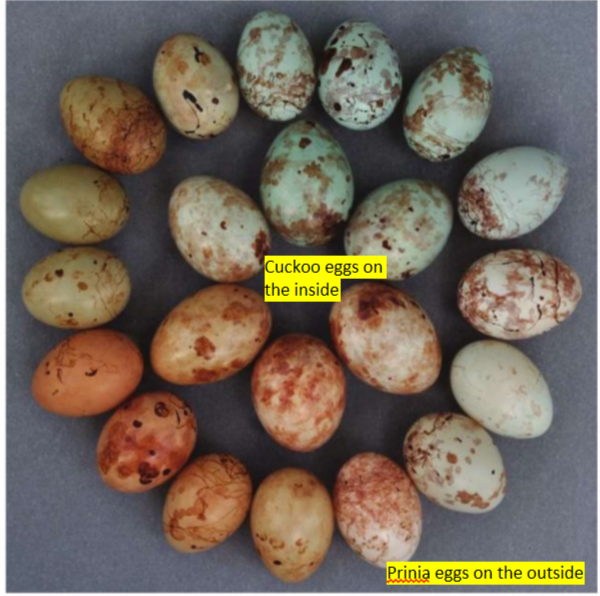
Q→ has there been an evolutionary arms-race between these species over a 30 year period?
m→ compared clutches collected in the 1970’s to clutches today
r→
both host and parasite eggs have changed over time
there has been an increase in variation in both species
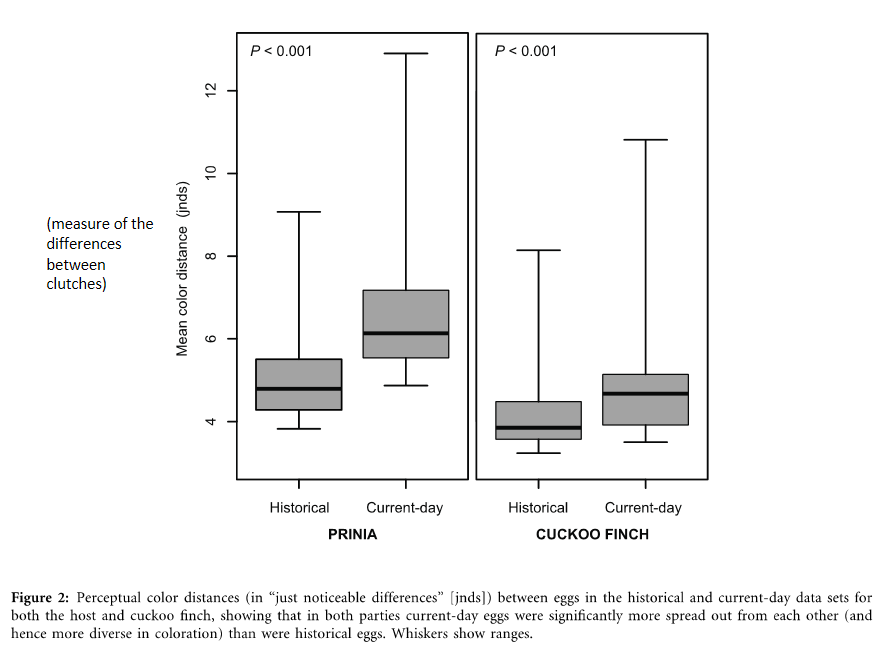 → there have been evolutionary changes tracked over this 30 year period
m→ looking at how the egg colour patterns have changed over time
r→ the eggs today are occupying a larger colour space
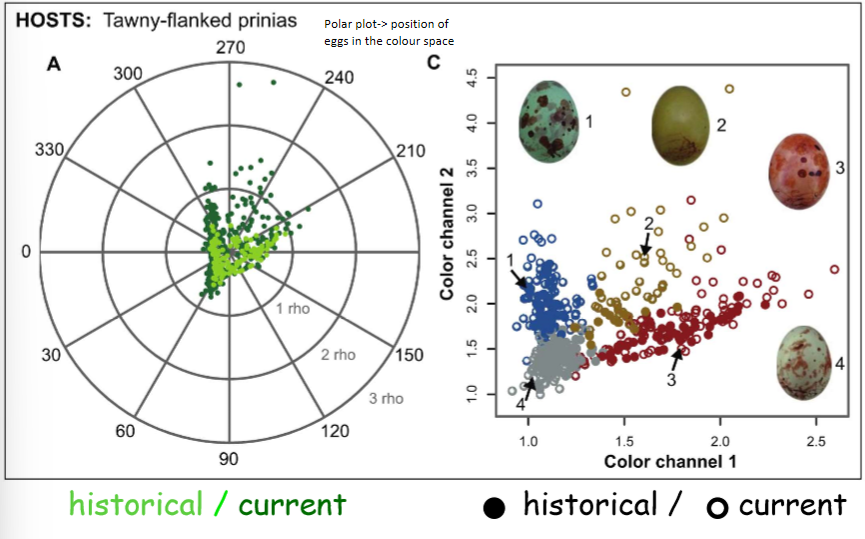 → the eggs are more diverse today in terms of colour
the same expansion of colour can be seen in cuckoos
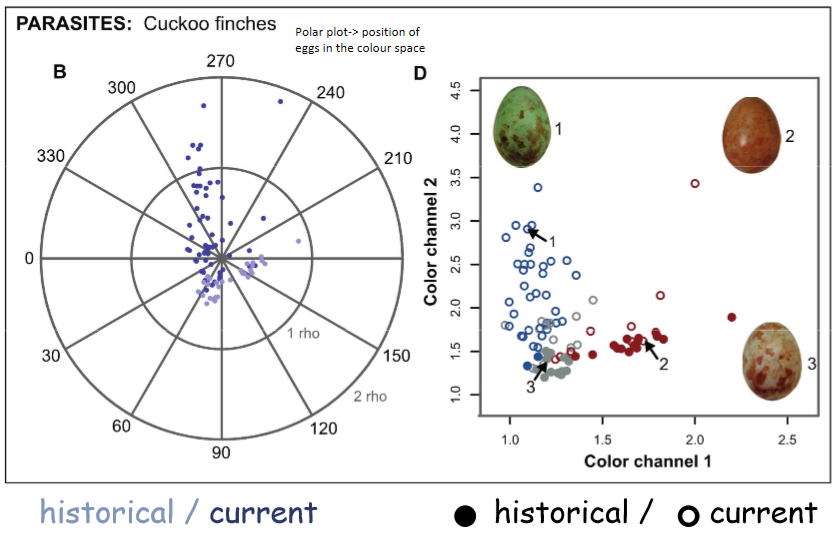 → over 30 years, there has been big changes in egg colour and patterns in both the host and the parasite
m→ compared hosts to the cuckoos to see if the parasites are tracking the hosts over time
r→
historical cuckoos are more similar to historical hosts
current cuckoos are more similar to current hosts
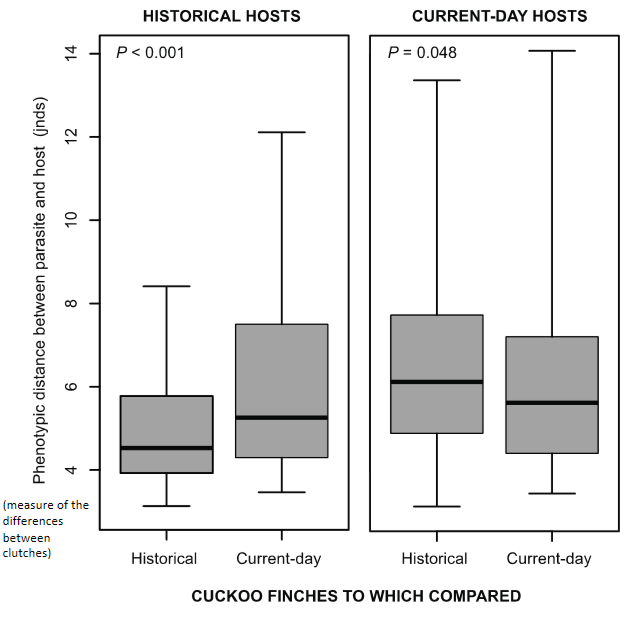 → as time passed, host evolution and defences has led to more divergence in egg patterns that the cuckoos have been tracking
Q→ why does mimicry and defences vary between species?
we are only seeing a snapshot of a continuing evolutionary arms-race
get a sequence of events:
no parasitism, no rejection→
can be seen in unsuitable hosts or in allopatry
parasitism, selection favours egg rejection→
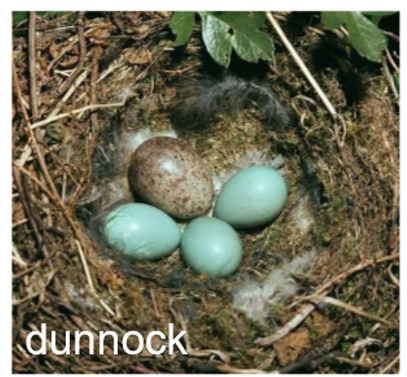
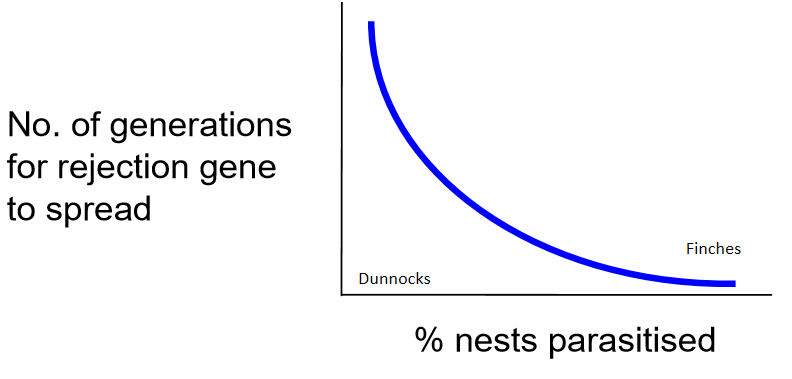
strength of selection depends on the rate of parasitism e.g. finches have high parasitism so high selection for egg rejection, whilst dunnock cuckoos are rare so dunnocks have not evolved the egg rejection behaviour
the lower the parasitism rate, the more generations are needed to spread the egg rejection mutation:
evolution of mimicry by the parasite→
to overcome host defences, leads to gentes
host defences win→
over time, the host defences are so good there is no longer any parasitism
no selection pressure for behaviour to be maintained so host defences weaken until there is no rejection→ step 1
→ cycle where parasitism could start again
Evidence for this sequence:
those that are not currently being parasitised (black) still have rejection behaviour→ suggests they were parasitised at some point in the past and their defences won
Why is there selection pressure against rejection?
rejection is costly:
errors in rejecting so eject own egg by accident
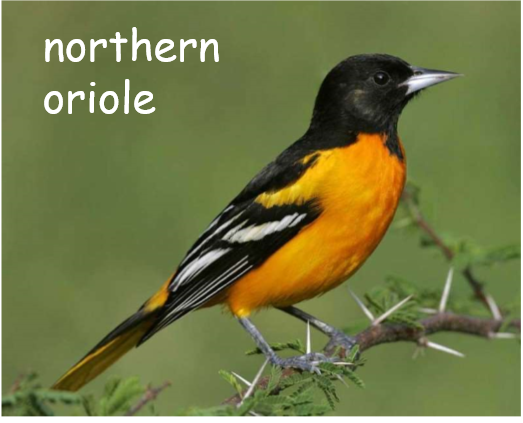
cost of ejecting eggs out of nest e.g. for every cuckoo the northern oriole rejects/ejects, they damage/eject one of their own
there are other types of host defences e.g. common grackles use nest defence rather than egg rejection