Astrophysics
Units
Units to be used:
kilogram (kg) → unit of mass, a measure of the amount of matter in an object
metre (m) → unit of distance/length, used to measure size or separation in space
metre/second (m/s) → unit of speed or velocity, describing how fast something moves
metre/second² (m/s²) → unit of acceleration, describing the rate of change of velocity
newton (N) → unit of force, defined as the force needed to accelerate 1 kg at 1 m/s²
second (s) → unit of time
newton/kilogram (N/kg) → unit of gravitational field strength, the force acting on 1 kg of mass
Motion in the universe
The universe:
A very large collection of billions of galaxies
Continues to expand since the Big Bang
A galaxy:
A large collection of billions of stars, along with gas, dust, and sometimes black holes
Held together by gravity
Our solar system is located in the Milky Way galaxy, which is a spiral-shaped galaxy
Gravitational field strength (g):
The strength of gravity varies depending on location
On Earth, g ≈ 9.8 N/kg
It is weaker on the Moon (about 1/6th of Earth’s g) because the Moon is smaller and less massive
Larger planets, like Jupiter, have much stronger gravitational field strengths
Gravitational force causes:
Moons to orbit planets → moons are held in stable orbits around their planets due to gravitational attraction; they usually have almost circular paths
Planets to orbit the Sun → the Sun’s very large mass creates a strong gravitational pull that keeps the planets moving in nearly circular orbits rather than flying off in straight lines
Artificial satellites to orbit the Earth → satellites, such as communication or weather satellites, are kept in orbit by Earth’s gravity; without gravity they would move off into space
Comets to orbit the Sun → comets follow highly elliptical orbits; gravity from the Sun pulls them back after they travel to the far reaches of the solar system
Differences in orbits:
Moons orbit planets in nearly circular orbits and remain bound closely to the planet
Planets orbit the Sun in almost circular orbits and remain in the same plane (the ecliptic)
Comets orbit the Sun in very elongated elliptical orbits, spending most of their time far from the Sun and only briefly close to it
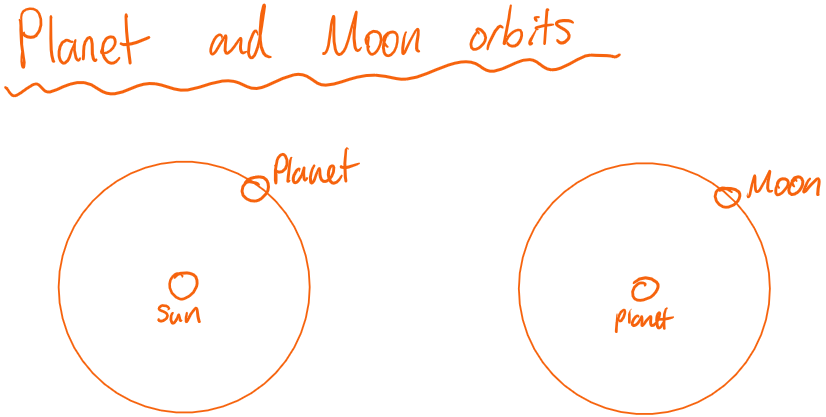
Orbital speed formula:
The orbital speed remains nearly constant as the distance from the centre doesn’t change
Orbital speed = (2 × π × orbital radius) ÷ time period
v = 2πr / T
This means the speed of an orbiting object depends on its orbital radius and how long it takes to complete one orbit
Stellar evolution
Star classification:
Stars can be classified according to their colour
Star colour depends on surface temperature:
Blue stars → hottest, temperatures above 25,000 K
White → very hot, between 10,000–25,000 K
Yellow → medium temperature, around 6,000 K (e.g. the Sun)
Orange → cooler, around 4,500 K
Red → coolest, temperatures below 3,500 K
Evolution of stars similar to the Sun:
Nebula → cloud of gas and dust pulled together by gravity
Protostar → region contracts, temperature rises, nuclear fusion begins
Main sequence star → stable stage lasting billions of years, fusion of hydrogen into helium provides energy, outward radiation pressure balances inward pull of gravity
Red giant → hydrogen runs out, core contracts and outer layers expand, helium fusion begins, star becomes cooler and redder in colour
White dwarf → outer layers drift away forming a planetary nebula, leaving behind a small hot dense core that slowly cools over billions of years
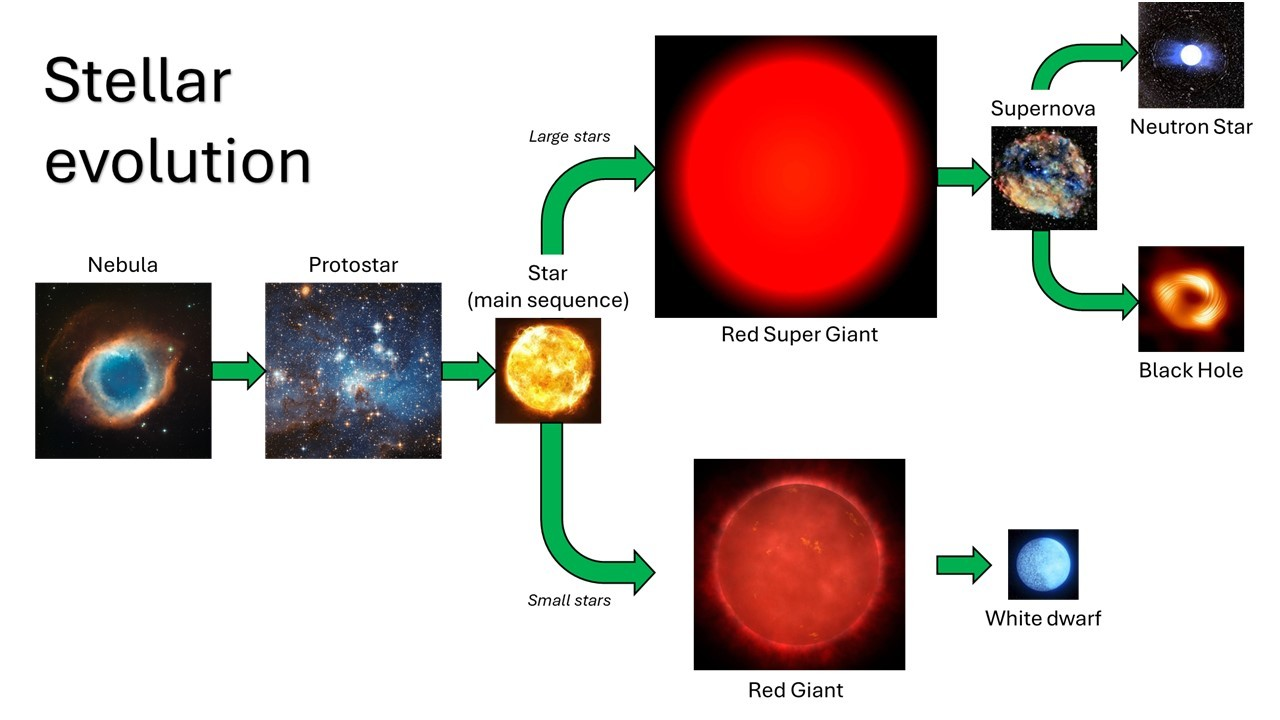
Evolution of stars more massive than the Sun:
Nebula → massive protostar → main sequence star
Red supergiant forms after hydrogen fuel runs out
Core collapses, leading to a violent supernova explosion, releasing huge amounts of energy
After explosion:
Neutron star forms if the core left is dense and compact but not extremely massive
Black hole forms if the remaining core is extremely massive and gravity prevents even light escaping
Brightness of a star:
Brightness can be measured by apparent magnitude (how bright a star looks from Earth) and absolute magnitude (how bright it would appear at a standard distance of 10 parsecs)
Absolute magnitude allows fair comparison of stars without the effect of distance
A lower magnitude value means a brighter star (e.g. -1 is brighter than +5)
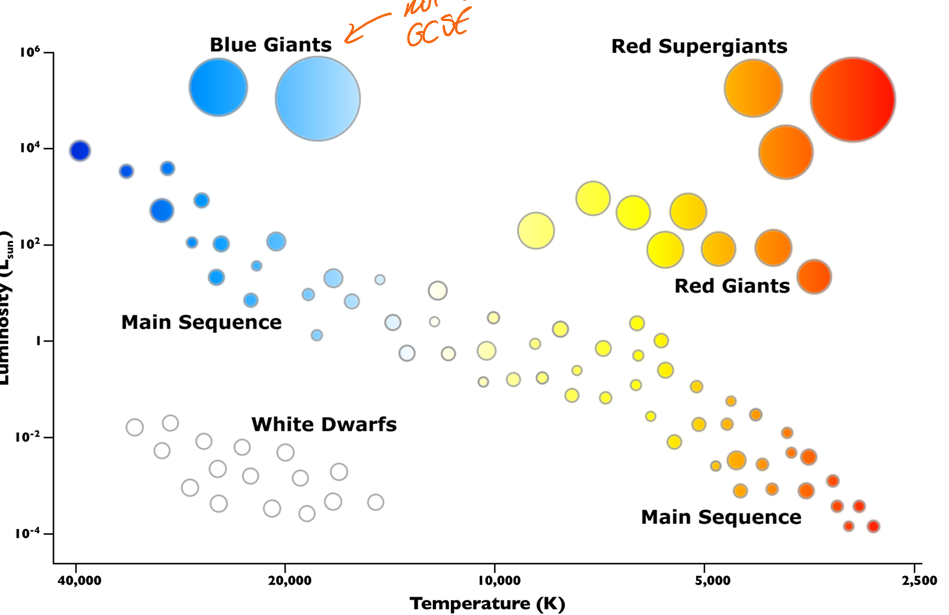
Hertzsprung–Russell (HR) diagram:
Shows relationship between surface temperature (x-axis, decreasing to the right) and absolute magnitude/brightness (y-axis, increasing upwards)
Main features:
Main sequence stars form a diagonal band from hot/bright (top left) to cool/dim (bottom right)
Red giants appear in the upper right (cool but very bright due to large size)
White dwarfs appear in the lower left (hot but dim due to small size)
Drawn HR diagram:
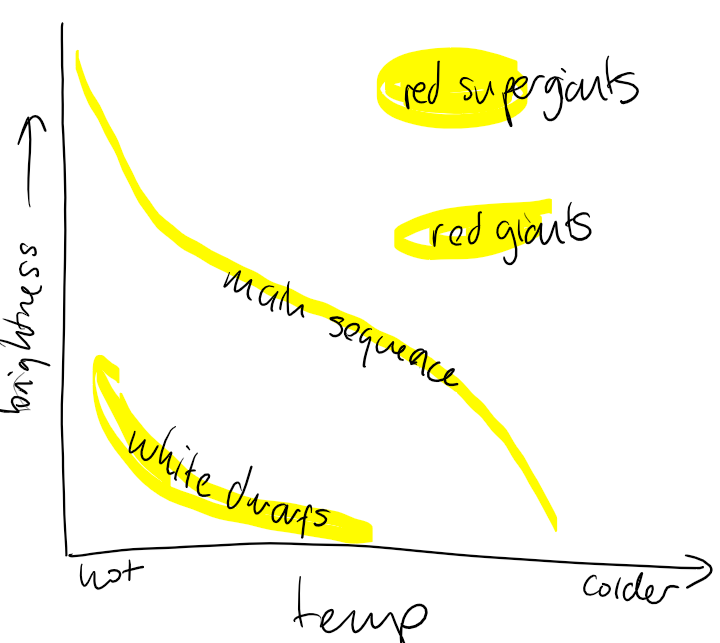
Simplified digital HR diagram:
Cosmology
Evolution of the universe:
The Big Bang theory suggests the universe began around 13.8 billion years ago from a single, extremely hot and dense point
All matter, space and time originated in this event
The universe has been expanding ever since, and galaxies are moving apart from each other
In the earliest moments, particles formed, then atoms, leading to stars and galaxies forming over time
Evidence for the Big Bang theory:
Red-shift:
Light from distant galaxies is shifted towards the red end of the spectrum, showing they are moving away from us
The more distant the galaxy, the greater the red-shift, meaning it is moving away faster → this indicates that the universe is expanding
Cosmic microwave background radiation (CMB):
Faint radiation detected in every direction of the sky
It is the leftover heat from the Big Bang, stretched into microwave wavelengths as the universe expanded
Its uniform presence provides very strong evidence that the universe began in a hot, dense state
Doppler effect with waves:
If a wave source moves relative to an observer, the frequency and wavelength change
Approaching source → frequency appears higher, wavelength shorter (blue-shift in light)
Receding source → frequency appears lower, wavelength longer (red-shift in light)
This effect applies to both sound and light waves
Equation for red-shift:
change in wavelength / reference wavelength = velocity of galaxy / speed of light
Δλ (New - original) / λ₀ (Original) = v / c (3×10 to the power of 8)
Used to calculate how fast galaxies are moving away from us
Red-shift observations:
Light from galaxies further away shows a greater red-shift
This means that the universe is not only expanding, but galaxies that are more distant are receding at faster speeds
Red-shift as evidence for expansion:
Since galaxies are moving apart in all directions, it suggests that space itself is stretching
This supports the Big Bang model rather than a static universe
It also suggests that in the past, all matter and space were concentrated at a single point
Future of the universe:
The ultimate fate depends on the total amount of matter and energy
Possibilities include:
Continuous expansion forever
Slowing down but never stopping
Eventually collapsing back in a "Big Crunch" if there is enough mass and gravity
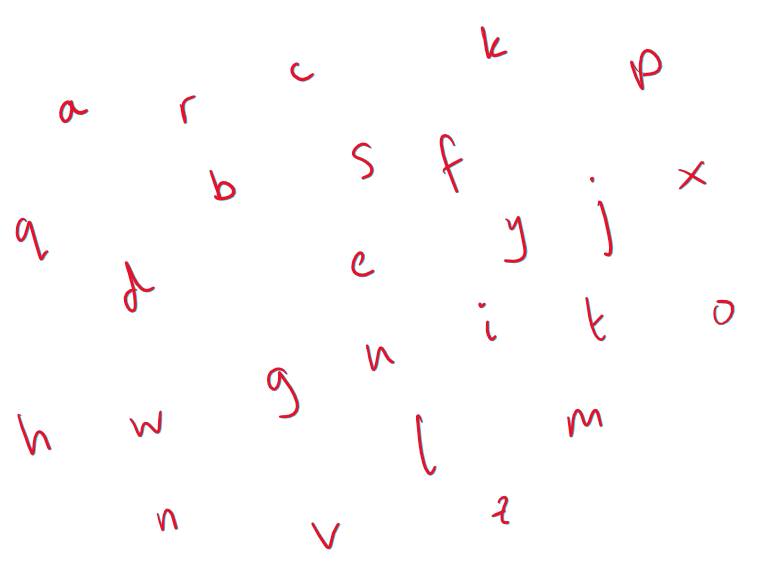
Expansion example:
Original:
Expansion:
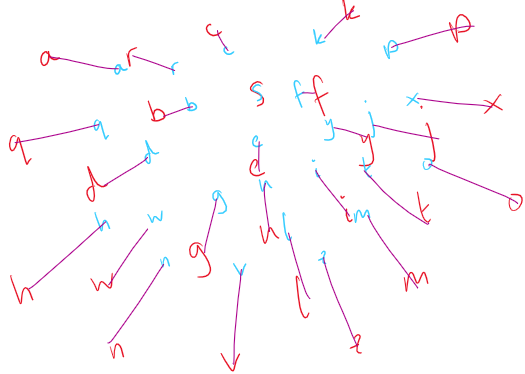
Expansion from different point of view