1.8 Water Balance
Water balance - gives an overview of how much water is used for which process
summary: water balance is a mass balance set up over a certain period and over a certain area (usually a catchment). the most important terms: precipitation, evapotranspiration, discharge, and storage change. Allows us to identify important processes and compare catchments
useful for comparing catachmetns
water balance is based on the mass balance equation
inflow - outflow = storage change
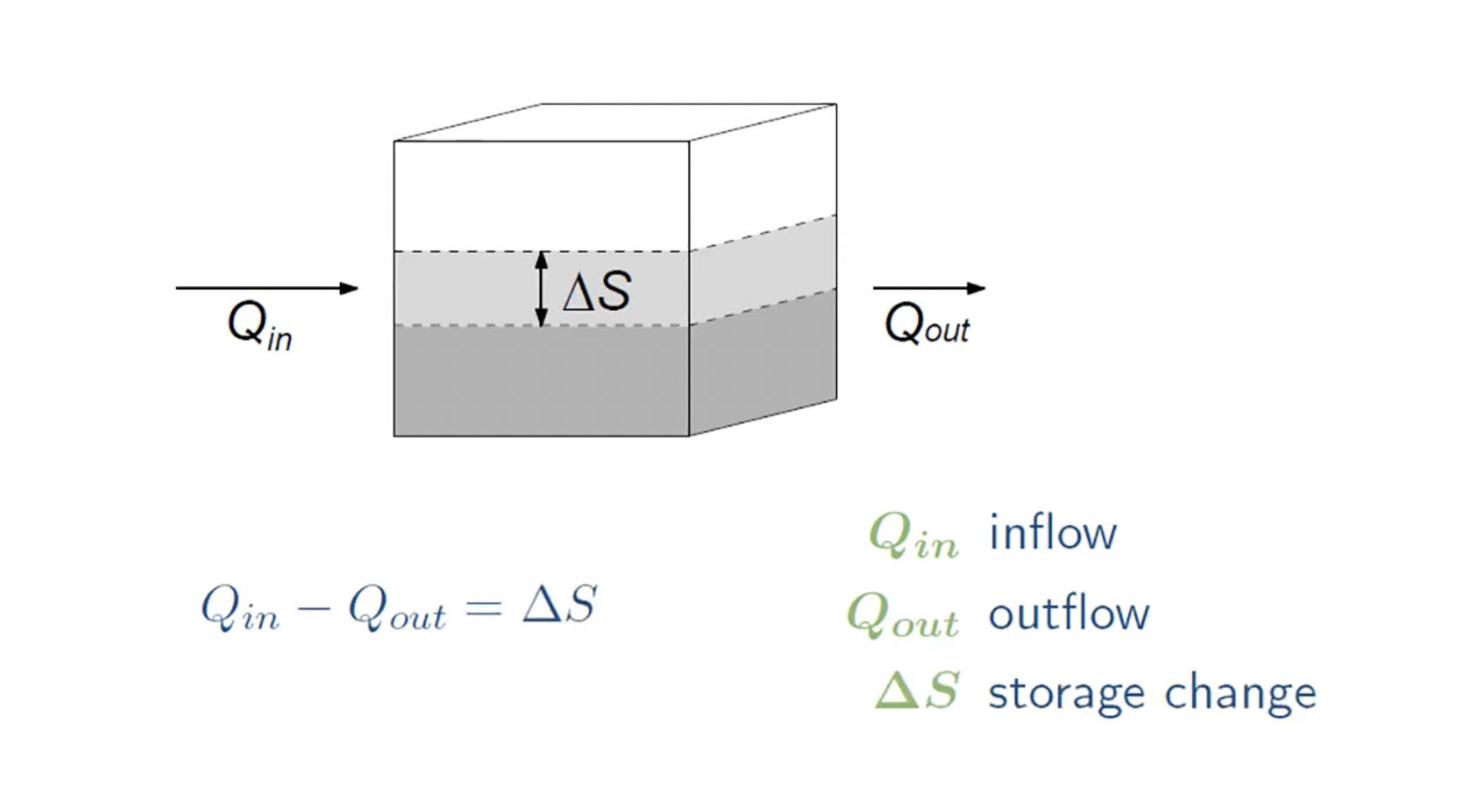
what flows into a certain volume at a certain time than what flows out then at the end of the period there is more water than at the start
catchment has the same working
identify which fluxes are relevant
flux - something flowing into or out of the catchment
inflowing: precipitation
outflow - evapotranspiration and discharge at the outlet
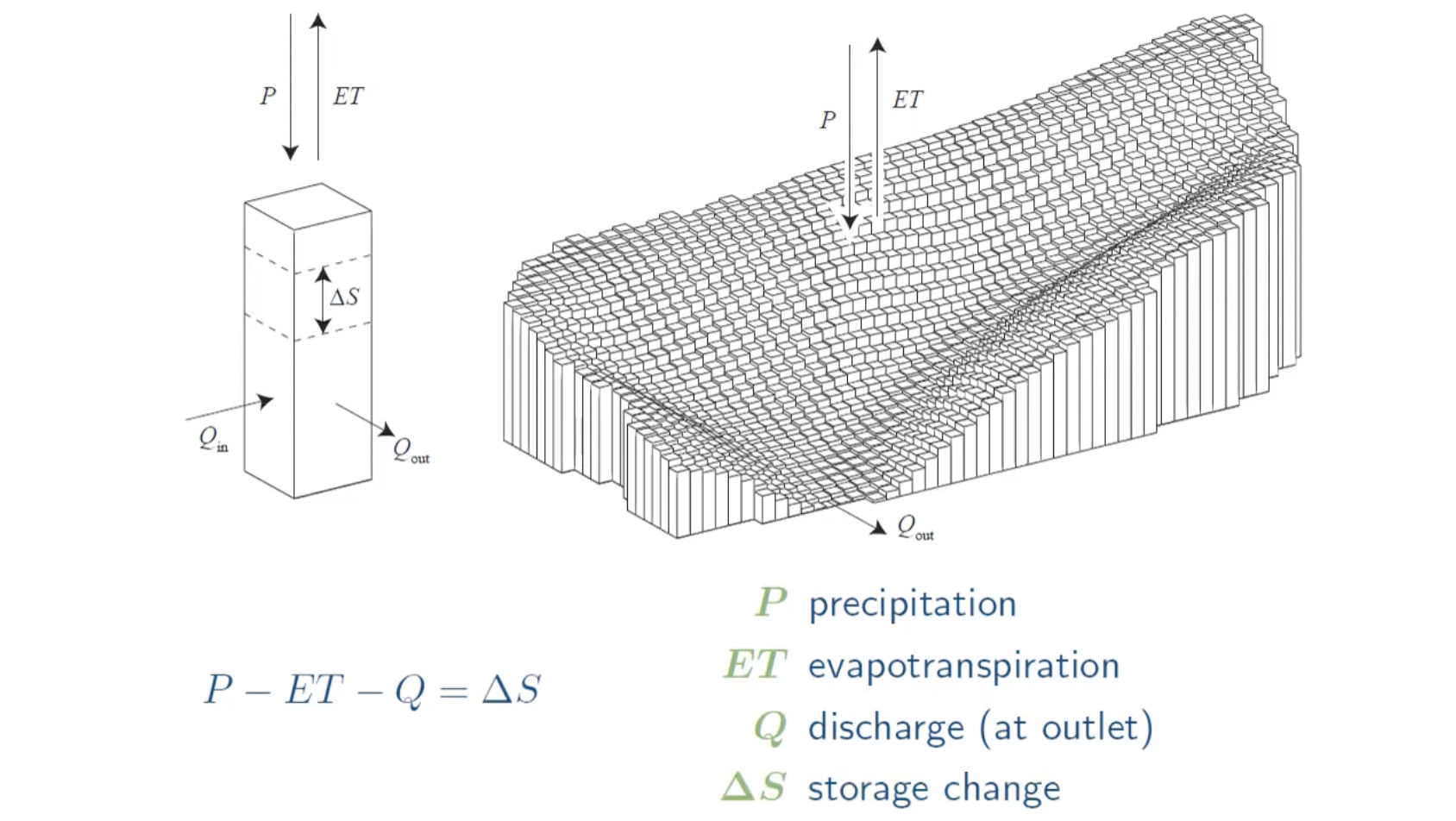
if you set up a water balance for a whole year: you sum all precipitation that fell during that year
do the same for evaporation and discharge
then compare for the difference between the end and the start of the year
HAVE TO CONVERT DISCHARGE BY CATCHMENT AREA = dischage is in volume/time then to conver it is —- (volume/time)/area —— end up with then length per time
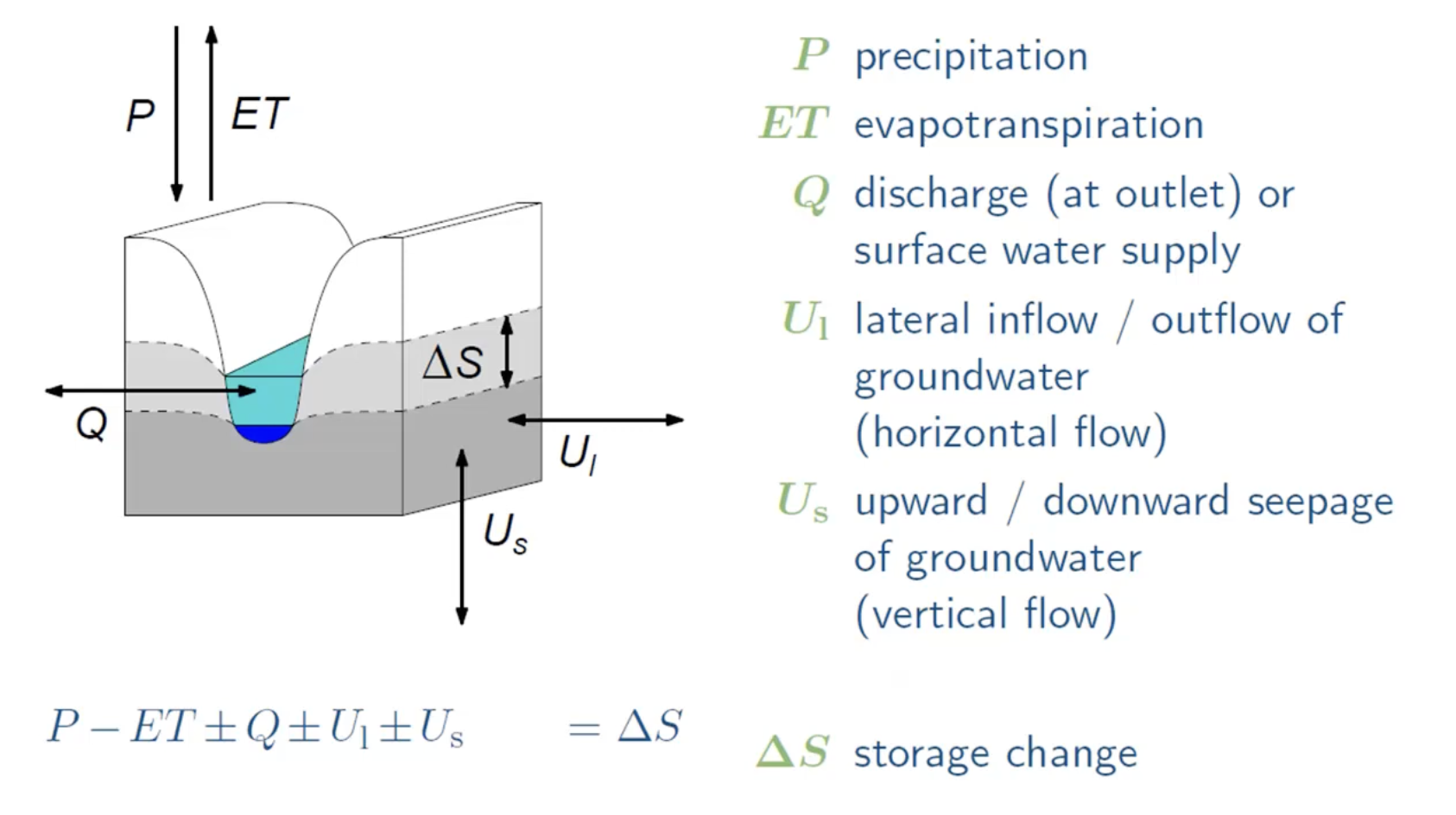
Complex catachemnts
i.e in lowland areas
surface water flowing into the catchmetn
groundwater exchange - either vertically (seepage) or horizontally
Groundwater storage
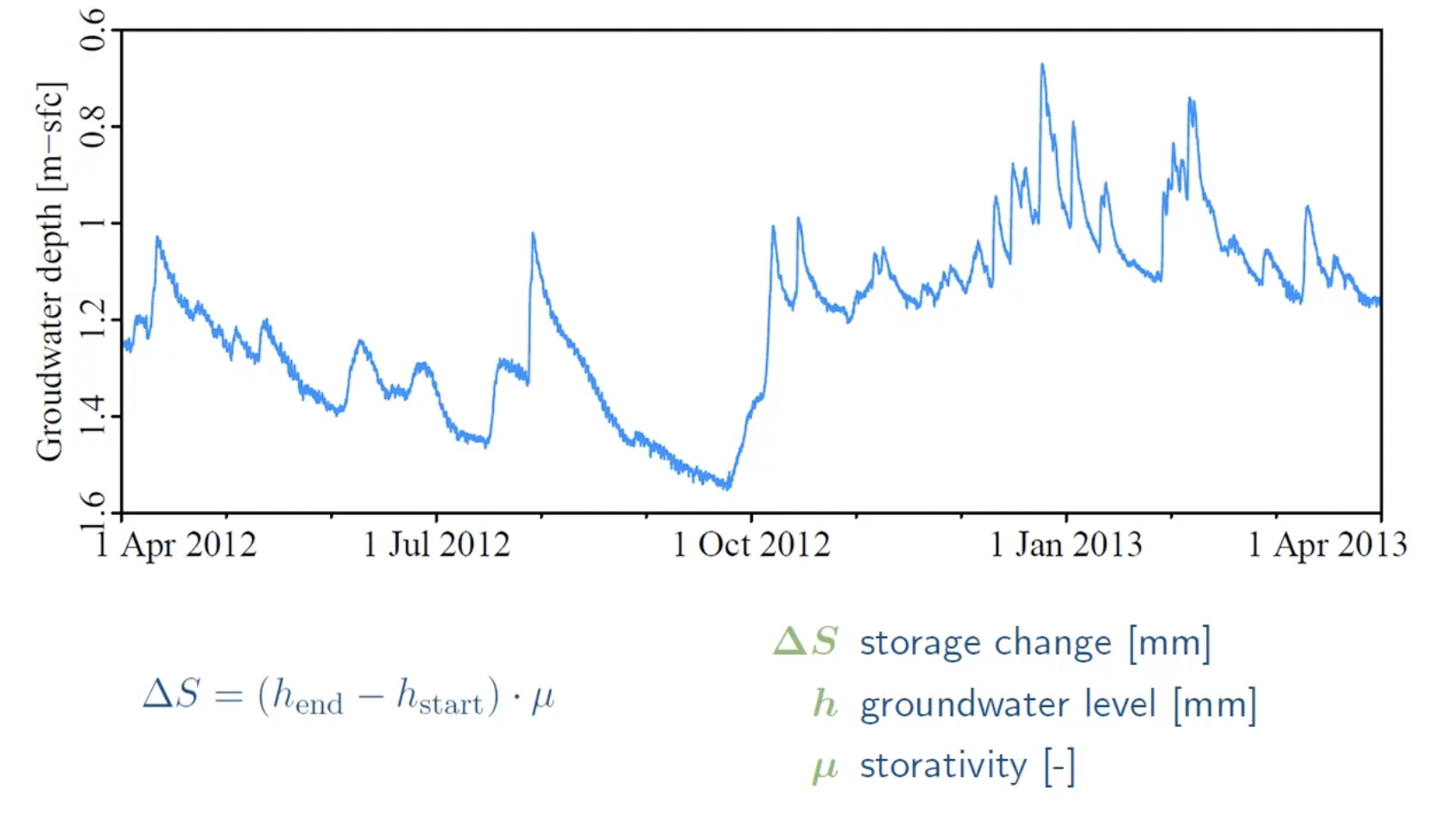
need the change in the amount of groundwater
multiply the groundwater change with distortivity to get the storage change
less than the groundwater level change because most of the soil volume is taken up by soil particles and immobile water
Storage change
increases and decreases over the year
the end is about the same at the start of the year - can be negelected
storage change cannot be neglected if you set it up over a part of the year