W3 L9: Growth hormones
- It’s a somatotrope → secreted by somatotroph cells of anterior pituitary
- Exerts it’s effects directly on most tissues in the body
- Has 2 main types of effects:
- stim. tissue growth
- influences metabolism
- Neurons in hypothalamus - release stim. hormone into portal circulation - acts on anterior pituitary cells - e.g. somatotrophs - will release 2nd hormone that acts on target organ
Human Growth Hormone (hGH)
- Peptide hormone consisting of 191 amino acids
- Signals by binding to tyrosine kinase receptors on outside of cells
- Stimulates:
- body growth
- secretion of insulin-like growth factor (IGF)-1
- stim. lipid breakdown
- counteracts actions of insulin → prevents uptake of glucose
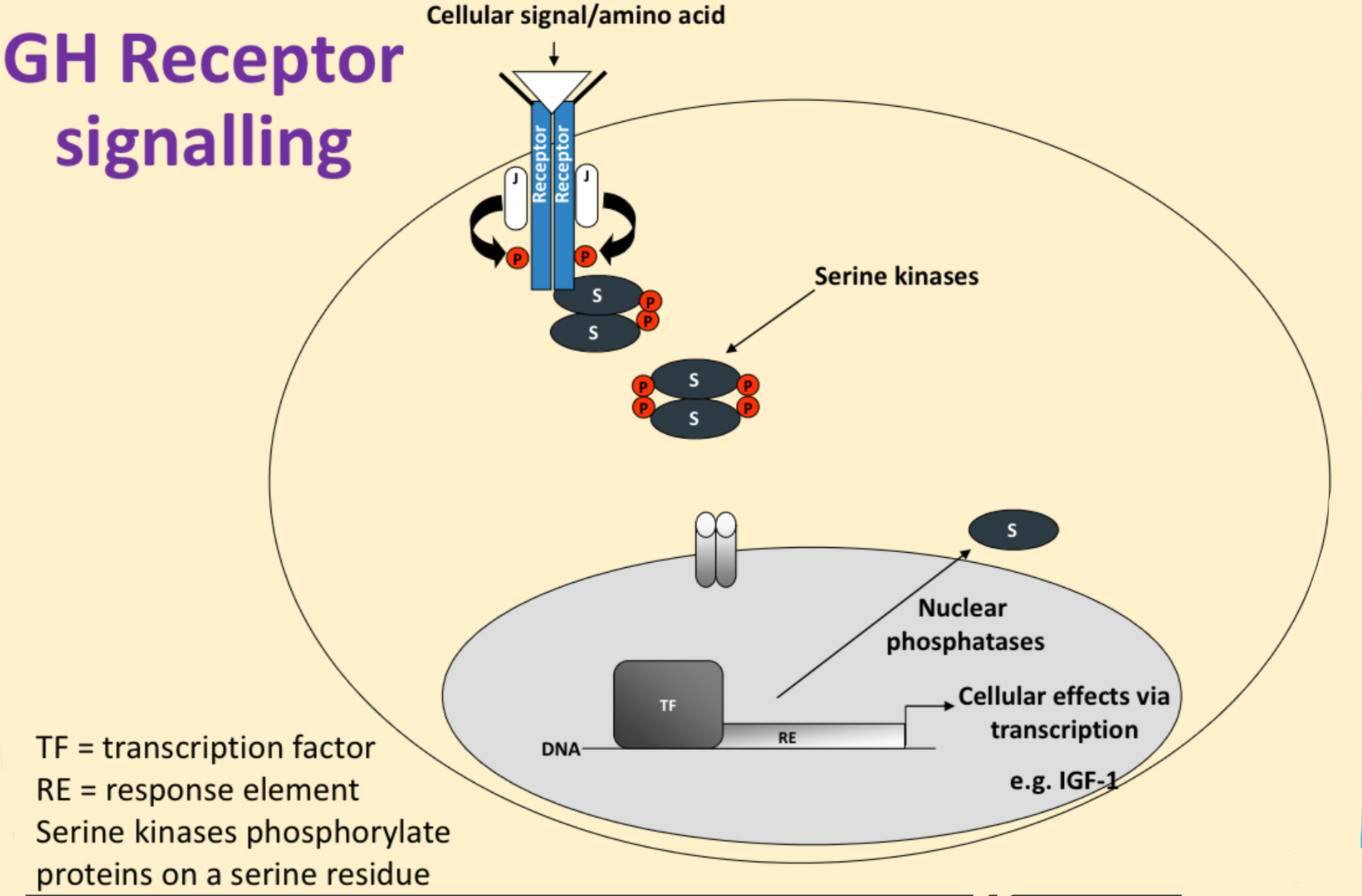
- Tyrosine kinase receptor
- Stimulation of growth factor receptor by growth hormone - so binds to receptor
- Dimerisation (partnering) → leads to accessory proteins coming & allowing phosphorylation of receptor
- Δ in shape that recruits additional kinase proteins → which phosphorylate to next substrate (kinase cascade)
- Leads to migration of protein to nucleus to associate w/ other transcription factors & induce expression via transcription
- Nuclear phosphatases remove phosphate gps → inactivates protein & return to cytoplasm
Control of Growth Hormone Release
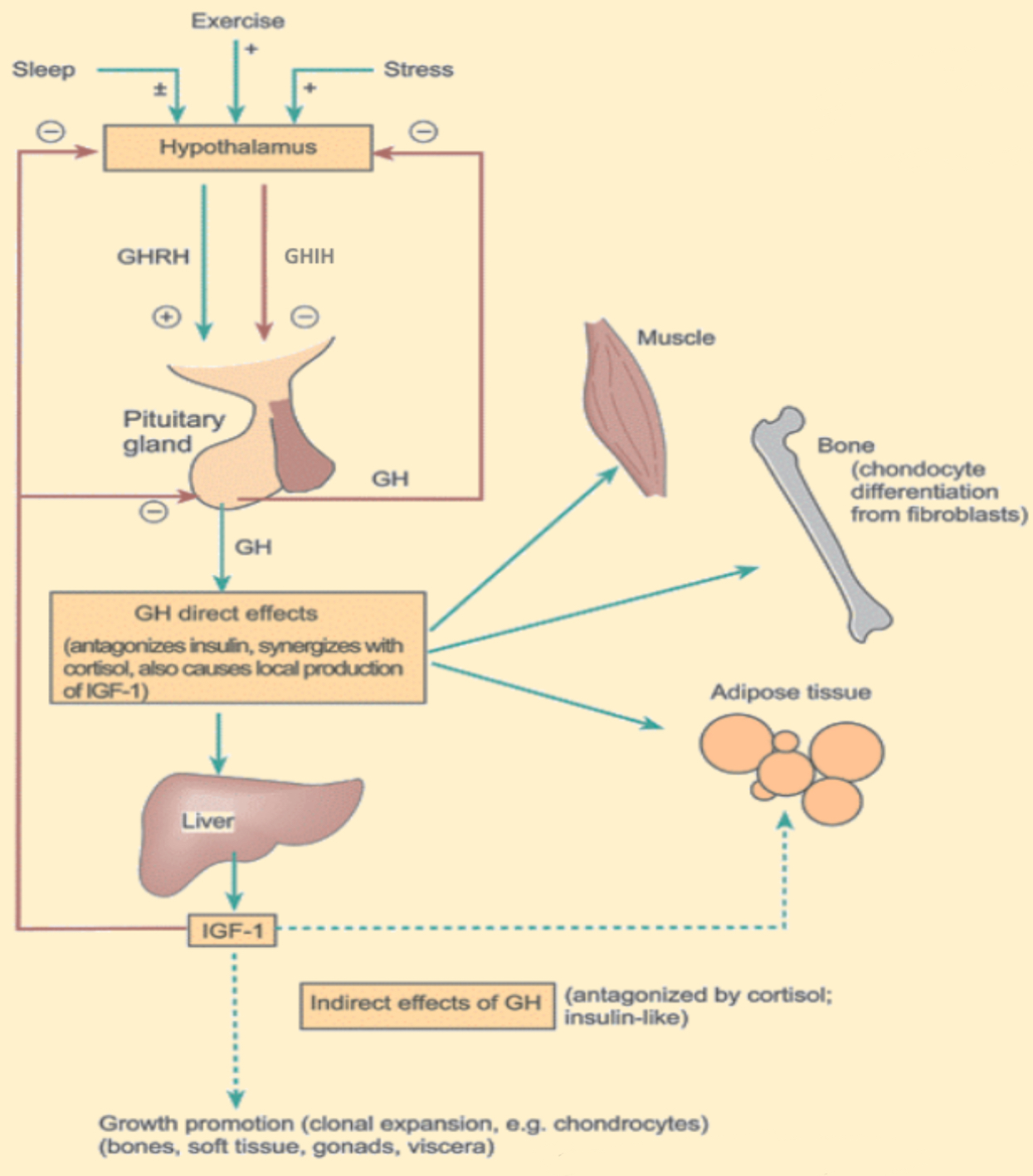
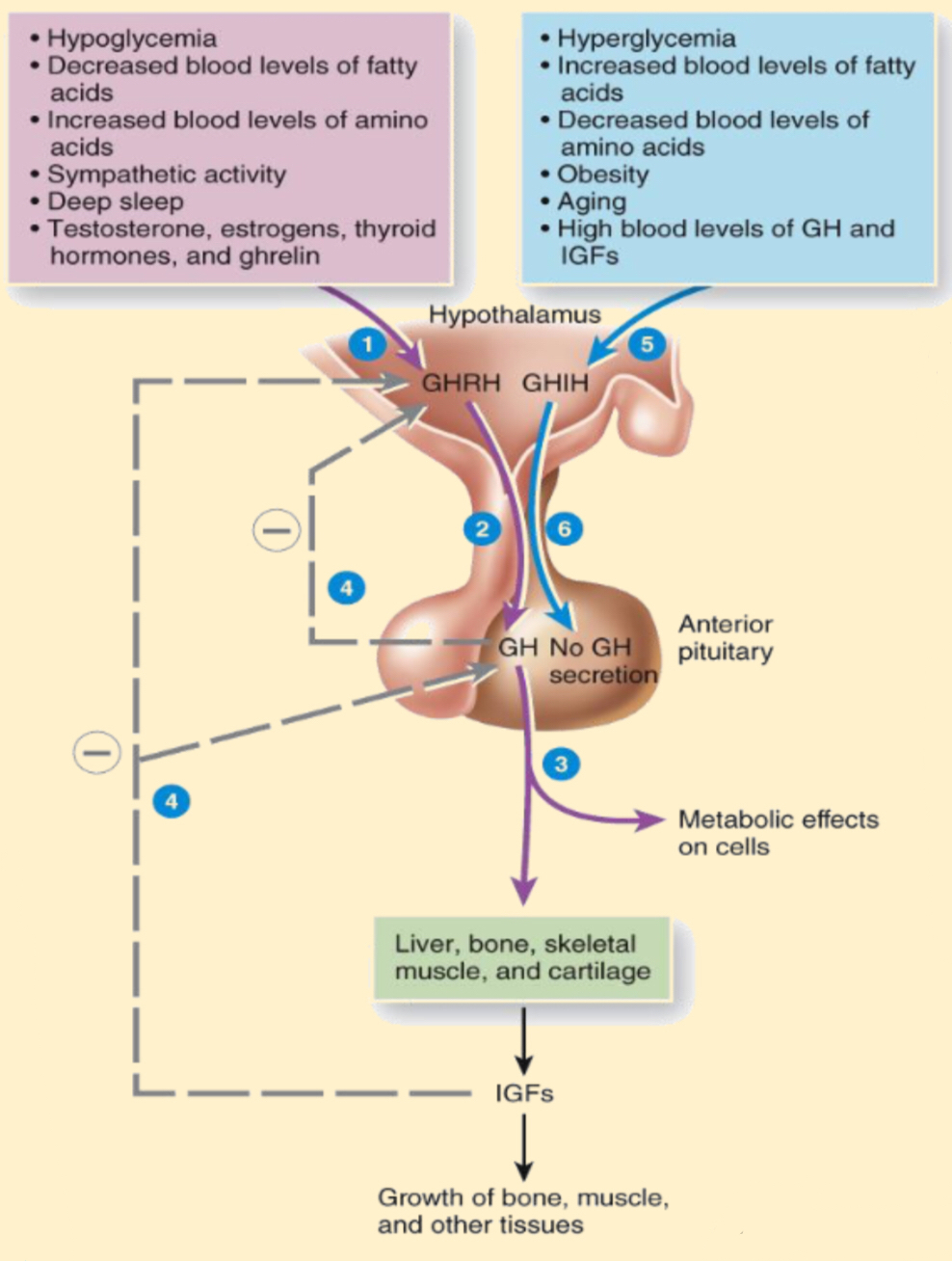
- GHRH is released by neurones in hypothalamus
- GRHR is carried directly to anterior pituitary in the portal circulation → binds to specific receptors on somatotroph cells of anterior pituitary
- Somatotroph cells release growth factor hormone into general circulation
- GH binds to GH receptors in many tissues
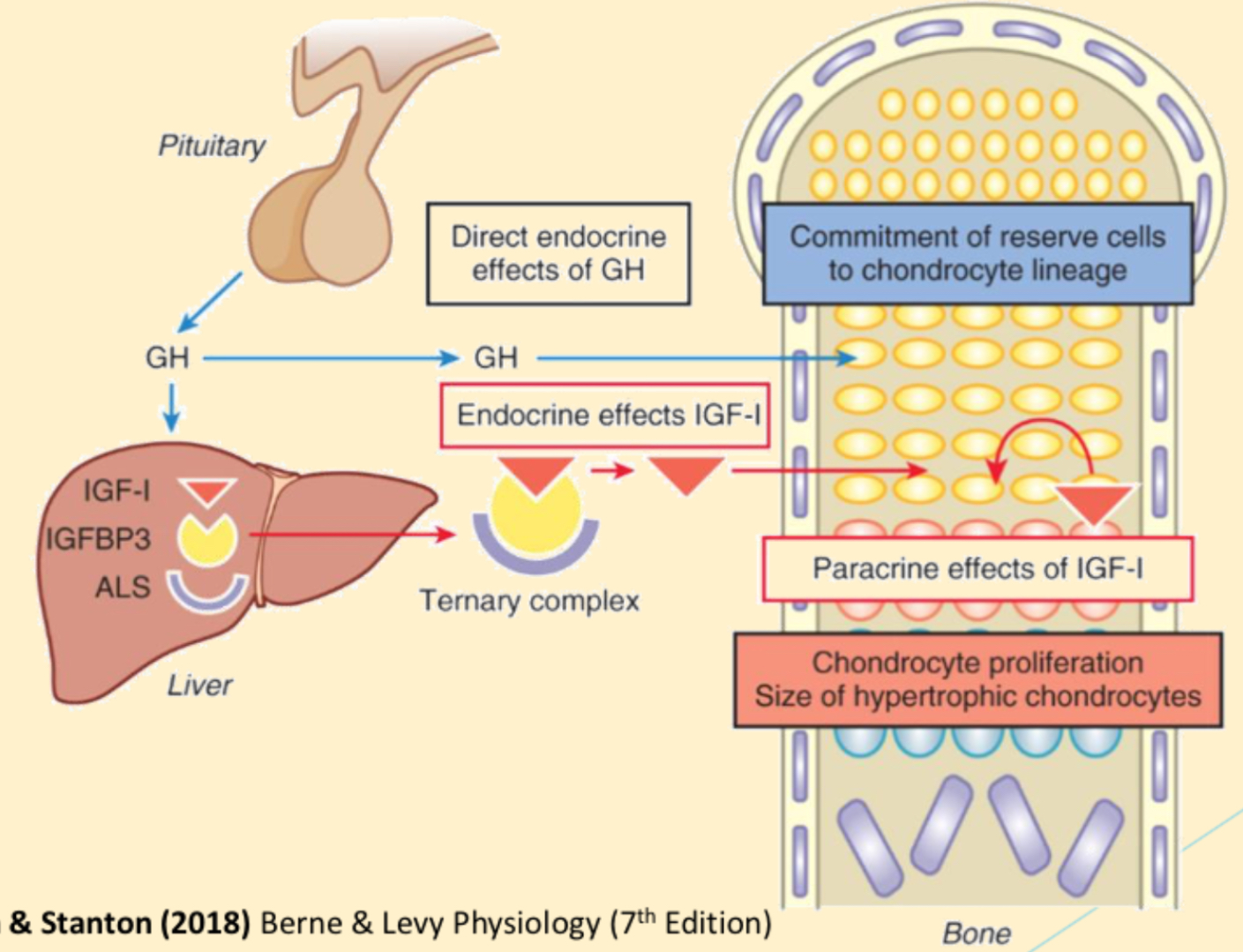
- In liver, binding of GH to GHR causes release of insulin like growth factor 1 (IGF-1)
- IGF-1 binds to IGF-1 receptors on chondrocytes & osteoblasts in bone
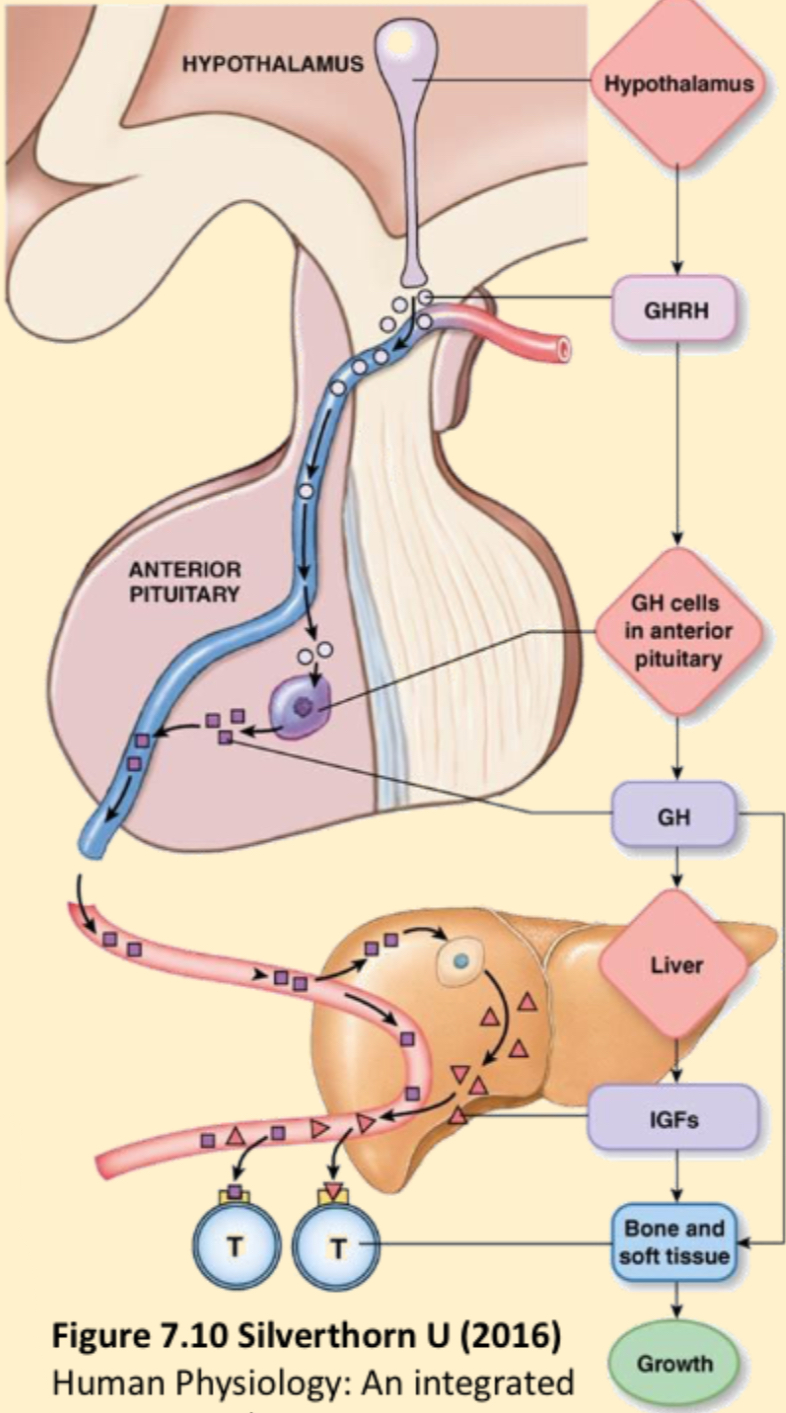
- Induces growth→ GH binds to GHR will induce expression of genes that ↑ proliferation & ↑ cell size & ↑ AA uptake to make more proteins ∴ cells ÷
Effects of growth hormone
- ↑ tissue size by ↑ protein synthesis, RNA & DNA synthesis & ↑ mitosis
- In liver - stim. IGF-1 production
On bone
- ↑ protein deposition by chondrocytes & osteogenic cells
- Differentiation of osteogenic cells into osteoblasts
- Epiphyseal line → under line is where growth occurs - chondrocytes & osteolineage cells
- Stim. from growth hormone - ↑ protein deposition e.g. ↑ collagen
- cartilage cells → osteogenic cells → osteoblasts
- osteoblasts ↑ bone length by ↑ calcium deposition
Insulin-like Growth Factors (IGFs)
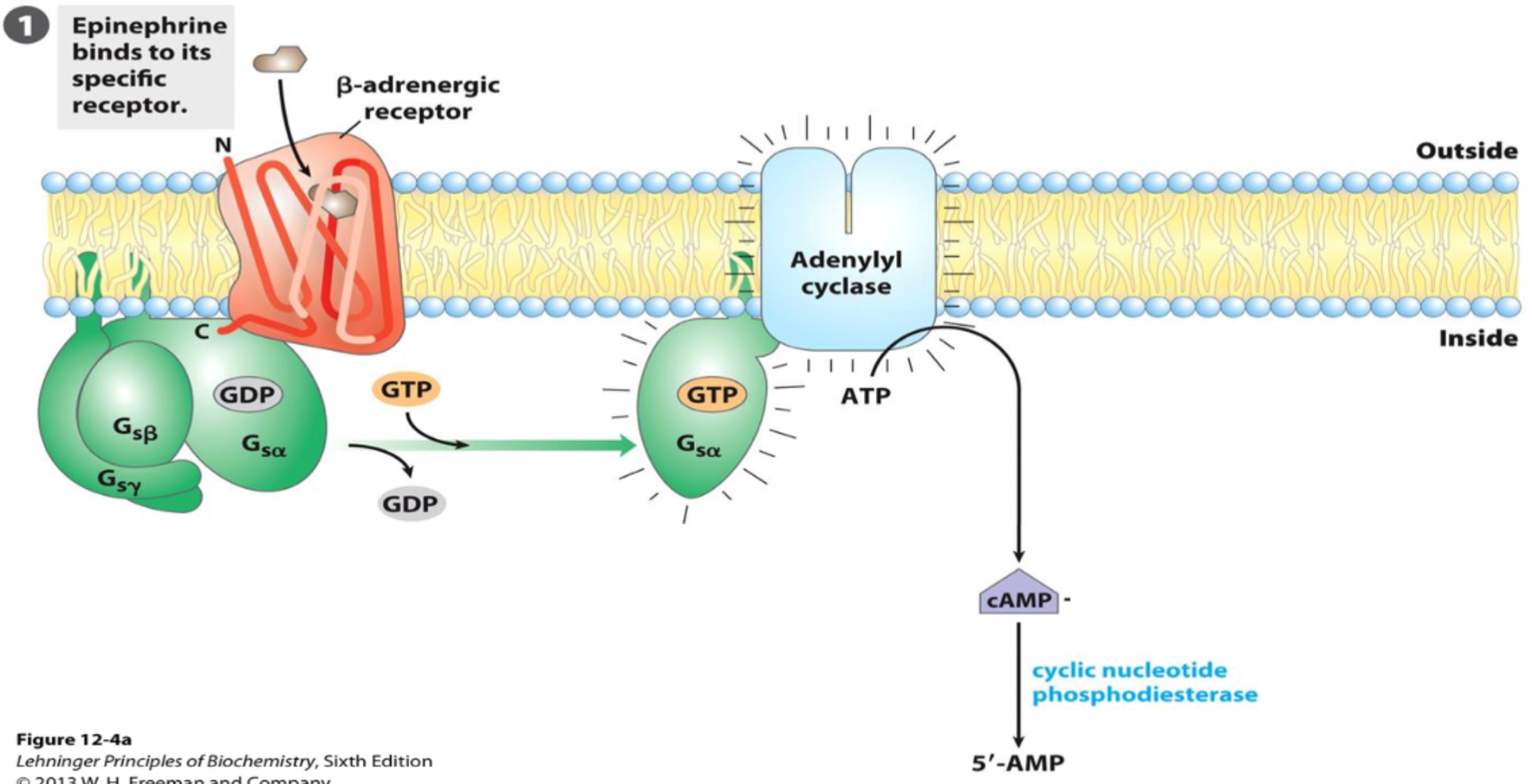
- Peptide growth factors, act via G protein coupled receptor signalling (via adenylyl clyclase)
- 2 rel. factors IGF-1 & IGF-2
- Synthesised in growing tissues e.g. bone, adipose & liver
Function
- IGF-1 is important part of growth Hormone (GH) feedback control
- stim. growth
- IGF-2 most active in the embryonic phase of development where it stim. embryonic growth
In bone
- All aspects of chondrocyte function (e.g. collagen/bone matrix production)
- Formation & maturation of osteoblasts
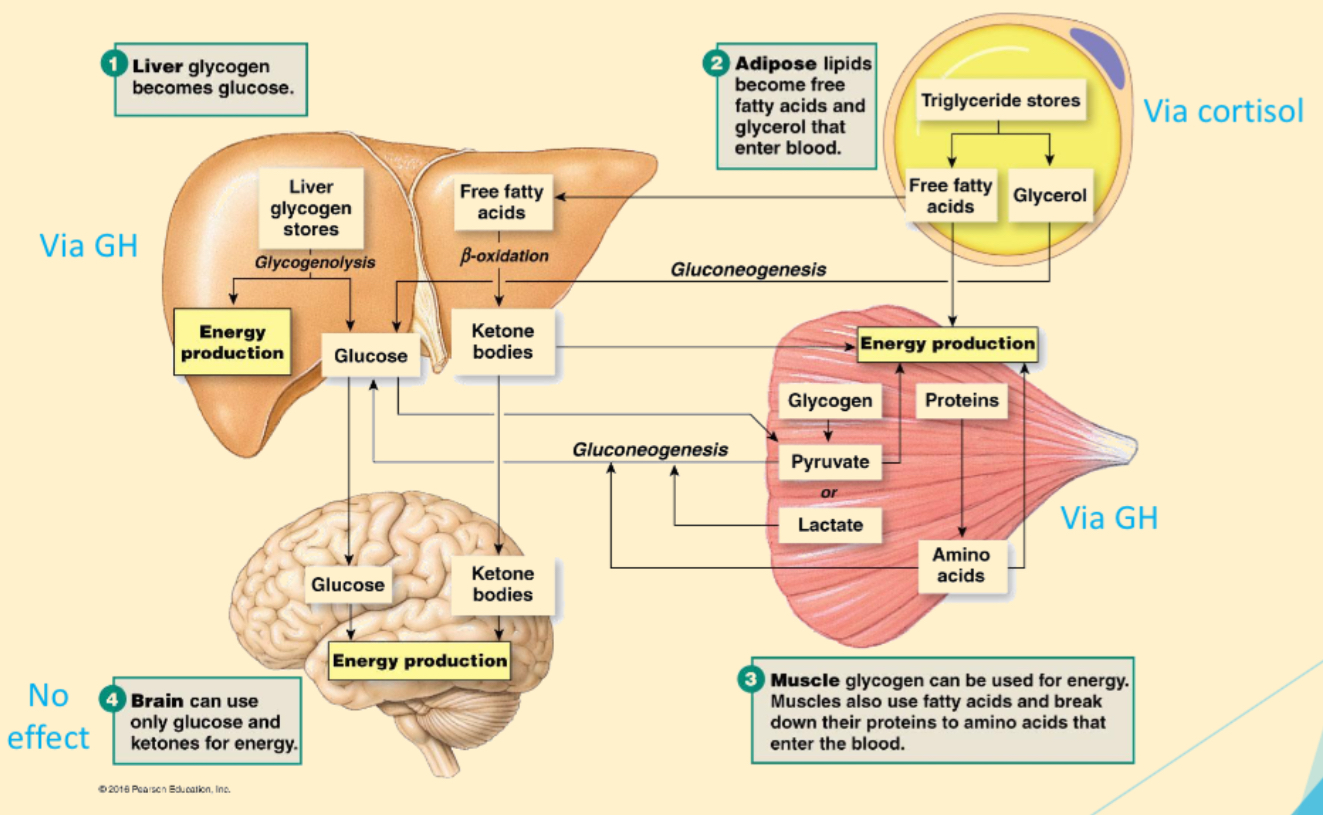
Metabolic effects of growth hormone
In fasted state:
- Drives for maintenance of blood glucose levels
- in adipose & muscle - ↓ glucose uptake
- in liver & adipose drives glycogenesis, gluconeogenesis (liver) & lipolysis (adipose)
Both direct & indirect (through IGF-1) effects on bone exist
Regulation & pathologies
When do we need GH?
- It’s regulated based on physiological state:
- Stress hormone - ↑ w/ neurogenic or physiological stress
- acute hypoglycaemia is a trigger for release of GH
- ↑ amino acids in blood stim. GH release
- ↑[glucose]blood & ↑ free fatty acids → leads to inhibition of GH release
Feedback & physiological stim. of growth hormone
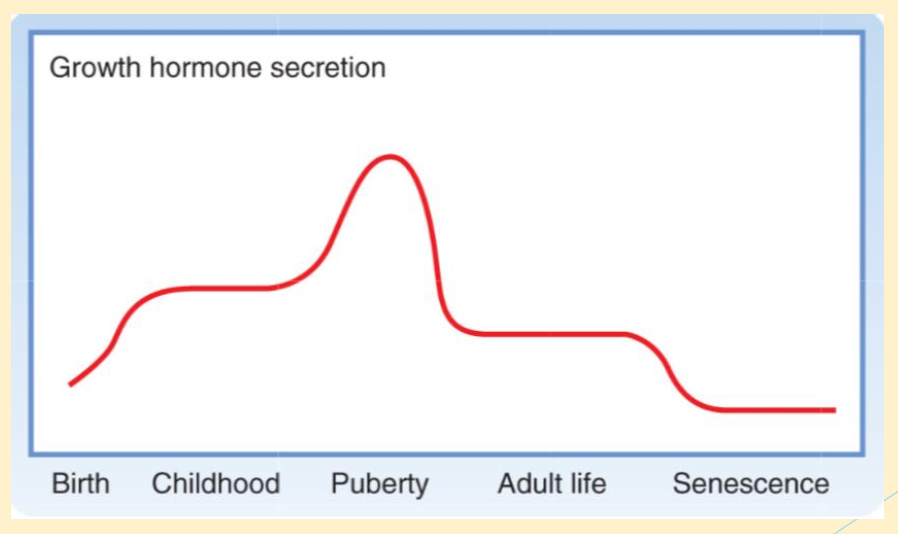
- Low at birth as can’t walk- less stress on bones, which stim. GH secretion
- Large peak before puberty due to high activity
- Low in senescence due to sedentary lifestyle
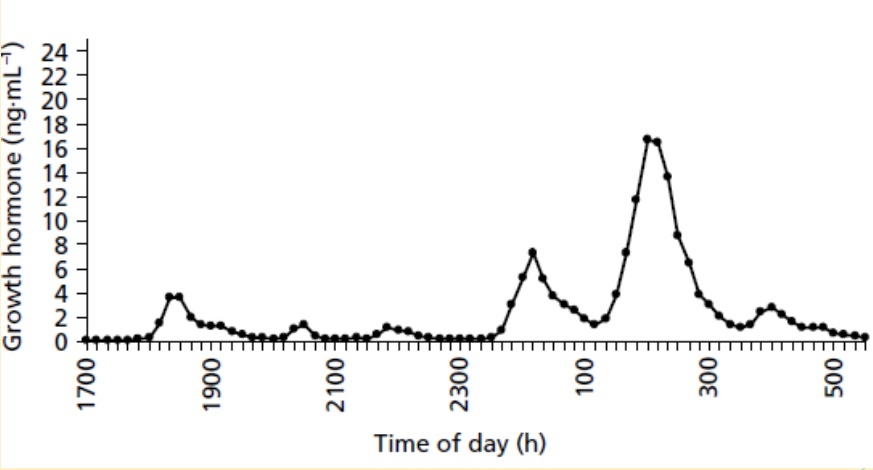
- Peak at 12 as you hit REM cycle & 3 when blood glucose drops
- Male GH reference range: <3 μg/L
- Female GH reference range: <8 μg/L
Pituitary Dwarfism
- GH deficiency in children
- Slow bone growth - fairly normal body proportions
- If untreated, max. height ~ 4 ft
- Associated w/ deficiencies in other pituitary hormones e.g. TSH gonadotrophins
- result in abnormal body proportions, failure of sexual maturity
- Treatment w/ GH replacement
- GH deficiency ~ not life threatening
- must be human GH (hGH)
Variants of dwarfism
- Laron dwarfism
- mutation of GH receptor gene (GHR)
- single-base pair change Δ in GH receptor
- reduced GH sensitivity
- often low IGF-1 too
Pituitary Gigantism
- hGH hypersecretion in children
- rapid bone growth - fairly normal body proportions
- individuals may reach ~ 8 ft
- rare clinically, only happens in children
- e.g. benign tumour that excessively secretes GH
Acromegaly
- ↑ hGH secretion during adulthood
- only some bones responsive to GH
- more common than gigantism
- Enlargement/thickening of hands, feet, jaw & face
- Thickening of soft tissues
- e.g. coarsening of facial features
- Treatment usually surgical
- anatomical changes are irreversible