Psychodynamic Study Guide
Mind Map: Primary Defen
Psychodynamic Study Guide
Psychoanalysis → “second force in psychology”
FOCUS: Unresolved unconscious conflicts = constant conflict going on between our mind with different forced
Psychodynamic Thought
Transformation and exchanges of “psychic energy” within the personality
Focus: energies + conflicts between the id, ego, and superego
Fundamental Hypotheses of Psychoanalysis
Psychic Determinism
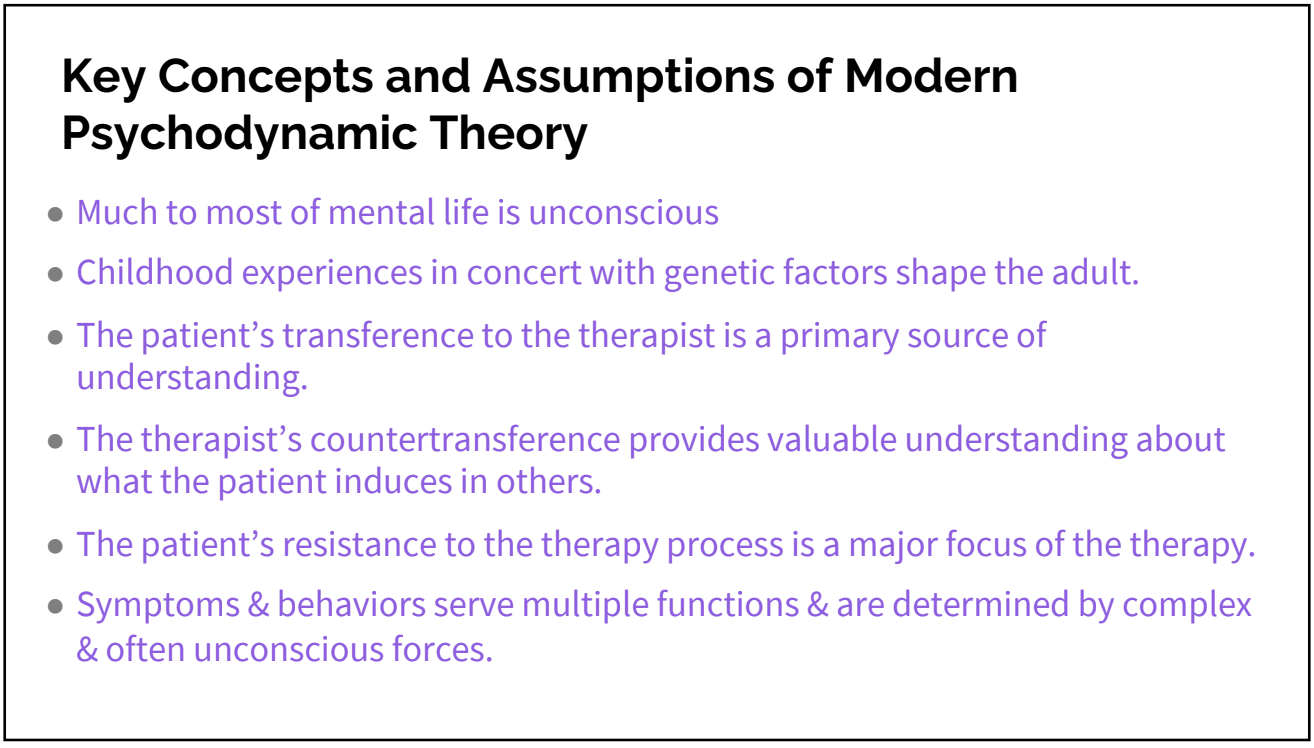
Mental activity is NOT random (every process is linked to previous thoughts + events
Dynamic Unconscious
The greater part of mental activity occurs outside conscious awareness
The greater part of mental activity occurs outside conscious awareness
mental processes, including conscious and unconscious ones, are determined by past experiences, internal drives, and external stimuli.
The existence of a dynamic unconscious is necessary to support this principle because it implies that there are hidden connections and influences between different mental processes.
Important things to remember about Freud
Created “dynamic psychology” → transformations and exchanges of energy within a personality
Anna O (patient of freuds) → “talking cure”
Hysteria originates in sexual malfunction & symptoms can be talked away
“Chimney sweeping” = symptoms reduced/disappeared
His father died 1896 → “most important event” that eliminated his “seduction theory” and developed the oedipus complex instead
Freud had originally proposed that many neuroses (mental disorders characterized by anxiety, compulsions, or other distressing symptoms) stemmed from early childhood experiences of sexual abuse or molestation, often by a parent or caregiver.
However, after his father passed away he believed that these memories of childhood sexual abuse were not accurate representations of reality but rather fantasies or unconscious desire
Freud’s second daughter died of influenza → created new drive theory = pleasure principle/life drive (eros) + death drive (Thanatos)
Parapraxes & Dreams | Topographical/Iceberg model | Structural Model (Id, Ego, Superego) | Motivational Drives |
|---|---|---|---|
Dreams
2 forms of dreams
Dreams are distorted with unconscious wishful impulses (unconscious) | 3 systems of awareness = conscious system, preconscious system, unconscious system Systems contain dynamic movements of energy: sources of thinking/feeling
| Id is developed in early stages, then the ego develops, then superego. The ego and superego balance the id BUT if there is not good development, then that is how psychopathology happens | Nervous energy arises from drives
**Interplay between Eros + Thanatos = constructive + destructive tendencies |
Conscious Mental activity completely within immediate awareness | ID Give me what I want now (unconscious) | ||
Sexual Drive (Eros) behavior is influenced by the libido (sexual energy) Eros= sexual desire, pleasure, love, and creativity. **libido fuels eros | |||
Parapraxes (analyze with free association)
(tongue, pen, misreading, mishearing)
(tip of the tongue) = counter will that is hostile
mislaying something) = wish to lose something | Preconscious Mental activity available to conscious awareness, but not in conscious attention at the moment
| Ego Reality Testing (All 3 levels) | |
Aggressive Drive (Thantos) death instinct= aggressive and destructive impulses within the psyche (desire for violence, destruction, and self-destructive behaviors → frustration, rivalry, or the desire for dominance). | |||
Unconscious Mental activity hidden beyond conscious awareness
| Super Ego/Ego ideal We have rules and obligations to follow (All 3 levels) | ||
Ego Defense Mechanisms
Utilized often as a result of one’s temperament, childhood, modeling by sig figures, and reinforcement
Primitive Defenses
immature lower-level/lower-level defenses (boundary between the self and the outer world)
Primary defenses exhibit qualities associated with preverbal stages of development. This means they operate before the acquisition of language and symbolic thought
Lack of Attainment of the Reality Principle: failure to fully grasp this principle, leading individuals to respond to internal impulses without regard for external reality or consequences.
Lack of Appreciation of Others Being Separate and Constant: In early development, children gradually learn to recognize the separateness of themselves and others, as well as the constancy of others' presence and identity. Difficulties with this can manifest as difficulties in forming stable and healthy interpersonal relationships or recognizing the autonomy of others.
Extreme Withdrawal | Psychological escape from reality | Schizoid Personalities (both physically and into fantasy) |
|---|---|---|
Denial | If i don’t acknowledge it, it isn’t happening | Child’s egocentrism, Mania; psychotic denial; Narcissistic personalities; Borderline Personalities; Paranoid personalities; Manic Personalities prone to this; |
Omnipotent Control | Prioritizing one’s power over ethics | Psychopathic Personalities(reaching for omnipotent control); Sadistic Personalities; Severe O-C’s |
Extreme Idealization & Devaluation | Occurs when reality does not align with the belief of a “perfect person” | Narcissistic Personalities; Depressive Personalities; Narcissistic personalities; |
Projection (externalization) | What is coming from inside is coming from outside | Paranoid personalities; psychotic(delusional) projection; Narcissistic personalities; |
Introjection (internalization) | What is outside is misunderstood as coming from inside | Common in Depressive personalities ; Borderline organization; Masochistic Personalities |
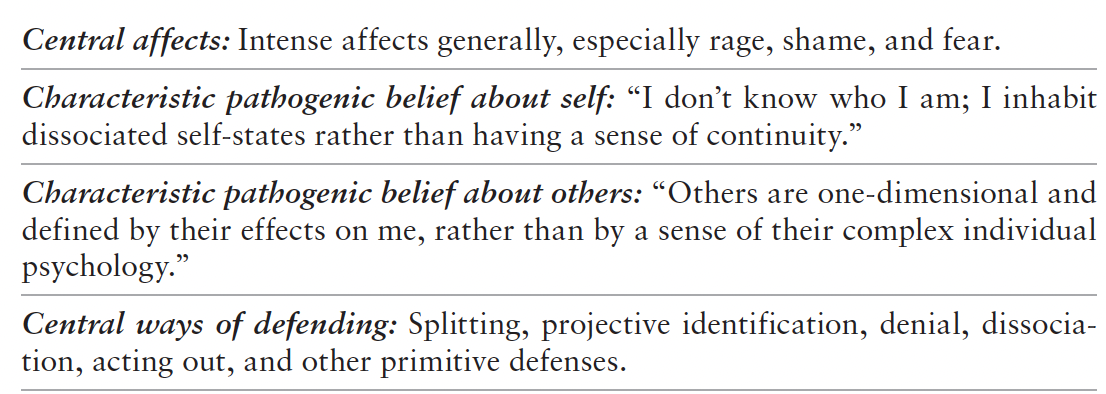
Projective Identification | Person projects internal objects and gets the person/target of projection to behave like those objects (accusing and confirming beliefs) | Borderline personalities; Narcissistic personalities; Paranoid personalities (tend to project negative qualities) |
Splitting of the Ego (Splitting) | Characterizing object as either all good or all bad (perfect vs. unworthy/evil) | Borderline Personalities prone to this; |
Somatization | Emotional states are expressed physically (stressed → illness) | Somatizing Personalities; Dependent Personalities |
Acting Out (Defense Enactment) | Put into action what one lacks in words to express | Impulsive; Hysteric-Histrionic personalities; Borderline Personalities; Can be part of the compulsions in O-C personalities; Hallmark of Masochistic Personality |
Sexualization (Instinctualization) | Subtype of acting out, pain → sexual excitement (anxiety → masturbate) | Hysteric-Histrionic personalities; |
Extreme Dissociation | Normal reaction to trauma | Borderline Personalities; Histrionic Personalities; |
Secondary Defenses
Mature, advanced, higher order defenses
Internal boundaries between the id, ego, and superego / between observing and experiencing parts of the ego
Make more specific transformations of thought, feeling, sensation, or behavior
Repression | Handling disturbing thoughts or experiences by relegating them from the unconscious | Hysteric-Histrionic personalities; some O-C Personalities |
|---|---|---|
Regression | Unconsciously reverting to old feelings, thoughts, behaviors, or an earlier phase of development; somatization a type of regression (e.g. hypochondriasis) | Dependent Personalities; Somatizing personalities; Hysteric-Histrionic personalities; |
Isolation of affect | Isolating feeling from knowing to deal with anxiety or painful states; subtype of dissociation | O-C Personalities, |
Intellectualization | Higher order isolation of affect from intellect; thinking rationally via ego strength | O-C Personalities; |
Rationalization | Unconsciously seeking cognitive, acceptable grounds for one’s decisions | Anxious-Avoidant Personalities; O-C Personalities |
Moralization | Seeking a way to feel it’s one’s duty to pursue a course of action | Masochistic Personality; Some O-C’s; |
Compartmentalization | Allows two conflicting conditions/beliefs to co-exist without conscious, guilt, shame, or anxiety; E.g. Golden Rule and Looking out for myself | |
Undoing | More mature version of omnipotent control; unconscious effort to counterbalance an affect, usually guilt or shame, with an attitude or behavior that will magically erase; e.g. religious rituals like confession | Primary defense for O-C Personalities; |
Turning against the self (devaluation of self) | Redirecting some negative affect or attitude from an external object toward the self; depressive personalities and some masochistic personalities prone to this | Depressive personalities; Masochistic personalities |
Displacement | Redirecting a drive, emotion, preoccupation or behavior from its natural object to another because the original direction presents too much anxiety; e.g. sexual fetishes; phobias | Anxious Avodiant Personalities; |
Reaction Formation | Turning something into its opposite in order to make it less threatening | O-C Personalities; Narcissistic personalities; |
Reversal | Enacting a scenario that switches one’s position from subject to object or vice versa; e.g. feeling too threatened to be cared for by another, one cares for others; satisfy one’s own needs by taking care of another (e.g. therapists) | Depressive Personalities; Dependent Personalities; Sadistic Personalities; |
Identification | Deliberately , but partly unconsciously, becoming like another person | |
Sublimation | Finding a creative and useful way to express problematic impulses and conflicts | |
Humor | Subtype of sublimation; used to tolerate pain | Me, fernanda; Healthier Paranoids; |
Important People & Schools of Psychoanalytic Thought (Post Freud)
Classic psychodynamic thought |
|
|---|---|
Ego Psychology |
|
Interpersonal Psychoanalysis |
|
Contemporary Kleinian Theory |
|
British Object Relations School |
|
Self-Psychology |
|
Classic Psychodynamic Thought | Ego Psychology | Interpersonal Psychoanalysis | Contemporary Kleinian Theory | British Object Relations School | Self-Psychology |
|---|---|---|---|---|---|
Sigmund Freud | Anna Freud | Harry Stack Sullivan | Melanie Klein | W.R.D. Fairbairn | Erik Erikson |
Carl Jung | Ernst Kris | Clara Thompson | Wilfred Bion | D.W. Winnicott | Heinz Kohut |
Alfred Adler | Heinz Hartman | Edgar Levenson | Heinrich Racker | Michael Balint | |
Melanie Klein | Rene Spitz | Thomas Ogden | John Bowlby | ||
Margaret Mahler | Betty Joseph | Harry Guntrip | |||
Edith Jacobson |
Introjective | focused on self-definition, “I can’t love myself”; “I'm not good enough, flawed, self-indulgent, evil” |
|---|---|
Anaclitic | centered on self-in-relation (often mommy issues causes this per Dr. Acklin lol) “No one really loves me” ; “Im empty, hungry, lonely, I need connection”; strong emotional dependence on others; |
PERSONALITY DISORDER= When defenses are so stereotypical or stuck that it prevents psychological growth and adaptation; have to be pervasive throughout someone’s life. Otherwise it could be described as a characterological style.
The Neurotic-Borderline-Psychotic Spectrum
Healthy: Still become symptomatic under stress but have certain “favored" ways of coping; they have enough flexibility to accommodate adequately to challenging realities (though not necessarily severe trauma). We all have characteristic “style or flavor or type” of personality or a stable mixture of styles.
Neurotic: People at this level of organization are notorious for their relative rigidity. They tend to respond to stress with a restricted range of defenses and coping strategies. Patterns of suffering tend to be restricted to specific areas (e.g. loss, rejection, self-punitiveness seen in depressive personality, issues of gender/sexuality/power in hysteric-histrionic personality; control issues in O-C personality). Defenses at the neurotic level are more likely to concern one area/one type of relationship rather than all relationships as seen in borderline level. People at this level tend to have some perspective/insight on their recurrent difficulties and can imagine how they would like to change.
Common personality styles at the neurotic level are: Depressive, Hysteric, phobic, and Obsessive-Compulsive personalities.
Borderline: People with borderline organization have difficulties with affect regulation and are vulnerable to extremes of overwhelming affect (depression, anxiety, rage). Recurrent relational difficulties; severe problems with emotional intimacy; problems with work; problems with impulse regulation; Addiction; When an attachment relationship is threatened they are also at greater risk of self-harm, including self mutilation, sexual risk taking, accumulation of inordinate debt, and other self-destructive behaviors/activities; Failure to integrate disparate aspects of identity into a coherent whole→Identity Diffusion
Higher level borderline-neurosis (more neurotic than borderline)- less deficits→ more exploratory approaches
Lower level borderline -psychotic - severe deficits → supportive, capacity building approaches
Key difference to Neurotic Level = absence of mature defenses like the neurotic level
Psychotic: People with a psychotic organization but not a Dx tend to have transient features such as overgeneralized, concrete, or bizarre thinking; socially inappropriate behaviors; pervasive and severe annihilation anxiety; fixed beliefs that their ideas of others are true regardless of what is said or done. Psychotic level of personality organization implies identity diffusion, poor differentiation between representations of self and others, poor discrimination between fantasy and external reality, reliance on primitive defenses, and severe deficits in reality testing. Examples of individuals functioning in the psychotic range→ anorexic client who is dangerously close to starvation but believes they are overweight; OC people who severely hoard; THe person’s “fixed” ideas are so absolute that it approaches delusional ideation.
Personalities Types/Characterological Styles
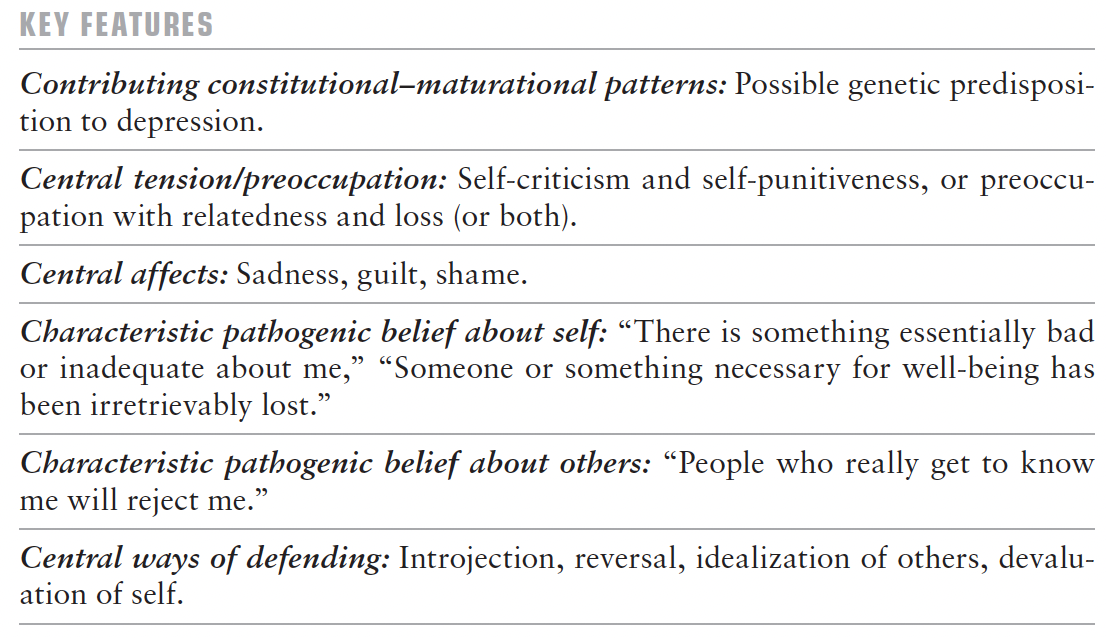
Depressive Personality:
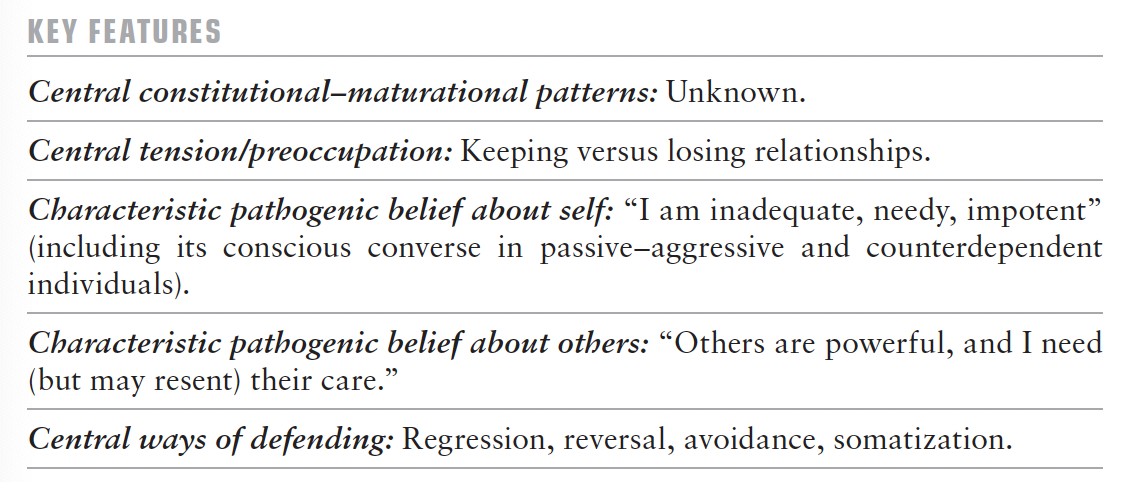
| Dependent Personality:
|
|---|---|
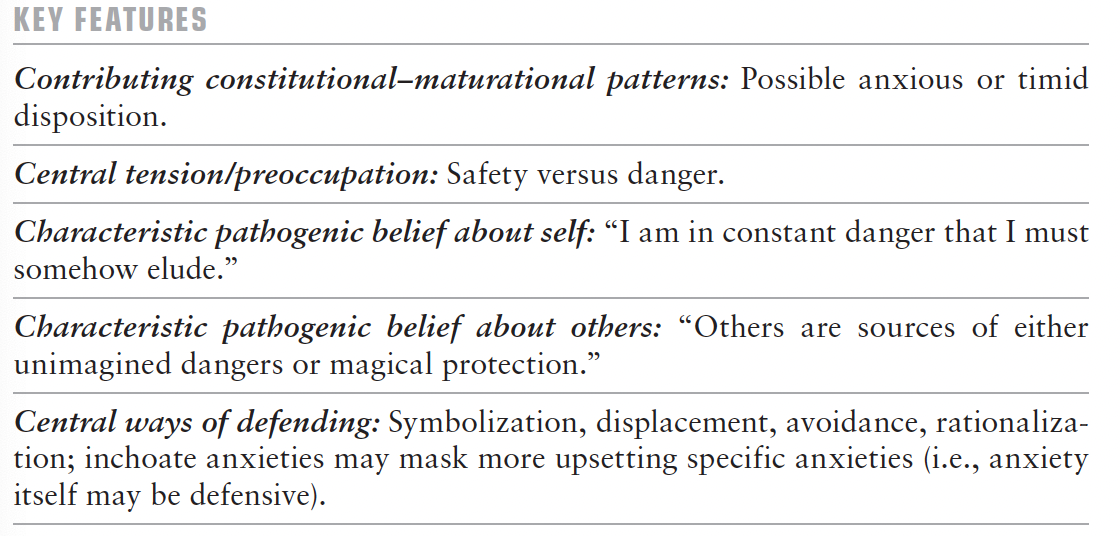
Anxious-Avoidant and Phobic Personalities:
| Obsessive-Compulsive Personalities:
|
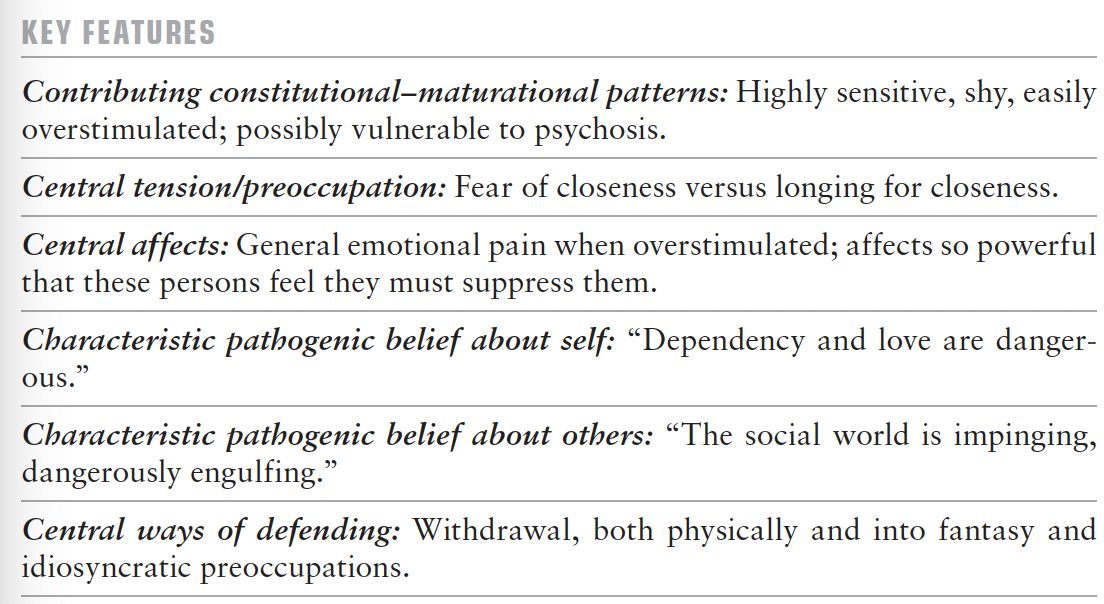
Schizoid Personalities:
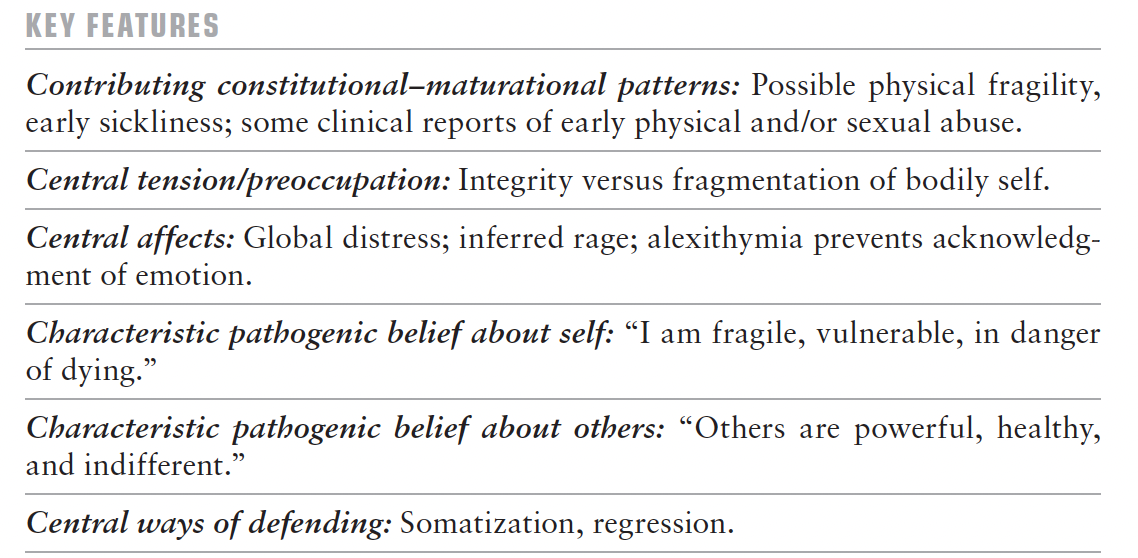
| Somatizing Personality:
|
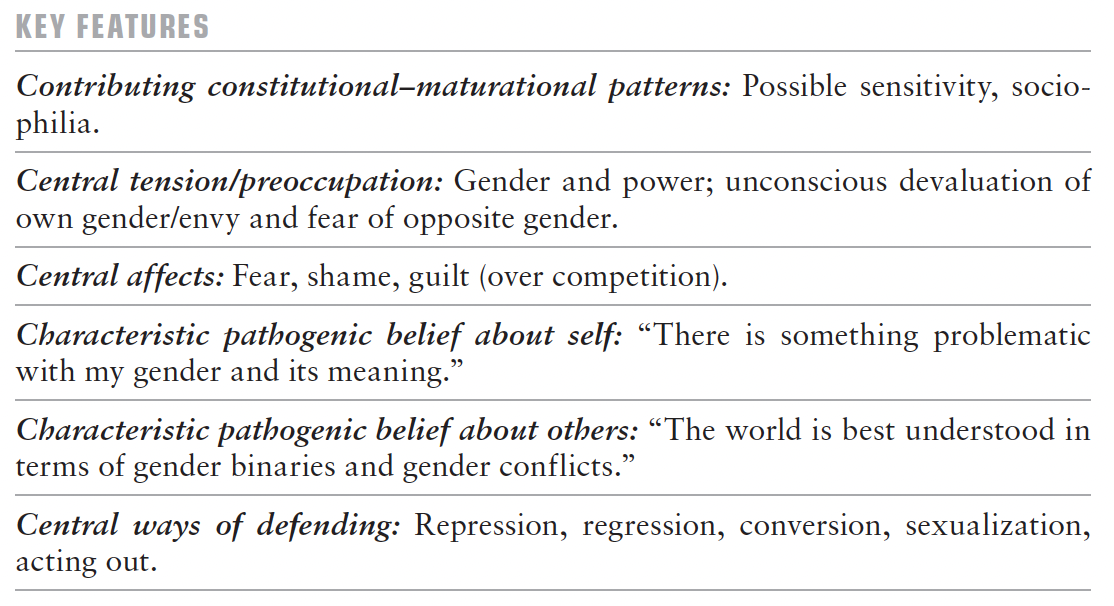
Hysteric-Histrionic Personalities:
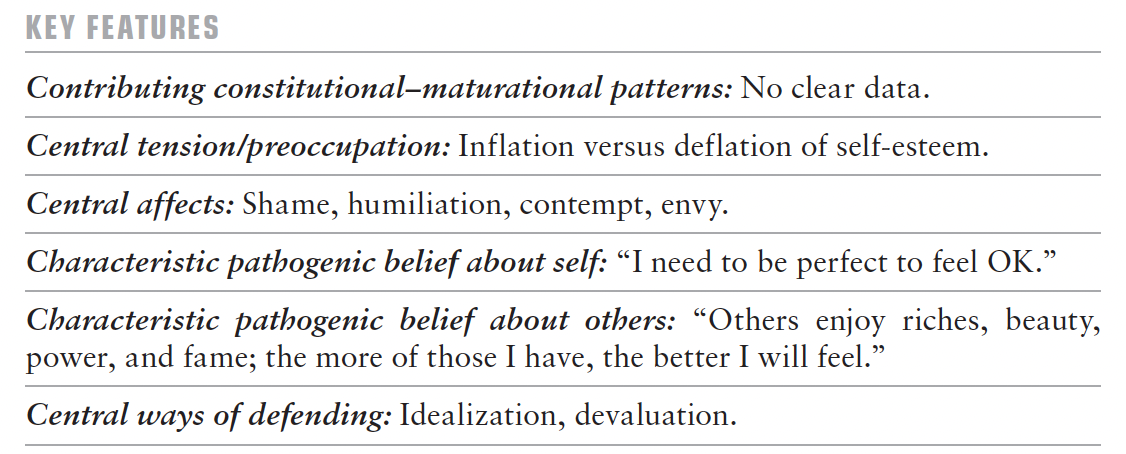
| Narcissistic Personalities:
|
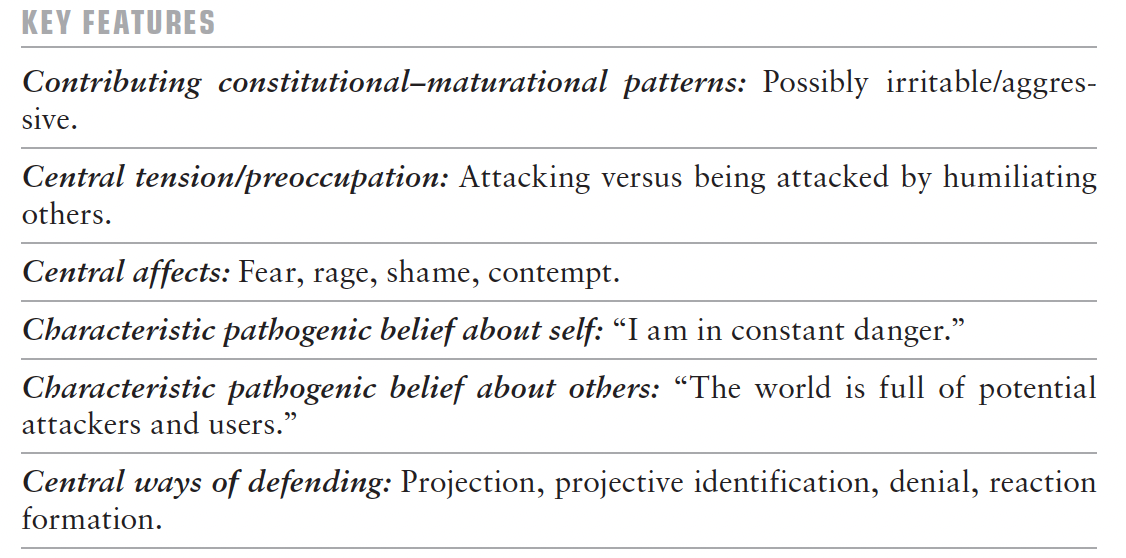
Paranoid Personalities:
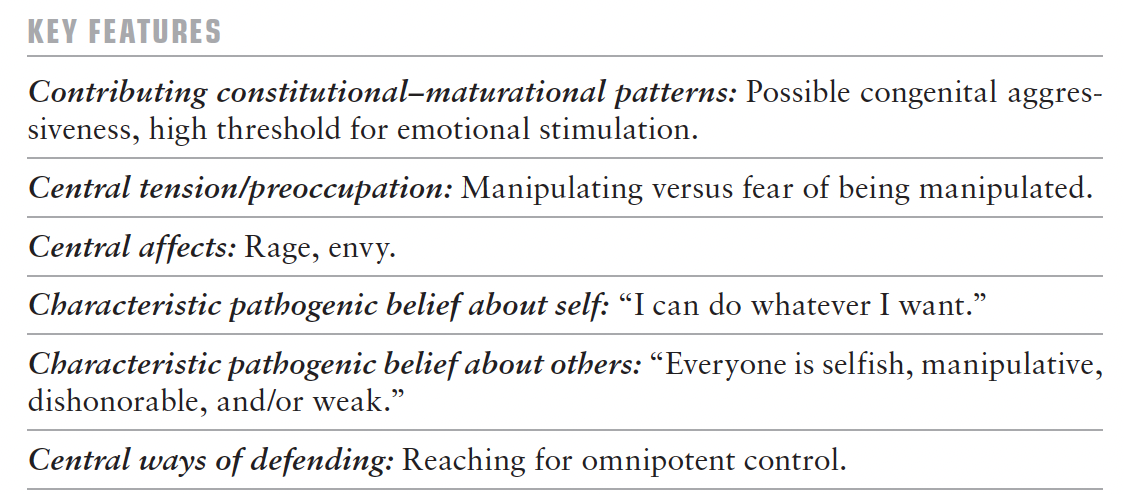
| Psychopathic Personalities:
|
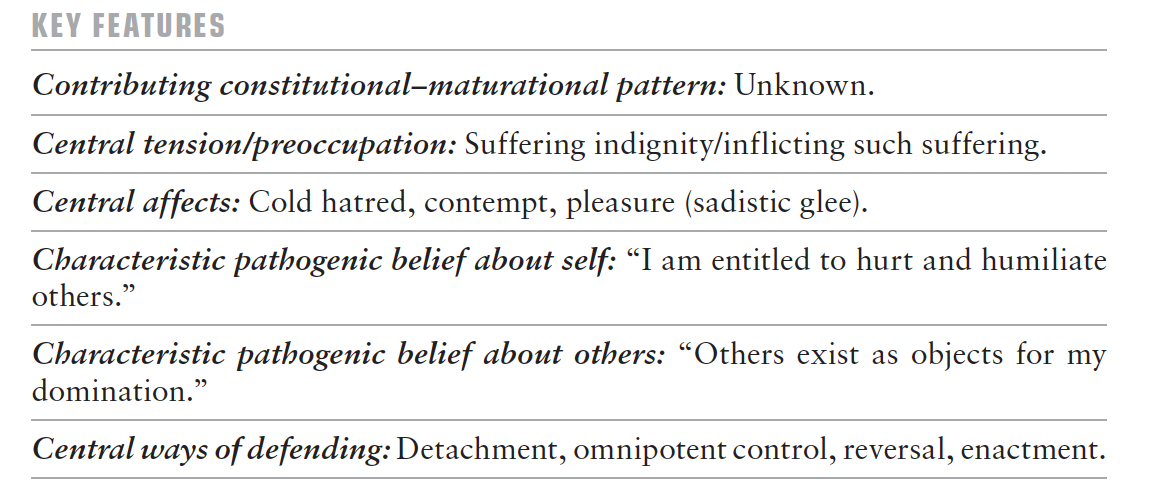
Sadistic Personalities:
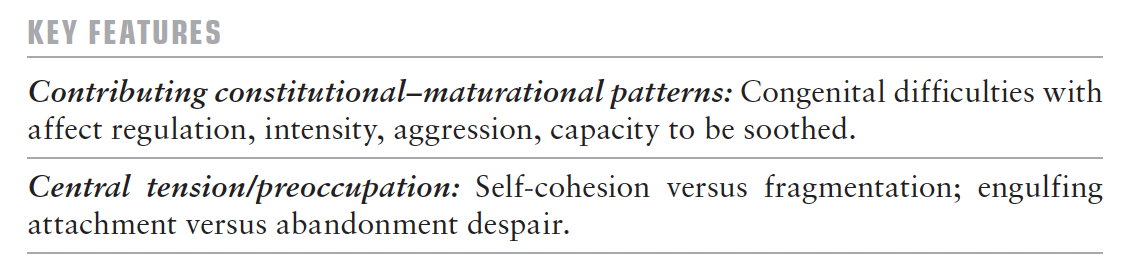
| Borderline Personalities
|