W4 L11: Liver & gall bladder physiology
Where is the liver in the body?
- Largest solid organ
- Located underneath diaphragm & v close proximity to pancreas, small intestine & gallbladder
- Underneath liver is gallbladder
- Gallbladder stores bile
Structure of the gall bladder
- Thin-walled muscular sac on ventral surface of liver & diverticulum from bile duct
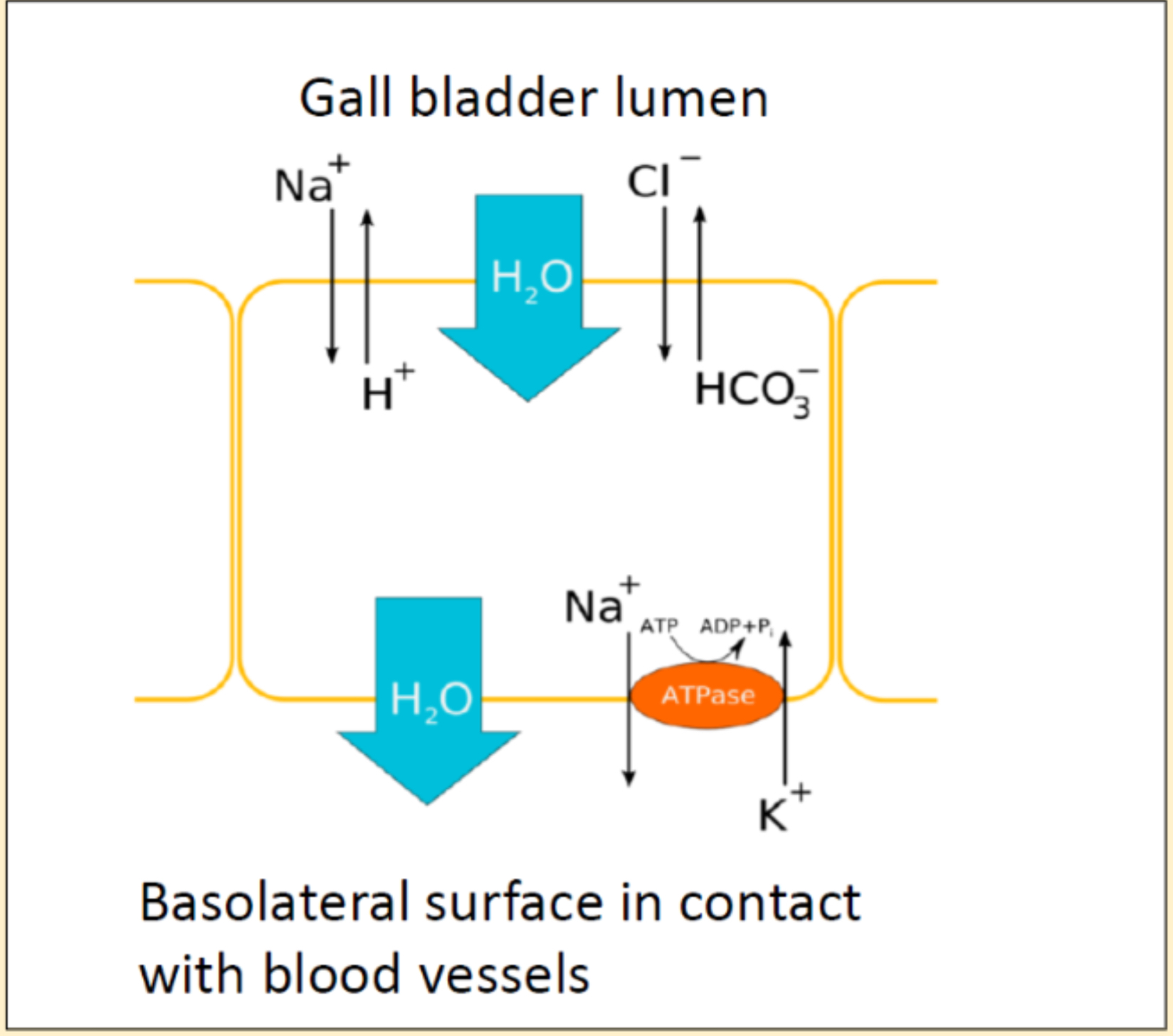
- Stores & concentrates bile
- Contracts when there’s food in duodenum to release bile into GI tract
Function of Liver and Gallbladder
Liver function:
- Red blood cell (erythrocyte) turnover
- Digestion
- Storage
- Detoxification
- Hormone production
Role of liver in erythrocyte maintenance
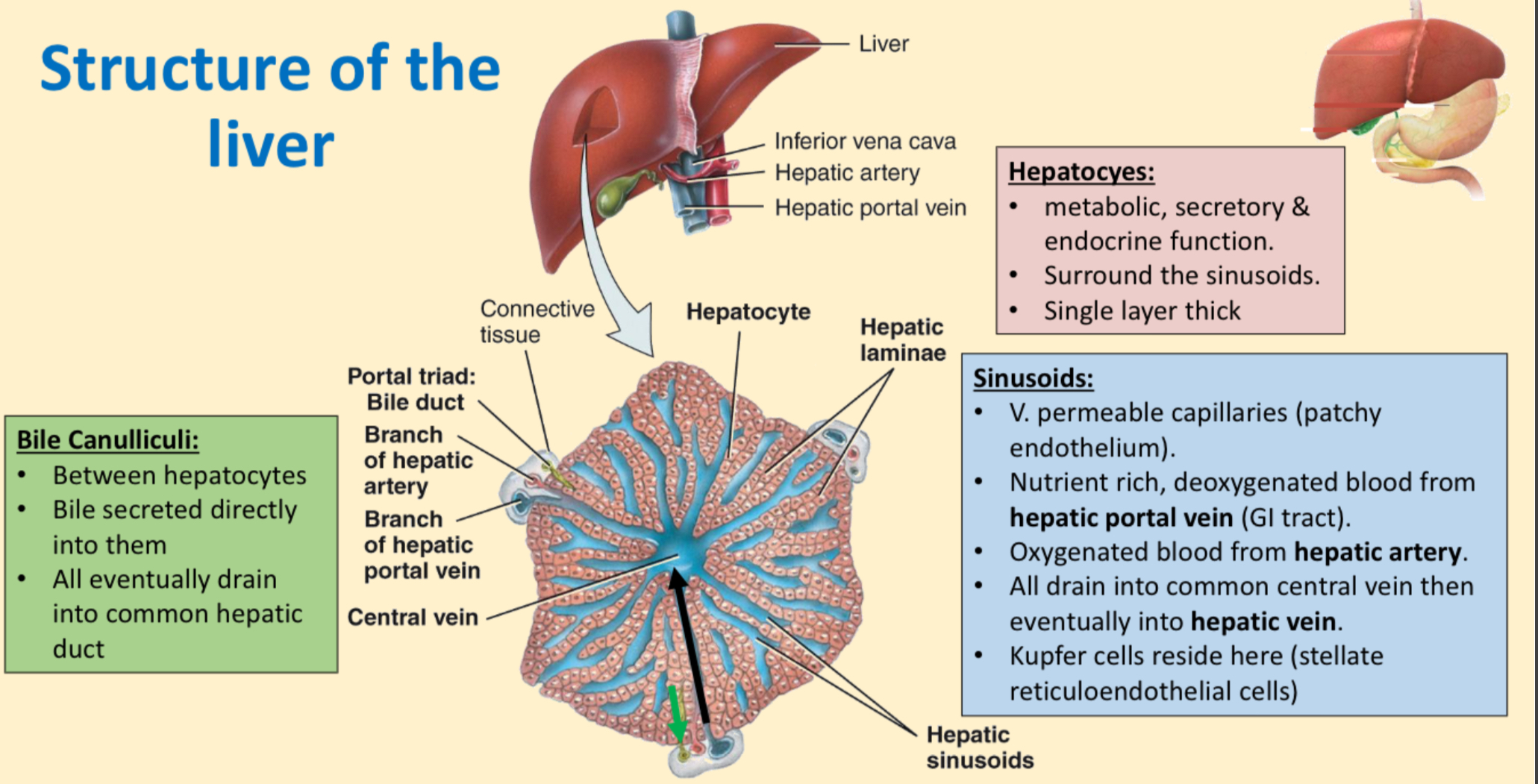
- Phagocytosis of old red blood cells by Kupfer (stellate reticuloendothelial) cells generating:
- iron
- globin
- bilirubin
- Storage of iron as ferritin & hemosiderin
- After erythropoietin (Epo) release these proteins are transported to the bone marrow by transferrin, iron is released for erythrocyte precursor gen.
Influence on protein metabolism
- Major site for protein synth.
- plasma proteins
- coagulation factors
- Ca & Fe binding factors
- Protein catabolism to generate urea
Influence on glucose metabolism
Maintenance of plasma glucose:
- Breakdown of glycogen to glucose by glycogenolysis
- Glycogenic amino acids broken down to generate glucose via gluconeogenesis (GNG)
- Release glucose directly into the bloodstream
Storage of glycogen:
- Under conditions of high blood glucose (e.g. after a meal) glucose is converted glycogen & triglycerides for storage
Liver storage:
- glycogen
- fat
- steroid vits. (A, B12 & D) & vits. E & K
- minerals iron & copper
Role of liver in lipid metabolism
Synthesis:
- Dietary fat processed to generate very-low-density lipoproteins (VLDL) generated from triglycerides, apolipoprotein & cholestrol
- cholesterol
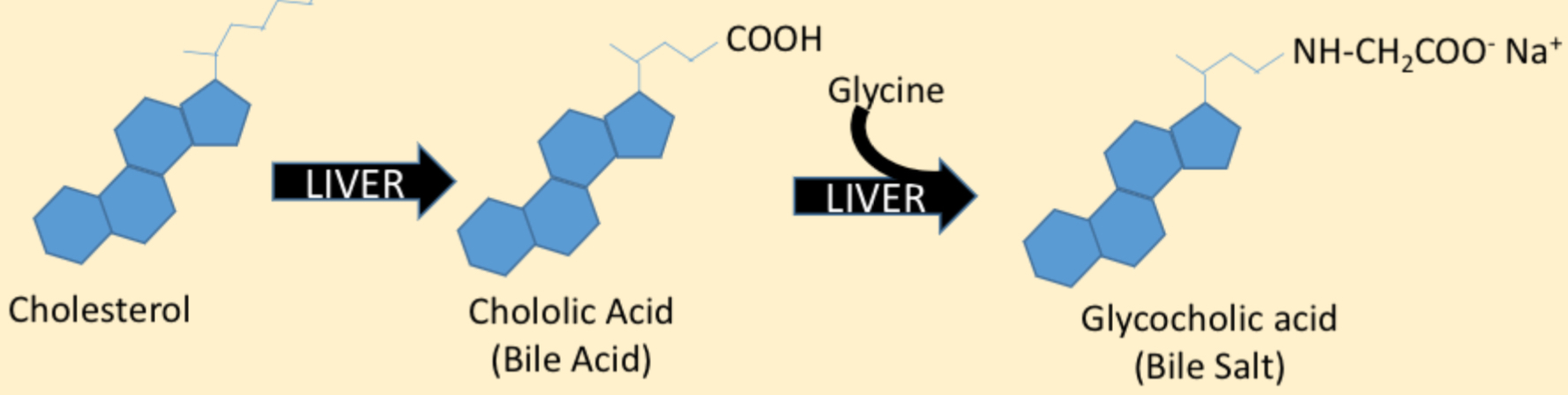
- bile salts
Breakdown:
Fatty acids are broken down to generate ATP
Storage:
Hepatocytes store some triglycerides
The liver produces Bile
- Bile → secretion of liver consisting of water, bile salts, bile pigments, cholesterol, lecithin & several ions
- yellow, brownish or olive-green liquid
- pH of 7.6-8.6
- Daily secrets 250-1000mL of bile
Bile salts
- Na or K salts of bile acids (mostly chenodeoxycholic acid or cholic acid)
- Emulsification or fats into lipid globules → uniformly distributed particles
- Allow suspension of small lipid globules to form in aq sol. ↑ solubility
- aids absorption of lipids following their digestion
Detoxification by liver
- Detoxifies many metabolites & substances e.g. alcohol
- Excrete drugs e.g. antibiotics & sulphonamides into bile
- Chemically Δ or secrete thyroid hormones & steroid hormones e.g. Oestrogen & Aldosterone
Secretion of bile:
- multiple routes of entry of bile acids
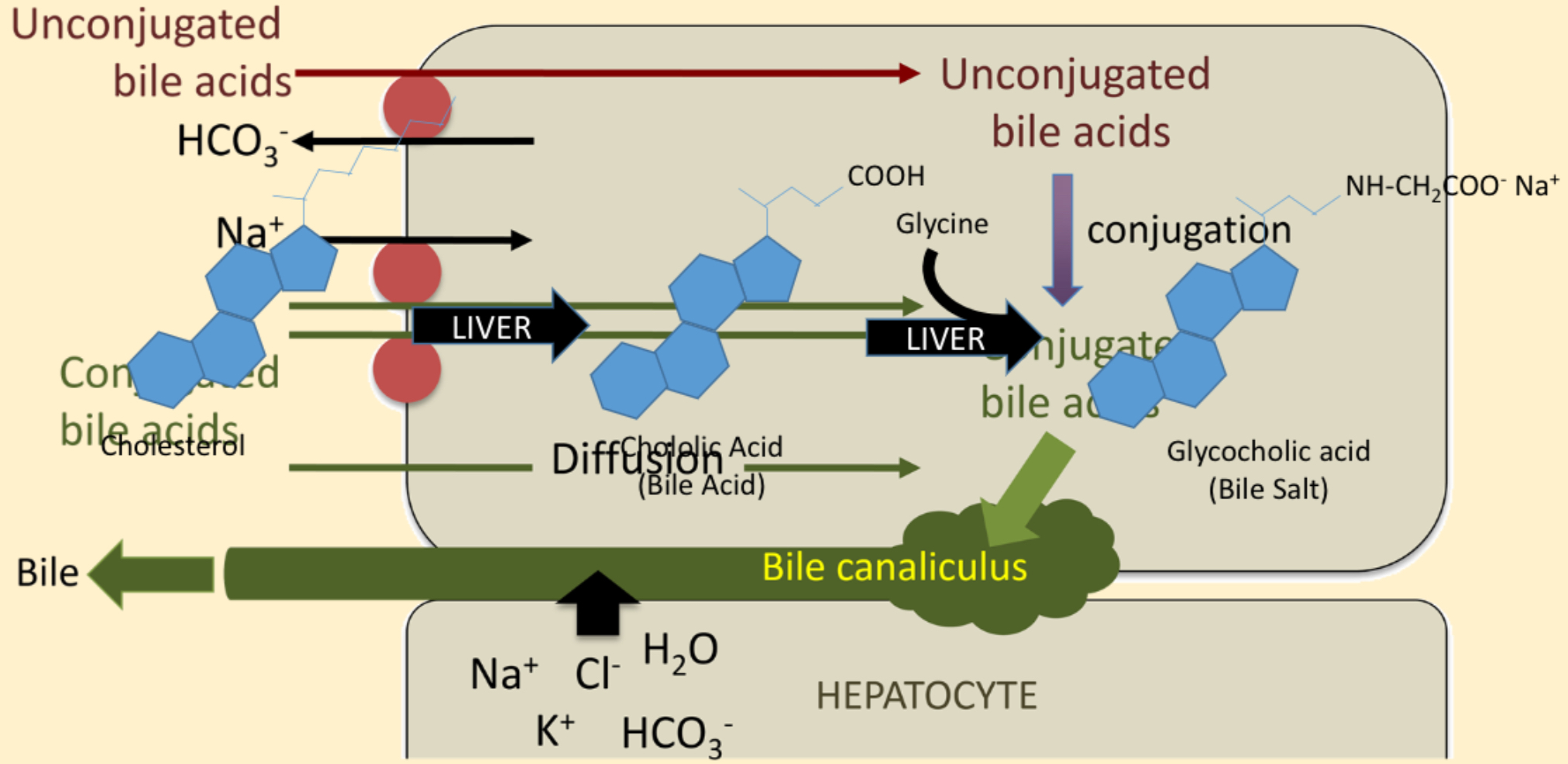
Role of the liver in control of digestion
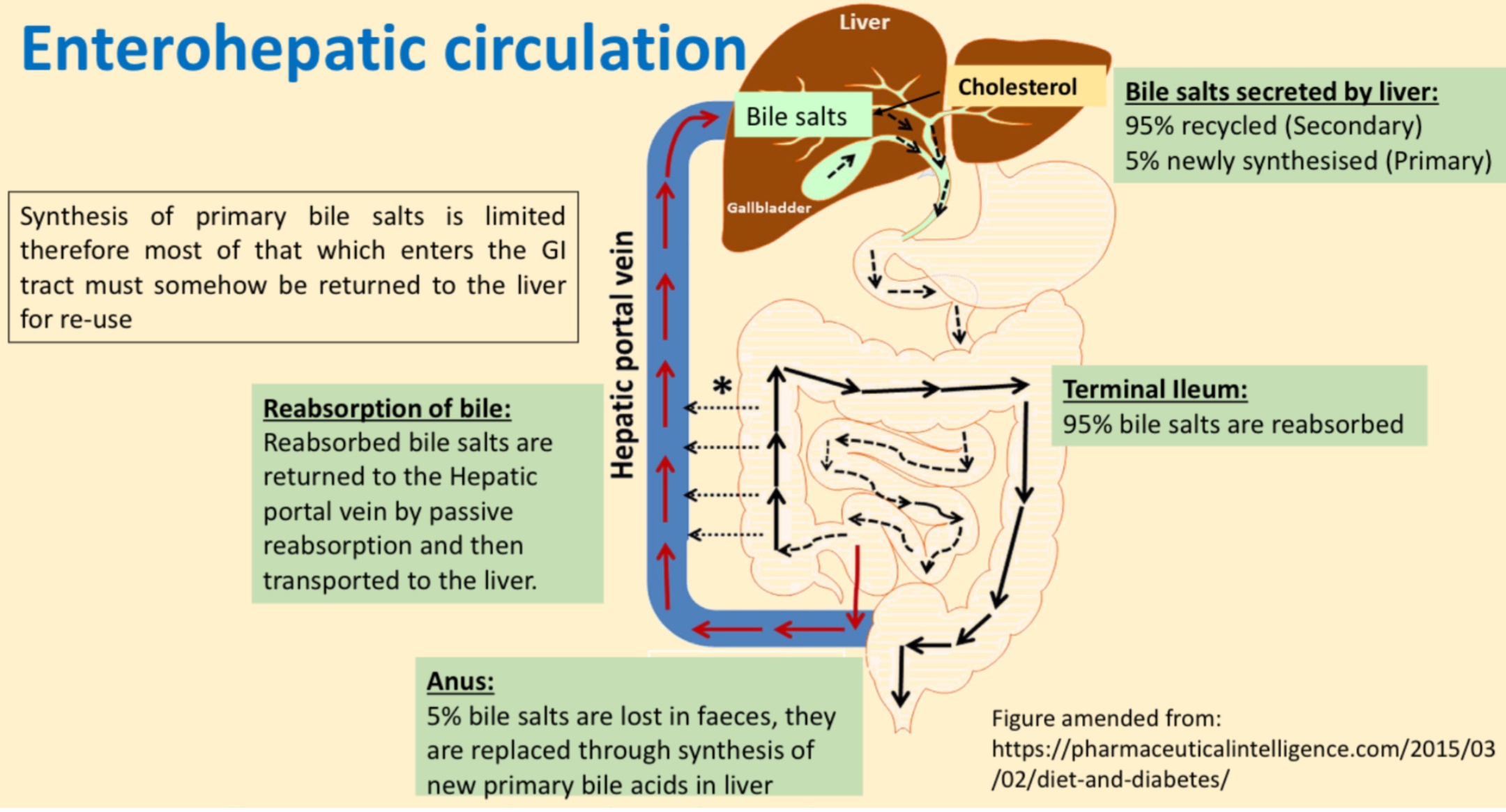
Enterohepatic circulation
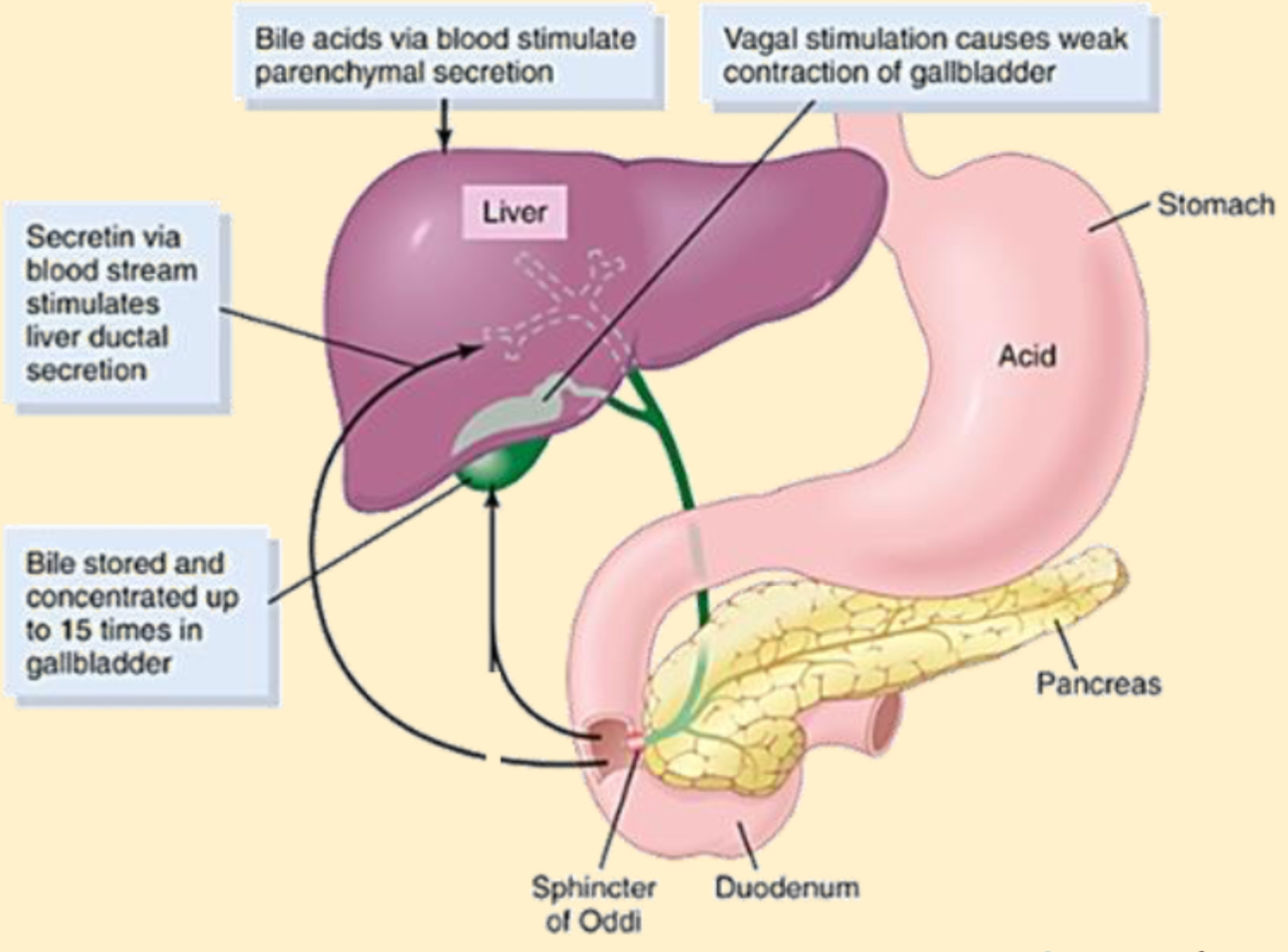
Hormone that regulate digestion
Secretin
- Secreted in response to acid in the duodenum
- Stimulates biliary duct cells to secrete bicarbonate & H2O → expands vol. of bile & ↑ flow out into intestine
Chloecystokinin
- Fat in duodenum stim. chloecystokinin release
- Stim. contractions of gallbladder & common bile duct → delivery of bile into duodenum
Bile secretion
Pattern & control of bile secretion
- During fasting, bile accumulates in gallbladder for conc
- Chyme entry into small intestine & partially digested fats & proteins stim. secretion of enteric hormone which are important for secretion & flow of bile - also initiates pancreatic exocrine secretion
- Secretin released in response to acid in duodenum
- Cholecystokinin released in response to fat in duodenum
- Bile produced by hepatocytes & secreted into bile caniliculi
- Secretin released in response to acid in duodenum
- Secretin stim. bile secretion by bile ductules - can double bile production for up to several hrs after a meal
- Bile drains into hepatic duct to be stored in gallbladder - where it’s concentrated
- Cholecystokinin released in response to fat in duodenum
- Emptying starts by rhythmic contractions of gall bladder wall, stim. most strongly by cholecystokinin - but also by vagal & enertic nerve stim.
- Effective emptying required simultaneous relaxation of Sphincter of Oddi
Liver as a gland
- Synthesises angiotensinogen
- Synthesis & release of thrombopoietin (TPO)
- Synthesis & activation of vit D
Relationship b/w structure & function
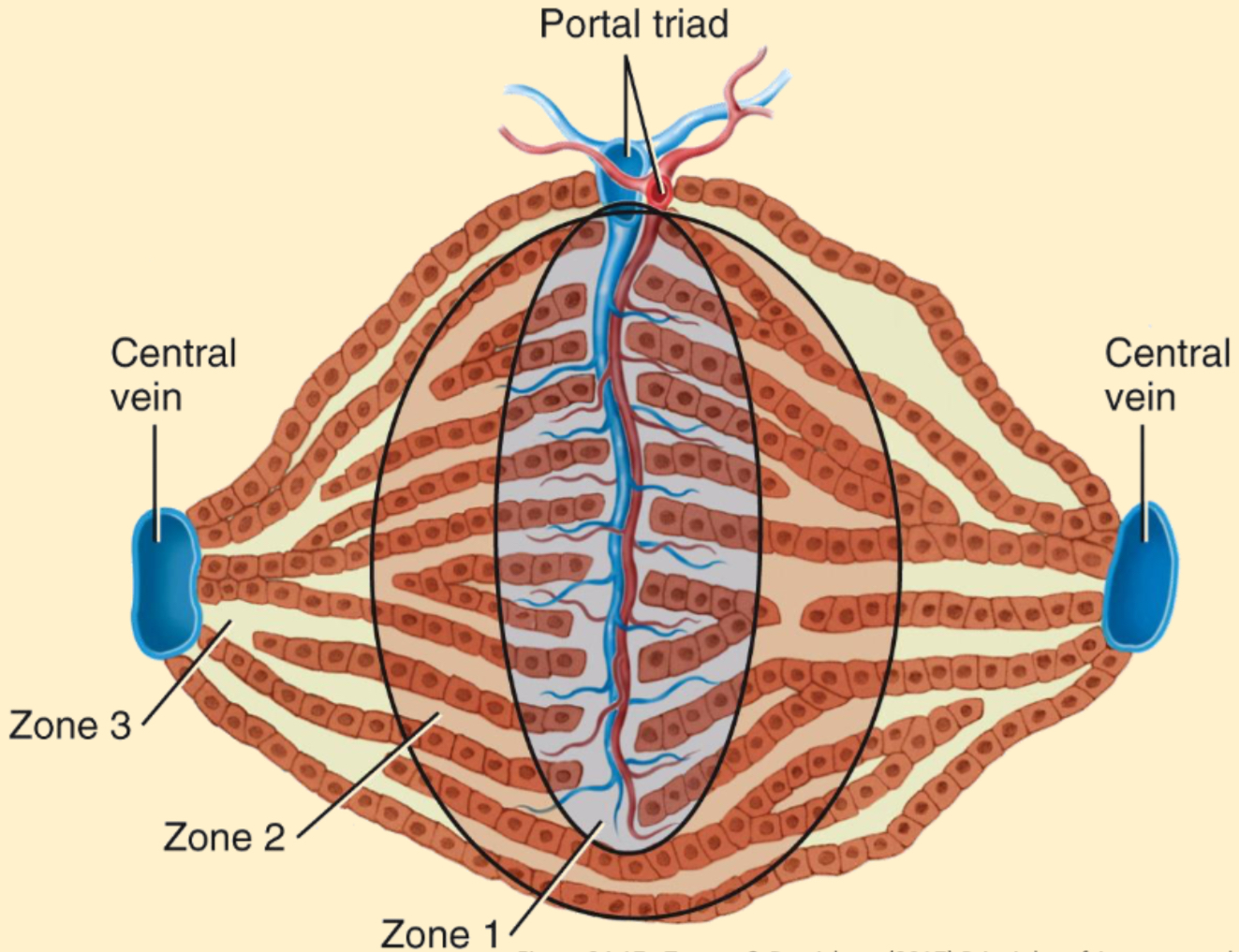
Relevance of blood pressure to liver
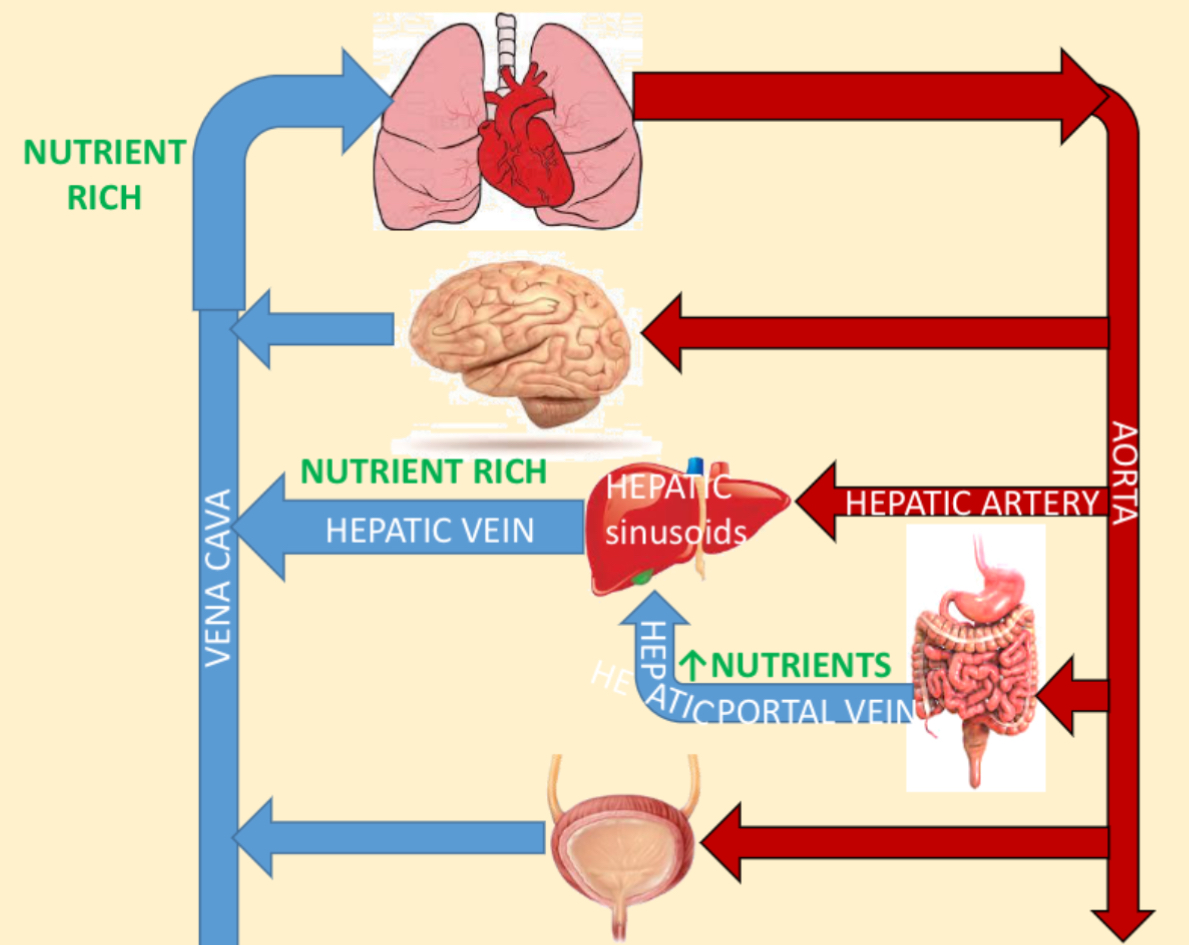
- ↑ pressure in hepatic portal vein (portal hypertension)
- leads to ↑ sinusoid pressure
- Result → fluid moves into interstitial fluid - then leaks into peritoneal space
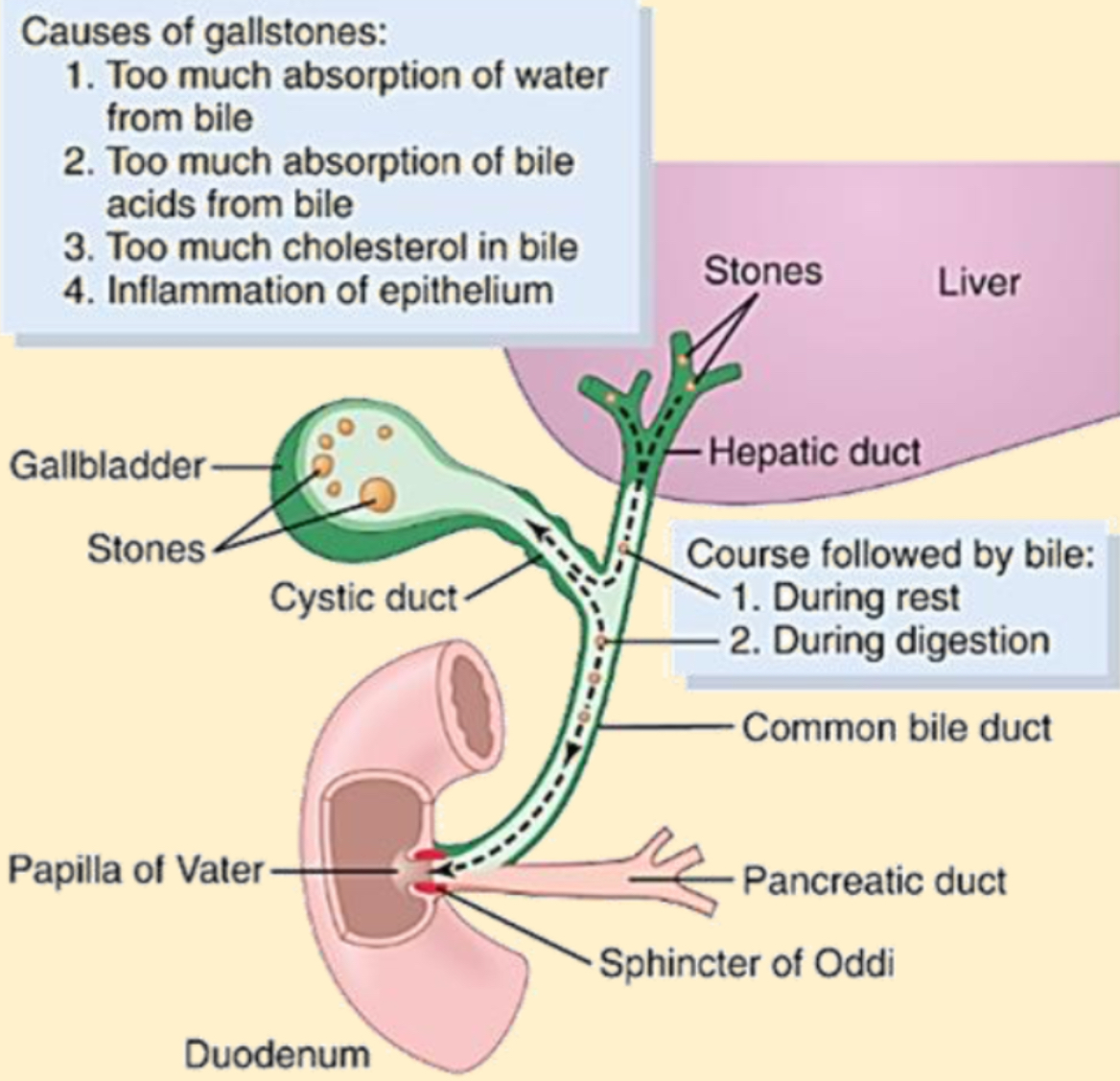
Gall stones
Jaundice
- Yellowish colouration of sclera of eye, skin & mucous membranes caused by accumulation of bilirubin
- Other symptoms: light stools & dark urine
- 4 types include:
- pre-haptic jaundice → excess production bilirubin (high [bilirubin] in blood) → Sign of haemolytic disease
- (Intra)-hepatic jaundice → prevents proper function of hepatocytes - congenital liver disease, cirrhosis or hepatitis can be a cause
- Extra-hepatic jaundice → hepatocyte function ↓ due to accumulation of bile → blockage of bile drainage (gallstones or cancer)
- Neonatal (physiological) jaundice → observed commonly in newborns due to poor function in 1st week, disappears quickly → treated by exposing to blue light