B17. Variation and natrual selection
Variation: differences between individuals of the same species
Phenotypic variation: the difference in features - most caused by genetic variation
continuous variation: many small degrees of difference for a particular characteristic, are arranged in order and can usually be measured on a scale. E.g: height, mass,…
graphs are a smooth curve bell
Discontinuous variation: limited number of phenotypes with no intermediates
graphs are a ‘step-like’ shape
e.g: ABO blood groups
Genetic variation:
blood group
eye color
gender
Environmental variation:
characteristics that can be affected by enviromental factors
an accident → scarring, eating too much,
Mutation: genetic changes → new alleles are formed
have small effects on the organism
new allele could give the individual a survival advantage
could lead to harmful changes
happens spontaneously and continuously
increased mutation could be cancerous
Adaptive features: inherited features that help an organism to survive and reproduce in its environment
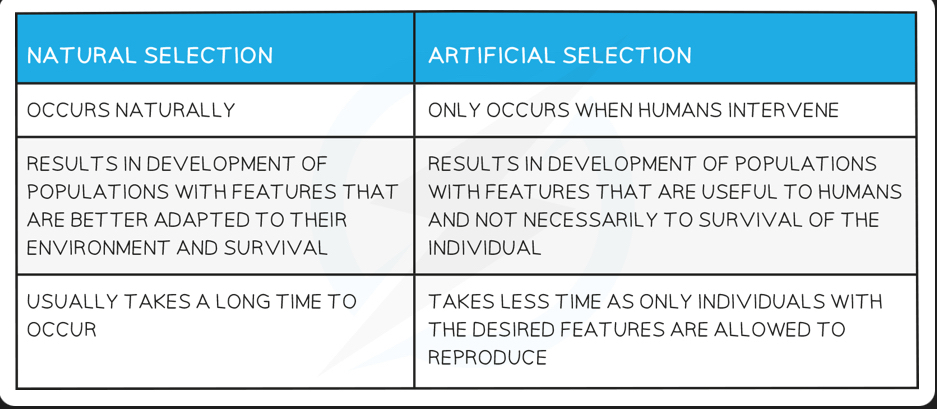
Natural selection: individuals that have the best adaptive features are most likely to survive and reproduce to pass on those adaptive features
produce more offspring than the environment is able to support → competition for food and other resources which results in a ‘struggle for survival’
Individuals with characteristics most suited to the environment have a higher chance of survival and more chances to reproduce→ alleles resulting in these characteristics are passed to their offspring at a higher rate than those with characteristics less suited to survival
This means that in the next generation, there will be a greater number of individuals with the better adapted variations in characteristics
Adaptation by natural selection: If the environment changes, or a chance mutation produces a new allele, selection might now favour individuals with different characteristics or with the new allele
Selective breeding: select individuals with desirable characteristics and breed them together
doesn’t stop until offspring show the desired characteristics are selected and bred
repeated for many successive generations
Selective breeding in crop plants
Plants are selectively bred by humans for the development of many characteristics, including:
disease resistance in food crops
increased crop yield
hardiness to weather conditions (e.g. drought tolerance)
better tasting fruits
large or unusual flowers