Meiosis and Mendelian Inheritance
Heredity - transmission of trait from one generation to the next
Locus - specific location of a gene on a chromosome
max of only 2 alleles
Alleles - variation of DNA sequence at a locus
only inherit 2 and pass on 1
Sexual reporduction increases gentic variation
only way for variation to happen in asexual reporduction is throuhg environemtn
Meiosis -
a diploid cell is created by fusion of egg and sperm (a zygote)
meiosis splits that diploid cell to a single haploid set of chromosomes
each gamete provides half of its genetic material to offspring
males determine sex of offspring
from a single cell in meiosis, you get 4 in the end
Comparing mitosis and meiosis:
second half of meiosis is just mitosis in the second half (kind of)
mitosis splits into 2 identical cells
Meiosis I:
1st step of meiosis: Prophase I:
diploid set happens after inter[hase because they gt duplicated
chromosomes become visible
centrosomes migrate to the poles
homologous chromosomes that came from each parent are going to line up side by side (does not happen in mitosis)
tetrads - term for the 4 chromatids at this point
bivalent - structure formed during prophase I of meiosis, when two homologous chromosomes pair up and align closely
the chromosomes inherited from mom and dad then cross over and exchange dna
recombination/crossing over - process in which genetic material is exchanged between different chromosomes or different regions of the same chromosome
contributes to genetic variation
results in a recombinant chromosome
chiasma/chiasmata (plural) - positions where the two chromosomes exchanged DNA
synaptonemal complex - protein-based structure that forms between homologous chromosomes; ensures precise alignment of homologous chromosomes
Prometaphase:
spindles form and microtubules bind to kinetochores
Metaphase I:
chromosomes line up in the middle, but each spindle can randomly be pulled to either size
Anaphase:
separates homologs from each other into separate daughter cells
Telophase I:
nuclear envelope forms
results in haploid daughter cells with only one chromosome each
Cytokinesis - cytoplasm splits to distribute and equal amount of organelles and resources to each new daughter cell so it can survive
Meiosis II:
No dna synthesis occurs in Meiosis II
follows the same process, but splits using the recombinant types of chromosomes from Emiosis I
Mechanisms of genetic variation: crossing over, independent assortment, and random fertilization (idea that any sperm can fuse with any egg)
Modern Genetics:
True-breeding - when plants or something cn ferrtlize themselves and will create only offspring that are the same thing they are
hybridization - offpsring of gentically different parents
Pedigree analyisis - diagram that studies inheritance of certain traits
monohybrid corss- studying inheritance of a single trait
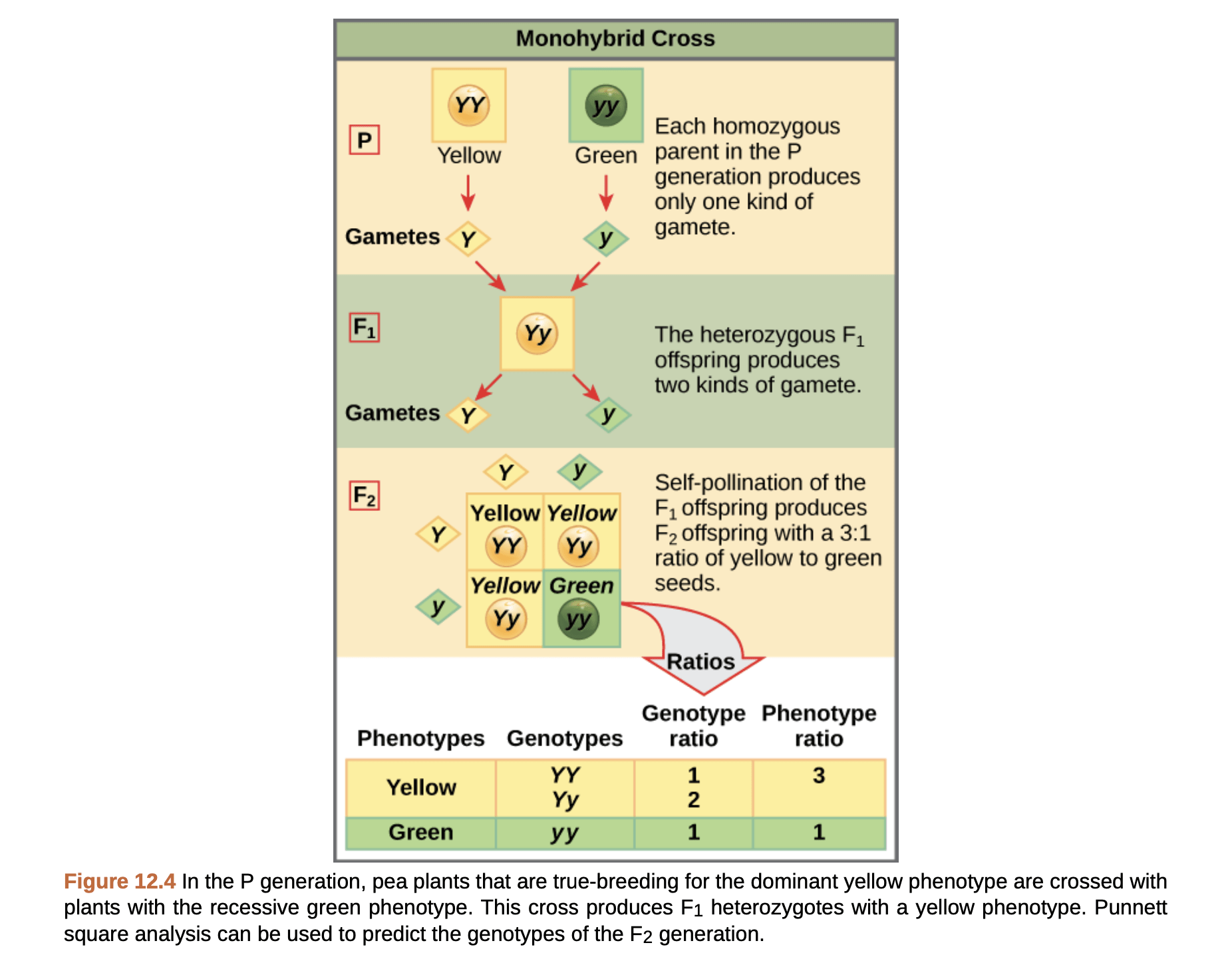
In f1, dominant trait was present in all of them, but in F2 it was 3:1 dominant and recessive
therefore, there are 2 alleles for each trait (in this case)
Law of Segregation - alleles for a particular gene are separated during the formation of gametes in sexual reproduction; you inhereit 2 alleles for a trait from each parent, but you end up with one of each