Chapter 7 - Nicotine
Nicotine & Tobacco
60 species of Nicotiana
only 2 can be used for smoking/human consumption
Nicotiana rustica
Nicotiana tabacum
provides all tobacco in US
tobacco has many ingredients
nicotine is the main drug in tobacco
nicotine is extremely toxic
approximately as toxic as cyanide
lighting it (smoking) makes it less quantity so not toxic that way
Tobacco Use History
indigenous to South America
flourished in Virginia
popular in Europe
attempts to suppress tobacco smoking failed
church - considered a vice
tobacco was believed to have medicinal value
Prevalence of Tobacco
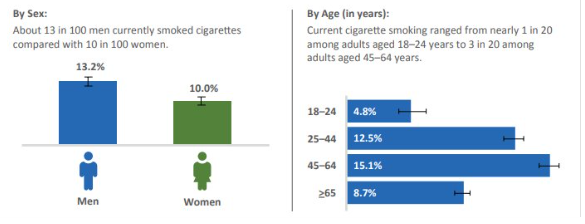
more males smoked than females
as education level increases, rate of smoking decreases
unemployed people smoke more
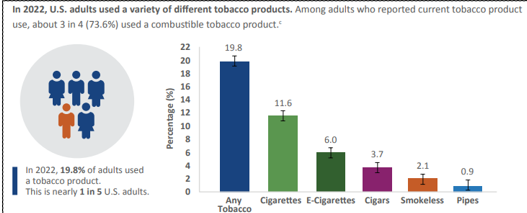
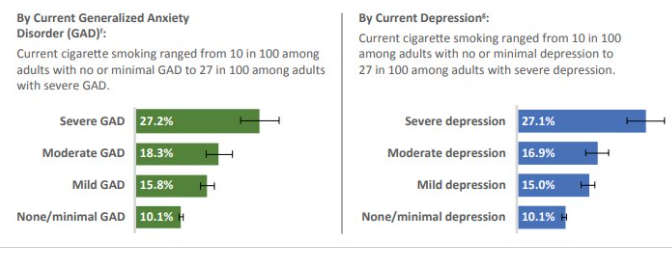
Prevalence of Cigarettes
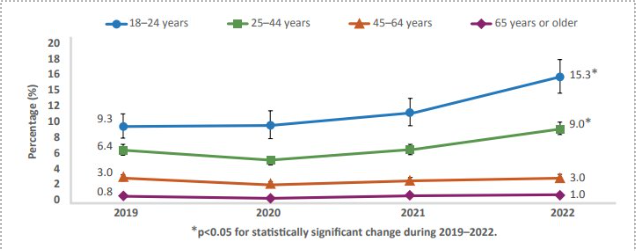
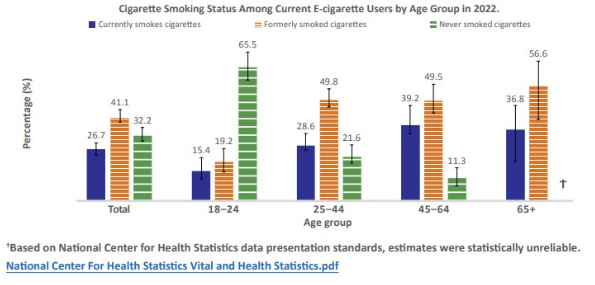
Prevalence of E-Cigarettes
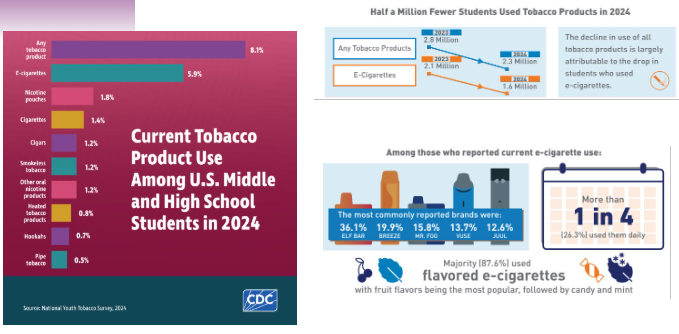
Prevalence of Tobacco: Middle School/High School
Starting Smoking
the earlier a person starts to smoke, the harder it is to quit later
adolescent dependence on nicotine persists into adulthood
advertising targeted to groups is associated with smoking initiation in those groups
the adolescent brain is more sensitive to reinforcing effects of nicotine
PET scan studies show greater effects of nicotine in people with hostile or aggressive personalities
novelty-seeking adolescents are more receptive to tobacco ads
Pharmacology: Sites of Action
nicotine mimics acetylcholine (ACH)
ACH acts on autonomic nervous system & the central nervous system
nicotine has biphasic effects - at low amounts: increase acetylcholine system, at high amounts: decrease
interacts with dopamine system
increase extracellular dopamine in nucleus accumbens
interacts with GABA, NE & 5-HT systems
leads to increase of norepinephrine, serotonin, & endorphins
may self-medicate for attention
Pharmacokinetics
absorption
nicotine is readily absorbed across all body membranes
site of contact and length of time tobacco contacts membranes affect absorption
distribution: quick
metabolism
nicotine is excreted in all body fluids, but mostly in urine
as nicotine levels drop, smokers experience withdrawal
people tend to re-dose throughout the day
Developing Dependence
not clear why tobacco use is reinforcing
for most, smoking isn’t pleasant at first
psychosocial rewards
most can’t describe an attractive effect except taste of tobacco
past: “nicotine is the reinforcing factor behind smoking”
low doses (0.01 mg/kg; IV) → mood enhancement & drug liking
high doses (0.04 mg/kg; IV) → aversive
nicotine increase dopamine concentrations in nucleus accumbens
if nicotine is the only factor, nicotine gum should be 100% effective
it isn’t
now, many view smoking’s ability to decrease negative feelings as important
e.g., sadness, boredom, anxiety, environment
nicotine also relives nicotine withdrawal
Tolerance & Dependence
Tolerance
develops quickly
within the first few cigarettes ever smoked
within the first few cigarettes of the day
dependence
physical dependence
withdrawal symptoms
craving, irritability, anxiety
difficulty concentrating, restlessness
increase appetite and insomnia
risk increases with regular smoking
psychological dependence
Effects
users typically report smoking calms them & decrease tension
cognitive effects often comparable to caffeine
EEG patterns consistent with increased psychological arousal
facilitates
finger-tapping rate & choice reaction time
focused & sustained attention
recognition memory & short-term memory
vigilance
motor tracking
decreased deprivation induced deficits
impairs
complex task performance
solving problems
understanding articles
to date, no true increase in
sensory abilities
selective attention
problem solving or reasoning
acute effects
mimic ACH
enhances alertness, learning, memoryincreases heart rate, blood pressure, heart contraction
relaxes skeletal muscles
decreases appetite for sweet food
chronic use effects
life-threatening diseases
lung & oral cancers
emphysema
heart disease and stroke
pregnancy complications
warnings on boxes: changed in rotation because if same warning every time, people will ignore
Tobacco Culprits
cigarette smoking damages health because of the constituents of tobacco smoke
3 main culprits
tar
nicotine
carbon monoxide
are cigarettes low in tar and nicotine safer?
no
passive smoke?
secondhand smoke: Group A carcinogen
thirdhand smoke: toxins deposited onto hair, clothing - especially bad for young children whose immune systems are not fully developed
Is Vaping Safer?
nope
still addictive, has nicotine still
has carcinogen
fun flavors to entice
Why is Quitting Hard?
motivation to quit
influences on relapse
most people who quit do so without treatment
but, they make many attempts
treatment goals
control nicotine withdrawal
break habits of movements used in smoking
learn coping skills
increased nicotine receptors for a little after quitting
Treatments
behavioral programs
individual or group therapy
effective compared to placebo
high relapse rates
historically involved ongoing, direct, often weekly contact with clinical staff in group or individual format for 2-3 months
teach clients to identify high risk situations
apply techniques to weaken habit components, teach competing coping responses
teach self-monitoring
successful, but not practical or afforable for many
recent expansion in format, intensity, duration of programs
overall effective way to stop smoking
incorporated in APA’s guidelines for treatment of cigarette smoking
nicotine replacement
gum, patch, nasal spray, inhaler, lozenge
all double chances of quitting
more effective when combined with behavioral programs
generally safe long-term
relapse has been attributed to nicotine cravings
each of the NRTs doubles the chances of quitting compared to placebo
research finds no differences in effectiveness of different NRTs
individuals may initially prefer a certain NRT over others, but typically adapt to the one they are using
combining NRTs with behavioral programs enhances quit rates of either treatment alone
little evidence of long term negative consequences of using NRTs as intended
pharmacological
bupropion (Zyban)
antidepressant
not nicotine-based
superior to placebo
other antidepressants have not been effective for smoking cessation
varenicline (Chantix)
competes with nicotine to bind to receptors
nicotine receptor partial agonist
reduces cravings & effectiveness of nicotine
informational campaigns and “macro-environmental” methods have lowered smoking prevalence and number of people exposed to secondhand and thirdhand smoke
prevention programs aimed at youth who have not started smoking yet are best
tobacco use is hard to stop once started
tobacco industry advertising is a major counterforce against prevention programs
continue expansion of smoking treatment formats
new worksite treatments have proven effective
brief behavioral or NRT for adults, teens in primary medical care settings
“precision medicine” - genetic marker matching
“harm reduction”