Circadian Rhythm
Circa = approximately and diem = day. Circadian rhythms operate over 24 hours eg the sleep-wake cycle, body temperature and plasma cortisol levels
Actograms measure circadian activity in mice by counting the number of rotations of a wheel carried out by a mouse, used to measure activity. Mice are crepuscular meaning they’re nocturnal but most active at dawn and dusk
Siffre’s cave experiment in Texas, 1972 investigated the effect of no sunlight and constant temperature on circadian rhythm. He emerged after 179 days, thinking he’d only been in there for 151 days showing that over time his circadian rhythm had lengthened to be closer to 25 hours than 24.
Circadian rhythm has different effects on our physiology throughout the day. Between 6am and midday for example, cortisol release occurs followed by the rapidest increase in blood pressure and high alertness. Between 18 and 24 hours body temperature reaches its peak, followed by highest blood pressure and melatonin secretion.
The main pacemaker for the circadian rhythm is the suprachiasmatic nucleus (SCN), a small structure in the brain which receives information directly from the eye. Rhythm can be reset by the amount of light entering the eye. Light inhibits melatonin release from the pineal gland. If someone is blind, they can reset their circadian rhythm with light as long as they have intact eyes.
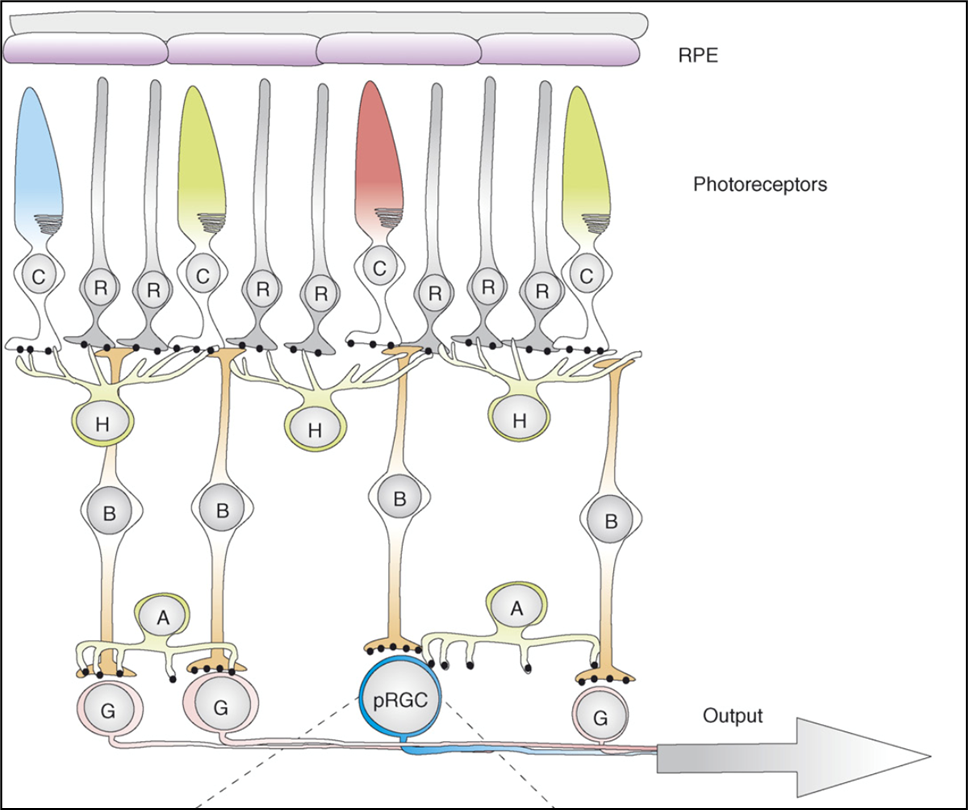
Photosensitive retinal ganglion cells (pRGCs) connect to the optic nerve. They contain receptor melanopsin (OPN4) which detects blue light (450 to 480nm). This is why screens are able to affect our sleep.
Melatonin, cortisol and body temperature fluctuate over time. In humans, melatonin is important for regulating circadian rhythm, sleep control and signalling to other parts of the body. Melatonin also regulates seasonal (circannual) cycles in many mammals which are controlled by the length of the daily photoperiod eg reproduction, coat colour, fat accumulation and hibernation. Melatonin is an antioxidant and acts by donating protons to free radicals. The melatonin radical is less reactive than other radicals and therefore less toxic. As an indirect action melatonin therefore synthesises antioxidants eg glutathiones, SOD and glucose-6-phosphatase dehydrogenase.
Changes in endocrine factors as a result of the circadian rhythm affects various physiological functione eg overnight production of vasopressin, leptin, TSH and grehlin.
Two-component oscillators: circadian rhythm can affect animal behaviours through changes in gene expression in the SCN over the circadian day. Has effects on evolution of predator-prey populations eg rabbit litter size has a knock-on effect on fox/other hunter population.
The circadian rhythm was first observed in 1945. The first genetic evidence came from the study of D. Melanogaster, whose larvae usually emerge at night. However mutagenesis was performed and mutants which didn’t emerge from their pupa at the right time were observed - eclosion (emerging from the pupa as an adult) mutants. They then isolated the gene involved which is the PERIOD (PER) gene. Per acculumates overnight, inhibiting its own gene’s transcription.
Basic helix-loop-helix transcription factors often operate as heterodimers to bind E-box motifs in target gene promoters eg the Clock-BMAL1 or PER-CRY heterodimer.
PER-CRY:
24h cycle of increased transcriptional activity via Clock, Bmal1 and Npas2 → accumulation of transcriptional repressors Per 1/2, and Cry 1/2 → reduced transcriptional activity → degradation of transcriptional repressors → increased transcriptional activity
5 to 10% of the transcriptome as a result of increased transcription is output genes → functional rhythms (not part of the cycle)
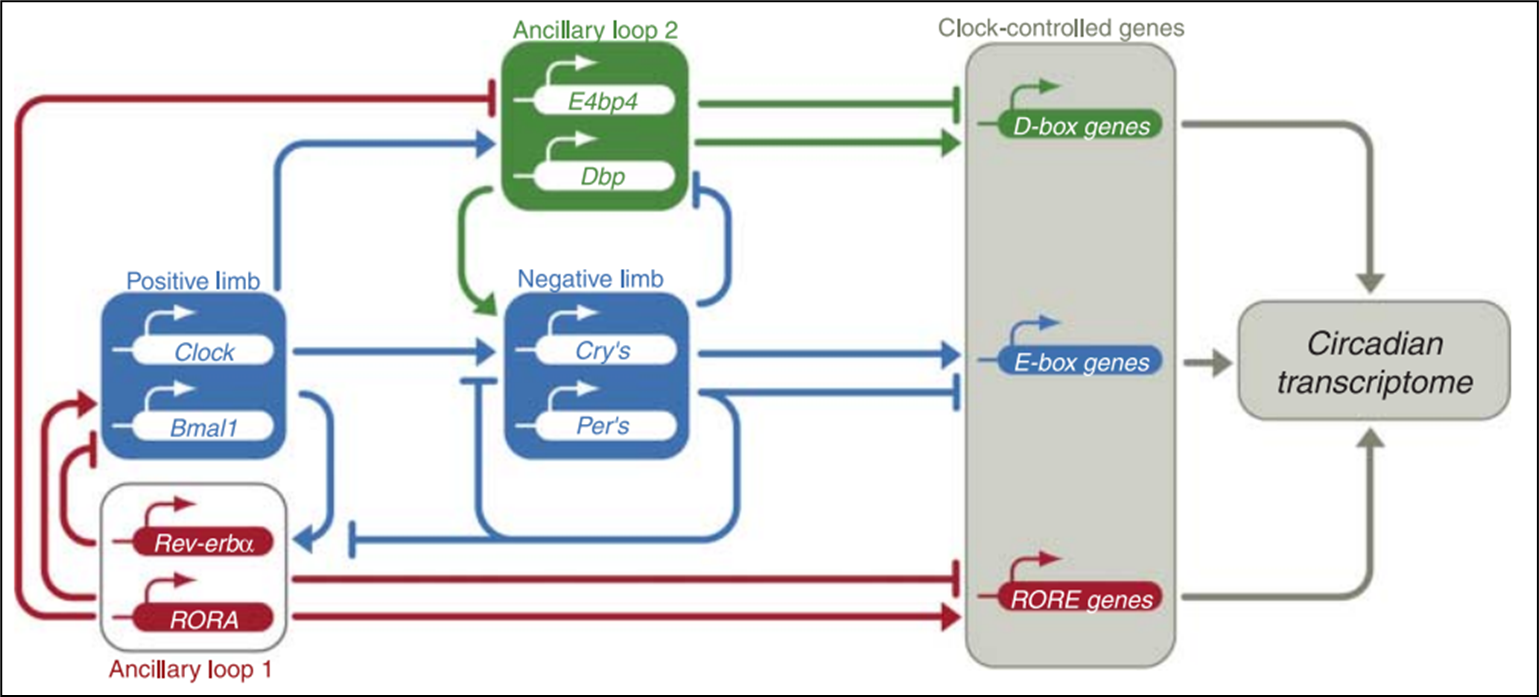
Within these cycles is a core oscillator (Cry, Per, Clock, Bmal) and two oscillating ancillary loops, The extra loops make the system more accurate and robust. The system has evolved to cycle in 24 hours and feeds into regulating many output genes which control physiology.
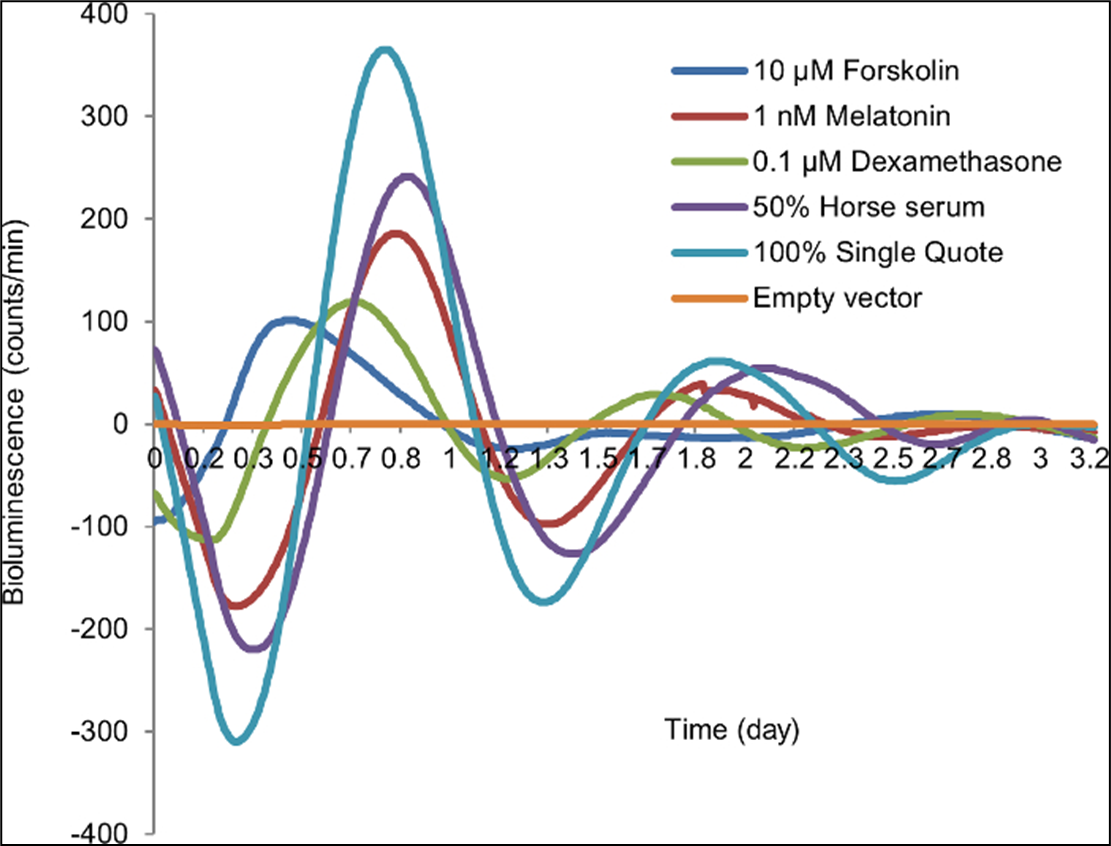
Scientists have managed to generate circadian rhythm in laboratory cells for a short period of time.
Observed peripheral effects of circadian rhythms include dip in blood pressure, motility of the GI tract, acid secretion, mucosa maintenance and digestive circadian rhythm. Clock-KnockOut mice have a kidney pathology suggesting kidney also regulated by circadian rhythm.
Clock-Bmal1 DNA binding activity is modulated by NAD+:NADH ratio indicating energy/redox state can influence circadian rhythm. Bmal1-KO mice have impaired glucose stimulated insulin secretion and the innate immune response varies over the day eg cold symptoms are worse in the evening.
Sleep disorders:
Familial advanced sleep phase disorder (FASPD) = circadian rhythm sleep disorder with early habitual sleep times. Individuals tend to feel tired in the early afternoon. This is due to a missense mutation in the PER2 gene which prevents phosphorylation by Casein kinases I-delta and I-epsilon.
Jetlag occurs when sleep-wake cycles are out of phase with the local environment. Differs based on direction of travel as it’s generally easier to delay internal clock than advance it.