Respiratory substrates
Alternative respiratory substrates
substances other than glucose
eg lipids or proteins
can be oxidised by cells to release energy
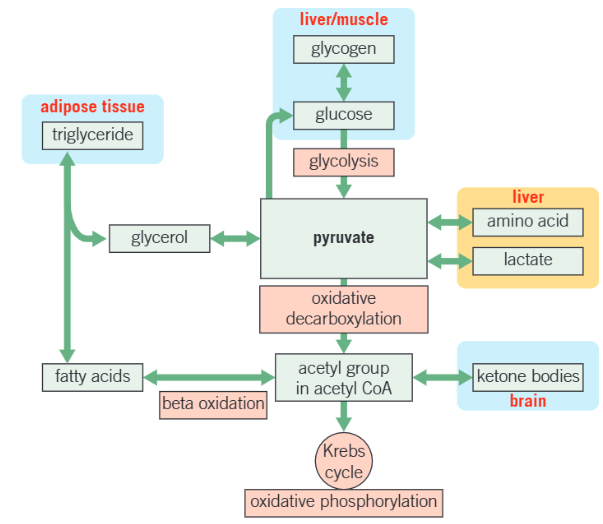
Lipids as respiratory substrates
lipids are hydrolysed into glycerol and fatty acids
glycerol is converted into triose phosphate and enters the glycolysis pathway and this thus converted to pyruvate
fatty acids are broken down into two carbon fragments via beta oxidation and converted into acetyl coenzyme A, which enters the Krebs cycle
Proteins as respiratory substrates
proteins are hydrolysed into amino acids
number of ATP molecules produced depends on R groups of amino acids produced by hydrolysis of the protein
the amino group is deaminated
deamination requires ATP so reduces yield from respiration
3C compounds are converted into pyruvate
4C and 5C compounds are converted into intermediates in the Krebs cycle
Respiratory quotient (RQ)
the ratio of the volume of CO2 produced to the volume of oxygen used in respiration

Interpreting RQ
indicates different metabolic conditions
an RQ of more than 1 indicates that anaerobic respiration is occurring
plants - low RQ values might suggest that photosynthesis is occurring as the CO2 released during respiration is being used
use stoichiometry
Respiratory substrate | RQ |
Carbohydrate | 1.0 |
Lipid | 0.7 |
Protein | 0.9 |